Six months ago, I stopped doing weekly water changes. My tank sits in the corner of my living room, crystal clear, plants growing faster than I can trim them, fish darting around like they own the place. I do almost nothing now. That is the goal most people chase but never reach, and the reason is simple: they built a tank, not an ecosystem. There is a difference, and it matters. The microbial engine beneath your substrate is what makes everything work. It takes months to build, and most guides skip right over it.
What Is a Self-Sustaining Aquarium
Before you start buying equipment and stocking fish, you need to understand what you are actually trying to create here.
A self-sustaining aquarium is not a magic box that never needs attention. It is a balanced biological system where the organisms you introduce handle the maintenance tasks you would normally do yourself. The bacteria break down waste. The plants consume nitrates. The cleanup crew eats algae and detritus. The fish exist within the capacity of the system to handle. When these pieces are in proper proportion, the ecosystem maintains itself with minimal intervention from you.

The realistic goal is not zero maintenance. It is reducing water changes from weekly to monthly (or longer), eliminating manual algae scrubbing, and creating stable water parameters that do not swing wildly. You will still feed fish, trim plants occasionally, and monitor the system. But the daily grind disappears.
Here are the key points to understand:
The realistic goal: Reduce active maintenance to 1-2 hours per month instead of 2-3 hours per week. Monthly water changes instead of weekly. No constant parameter adjustments.
The three balance pillars: Waste production (from fish and decaying matter) must be matched by waste processing (bacteria and plants) and waste export (water changes and cleanup crew). When these three are in equilibrium, the system sustains itself.
Two main types: Low-tech planted tanks rely on slow-growing plants and minimal bioload with no CO2 injection. High-tech planted tanks use CO2 systems, stronger lighting, and faster-growing plants to handle higher bioloads. Both can be self-sustaining, but the balance points differ.
The timeline: Expect 3-6 months before your tank truly stabilizes. The first month is bacterial colonization. The second month is plant establishment. Month three is when you start seeing the actual balance. Anyone promising faster results is selling you something.
The 5-Layer Ecosystem Model
Most aquarium guides jump straight to fish selection or equipment lists. That is backwards. A self-sustaining aquarium is built from the bottom up, starting with layers most people never think about. Each layer depends on the one beneath it. Skip a layer or rush the timeline, and the whole thing collapses.
| Layer | What It Is | Why It Matters |
| Layer 0: Microbial Foundation | Bacteria and microorganisms that process waste | Without this, ammonia and nitrites kill everything |
| Layer 1: Substrate | The physical base where roots grow, and bacteria colonize | Wrong substrate means plants starve, and bacteria have nowhere to live |
| Layer 2: Plant Architecture | Fast and slow-growing plants that consume nutrients | Plants are your biological filter; without enough plant mass, nitrates accumulate |
| Layer 3: Cleanup Crew | Snails, shrimp, and small catfish that consume algae and detritus | They process the waste that plants cannot, and keep surfaces clean |
| Layer 4: Fish | The final addition, once all other layers are stable | Fish produce waste; everything else processes it |
Layer 0: The Microbial Foundation
The nitrogen cycle gets talked about constantly, but it is just one part of a much larger microbial food web. Yes, nitrifying bacteria convert ammonia to nitrite to nitrate. But the real workhorses are heterotrophic bacteria, archaea, and countless other microorganisms breaking down organic matter, stabilizing pH, and competing with harmful bacteria for resources.
The nitrogen cycle in plain terms: Fish waste and decaying matter produce ammonia (toxic). Nitrosomonas bacteria convert ammonia to nitrite (also toxic). Nitrobacter bacteria convert nitrite to nitrate (less toxic). Plants and water changes remove nitrate. This cycle must be established before fish go in, which takes 4-6 weeks minimum.
The full microbial cast: Beyond nitrifying bacteria, you need heterotrophs that break down solid waste, denitrifying bacteria in low-oxygen zones that convert nitrate back to nitrogen gas, and beneficial biofilm that feeds fry and invertebrates. These take months, not weeks.
How to seed this layer from day one: Use established filter media from a mature tank, add bottled bacteria (Seachem Stability, Fritz Turbo Start), or introduce a few hardy plants immediately. Do not rely on bottled bacteria alone. Real colonization takes time. You cannot rush biology.
The honest warning: Cloudy water in weeks 1-3 is normal. It is a bacterial bloom as heterotrophs establish. Diatom algae in weeks 2-4 is also normal. It is the system finding its balance. Do not panic and tear everything down. These are signs of progress, not failure.
Layer 1: Choosing the Right Substrate
Your substrate choice determines which plants you can grow, how well bacteria colonize, and whether your system leans nutrient-rich or inert. Minimum depth should be 2-3 inches for plant root systems. Anything less, and the roots have nowhere to go.
Nutrient-rich soil (Fluval Stratum, ADA Aquasoil): Best for heavily planted tanks where plants are doing the heavy lifting for nutrient export. These substrates release nutrients slowly over 1-2 years, feeding plant roots directly. They lower the pH slightly and soften water, which suits most tropical fish. The downside is that they break down over time and need eventual replacement.
Inert gravel or sand: Best for tanks with minimal planting or where you want full control over nutrients through water column dosing. Does not affect water chemistry. Bacteria still colonize well. You will need root tabs for rooted plants since there are no nutrients in the substrate itself.
Mixed layered substrate: A base layer of nutrient-rich soil capped with 1 inch of inert sand or gravel. This gives you the benefits of soil without the mess. The cap prevents soil from clouding water during planting or when bottom-feeders dig around.
Water source matters: If you have hard tap water and want soft-water fish, use an active substrate that lowers pH. If you have soft tap water and want livebearers or African cichlids, use inert substrate and add minerals. Match your substrate to your water source and target species.
Layer 2: Plant Architecture (Building a Living Nutrient Filter)
Plants are not decoration. They are your biological filter. They consume nitrates and phosphates produced by fish waste, and they generate oxygen during photosynthesis. The plant density ratio rule is simple: aim for 60-80% plant coverage by volume in a self-sustaining setup. More plants mean more nutrient processing.
Fast growers (hornwort, water wisteria, stem plants): These are your nutrient vacuum cleaners. They grow aggressively, consuming nitrates and phosphates quickly. Plant them heavily in the background. Trim weekly and either replant cuttings or discard them (trimming physically exports nutrients from the system).
Slow growers (Anubias, Java fern, Bucephalandra): These add visual interest and fill niches that fast growers cannot. Attach them to rocks or driftwood instead of planting in substrate. They grow slowly, so they contribute less to nutrient export, but they are nearly indestructible and add stability.
Floating plants (frogbit, water lettuce, Amazon frogbit): These are absurdly efficient at nutrient uptake because their roots sit directly in the water column. They also shade the tank, reducing algae. The downside is they block light from below, so use them strategically or thin them regularly.
Planting zones: Carpet the foreground with dwarf hairgrass or Monte Carlo if you have good light. Fill the midground with bushy plants like cryptocoryne or amazon swords. Pack the background with fast-growing stems. Create depth and density, not sparse minimalism.
Reading algae type: Different algae signal different imbalances. Green spot algae means low phosphates. Hair algae means excess organics or inconsistent CO2. Black beard algae means low CO2 and poor flow. Algae is not the enemy; it is feedback. Adjust conditions instead of scrubbing endlessly.
Layer 3: Building a Cleanup Crew That Actually Works
Your cleanup crew processes the waste that plants cannot touch: dead plant matter, uneaten food, fish waste, and surface biofilm. Size your crew based on tank volume and fish count, not personal preference. More bioload means more cleanup crew.
| Species | Role | Min. Tank Size |
| Nerite Snails | Eats algae off glass, rocks, and decorations; does not reproduce in freshwater | 5 gallons |
| Malaysian Trumpet Snails | Burrows through the substrate, aerating it and preventing anaerobic pockets | 10 gallons |
| Amano Shrimp | Eats hair algae, biofilm, and leftover food; needs hiding spots | 10 gallons |
| Cherry Shrimp | Smaller than Amanos; breeds readily; great for biofilm control | 5 gallons |
| Otocinclus Catfish | Eats diatoms and soft algae; needs an established tank with algae already present | 20 gallons |
| Bladder Snails | Often arrive as hitchhikers; population self-regulates based on food availability | Any size |
Add a cleanup crew after plants establish, but before fish. Give them 2-3 weeks to acclimate and start working. If your cleanup crew population crashes, it means there is not enough food (waste) in the system, which is actually a good sign.
Layer 4: Adding Fish
Fish go in last. This is not negotiable. The lower layers need 6-8 weeks minimum to build the biological capacity to handle bioload. Rushing this step is the number one reason new tanks crash.
Simple bioload math: aim for 1 inch of fish per 2 gallons of water in a planted tank (traditional rule is 1 inch per gallon, but that assumes heavy filtration and frequent water changes). A 20-gallon tank with heavy planting can handle 10 inches of fish total. Five ember tetras at 0.75 inches each equals 3.75 inches. You have room for more, but start conservatively.
Beginner-friendly, low-bioload species: Small tetras (ember, neon, cardinal), rasboras (chili, harlequin, lambchop), guppies, endlers, platies, and pygmy corydoras. These fish produce minimal waste, tolerate a range of parameters, and thrive in planted setups.
Fish as health indicators: Healthy fish have bright colors, active swimming, and a good appetite. Clamped fins, gasping at the surface, or hiding constantly means something is wrong. Test water parameters immediately. Fish do not lie.
Introduce fish gradually: Add 3-5 fish every 2 weeks, not all at once. This gives bacteria time to catch up to the increased bioload. Monitor ammonia and nitrite during this period. Any reading above zero means you added fish too fast.
What Is the Technology Layer
Self-sustaining does not mean no technology. It means smart technology that removes human error from the equation. These tools do not create balance; they maintain it once you have built it.
ATO (Auto Top-Off) systems: Water evaporates constantly, concentrating minerals and shifting parameters. An ATO automatically replaces evaporated water, keeping the water level and salinity stable. This is the single best investment for hands-off maintenance.
Automatic feeders: Overfeeding is the most common mistake beginners make. An automatic feeder dispenses precise portions at set times, eliminating the temptation to overfeed. Load it once a week and forget about it.
Dosing pumps: For high-tech tanks, these automatically dose fertilizers or liquid CO2 on a schedule. Not essential for low-tech setups, but they remove the guesswork from nutrient management in demanding systems.
Smart controllers (Neptune Apex, Inkbird): These monitor temperature, pH, and other parameters, sending alerts if anything goes out of range. Worth it for expensive setups, overkill for beginner tanks.
CO2 systems: Not required for low-tech setups, but essential for high-tech tanks with intense lighting and fast-growing plants. CO2 injection dramatically increases plant growth, which increases nutrient processing capacity.
Budget tiers: Basic setup (ATO plus automatic feeder) runs $100-150. Mid-tier (add dosing pump) is $250-300. High-end (smart controller plus CO2) is $500+. Start basic and upgrade as you learn what your system needs.
How to Course-Correct Without Destroying Your Ecosystem
The minimal intervention principle is critical. Always start with the smallest possible action before escalating. Tearing down and restarting resets all the biological progress you have made.
Oily film on the surface: Increase surface agitation with an air stone or adjust filter output to break surface tension. This is usually protein buildup from excess feeding. Reduce feeding slightly.
Sulfur or rotten egg smell: You have anaerobic pockets in the substrate producing hydrogen sulfide. Malaysian trumpet snails prevent this by burrowing and aerating the substrate. If already present, gently stir the top inch of substrate during water changes to release gas pockets.
Fish gasping at the surface: Low oxygen. Increase surface agitation immediately. Check if plants are getting enough light (they produce oxygen during the day but consume it at night). Add an air stone at night if needed.
Sudden multi-species plant die-off: This is usually a nutrient deficiency (often iron or potassium). Test and dose accordingly. Could also be a lighting issue if you recently changed bulbs. Plants adapt to light levels; sudden changes stress them.
Persistent cloudy water past week 3: Likely a bacterial bloom from overfeeding or decaying organic matter. Stop feeding for 2-3 days. Do a 25% water change. Add more fast-growing plants to consume excess nutrients.
The one scenario that requires a reset: If ammonia or nitrite readings stay above 0.25 ppm for more than a week despite water changes, and fish are dying, the biological filter has failed. You need to restart the cycle, possibly with fewer fish or more plants.
Conclusion
The 5-layer model is not optional. Microbial base, then substrate, then plants, then cleanup crew, then fish last. Each layer depends on the one below it. Skip steps or rush the timeline, and you are building a tank, not an ecosystem. The maturation period is what most beginners underestimate. Cloudy water and diatom blooms are not failures. They are the system building itself. Pair patience with basic automation (an automatic feeder and an ATO unit) and the two biggest failure points disappear. Observe more and intervene less.
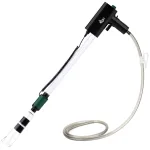
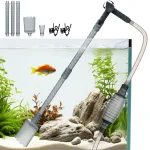
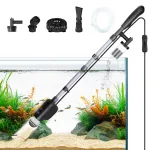
AQQA 5-in-1 Aquarium Gravel Cleaner Set For Removing...
Original price was: $35.59.$30.39Current price is: $30.39.