
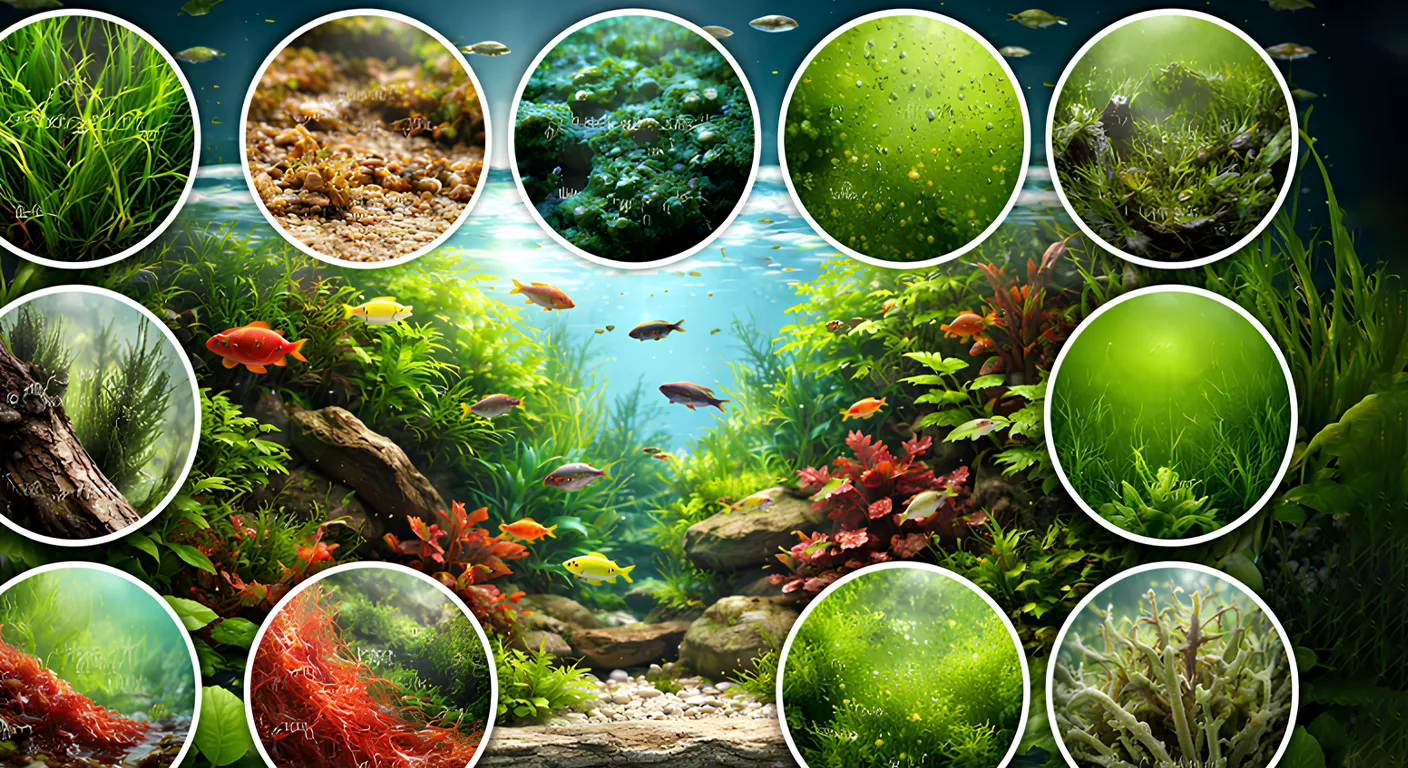
So you woke up one morning, looked at your tank, and thought what is that? Maybe it is a green fuzz taking over your driftwood. Maybe it is a dusty brown film coating everything in sight. Or maybe, worse, your water looks like someone poured pea soup into it.
Algae. The universal frustration of fish keeping.
Here is the thing most guides get wrong: they treat algae like a mess to clean up. Scrub it off, add some chemicals, and done. But that approach rarely works long term, because algae is not random. Every single type that shows up in your tank is a direct response to something happening in your water. It is your tank talking. And if you learn to read it, you stop chasing the same problem over and over.
This guide covers all 9 common aquarium algae types, what they look like, where they show up, what they are actually signaling, and how to fix the cause, not just the surface.
Table of Content
ToggleWhat Each Algae Profile Covers
Before jumping in, here is what each section tells you. You will find the appearance, where it tends to grow, a severity rating so you know how fast to act, what it signals about your water, how to remove it, and which algae eaters actually help.
One thing worth noting upfront: “easy to treat” algae usually means the cause is temporary and self-correcting. “Hard to treat” algae almost always means there is a water chemistry problem that keeps feeding it back. Removing the algae without fixing the cause is like mopping the floor while the tap is running.
9 Types of Aquarium Algae
Here are details of these different algae:
1. Brown Algae (Diatoms)
The most misunderstood algae in the hobby. Beginners panic, but this one almost always fixes itself.
Brown algae show up as a soft, dusty, brown coating on glass, substrate, decorations, and plant leaves. It wipes off easily. It appears most often in new tanks and tends to coat everything within the first few weeks of setup.
What it signals: Low light and high silicates, usually from tap water. New tanks that have not fully cycled yet almost always go through a diatom phase.
Severity: This is a phase, not a permanent problem.
How to remove it: Wipe glass surfaces manually, do regular water changes, and wait. Diatoms disappear on their own once the tank matures and light levels stabilize.
Best algae eaters: Otocinclus catfish and nerite snails make short work of it.
2. Green Dust Algae (GDA)
The one green algae you should actually leave alone. Scrubbing it makes things worse.
GDA appears as a thin, powdery green film on the glass. It is soft and easy to wipe off, which is exactly why people keep scrubbing it away. The problem is that scrubbing resets its reproductive cycle, and the cycle starts again.
What it signals: Generally, it means your tank is finding its balance. GDA is common in newer setups and often appears when light and nutrients are slightly off.
Severity: Low to moderate.
How to remove it: Let it complete its full life cycle (around 3 to 4 weeks), then do one big wipe of the glass. The algae detaches, you remove it with a water change, and it often does not return at the same intensity.
Best algae eaters: Ramshorn snails and nerite snails help keep it in check.
3. Green Spot Algae (GSA)
Hard, stubborn, and almost always a sign that your phosphate is lower than you think.
GSA appears as small, hard, bright green circles on slow-growing plant leaves and glass panels. You will need a razor blade or a hard scraper to remove it from the glass. It does not wipe off.
What it signals: Low phosphate. A lot of hobbyists assume all algae means too many nutrients, but GSA is one type that actually shows up when phosphate drops too low.
Severity: Not an emergency, but it does not go away without fixing the cause.
How to remove it: Scrape the glass with a razor blade. For plants, remove heavily affected leaves. Raise phosphate levels slightly and maintain consistent CO2 if you are running a planted tank.
Best algae eaters: Nerite snails are one of the few that will graze on it.
4. Green Water
When your tank looks like pea soup, you are not dealing with surface algae. You are dealing with millions of free-floating cells suspended in the water column.
Green water turns the entire tank a murky, opaque green. You cannot see through it. It blocks light and looks alarming.
What it signals: A sudden spike in ammonia or nutrients combined with excess light. Common after adding new fish, over-fertilizing, or when a filter has been disrupted.
Severity: It will not resolve on its own easily.
How to remove it: A UV sterilizer is the most effective solution. Blackouts (covering the tank completely for 3 to 4 days) also work. Regular water changes alone rarely fix it.
Best algae eaters: This is a water column problem, not a surface problem.
5. Hair Algae
Fast-growing, frustrating, and almost always a lighting or iron problem, not a cleaning problem.
Hair algae looks like fine green threads or strands growing from plants, substrate, and hardscape. It can grow in dense clumps or wispy patches and tends to show up suddenly and spread quickly.
What it signals: Excess iron combined with inconsistent or excessive lighting. It is common in tanks with LED lights running too long or at full intensity.
Severity: Moderate to high, depending on how fast it spreads.
How to remove it: Reduce photoperiod to 6 to 8 hours. Check iron levels. Manually remove as much as possible by twirling it around a toothbrush. Fix the light first, or it comes right back.
Best algae eaters: Amano shrimp are the gold standard here. Siamese algae eaters and some species of mollies also help.
6. Black Beard Algae (BBA)
The most feared algae in the planted tank hobby, and the one most often treated incorrectly.
BBA appears as dark gray or black tufts that look almost like tiny brushes. It attaches firmly to plant edges, driftwood, filter intakes, and hard surfaces. It is tough to remove physically.
What it signals: CO2 fluctuations. BBA almost always appears in planted tanks where CO2 levels are inconsistent, rising and falling throughout the day rather than staying steady.
Severity: It spreads aggressively and is hard to remove.
How to remove it: Stabilize CO2 levels first. Then spot treat affected areas with liquid carbon (Excel) directly applied using a syringe with the pump off. BBA turns red when dying. Hydrogen peroxide spot treatment (3%) also works well.
Best algae eaters: Siamese algae eaters are one of the very few fish that actually eat it. Florida flagfish will also graze on it.
7. Staghorn Algae
Looks like hair algae at first glance, but behaves completely differently and needs a different fix.
Staghorn algae grow in single gray-green strands that branch out like antlers. It is tougher than hair algae and does not pull off easily. You will find it attached to plant tips and equipment.
What it signals: Low CO2 or ammonia spikes, often caused by inconsistent fertilization or irregular water changes.
How to remove it: Spot treat with hydrogen peroxide or liquid carbon. Fix CO2 consistency and check ammonia levels.
Severity: Moderate.
Best algae eaters: Amano shrimp will graze on it occasionally, but they are not reliable here.
8. Cyanobacteria (Blue-Green Algae)
It looks like algae, spreads like algae, and gets treated like algae. That is exactly why it keeps coming back.
Cyanobacteria form slimy, flat sheets of dark green or blue-green color over substrate, plants, and decorations. It often smells musty. It peels away in sheets but returns within days.
What it signals: Low nitrates, poor flow, and high organic waste. Cyanobacteria thrive in stagnant areas with low water circulation.
Severity: Standard algaecides do not work here because this is bacteria, not algae.
How to remove it: Improve flow in still areas, increase nitrates through water changes, and address organic waste buildup. Erythromycin-based treatments can be used as a last resort, but should be avoided if possible, as they affect your gut bacteria.
Best algae eaters: This one requires water chemistry fixes, not livestock.
9. Saltwater-Specific Algae
Marine tanks run into all of the above, plus a few types that freshwater keepers will never see.
Coralline Algae: A desirable, hard, purple or pink encrusting algae that signals good calcium and alkalinity levels. Most reef keepers want more of it.
Bryopsis: A feathery, fern-like green algae that is extremely difficult to remove. It often signals a magnesium imbalance.
Chaetomorpha (Chaeto): A beneficial macro algae kept deliberately in refugiums to export nutrients. It is a tool, not a problem.
Turf Algae and Dictyota: Thick, mat-forming algae that can smother corals. Caused by excess nutrients and low herbivore populations.
The Biggest Mistake Aquarium Hobbyists Make With Algae
Most people treat algae as a surface problem. They scrub it, dose chemicals, add algae eaters, and wonder why it comes back within a week. Here is why: the algae is a symptom. If the cause is still there, the algae come back. Every time.
The types most often treated this way are BBA, hair algae, and cyanobacteria. All three have strong, specific root causes, and all three regrow immediately if those causes are not fixed first.
The right order is simple. Identify the type, figure out what it is signaling, fix the water parameter, then remove the algae.
Diagnose Your Tank: Read the Algae Like a Dashboard
| What You Are Seeing | What Your Tank Is Telling You |
| Brown dusty film right after setup | New tank phase, high silicates, low light |
| Hair algae grows fastest near the light | Excess iron, too much light intensity, or duration |
| Green spots on slow plants and glass | Low phosphate |
| BBA at filter outflow or high-flow spots | CO2 fluctuations |
| Staghorn on hardscape and equipment | Inconsistent CO2 or ammonia spike |
| Cyanobacteria in still corners on the substrate | Low nitrates, poor circulation, and organic waste buildup |
| Green water after fertilizing or adding fish | Nutrient spike combined with excess light |
Conclusion
Algae is not the enemy. It is information. Every type has a pattern, a location, and a cause, and once you know how to read those clues, you stop feeling like your tank is against you.
The next time something shows up in your tank, do not reach for the scraper first. Check this guide, match what you are seeing to the diagnostic table, and fix the water before anything else. That one shift in how you think about algae will save you months of frustration and a lot of wasted product.
FAQ
1. What is the most common type of algae in freshwater aquariums?
Brown algae (diatoms) are the most common, especially in new tanks. It is temporary and almost always resolves on its own.
2. Are all aquarium algae harmful to fish?
No. Most algae are harmless to fish. Cyanobacteria can be problematic in large quantities, and green water can reduce oxygen, but most types are cosmetic issues rather than health ones.
3. Why does algae keep coming back even after I clean it?
Because the cause has not been fixed. Algae respond to water chemistry. Scrubbing removes the growth but not the reason it appeared.
4. What eats Black Beard Algae?
Siamese algae eaters are the most reliable. The Florida flagfish also works. Most other fish ignore it.
5. How do I tell the difference between algae and cyanobacteria?
Cyanobacteria peel away in sheets, often smell musty, and tend to smother surfaces in a flat film rather than growing in strands or spots. It also responds to antibacterial treatments, not algaecides.
6. Can algae actually benefit my tank?
Yes. Controlled algae growth provides surface area for beneficial bacteria, grazing opportunities for fish and invertebrates, and some types (like coralline in marine tanks) are actively desirable.
Related Reading
Related Products For Your Reference

Aquarium Magnet Glass/Acrylic Cleaner,Fish Tank Cleaner Brush,Magnetic Algae...
AQQA Aquarium Strong Magnetic Cleaner Brush, Algae Magnet...












Add comment
You must be logged in to post a comment.