
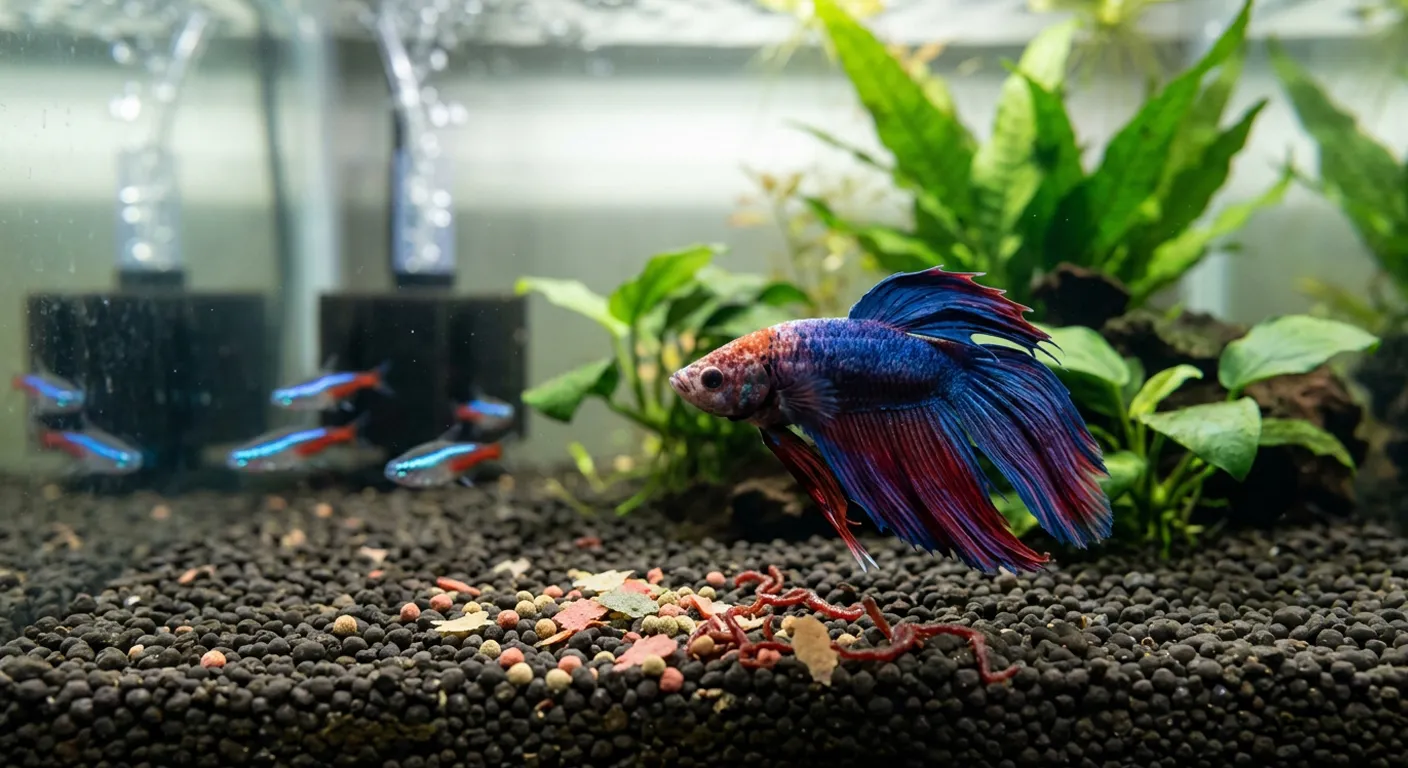
A fish that stops eating is usually reacting to something specific. Stress, poor water quality, a recent change, unsuitable food, competition, or early illness can all be behind it. One skipped meal is rarely an emergency, since a healthy adult fish can go several days without food. Refusal that lasts longer, or comes with other unusual symptoms, deserves a closer look.
This guide walks through the checks in a sensible order. You will learn whether one fish or the whole tank is affected, what to test in the water, and how to confirm your fish can reach its food. You will also learn which signs point to illness and how to encourage safe eating.
First, Is It One Fish or the Whole Tank
The number of fish affected narrows down the cause faster than any other clue. When the whole tank refuses food, the problem usually sits in the environment. When a single fish refuses, think about competition, stress, injury, a diet mismatch, or an individual illness.
Start with observation, not treatment. Watch the aquarium for five minutes during feeding. Do not assume every fish gets an equal share, because food often vanishes before slower fish notice it.
When All Fish Stop Eating
Several fish ignoring food at the same moment point toward water quality, a temperature change, low oxygen, contamination, a recent water change, or a failing filter. Cleaning spray, air freshener, or hand lotion near the tank can end up in the water.
Rapid breathing, gasping at the surface, lethargy, and odd swimming make the situation more urgent. Check the aquarium system before adding more food or any medication.
When Only One Fish Stops Eating
A single fish may be bullied, naturally shy, unable to swallow the food, injured, or dealing with an internal problem. It may also be too slow to compete with faster tankmates.
Watch that fish at the next feeding. Does it swim toward the food? Does it hide when you lift the lid? Does another fish chase it away? Does it take a pellet and spit it out, or does it look uninterested altogether? Each answer points in a different direction.
Questions to Ask Before Doing Anything
- How many fish are refusing food, and for how many days?
- Did anything change in the tank during the last 24 to 72 hours?
- Do ammonia and nitrite both read zero?
- Is the fish breathing normally, or are the gills moving fast?
- Does the fish look thinner, bloated, or marked with spots or sores?
- Is the food right for this species and the size of its mouth?
Check for Recent Aquarium Changes
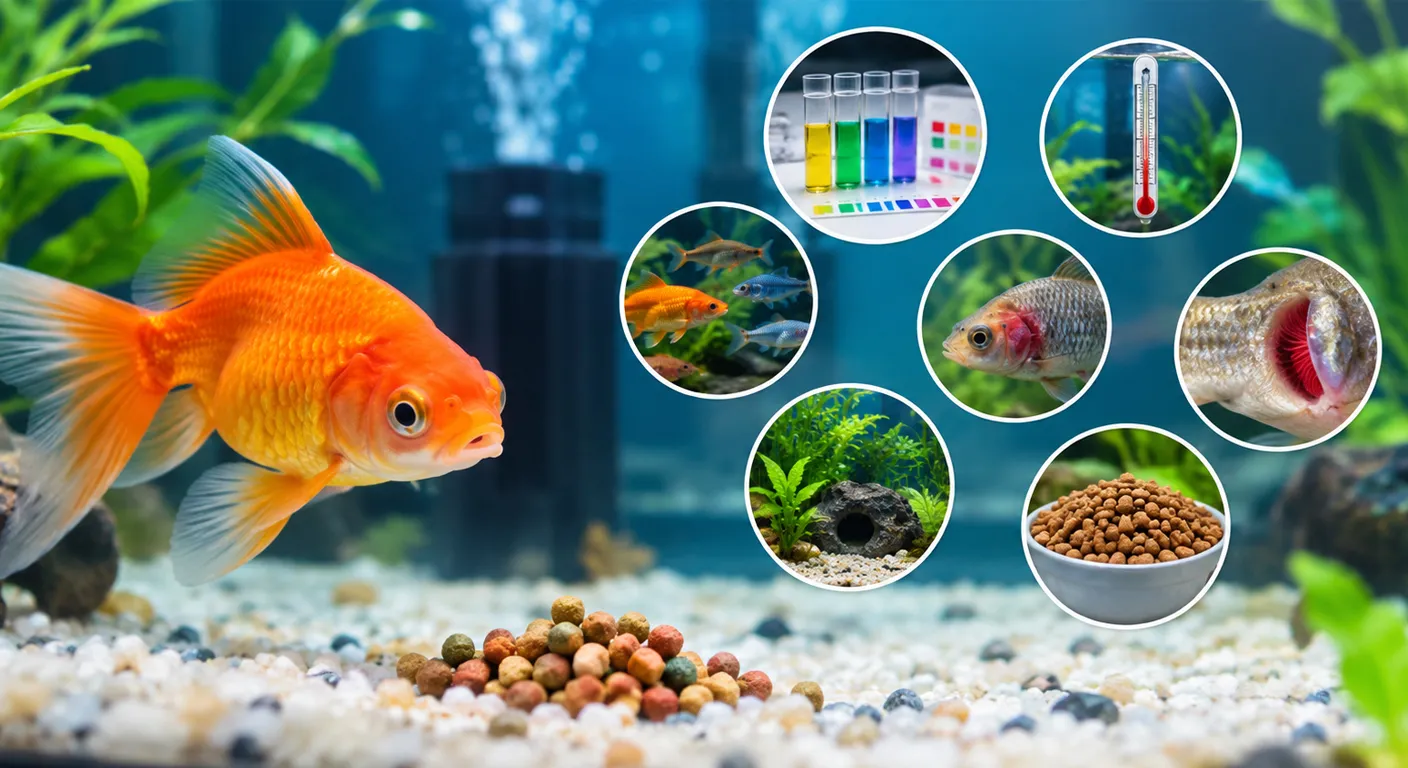
Fish often stop eating right after their surroundings shift. Even helpful chores, such as a water change or a filter rinse, can unsettle them when temperature or chemistry moves too quickly. Cold tap water poured into a warm tank is one example. Rinsing filter media under the tap is another, since chlorine can kill the bacteria that process ammonia.
A recent change does not mean you did something wrong. It simply gives you a possible trigger. Look back over the last 24 to 72 hours and write down what happened. Think of new fish, new decor, heater adjustment, different food, or a power cut.
Once you spot a likely cause, resist making many quick adjustments. Stable water is often better for a stressed fish than a string of corrections. Change one thing at a time, then give the tank a day to respond.
Test Water Quality Before Blaming the Food
Poor or unstable water is one of the most common reasons aquarium fish stop eating. A tank can look clear and still carry toxic ammonia. Rely on a test kit instead of your eyes. Liquid kits are usually more accurate than paper strips.
Test ammonia and nitrite first, then temperature and nitrate. Check pH and hardness when your species is sensitive to them. Sudden swings can stress fish as much as steady, mildly imperfect water.
What to Test First
| What to check | Why it can affect appetite | What to look for |
| Temperature | Cold water slows digestion, while heat raises stress and oxygen demand | Most tropical fish do well at 75 to 80°F (24 to 27°C). Goldfish prefer cooler water. A daily swing above 3°F is a warning. |
| Ammonia | Burns gills and skin, which makes fish too uncomfortable to eat | Should read 0 ppm. Any reading above zero needs action. |
| Nitrite | Blocks oxygen transport in the blood, leaving fish weak | Should read 0 ppm. |
| Nitrate | High levels cause slow, steady stress | Keep it below 40 ppm, ideally below 20 ppm. |
| pH and hardness | Sharp changes upset the internal balance of the fish | Match the species. A stable reading matters more than a perfect one. |
| Oxygen and flow | Low oxygen makes fish sluggish and less interested in food | Watch for surface gasping or fish crowding near the filter outlet. |
Fix the underlying problem before offering more food or treatment. If ammonia or nitrite shows above zero, a partial water change of 25 to 50 percent is the usual first step. Use dechlorinated water at the same temperature as the tank.
Stress Can Make Fish Refuse Food
Stress is not a vague catch-all. It nearly always has a source you can find. Transport, unfamiliar surroundings, loud noise, harsh lighting, bare tanks without hiding places, crowding, and aggressive tankmates can each leave a fish too nervous to eat.
A new fish that hides and skips meals for a short period can be perfectly normal, as long as it looks alert, breathes calmly, and shows no signs of disease.
New Fish Not Eating
Do not panic, but do not ignore it either. Many new fish start eating within one to three days. Help them along with a quiet room, dimmer lighting, plants or caves, and a small portion of species-appropriate food once they settle.
Keep watching, though. Refusing food together with rapid breathing, severe lethargy, visible injury, or a worsening condition is not normal acclimation. That fish needs attention. Make sure that the new fish are properly introduced into the aquarium.
Make Sure the Fish Can Eat the Food
A hungry fish may still fail to eat. The food may be too large, too hard, stale, or floating at the wrong level of the tank.
Fish feed in different zones. Hatchetfish take food from the surface. Tetras grab it midwater as it sinks. Corydoras and loaches search the bottom, so they need sinking wafers. Many catfish and loaches are nocturnal and only eat after the lights go out. Fast danios can finish a serving before a timid fish approaches.
Match the food to the mouth size, natural diet, and feeding zone. If a fish was raised on frozen or live food, or on another pellet brand, switch slowly. Mix a little new food into the old for about a week. Dry food also loses nutritional value once opened, so replace it within a few months.
Fish Takes Food and Spits It Out
This behavior tells you something useful: the fish still wants to eat. The food is probably too big, too hard, too old, or unfamiliar. Try a smaller size, soak pellets in tank water for a minute, or switch to a softer food.
Repeated spitting along with rapid breathing, a swollen mouth, gill irritation, or lethargy needs a closer health check. Never force-feed a fish, and do not start medication without a diagnosis.
Ways to improve feeding access:
Feed at the same time and in the same corner each day, so fish learn the routine.
Scatter food in two spots, so shy fish can eat away from bold ones.
Use sinking food for bottom dwellers and floating food for surface fish.
Add plants, caves, or driftwood so timid fish can eat under cover.
Offer only what the fish finishes in two to three minutes, then remove the rest.
Look for Signs of Illness
Appetite loss can be an early symptom of disease, parasites, injury, or digestive trouble. It is not proof of any single illness, though. Look at the whole fish rather than diagnosing from one skipped meal.
Watch for these warning signs:
Clamped fins held tight against the body
Rapid breathing, or gills moving faster than normal
Flashing, which means darting and rubbing against decor or gravel
White spots, fuzzy patches, or ulcers
Bloating, or scales that stand out like a pinecone
Visible weight loss, such as a sunken belly or a thin back
Pale, white, or stringy feces
Balance problems, such as floating sideways, sinking, or swimming in circles
When to Seek Help Quickly
Do not wait if several fish are declining, symptoms are severe, or a fish is losing weight fast. An aquatic veterinarian can offer the most reliable guidance. Prepare your water test results, tank size, species list, and a timeline of what changed. A short video of the fish breathing also helps.
Safe Ways to Encourage a Fish to Eat
Try this only after water quality and urgent health concerns have been checked. The goal is to reduce stress and offer a small amount of suitable food.
Offer fresh food suited to the species. If flakes are ignored, try a sinking pellet or another texture. Frozen or live foods, such as bloodworms, brine shrimp, or daphnia, often tempt picky fish because they smell strong or move. Thaw frozen food in a little tank water. These foods can spark interest, but they do not replace solving the underlying cause.
Shy fish eat better when the room is calm, and the lights are dim. Place food near cover, then step back. Offer a small portion once or twice a day, and remove leftovers after a few minutes.
Avoid These Common Mistakes
Worry makes people act fast, and fast action often backfires. Patience and stable conditions do far more good.
Overfeeding in the hope that the fish will eat, which fouls the water as leftovers rot
Skipping water tests and guessing from how clear the tank looks
Changing foods every day instead of giving one option time
Starting medication without a diagnosis, which can harm fish and beneficial bacteria
Making large water changes or resetting equipment all at once
Dismissing visible weight loss, since a thinning fish that refuses food for weeks needs help
Conclusion
Finding the reason behind a fish refusing food takes a calm, ordered process. Check whether one fish or the whole tank is affected, review recent changes, test the water, watch feeding behavior, and look for stress or illness.
Do not assume the fish simply dislikes its food. Check water conditions, temperature, tankmates, feeding access, and overall behavior before trying medication or swapping foods again. Keep the aquarium stable, offer suitable food calmly, and monitor your fish closely.
AQQA Automatic Fish Feeder, 12H/24H/48H Timer, 110ml Capacity,...
Original price was: $13.19.$12.99Current price is: $12.99.
AQQA 200ML Auto Fish Feeder, Quiet Smart Timer...
Original price was: $22.39.$19.87Current price is: $19.87.

Add comment
You must be logged in to post a comment.