

You’ve probably done it before. A little extra pinch of food. It feels harmless. But give it a few days. The water goes cloudy, algae starts showing up, and your fish are just… off. All from a bit of extra food. Overfeeding is actually one of the biggest mistakes in fishkeeping. The leftover food breaks down in the water and throws the whole tank out of balance. Your fish end up stressed, and most of the time, you won’t even know why.
Fish will eat whenever there’s food in front of them. That’s not hunger, that’s just how they’re wired. So when your fish rushes to the surface, it doesn’t mean it needs more food. But it’s easy to think that way, and a lot of owners do. This guide covers why overfeeding happens so easily, what it actually does to your tank, and what proper feeding looks like.
Stick around by the end, and you’ll know exactly what signs to watch for and how to fix things before they get out of hand.
The Biology Behind the Behavior
Overfeeding isn’t about greed. It’s about instinct.
Why Fish Always Look Hungry
Fish didn’t grow up in a tank. In the wild, food showed up randomly — sometimes a lot, sometimes nothing for days. So they evolved to eat whenever they can, no questions asked. Bring that same fish into your aquarium, and that instinct doesn’t go away. Every time you walk up to the tank, they’re at the surface looking desperate. Looks like hunger. It’s not. They’re just wired that way.

Fish Stomach Sizes: Smaller Than You Think
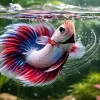
A betta’s stomach is about the size of its own eye. And goldfish? They don’t even have a real stomach. Food just moves straight through them. There’s no storage happening. Whatever they don’t use right away turns into waste — simple as that. So when someone tells you to feed less, this is exactly why.
Temperature and Metabolism
Fish are cold-blooded. Their metabolism runs on whatever the temperature of the water is. Cool the water down, and their body slows down too. They need up to 40-50% fewer calories. But most people feed the same amount all year. In winter, that’s basically doubling the portion size without realizing it.
A fish at 72°F needs noticeably less food than the same fish at 80°F
Sudden algae blooms without any feeding changes are often tied to a slower metabolism
Adjusting how much you feed by season is one of the simplest fixes — and almost nobody does it
The Nitrogen Cycle: The Machine Overfeeding Breaks
This section explains how overfeeding disrupts ammonia, nitrite, and nitrate levels and why that directly threatens your fish’s survival.
The Full Biological Chain Explained
Food waste → ammonia (NH₃) → nitrite (NO₂⁻) → nitrate (NO₃⁻)
Your tank runs on this chain. Beneficial bacteria sit at each step and keep things moving. Overfeed, and you flood the very first step with more waste than the bacteria can handle. Ammonia spikes. Nitrite spikes. Both at the same time. The whole system gets overwhelmed.
Why Elevated Nitrite Suffocates Fish in Oxygenated Water
Here’s something most people don’t know. Nitrite latches onto your fish’s hemoglobin faster than oxygen does. So even if the water is full of oxygen, the blood can’t carry it. The fish suffocates from the inside. This is called brown blood disease, and it’s one of the nastiest things overfeeding can quietly cause.
Watch out for these signs:
Fish gasping at the surface even with good aeration
Red or inflamed gills
Fish that were totally fine are suddenly going lethargic
Any nitrite reading above 0 ppm in a cycled tank
New Tank vs. Established Tank
A new tank has no beneficial bacteria yet. There’s nothing to process the waste. One overfeeding event can push ammonia to lethal levels within 24 hours. A tank that’s been running for months handles things very differently. Treating them the same is a serious mistake.
Recognizing Overfeeding: A Tiered Warning System
This section introduces a three-tier alert system to help you decide when to monitor, act, or intervene immediately.
3 Urgency Tiers Every Fish Owner Needs to Know
| Urgency | Sign | Root Cause | Action |
| Watch | Uneaten food, cloudy water, algae | Excess food is beginning to decompose | Reduce feeding immediately |
| Act Soon | Dropping pH, clogged filter, bloating | Waste accumulation stressing system | Perform water change within 24 hrs |
| Emergency | Ammonia/nitrite above 0 ppm, gasping fish | Toxic buildup is overwhelming the tank | Stop feeding + immediate intervention |
The Silent Damage of Chronic, Low-Level Overfeeding
Not all overfeeding problems are immediate. In many cases, the damage builds slowly over months.
Chronic mild overfeeding gradually depletes KH (carbonate hardness), eventually leading to a sudden pH crash with no obvious trigger. This is one of the most misdiagnosed causes of unexplained fish deaths.
The slow-burn effects include:
KH erosion over time, leading to sudden and severe pH instability
Anaerobic bacteria form in the substrate, producing toxic hydrogen sulfide
Shortened fish lifespans and persistent low-energy behavior
How to Feed Fish the Right Way
Different types of fish require different feeding strategies. There is no one-size-fits-all approach.
5 Fish Types Vs 5 Different Feeding Needs
| Fish Type | Examples | Frequency | Food Format |
| Carnivore | Bettas, cichlids | 1–2 times daily | High-protein pellets/live |
| Herbivore | Mollies, plecos | 2–3 times daily | Algae wafers, plant matter |
| Omnivore | Tetras, guppies | 1–2 times daily | Mixed flakes/pellets |
| Bottom feeder | Corydoras | Once daily (targeted) | Sinking pellets |
| Fry | Baby fish | 3–5 small feedings | Powdered or liquid food |
4 Types of Food That Pollute Water Quality
What you feed matters as much as how much. From fastest to slowest decomposition:
Dry flakes: Break apart quickly and pollute water fastest
Frozen/live food: Nutrient-rich but can spike ammonia if uneaten
Sinking pellets: More controlled, less fragmentation
Gel/paste food: Slowest breakdown, least waste when used correctly
Automatic Feeders: Helpful Tool, Common Trap
Automatic feeders can improve consistency — but they often replicate overfeeding mistakes.
To use them correctly:
Run the feeder for one full week while observing actual output
Adjust until no food remains after two minutes
Clean regularly to prevent humidity clumping and sudden overfeeding
Recovery: A Realistic 3-Stage Timeline
This section provides a clear, time-based plan to restore balance in an overfed tank.
Days 1–3: Stop the Damage
Stop feeding completely. Remove visible waste using a turkey baster, vacuum the gravel, and test ammonia, nitrite, and pH daily.
Days 4–14: Active Recovery
Perform 25–30% water changes every 2–3 days. Rinse filter media in tank water (never tap water). Resume feeding at 50% of previous levels by the end of week two.
Weeks 3–6: Full Stabilization
Algae may take several weeks to recede. pH stability returns last. Severely affected tanks may require bacterial supplements to restore balance.
Conclusion
Overfeeding sneaks up on you. One extra pinch here, a little more there and before you know it, your tank is a mess, and your fish are paying for it. The real problem isn’t the food itself; it’s what that food does to the water chemistry once it’s in there.
Two minutes is all you need to go by. If there’s still food floating around after that, you gave too much. Test your water every week because ammonia starts climbing long before your fish look sick. By the time they show symptoms, things are already bad.
Small habits add up. Feed less, test often, and pay attention to your tank. Most people lose fish to overfeeding without ever realizing that’s what happened. Now you know better and that’s honestly half the battle.
FAQ
1. My tank is large and heavily planted. Can I feed more?
You can push it a little, but don’t get comfortable. Sure, plants soak up some of the extra nutrients floating around. But they’re not a safety net. Too much food and your ammonia and nitrite will still climb, big tank or not.
2. My goldfish have bloated bellies but still eat normally. Am I overfeeding?
That’s a yes. Goldfish have no real stomach and zero sense of when to stop. They’ll eat until there’s nothing left. A bloated belly is their way of telling you it’s already too much. Pull back on the portions and watch how much waste is building up.
3. Do outdoor ponds have the same overfeeding risks?
They do. A big pond buys you some room — more water, more natural filtration. But push it far enough, and the water quality drops anyway. Your fish will feel it whether they’re in a tank or a pond.
4. If I go on vacation for a week, what’s safest?
Skip the food. Sounds wrong, but it’s true. A healthy adult fish can go several days without eating and be completely fine. An automatic feeder sounds like the smart move, but if you haven’t tested it properly, it can dump way too much in one go. That’s worse than nothing.
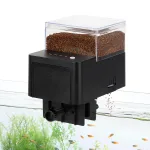
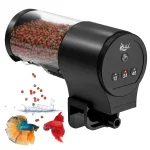
AQQA Automatic Fish Feeder, 12H/24H/48H Timer, 110ml Capacity,...
Original price was: $13.19.$12.99Current price is: $12.99.
AQQA 200ML Auto Fish Feeder, Quiet Smart Timer...
Original price was: $22.39.$18.19Current price is: $18.19.












Add comment
You must be logged in to post a comment.