
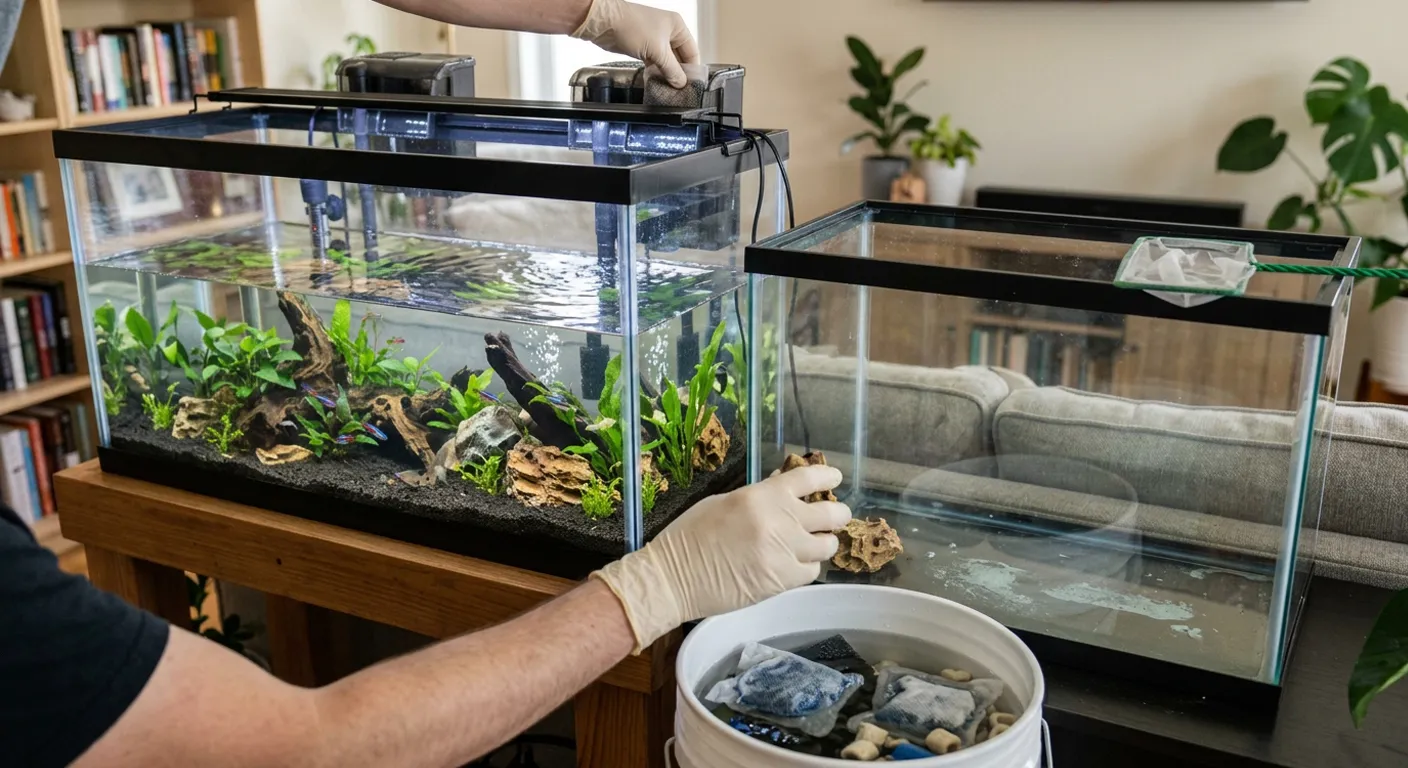
A 20-gallon tank gives fish more swimming room and steadier water than a 10-gallon does. The upgrade only works if the established biological filter survives the move. Mature filter media, matched temperature, conditioned water, and gentle handling matter far more than carrying over old water.
This guide covers what to transfer and how much old water to reuse. It also explains how to move fish and filter, and what to watch afterward.
Is a 20 Gallon Tank Better Than a 10 Gallon Tank
For most freshwater community setups, yes. The catch is that your fish, space, budget, and routine must suit a larger aquarium.
Benefits of Upgrading to 20 Gallons
Twice the water volume softens small maintenance mistakes, evaporation, and sudden parameter swings.
More floor space makes room for swimming lanes, territories, plants, caves, and hardscape.
Stocking becomes more flexible, though doubling the fish count on day one is a poor idea.
Stability has a price: a 25 percent water change means 5 gallons instead of 2.5.
Choose a 20 Gallon Long When Possible
Both shapes hold the same volume, yet they behave very differently.
| Tank type | Typical footprint | Best suited for |
| 20 gallon long | About 30 x 12 inches, 12 inches tall | Danios, rasboras, small tetras, bottom dwellers, wide planted layouts |
| 20 gallon high | About 24 x 12 inches, 16 inches tall | Tall plants, small groups of calm fish, narrow spaces |
The long version is usually the better choice for community fish. It offers about 25 percent more area than the tall version, which aids oxygen exchange. Fish also gain more horizontal swimming distance.
What You Need Before Moving to a 20 Gallon Tank
Gather everything first. Preparation shortens the time fish spend in temporary containers and prevents rushed decisions.
Checklist: Essential Equipment
A 20-gallon aquarium and a level stand rated for its weight, since a filled tank can weigh 200 pounds
A suitable lid and light
A heater sized for your room and tank volume, often 75 to 100 watts
A filter rated for 20 gallons, ideally with space for sponge or biological media
Water conditioner that treats both chlorine and chloramine
Clean, aquarium-safe buckets, a fish net, and a thermometer
A test kit for ammonia, nitrite, nitrate, and pH
Substrate, plants, and décor as needed
An air stone and pump, especially if fish will wait in buckets for long
One safety note. Never use containers that have held soap, chemicals, paint, or food residue, because even traces can harm fish.
Leak Test the 20 Gallon First
Set the new tank on its permanent stand and fill it a day before transfer day. Check the seams and confirm the stand is level. Finding a defect now beats finding it after the old aquarium is dismantled.
What Should You Transfer From the 10 Gallon Tank
Keep this table nearby on transfer day.
| Item from the 10 gallon | Transfer it | Why it matters |
| Established filter media | Yes, always | Holds most of the beneficial bacteria |
| Existing filter | Yes, if it still runs well | Works as backup filtration and extra bacteria housing |
| Old tank water | Some, if clean | Keeps conditions familiar but does not cycle the new tank |
| Healthy plants | Yes | Absorb waste nutrients and carry bacteria on leaves and roots |
| Rocks, driftwood, caves, décor | Yes | Wet surfaces already carry bacteria and biofilm |
| Established substrate | Yes, mostly | Bacteria live on the grains, so rinse gently in old tank water only |
| Dirty water, sludge, muck | No | Adds waste and decaying material to a fresh tank |
| Diseased fish or contaminated equipment | No | Spreads pathogens, so treat or disinfect before any reuse |
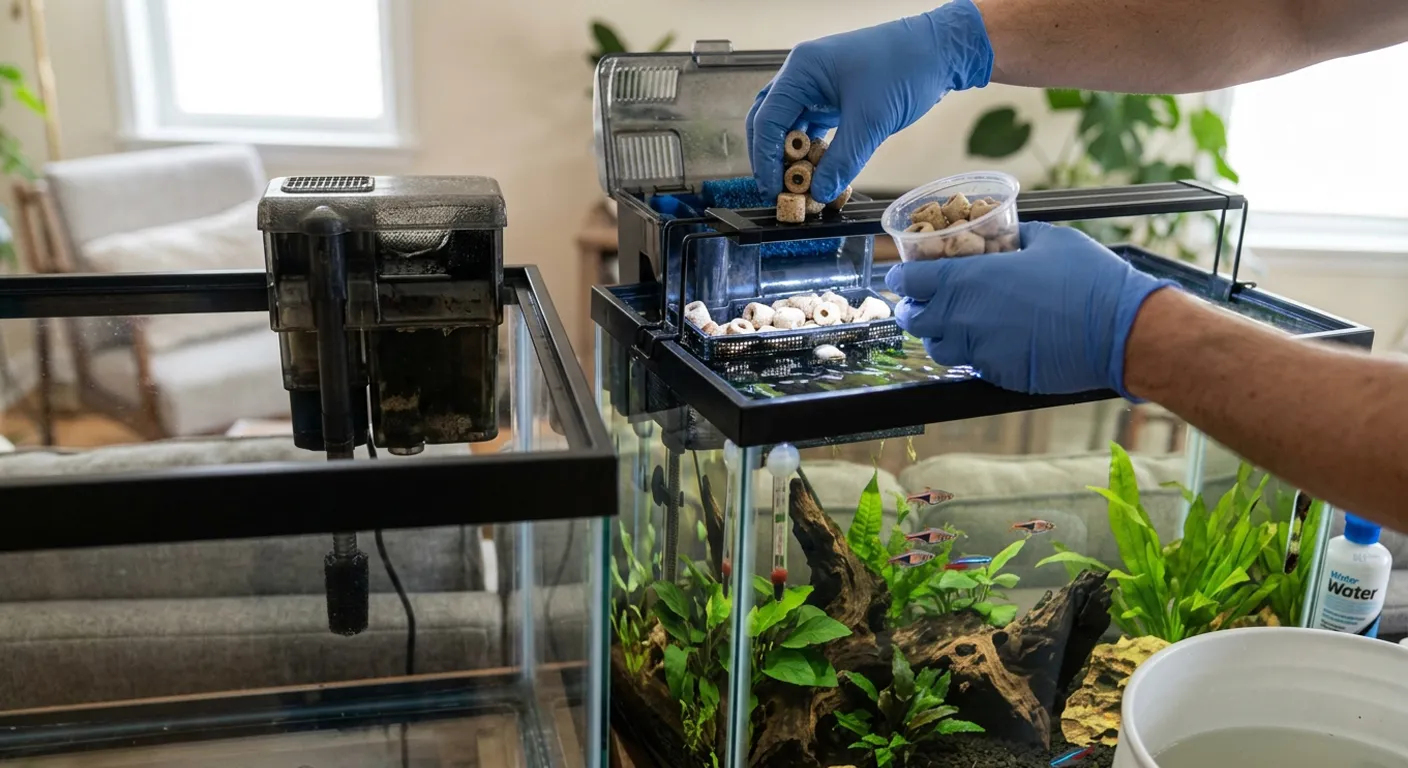
The Most Important Thing to Move: Filter Media
The filter sponge, ceramic rings, bio-media, and intake sponge matter far more than the old water. Beneficial bacteria settle mainly onoxygen-rich surfaces. Inside a filter is the richest of them. Follow these rules:
Keep media wet in old aquarium water at all times.
Never rinse it under untreated tap water, since chlorine and chloramine kill bacteria.
Do not let it dry, even briefly.
Move to a new filter as soon as possible.
If you switch filters, place the old media inside or beside the new one.
Replacing every piece of established media at once leaves the tank open to ammonia and nitrite spikes.
How Much Old Water Should You Put in the New Tank
You can reuse some clean old water, even most of it. Moving all 10 gallons is unnecessary. The new tank will still need roughly half its volume as fresh, conditioned water. A few ground rules:
Match the temperature as closely as practical, within a degree or two.
Leave behind water that is cloudy, high in nitrate, full of algae debris, or showing ammonia or nitrite.
Fish benefit more from stable, conditioned water and mature media than from every last gallon.
Avoid This Common Myth
Myth: Old aquarium water holds enough beneficial bacteria to instantly cycle a new tank.
Reality: Most useful bacteria live on filter media, substrate, plants, and décor, not freely in the water.
How to Upgrade From a 10 Gallon to a 20 Gallon Tank
Work in this order, and keep the fish out of the new tank until the final step.
Step 1: Set Up the New 20 Gallon Tank
Place the tank on its stand, away from direct sunlight and heat vents.
Rinse any new substrate with plain water until the runoff looks clear.
Install the heater, thermometer, lid, and light, but keep the heater unplugged until it is underwater.
Set the new filter in position without running it dry.
Arrange larger hardscape pieces before adding much water.
Step 2: Prepare Temporary Containers for Fish
Fill clean buckets with enough old tank water to cover the fish comfortably.
Add an air stone to each bucket and cover it loosely, since stressed fish jump.
Keep buckets away from drafts so the temperature does not drop.
Use separate buckets for fish that bully or nip each other.
Skip feeding on moving day, because waste fouls small volumes of water quickly.
Step 3: Protect the Biological Filter
Switch off the old filter and lift out the media.
Submerge all media in a bucket of old tank water right away.
If a sponge looks clogged, squeeze it gently in that same water.
Install the media once the new tank has enough water to run the filter.
Run the old filter beside the new one for a few weeks if space allows.
Step 4: Move Substrate, Plants, and Décor
Scoop healthy substrate into the new tank and leave thick sludge behind.
Swish dirty décor in old tank water with a soft brush, never soap.
Trim dead or rotting leaves, then replant with roots kept moist.
Skip any item that smells foul or looks decayed.
Place plants and hardscape before the tank fills so nothing shifts later.
Step 5: Add Conditioned Water and Match the Temperature
Pour clean old water in first, aiming it at a plate to spare the substrate.
Treat fresh tap water with conditioner, dosed for the volume you are adding.
Check the new water against the old with a thermometer, not your fingers.
Fill the tank, then start the filter and heater once the heater has sat underwater briefly.
Let everything run for 30 minutes to confirm flow, temperature, and a dry floor beneath the stand.
Step 6: Transfer Fish and Restart the Aquarium
Net fish gently and keep their time outdoors as short as possible.
Because the water is familiar and temperature-matched, a quick release usually works.
Move the shy or nervous fish first so they can claim hiding spots.
Keep the lights dim for the first day.
Offer a very small meal after 24 hours, not before.
What to Monitor After the Upgrade
The first one to two weeks matter, even when mature media made the trip. Bacteria need time to settle into a new filter and a larger volume of water.
Test Daily at First
Test ammonia, nitrite, nitrate, and temperature daily for the first week. Then test every two or three days in the second. In a stable, cycled aquarium, ammonia and nitrite should read 0 ppm. Any reading above zero calls for a 25 to 50 percent water change with conditioned water. Nitrate should stay below roughly 40 ppm, and lower is better.
Do Not Stock the New Tank Immediately
Extra water is not an invitation to buy more fish that same afternoon. Bacterial colonies grew to match your current fish. It needs time to adjust to the new filter and surfaces. Wait at least two to four weeks while readings stay at zero. Then add a few fish at a time, testing after each addition.
Common Mistakes When Upgrading to a 20 Gallon Tank
Replacing all old filter media at once
Rinsing media or décor under chlorinated tap water
Moving cloudy, dirty, or high nitrate water into the new tank
Ignoring the temperature gap between old and new water
Skipping the leak test
Adding more fish on transfer day
Letting media or plants dry out during the move
Using buckets that once held soap or chemicals
Conclusion
A safe upgrade comes down to preparation. Leak test the new tank early and protect the filter media. Move healthy plants and décor, use conditioned water, and keep testing afterward.
The biological filter is the one thing worth guarding. Keep mature media wet, match the water temperature, and leave behind unhealthy water and contaminated equipment. Reusing some old water is fine. It simply cannot replace the media. Be patient with stocking, and the larger tank will reward you.
FAQ
1. Can I use my 10 gallon filter on a 20 gallon tank?
Yes, for a while, if it still runs well. It usually moves too little water for 20 gallons. Run it beside a new filter, or transfer its media into a larger unit.
2. Do I need to cycle my 20 gallon tank if I move my old filter?
Usually not from scratch, since mature media carries most of the bacteria. Still, test daily, because ammonia or nitrite can appear if the media dried out.
3. Can I move all the old substrate?
Yes, if it is clean and healthy. Leave thick sludge behind, and add fresh substrate if the old amount no longer covers the larger floor.
4. When can I add more fish to the 20-gallon tank?
Wait two to four weeks, until ammonia and nitrite stay at 0 ppm. Then add a few fish at a time and retest after each addition.
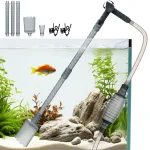
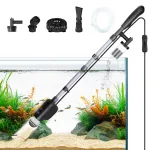
AQQA 5-in-1 Aquarium Gravel Cleaner Set For Removing...
Original price was: $35.59.$32.39Current price is: $32.39.


Add comment
You must be logged in to post a comment.