

So you started with this cute little 5-gallon setup, thinking you’re all set. But fast forward a few months, and you notice fish are getting bigger. You are adding more plants and decorations, and suddenly, everything looks way too crowded. That’s when most people realize they need to upgrade to a bigger tank. But here’s the thing nobody tells you upfront – you can’t just scoop your fish out and plop them into their new home.
I learned this lesson the hard way when I almost lost my favorite angelfish during my first transfer attempt. You’ve got to keep all that good bacteria alive, handle your plants without destroying them, and make sure your fish don’t go into shock from sudden water changes, as improper handling can even lead to the death of the fish. After a few tank upgrades and some trial and error, I’ve figured out the 4 steps that actually work:
Setting up your new aquarium
Preparing for the transfer
Acclimating and moving your fish
Post-transfer care and monitoring
Eager to know more? Then stick around because in this article we’ll discuss everything from the tools you need, the mistakes to avoid, and some tricks to make every easy. Read on to discover everything.
Important Considerations Before Transferring
Ready to make the move to a bigger tank? There are a few things you absolutely need to sort out first, or you’ll be dealing with stressed fish and potential disasters. Here’s what we’re talking about:
Getting That Beneficial Bacteria Going: Your new tank is basically sterile, which sounds good but is actually terrible for fish. You need those good bacteria colonies that eat up all the nasty ammonia and nitrites from fish waste. Skip this step, and your fish could face toxic spikes that’ll make them sick or worse.
Don’t Trash Your Plants: If you’ve got live plants, they’re more fragile than they look during moves. I always trim off any dead or dying leaves first, keep the roots damp while I’m working, and get them replanted fast. The longer they sit out, the more shocked they get.
Stock Up on the Right Stuff: Grab some dechlorinator, stress coat, and maybe some beneficial bacteria starter. These aren’t just marketing gimmicks – they actually help your fish handle the transition without freaking out.

Tools that Are Recommended
Here’s your shopping list. Don’t try anything without these essentials:
A big bucket: Not your cleaning bucket, obviously. Get one that’s fish-only for holding your crew temporarily, plus plants and decorations.
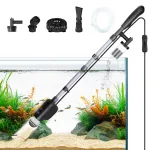
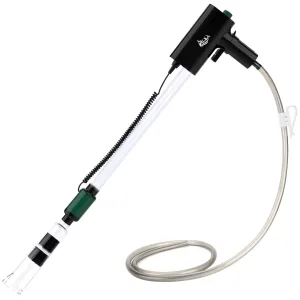
A decent siphon: You’ll be moving a lot of water around, and doing it cup by cup will drive you nuts. Get one that actually works.
A soft net: Skip the cheap ones that feel like sandpaper. Your fish are already stressed enough without getting scraped up.
Small air stone: If things take longer than expected (and they usually do), you need to keep oxygen flowing in that holding bucket.
Portable heater: Temperature swings will shock your fish faster than anything else. Keep things steady.
Lid hat fits tight: Fish get jumpy during moves. I learned this when my favorite neon decided to take a carpet tour.
Transfer Your Fish to the New Tank in 4 Steps
Now that you know everything important before transferring and have the tools, it’s time to make it happen. Follow the steps below carefully to avoid anything unfortunate.
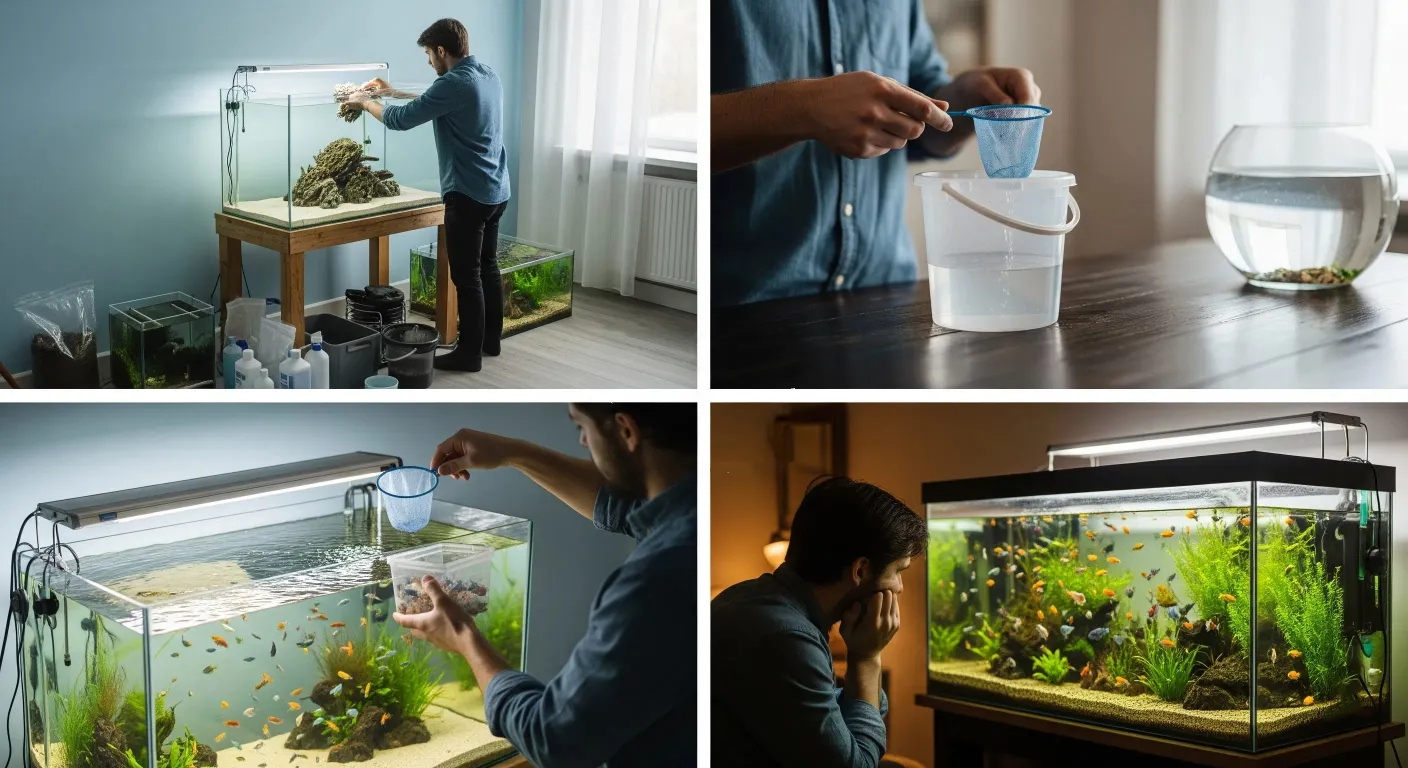
1. Setting up Your New Aquarium
Clean the new tank thoroughly with warm water only – never use soap or harsh cleaners. Set up your substrate, arrange decorations how you want them, and get plants in place. Trim any overly long plant roots before planting. Here’s the key move: transfer some filter media or bio balls from your old filter to the new one. This seeds it with beneficial bacteria instead of starting from scratch.
Install your filter, heater, and air pump. Let the tank cycle at least partially before moving fish – even a few days helps way more than zero cycling. Test water parameters before transfer day. Temperature, pH, and hardness should match your old tank closely, or fish will go into shock.
2. Prepare the Fish Transfer
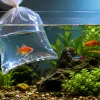
Start by draining about half the water from your old tank – leaving some familiar water keeps fish calmer during the whole process. When catching fish, use a net or container but don’t chase them around like crazy. That just stresses them out more.
Move fish in containers filled with their old tank water, and toss in an air stone if the move’s going to take more than a few minutes. Here’s something most people don’t think about – skip feeding for about 24 hours before moving day. Less food means less waste floating around during transport.
3. Transfer and Acclimate Your Fish
Float those fish containers in the new tank for about 15-30 minutes so temperatures even out. Then comes the patience part – drip acclimation. Slowly add tiny amounts of new tank water into their container so they can adjust to different water chemistry without shock.
Once they’re acclimated, gently release the fish into the tank. Don’t dump the old water in with them – you want to keep that stuff separate. Keep an eye on them for any weird behavior or stress signs right after the move.
4. Post-Transfer Care and Monitoring
Hold off on feeding for 24 hours after the move – this prevents digestive stress and keeps water quality stable while everything settles in. Your beneficial bacteria colony needs time to catch up with the bioload change, so test water daily for at least a week since ammonia and nitrite spikes are pretty common.
Ease your lighting and CO2 back to normal levels gradually instead of cranking everything up right away. This prevents algae blooms while your plants recover from the move. Watch your fish closely for any gasping, hanging around motionless, or weird swimming patterns. These signs are indicators that your water parameters are off and need fixing fast.
Conclusion
Switching to a bigger tank feels like a hurdle, but imagine your fish with all that extra room. It suddenly feels worth it. Yes, there are things like cycling the new setup, moving everything carefully, and watching water parameters for the first week. But once you see your fish actually settles in, you’ll be smiling at your new tank.
Just remember a few things like: keep that beneficial bacteria alive during the switch, don’t beat up your plants while moving them, float those fish properly before releasing them, and test your water religiously afterward. Something looks weird with your fish’s behavior? Don’t just cross your fingers and hope it works out. Jump on some aquarium forums or swing by your local fish store – most people are happy to help troubleshoot.
Every tank upgrade teaches you something new about keeping fish. Take it slow, don’t rush through steps just to get it over with, and before you know it, your fish will be loving their bigger space.
FAQ
1. Why did my fish die after moving to the new tank?
Usually ammonia spikes from poor cycling, temperature shock, or rushing the acclimation. Cycle properly and float them longer next time.
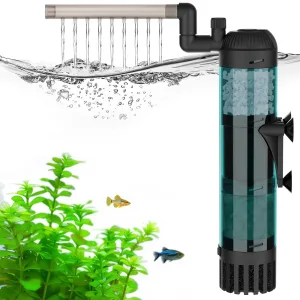
2. My filter in the small tank is old, should I buy a new and bigger one?
Yes, you should buy a new, larger filter.
But when you get the new filter, do not throw the old one away immediately. After cleaning the old filter, run both two together for a few weeks to allow the beneficial bacteria from the old filter to colonize the new one.
AQQA 5-in-1 Aquarium Gravel Cleaner Set For Removing...
Original price was: $35.59.$32.39Current price is: $32.39.


Add comment
You must be logged in to post a comment.