
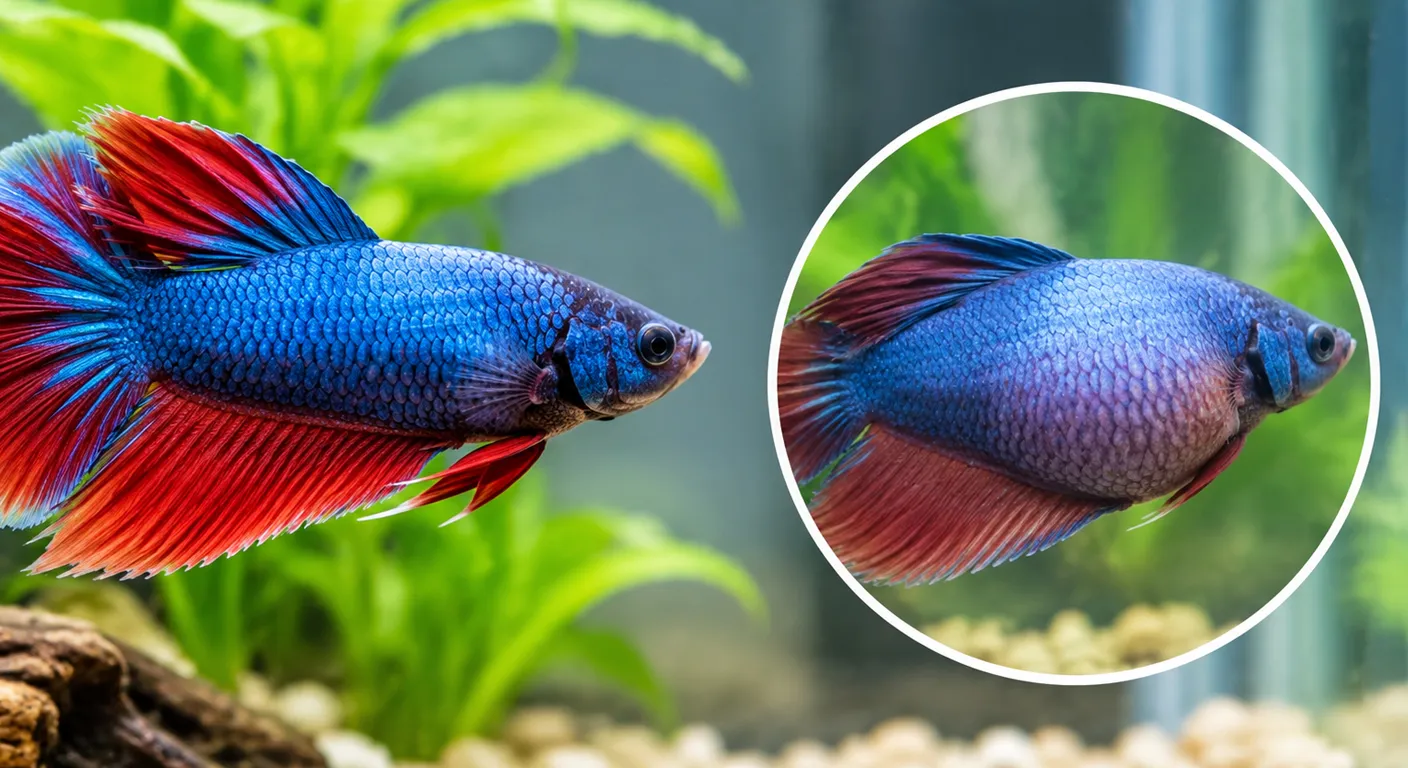
Yes, a betta can become overweight. A round belly does not automatically mean extra body fat, though. Changes in body shape can come from several causes, and some of them are serious. Before you cut back on food, look at the whole fish. Check its overall appearance, its behavior, and its feeding history together.
This guide covers how to judge body shape, how to separate weight gain from bloating or illness, and how to review feeding and tank conditions. It also explains simple monitoring steps, ways to prevent future problems, and when to call an aquatic veterinarian.
How Can You Tell If Your Betta Is Overweight
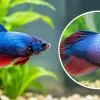
Start with the fish’s overall shape rather than its belly alone. A healthy adult betta has a slim body that tapers smoothly from the head to the tail. The belly should curve gently, not bulge. Most keepers notice the change first around the middle of the body, but the back half tells you more about weight.
Look at Your Betta From Above
Watch the fish from the top of the tank without netting it or lifting it out. Look at the outline behind the head and the way the body narrows toward the tail. In a fish at a healthy weight, the widest point sits in the front half. If the back half stays full and no longer tapers, weight gain becomes more likely.
Check the fish at different moments of the day. Bettas often rest near the surface or on the bottom, and their posture changes how wide they look. A fish that looks round while hovering in one spot may look normal when it swims freely.
A single round angle proves nothing. Posture and a recent meal can both change how the body looks, so look for a pattern across several days.
Compare Its Shape Over Time
Photographs work better than memory here. Take pictures from the same angle, in the same light, and at the same point in the feeding routine. Use the same tank background and camera distance too, since small changes in distance can make a fish look wider. Keep a short log beside your photos with these details:
The date you first noticed the change.
Whether it appeared suddenly or built up over weeks.
Whether it persists or comes and goes.
Any shift in appetite, swimming, or resting habits.
A slow change over several weeks points toward weight gain. A sudden swelling over a few days points somewhere else. Write down the water conditions from the same week too, since poor water quality can change how a fish looks and behaves.
Consider the Whole Fish
A round look and an overweight fish are not the same conclusion. A betta can look full after a large meal, or because its body is holding fluid. Put three things together before deciding: body shape, feeding history, and behavior.
An active, hungry fish with a slimmer back half is likely carrying extra weight. A lethargic fish that hides and eats little, with a swollen belly, needs a different look. The first case points toward diet. The second case may point toward illness.
Is Your Betta Fat or Bloated
Use the following as a way to organize your observations. It is not a diagnostic chart, because excess body condition and abnormal swelling need different responses.
Gradual widening of the body with normal activity: usually points toward excess condition. Review portions first.
A visibly enlarged belly with normal activity: may come from a full gut or constipation. Watch it for several days and check the feeding record.
Raised scales that stand out like pine cone petals: a warning sign of fluid buildup. Contact a veterinarian promptly.
Swelling with reduced appetite or lethargy: more worrying than weight gain alone. Seek professional advice soon.
What Does Dropsy Mean
Dropsy describes a set of signs rather than one disease. It refers to fluid building up in the body, which swells the abdomen. The fluid can lift the scales away from the skin, creating the pine cone look. The cause may be an infection or organ failure. That kind of problem usually needs treatment a home keeper cannot provide.
Dropsy is also why raised scales matter so much. A fish with only a rounder belly may simply need smaller portions. A fish with raised scales needs a veterinary look, and waiting to see what happens can cost it valuable time.
A guide written and reviewed by a veterinarian is the best next read if you see raised scales.
What Can Contribute to an Overweight Betta
Most overweight bettas are overfed, but not every round fish has been. Keep that in mind as you review the routine. Many of the factors below add up slowly, which is why they often go unnoticed until the fish looks clearly different.
Feeding More Than the Fish Needs
Bettas have small stomachs and need very little food. The total daily amount matters more than any single feeding. Add up everything, including the regular pellets, the extra pinch after dinner, and the weekend treat.
Shared households cause trouble. One person feeds in the morning, another at night, and a child drops in extra pellets after school. Each person gives a small amount, but together they may double what the fish needs. Keep a shared feeding record on the fridge or in a phone note. Treat it as a team task, not a blame game.
Food Choices and Frequent Treats
Record these details about the current food:
The product name and brand.
The pellet size or food format.
The amount offered at each feeding.
The treat type and how often it appears.
Treats need special attention. Frozen bloodworms and freeze-dried foods are rich in protein and fat. They work as occasional rewards, but daily treats often become a major part of the problem. Some freeze-dried foods also expand after they reach the water, so a small pinch can feel like more food to the fish than it looks.
Tank Conditions That Need Attention
A poorly kept tank can make a fish look unwell, which makes its body shape harder to read. Keep the water between 78 and 80 degrees Fahrenheit. Ammonia and nitrite should read zero. Nitrate should stay low, and a steady routine of partial water changes helps keep it there.
Do not assume a quiet betta is obese, since many bettas rest a lot. A water change will not produce weight loss on its own either. Portion control remains the main lever you have. Water quality supports the fish’s health, but it does not replace a good feeding routine.
What Should You Do If Your Betta Appears Overweight
Use this plan only after you have ruled out swelling or illness. If you remain unsure, book a professional assessment first. Guessing wrong can make a sick fish worse.
Step 1: Record the Current Feeding Routine
Track the following over three or four days:
What food goes in, and how much at each feeding.
How often the fish eats, and whether treats are included.
Whether anyone else feeds the fish.
Whether food is left uneaten.
You cannot fix a feeding problem you have not measured. The record often reveals the cause on its own, sometimes in just a few days.
Step 2: Review Portions and Food Suitability
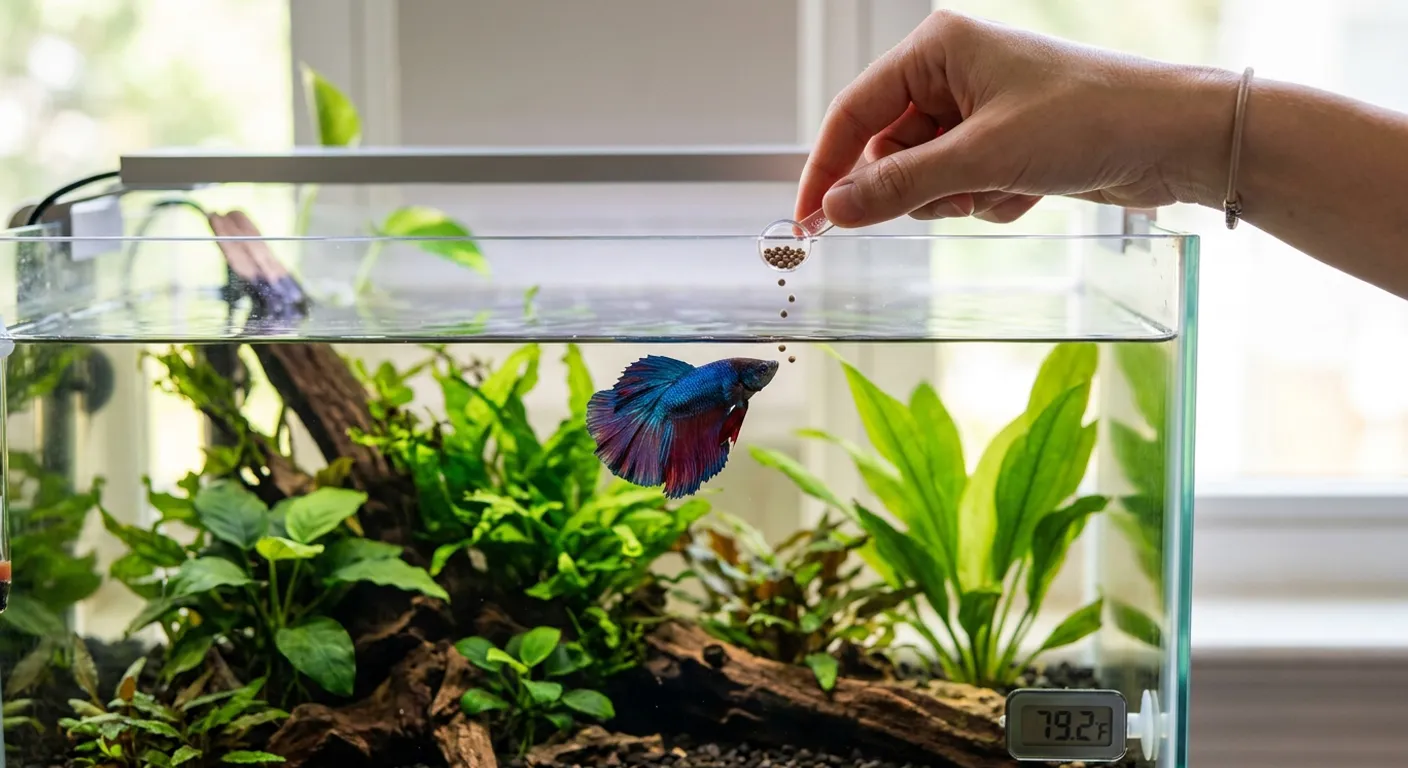
Reduce the daily total to a small, measured amount. A common starting point is two to four pellets once a day, though the right amount depends on the food and the fish. Choose a food the fish can take in one bite. Offer it in the same spot each time so you can see what the fish ignores.
Remove leftovers within a couple of minutes, since uneaten food fouls the water. Use a small cup or a dedicated measuring spoon so each feeding looks the same. Guessing by eye leads to inconsistent portions, especially when several people share the job.
Some keepers add one fasting day each week. Check with an aquatic veterinarian before doing this, because fasting does not suit every betta.
Step 3: Check Water Quality and Tank Conditions
Test the water on a schedule and log the results. Keep the temperature steady and do partial water changes regularly. A stable tank makes body shape changes easier to spot, because you are not also trying to read signs of stress or poor water.
Step 4: Monitor Consistently
Take the same photographs every week, at the same time of day. If the body narrows gradually and the fish stays active, you are on track. Expect slow progress rather than fast results.
If swelling grows or new signs appear, stop the plan and contact a veterinarian. Continuing a diet change while the fish is declining can hide the real problem.
Common Mistakes to Avoid
Abnormal swelling has several possible causes, so one generic fat fish treatment cannot safely fit every case. Avoid these errors:
Starving the fish without a plan.
Assuming every swollen belly comes from overfeeding.
Adding store-bought medication without knowing the problem.
Changing food, portions, and water all at once.
Skipping the water test because the fish looks fine.
Change one thing at a time so you can tell what helped. If you change everything together, you will not know which step made the difference.
When Should You Contact an Aquatic Veterinarian
Reach out early rather than late. Call a professional if you notice any of these signs:
Sudden, persistent, or worsening swelling.
Raised scales.
Reduced appetite or strong lethargy.
Trouble staying upright, or floating and sinking when it should swim normally.
Uncertainty about whether the fish is overweight or ill.
What Information Should You Provide
Gather these before the appointment:
Clear photographs or a short video from above and from the side.
A timeline of the change.
The food brand, portion size, and feeding frequency.
Tank size, measured temperature, and recent water test results.
Any recent changes to the tank or routine.
A clear timeline helps the vet separate a feeding problem from an infection much faster. Bring the feeding record too, since it often explains more than the photos do.
How to Help Prevent Future Weight Problems
Prevention comes from steady routines, not from chasing a slim look in a photo. Set a feeding schedule and keep it. Measure food rather than guessing. Keep treats occasional, test the water, and check body shape weekly.
A healthy betta shows a clear taper, steady energy, and regular interest in food. Small habits like these catch problems while small adjustments still work. Waiting until the belly looks obviously full usually means the change has been building for weeks.
Share the routine with everyone who feeds the fish. A single written schedule on the tank stand prevents most of the extra feedings that cause trouble. Review it every few months, especially after holidays or when someone new takes over the care.
Conclusion
A betta’s belly shape alone cannot confirm whether the fish is overweight. Look at overall body condition, track changes over time, and consider feeding habits and tank conditions together. Unexplained swelling or other signs of illness may need professional care.
Careful observation makes the difference. Compare shape across weeks, watch appetite and swimming, and avoid assuming every enlarged belly comes from overfeeding.
Keep portions consistent, monitor water quality, and write down anything unusual. Those habits will tell you more than a single look at a round fish ever could.
AQQA Automatic Fish Feeder, 12H/24H/48H Timer, 110ml Capacity,...
Original price was: $13.19.$12.99Current price is: $12.99.
AQQA 200ML Auto Fish Feeder, Quiet Smart Timer...
Original price was: $22.39.$18.19Current price is: $18.19.




Add comment
You must be logged in to post a comment.