

Picture this. You walk into your living room after a long day. The lights are low. And right there in the corner, a glowing tank full of colorful fish drifts peacefully in front of you. Instant calm, right?
That’s exactly what a good aquarium can do for your home and your stress levels.
But here’s the thing. Starting your first tank can feel overwhelming. There are filters, heaters, substrates, cycling schedules, and a hundred other things nobody warned you about. That’s where an aquarium fish tank starter set comes in.
In this guide, we will walk you through everything. What to look for, which kits are worth your money in 2026, and how to set everything up without pulling your hair out. Whether you’re buying for yourself or setting one up with the kids, then you’re in the right place.
Table of Content
ToggleWhat Is an Aquarium Fish Tank Starter Set
Before you spend a single dollar, it’s worth knowing exactly what you’re buying — and why a starter set beats buying everything piece by piece.
A fish tank starter set is an all‑in‑one bundle that packages the essential equipment a beginner needs to get a tank running, such as the tank, filter, light, and often basic water treatments and accessories. It’s designed so the components work together, sparing you from piecing everything out and guessing about compatibility as a first‑time aquarist.
It’s the shortcut that actually makes sense.
These kits are designed for beginners. The equipment is chosen to work together. And most come with a manual that walks you through setup from scratch.
What’s Included in a Starter Set
You’d be surprised how much (and how little) comes in the box — knowing this ahead of time saves you a frustrating trip back to the pet store.
Most starter sets include a tank (often 5–55 gallons), filter, LED lighting, hood or lid, water conditioner, starter bacteria, and small accessories like a net and thermometer, along with a basic instruction manual. Some kits add extras such as air pumps, decorative elements, or built‑in temperature displays, especially in more feature‑rich nano tanks.
What’s Usually NOT Included
Starter kits typically do not include live fish, fish food, a stand, live or artificial plants, or a comprehensive liquid water test kit. Many budget and mid‑range kits also exclude a heater, so you must buy one separately if you plan to keep tropical fish.
How to Choose the Right Aquarium Starter Set
There are a lot of kits out there, and honestly, not all of them are worth it. Here’s exactly what to look for so you don’t end up with buyer’s remorse.
Tank Size: What’s Best for Beginners?
Go with 10 to 20 gallons.
A 10–20 gallon tank is the most forgiving starting point, offering more stable water parameters than tiny 1–5 gallon setups while still being easy to place and maintain. Extremely small tanks (3–5 gallons) demand stricter maintenance and stocking discipline and are best treated as “nano” projects rather than general beginner defaults.
Don’t let anyone talk you into a 1-gallon “betta bowl” either. Your fish will thank you.
Glass vs. Acrylic: Which Is Better?
Both glass and acrylic materials have their fans. Here’s a simple breakdown:
Glass: More scratch‑resistant, stays clear over time, and is usually cheaper but heavier and more brittle if hit hard.
Acrylic: Lighter and more impact‑resistant but scratches easily and can yellow or haze over many years while often costing more upfront.
Feature | Glass | Acrylic |
Scratch resistance | Excellent | Scratches easily |
Weight | Heavy | Lightweight |
Durability | Very sturdy | Shatter-resistant |
Clarity over time | Stays clear | Can yellow with age |
Price | Generally cheaper | Generally pricier |
For most beginners, glass is the safer bet. It’s more affordable and holds up better to accidental scrapes during cleaning.
Filtration: What to Look For?
A good filter is non-negotiable. It keeps your water clean, your fish healthy, and your tank from smelling like a swamp.
For starter sets, most kits include a hang-on-back (HOB) filter. These are simple, effective, and easy to maintain. That’s exactly what you want as a beginner.
Look for a filter that provides mechanical, biological, and (optionally) chemical filtration and is rated for at least your tank volume, ideally a bit above. Simple hang‑on‑back or compact internal filters included in many kits work, but cartridge‑style units benefit from added sponge or biomedia so you aren’t throwing away all your beneficial bacteria when you replace cartridges.
Heater: Do You Actually Need One?
It depends on your fish.
Tropical fish like Bettas and Neon Tetras need water between 75–80°F. Without a heater, they get stressed and sick. So yes, if you’re going tropical, you need a heater.
Goldfish and White Cloud Minnows are different. They prefer cooler water. No heater required.
Check what fish you’re planning to keep before buying your kit. It’ll help narrow your options fast.
Budget Breakdown
You don’t have to spend a fortune to start well. Here’s what your money gets you at each level:
Budget Tier | Price Range | What You Get |
Budget | $30 – $60 | Basic tank, simple filter, minimal extras |
Mid-Range | $60 – $120 | Better filtration, LED lighting, heater included |
Premium | $120+ | Quality build, advanced lighting, full equipment set |
Note: If you can stretch to mid-range, do it. The difference in equipment quality is noticeable — and it saves you from upgrading everything six months later.
Top 5 Best Aquarium Fish Tank Starter Sets in 2026
Here’s the part you’ve been waiting for. The honest, no-fluff breakdown of the best starter kits you can buy right now.
Kit | Size range | Best for | Key drawback |
Aqueon Starter Kit | 10–55 galchewy+1 | First 10–20gal community tank | Basic cartridge filter, so‑so hoodchewy+2 |
Tetra ColorFusion | ~3 gal | Kid’s desk tank, single betta | Small, unstable volume, very limited stocking |
AQQA 3.7 Gal | 3.7 gal | Stylish betta/shrimp desktop | Non‑removable lid, tiny volume |
Marina LED Kit | 10–20 gal | Beginner community tanks | Cartridge filter, modest light for plants |
Fluval Flex 32.5 | 32.5 galfluvalaquatics+1 | Premium “showpiece” freshwater tank | Higher cost, needs stand and heaterfluvalaquatics+1 |
1. Aqueon Aquarium Starter Kit
The Aqueon starter kits are straightforward glass setups that give beginners a sensible first tank in common sizes like 10 or 20 gallons. They usually include a glass tank, LED hood, QuietFlow filter, water conditioner sample, and some basic accessories, making them a dependable all‑rounder.
Best for: Beginners who want a dependable all-rounder without overspending.
✅ Pros: Great filtration, multiple sizes, solid LED lighting
❌ Cons: Heater not always included in smaller kits
2. Tetra ColorFusion Starter Aquarium
Don’t let the low price fool you. The Tetra ColorFusion 3‑gallon kit is a small half‑moon tank that pairs an internal filter and air pump with a color‑changing LED bubbler, making it a fun, eye‑catching option. It looks great on a desk or nightstand but its size limits you to a single small fish and requires careful maintenance.
Best for: Tight budgets, desk setups, or a kid’s first tank.
✅ Pros: Affordable, fun LED colors, compact
❌ Cons: Small size limits fish options; no heater included
3. AQQA 3.7 Gallon Aquarium Starter Kit
If you’re looking for a compact tank that does everything straight out of the box, AQQA deserves a serious look. This 3.7-gallon glass kit is built for desktops, bedrooms, and office spaces and it’s packed with features you wouldn’t expect at this price point.
The AQQA 3.7‑gallon kit is a sleek, ultra‑clear glass nano tank that hides a 3‑in‑1 filter and multi‑color LED system in one integrated design. It adds touches like a digital temperature display and an aromatherapy compartment, turning the tank into a compact, spa‑like feature for a desk or bedside table.
One honest heads-up: the lid cannot be removed, which makes deep cleaning and planting a bit tricky. It’s also worth noting the temperature display monitors water temp but does not heat it, so you’ll need to add a separate heater for tropical fish.
Best for: Office desks, bedroom setups, Betta fish keepers, and anyone who wants a beautiful all-in-one starter without a big footprint.
✅ Pros: Stunning design, ultra-clear glass, 7-color LED, built-in 3-in-1 filtration, aromatherapy feature
❌ Cons: Small 3.7-gallon capacity limits fish options; lid is non-removable; heater not included
4. Marina LED Aquarium Kit
Marina LED kits, especially the 10‑gallon version, have a strong reputation as “simple but solid” beginner choices. They usually include a glass tank, a clip‑on Slim filter, a low‑profile LED hood, and basic water‑care samples and accessories.
Best for: Someone who wants a straightforward 10–20 gallon freshwater community tank and doesn’t mind buying a heater separately.
Best for: Beginners planning a tropical freshwater community.
✅ Pros: Great value, quiet filter, well-designed hood
❌ Cons: Heater sold separately
5. Fluval Flex 32.5 Gallon
The Fluval Flex 32.5 is a larger, curved‑front all‑in‑one system that hides its multi‑stage filtration in a rear compartment and uses a programmable LED light you can tune for brightness and color. It’s designed as a display‑worthy freshwater tank you can build a full community around, while still keeping the gear mostly out of sight.
Best for: Hobbyists who want a premium setup from the start.
✅ Pros: Beautiful design, powerful filtration, excellent lighting
❌ Cons: Higher price; no heater included
How to Set Up Your Aquarium Fish Tank Starter Set
Setting up a tank for the first time feels daunting — but follow these steps in order and you’ll wonder why you ever stressed about it.
Here’s your step-by-step setup blueprint:
1. Choose the right spot. Away from windows. Away from heating vents. Level surface only. Close to an outlet.
2. Rinse everything. Tank, gravel, decorations. All of it. No soap. Ever. Just water.
3. Add your substrate. Pour in gravel or sand. Slope it slightly toward the back for a natural look.
4. Set up your equipment. Install filter, heater, thermometer, and lighting per the manual.
5. Create drip loops. Let electrical cords hang below the outlet before plugging in. This prevents water from traveling up the cord.
6. Fill with dechlorinated water. Add water conditioner first, then fill slowly to avoid disturbing your substrate.
7. Power everything on. Check that all equipment is running correctly.
8. Start the nitrogen cycle. Do NOT add fish yet. This step is everything.
The Nitrogen Cycle Explained for Beginners
A cycled tank has enough bacteria to handle that process continuously. An uncycled tank does not — and fish added too early will suffer for it.
Expect the process to take 3 to 6 weeks naturally.
How to Speed Up the Nitrogen Cycle
Don’t want to wait six weeks? Fair enough. Here’s how to fast-track it:
Add bottled bacteria (most starter kits include some)
Use seeded filter media from an already-established tank
Add live plants — they absorb ammonia directly and encourage bacterial growth
Test your water every few days during this period. When ammonia and nitrite both read zero, you’re ready for fish.
Common Beginner Mistakes to Avoid
Every beginner makes a few of these — but knowing them in advance means you don’t have to learn the hard way.
Adding fish before the cycle is complete.
Putting too many fish in at once, overwhelming the new biofilter.
Overfeeding and letting food sit on the bottom, where it rots and spikes ammonia.
Relying on guesswork instead of using a liquid test kit.
Washing all filter media and gravel thoroughly at the same time, which wipes out beneficial bacteria.
Skipping regular weekly partial water changes (about 20–30% for most beginner tanks).
Conclusion
Starting your first aquarium doesn’t have to be stressful. The right starter set gives you a solid foundation. A little patience during the cycling stage saves you a lot of frustration later. And choosing the right fish for your tank size makes everything more enjoyable from day one.
The hobby rewards consistency. Show up, do your weekly water changes, keep an eye on your fish and you’ll be amazed at what a thriving, peaceful tank can become.
You’ve got this. And honestly? That first time you sit down in front of a fully cycled, fully stocked tank. It’s going to be worth every bit of effort.
Now go pick your starter set. Your fish are waiting.
FAQ
1. How much does an aquarium fish tank starter set cost?
Budget kits start around $30–$60. Mid-range kits run $60–$120. Premium options go $120 and above. Most beginners are well-served by a mid-range kit.
What size tank is best for a beginner?
10 to 20 gallons is the sweet spot. Large enough to stay stable, small enough to manage comfortably.
2. How long before I can add fish to a new tank? After a full nitrogen cycle — typically 3 to 6 weeks. You can speed this up with bottled bacteria.
3. Do I need a heater in my aquarium starter kit?
Only if you’re keeping tropical fish. Goldfish and other coldwater species don’t need one.
4. What’s the easiest fish to keep for beginners?
Guppies, Zebra Danios, and Platies are among the hardiest and most forgiving species for new aquarists.
5. How often should I change aquarium water?
A 25% water change every week is the standard recommendation for most freshwater tanks.
6. Can I use tap water in my fish tank?
Yes. But always treat it with a water conditioner first to remove chlorine and chloramines.
Related Reading
Related Products For Your Reference
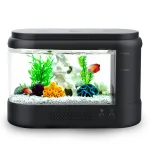
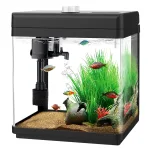
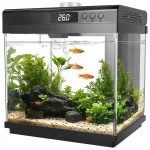
3.7 Gal Aquarium Kit: Filter, 10-Color Light, Self-Cleaning,...

Add comment
You must be logged in to post a comment.