

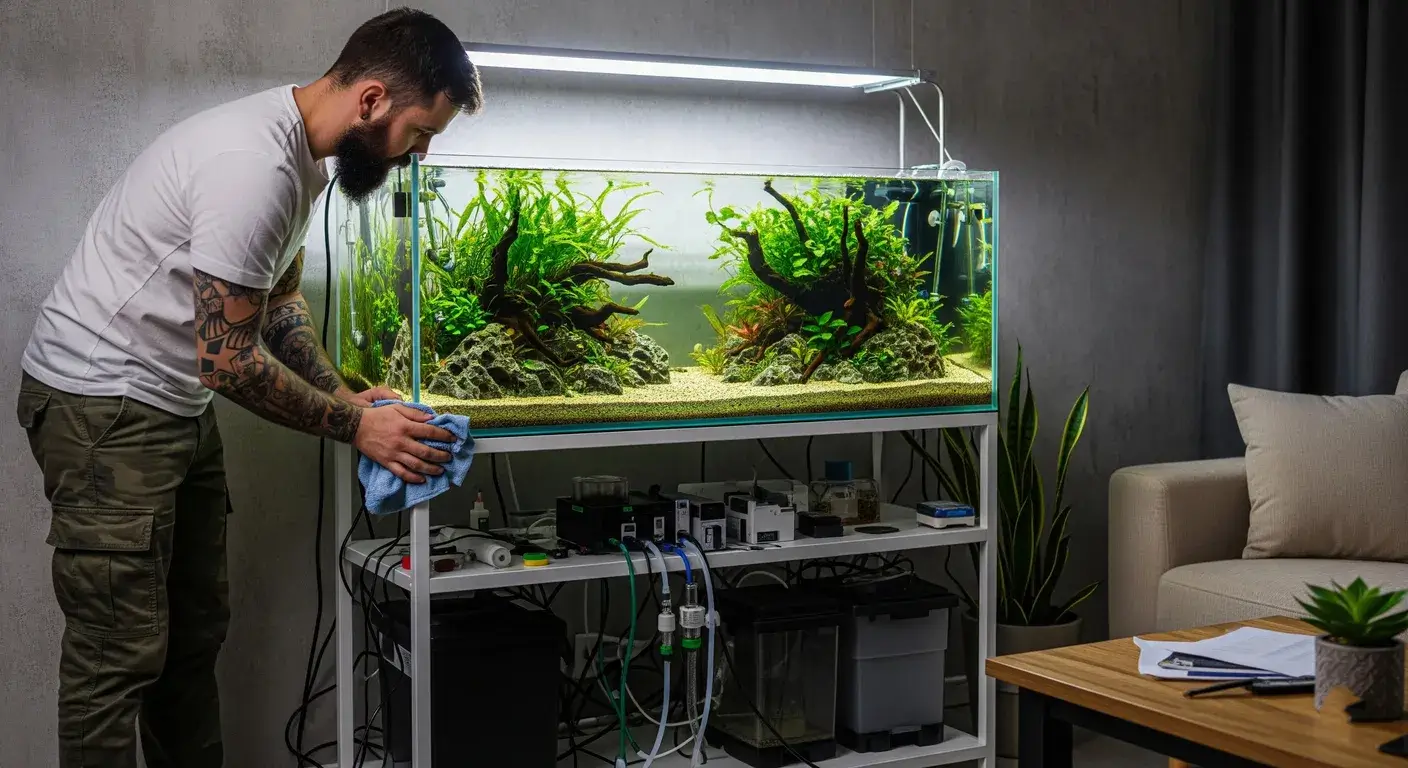
So when I first got into fishkeeping, I thought my old TV stand would work just fine for my new tank. Seemed logical enough: it was sturdy, looked good, and hey, it supported my heavy television for years without any issues. But after digging deeper into this, I got to know that not all the furniture at our home is best to carry the weight and fulfill fish tank requirements.
That’s when I learned the importance of getting a proper fish tank stand. Your stand isn’t just there to hold things up. It’s essential for safety, structure, and making maintenance way easier. Here’s what you need to focus on when picking one:
Weight & size capacity
Materials
Structural stability
Moisture resistance
Design functionality
Keep reading because in this article, we’ll discuss everything about a fish tank stand. From how to choose, build, and maintain, we’ll cover everything. Read on to discover everything in details.
Why You Need a Fish Tank Stand
A proper fish tank stand isn’t just another piece of furniture. It’s basically essential equipment that keeps your tank healthy and your space safe. Trust me, once you get into bigger tanks, that regular table or dresser just won’t cut it anymore. Here’s why a dedicated aquarium stand makes all the difference:
Way safer: These things are actually built to handle a fully loaded tank without giving out on you.
Better balance: They spread all that weight evenly instead of putting stress on just a few spots.
Actually practical: Gets your tank up to eye level so you can enjoy it, plus gives you storage space underneath for all your gear.
What You Should Prepare Before Choosing the Stand
Before you start shopping around, you’ll want to get a few things figured out first. Having this stuff sorted beforehand will save you a ton of headaches later and make sure you end up with something that actually works for your setup.
Get to know your tank: Measure your aquarium – length, width, height – and figure out how many gallons it holds. Here’s the kicker, though: a full tank weighs way more than you think. We’re talking water, gravel, decorations, plus the tank itself. That “small” 20-gallon tank? It’s pushing over 200 pounds when it’s all set up.
Scout your spot: Pick out exactly where this thing is going and make sure there’s enough room to actually work around it. If you’re going big, you might want to check if your floor can handle all that weight – especially if you’re upstairs or in an older place.
Know what you want to spend: These stands are all over the map price-wise, depending on what they’re made of and how fancy they get. Figure out your budget now, and think about whether you’ll need any extra help getting it set up.
5 Key Factors When Choosing a Fish Tank Stand
Now that you know the importance of a fish tank, let’s discuss how to actually choose the right one. We’ve listed five factors below to help you make the right choice.

1. Weight & Size Capacity
If you’re new to this, then you should know that fish tanks can often get very heavy. So first thing first, you need to consider the weight and account for everything: water, decorations, and the tank itself. View the table below to understand better:
| Tank Size | Dimensions (Inches) | Estimated Weight (Full) | Recommended Stand Type |
| 5 Gallons | 16 x 8 x 10 | ~60 lbs | Small wood/metal shelf |
| 10 Gallons | 20 x 10 x 12 | ~110 lbs | Sturdy wooden/metal stand |
| 20 Gallons | 24 x 12 x 16 | ~225 lbs | Reinforced aquarium stand |
| 30 Gallons | 36 x 12 x 16 | ~350 lbs | Heavy-duty aquarium stand |
| 55 Gallons | 48 x 13 x 20 | ~625 lbs | Steel-framed or hardwood |
| 75+ Gallons | Varies | 800+ lbs | Custom or professional stand |
2. Materials and Build Quality
What your stand is made of can make or break your whole setup. You need something that won’t buckle under all that weight, plus it’s got to handle the humidity and splashes that come with the territory. Here’s what’s out there:
Solid wood: Looks great and lasts forever, but man, it’s pricey. If you’ve got the budget, though, it’s worth every penny.
Metal (steel usually): Tough as nails and couldn’t care less about getting wet. Perfect for heavy tanks or if you dig that industrial vibe.
MDF or particleboard: Won’t break the bank and can look decent enough, but make sure it’s got some kind of waterproof coating or you’ll be shopping for a new one real quick.
Think about how messy you get during water changes because some of us are splashier than others.
3. Structural Stability
Now here’s where a lot of people mess up – they get hung up on materials and forget about the actual design. I’ve seen solid wood stands that wobble like crazy because they’re built wrong. Your stand has to sit flat and level, period. For bigger tanks, look for center supports or extra bracing. Trust me on this one, those long tanks will start bowing in the middle if there’s nothing supporting them properly.
Dealing with wonky floors? Been there. Grab some leveling mats or wooden shims to get things stable. If you’re talking about a massive tank, especially upstairs or in an older place, you might want to get someone to check if your floor can handle it before you end up in your neighbor’s living room.
4. Moisture Protection and Maintenance
Fish tanks and water everywhere just come with the territory. No matter how careful you think you are, stuff’s going to get wet. That’s why you need a stand that can actually handle moisture without falling apart on you. Here are some tips for this:
Skip anything that’s just plain wood with no protection – it’ll puff up and rot faster than you’d believe
If your stand has storage underneath, make sure it’s got some ventilation going on. Otherwise, you’re just creating a perfect little mold factory down there
Get something you can actually wipe down easily, because trust me, you’ll be doing it a lot
Some learn this one the hard way, when my first stand started getting all swollen and gross around the bottom. But not a fun discovery during tank maintenance day.
5. Aesthetics and Functionality
Your tank is probably going to be the main attraction in whatever room you put it in, so the stand better not make it look terrible. You want something that actually fits your space and works with how you do things. Here’s what to think about:
Open shelves or closed cabinets: Cabinets are great if you hate looking at all your fish stuff, but open shelves make it way easier to grab what you need quickly
Dealing with all those cables: Some stands have little holes or channels built in to keep your wires from looking like a complete disaster
Can you actually reach everything: Make sure you can get to the back of your tank or underneath without having to move furniture around
Don’t feel like you have to pick ugly just because it’s practical. There are plenty of stands out there that look good and still do their job. Your tank setup should make you happy to look at, not make you wish you could hide it somewhere.
And if you would like to have some references, check here to get one.
More Tips for Stand Longevity
Beyond all the main stuff we just talked about, there are some simple things you can do to keep your stand in good shape for years. Nothing fancy, just basic habits that’ll save you headaches down the road:
Give it a quick look every few months: Check for any wobbling, loose screws, or weird wear spots. Way easier to fix small problems before they turn into big ones
Clean up spills right away: Water sitting around is your stand’s worst enemy. Just grab a towel and wipe it up – takes two seconds
Maybe keep track of when you check things: I know it sounds nerdy, but jotting down when you last looked things over helps you remember to actually do it
Get help with the big stuff: If you’re going massive or custom, talk to someone who knows what they’re doing. Better safe than sorry when we’re talking serious weight
These aren’t very time-consuming, but they’ll definitely help your stand stick around longer without giving you problems.
Conclusion
Most fishkeepers often wish they could go back and tell their beginner self all that we covered in this article. They make costly mistakes before they realize. Picking the right stand isn’t just about finding something that looks decent – it’s literally what keeps your entire setup from becoming a disaster.
Those five things we talked about including: weight capacity, build quality, structural stability, moisture protection, and functionality. They’re not just nice-to-haves. Get any of them wrong, and you could be dealing with a flooded room or worse.
Whether you’re setting up your first tank or finally ditching that rickety old dresser you’ve been using, take your time with this decision. Your fish (and your floors) will thank you for it. And if you’ve got war stories or tricks that saved your butt, definitely share them with other people in the hobby. Trust me, we’ve all been the person staring at a wobbling tank wondering what we got ourselves into.
We AQQA offer aquarium stand and for you to learn more about it, just download the manual.
FAQ
1. I got a half moon aquarium stand, is it stable enough to support the weight of a full aquarium?
Yes, a properly designed half-moon aquarium stand is stable enough to support the weight of a full aquarium.
2. I have a bowl-shaped fish tank, what kind of stand is suitable for me?
Pedestal-style Stands: These stands are specifically designed with a flat, circular top to perfectly cradle the base of a fishbowl.
Table-style Stands: Any sturdy table or cabinet with a flat, level surface can serve as a stand for a fishbowl.
3. Is a corner stand as stable and weight-bearing as a regular stand?
Yes, a properly built corner stand is just as stable and strong as a regular stand.





Add comment
You must be logged in to post a comment.