

First-time setting up of an aquarium is a thrilling experience in the life of an aquarium keeper. Once a beginner, you will soon be tempted to introduce different kinds of colorful fish to your tank. But fish do not always get along, so it becomes necessary to pick the right species to bring in harmony. Community tanks come into play there.
A community tank is the collective aquarium environment showing that several non-aggressive fish species are together in perfect synchronization. There are fish that enjoy swimming around freely in the open water, and there are fish that seek cover or that prefer bottom areas. Others are inquisitive and sociable, while others are fairly shy and independent. Being aware of their habits enables the hobbyists to set up a tank in which all species can live without being stressed or fighting.
In this guide, we look at what defines a good community tank and show you eight species of small and calm fish suitable for the novice. There are also tips on the best tankmates, care and maintenance, and how to maintain your aquatic world as a healthy and beautiful place.
What is a Community Tank?
A community tank is a fish tank with various peacekeeping fish. The water parameters, diet, and temperament of these fish are also similar, and therefore, they can coexist in a stress-free, peaceful environment.
Community aquariums are both beautiful and exciting in terms of fish interactions and are great starting aquariums, as well as for experienced aquarium keepers.

Why Set Up a Community Tank?
The tank just enhances a rich, dynamic aquatic environment with variety, action, and color. It resembles a natural environment in which the various species coexist and interact, and possess a natural living environment with one another.
It is a wonderful fishkeeping experience where you have the stress-free enjoyment of fishkeeping with no need to deal with aggression and defending your territory. When deciding to create a community tank, one should choose a good species combination.
What Are the Key Characteristics of Community Fish?
Community fish should be bought under certain criteria so that they can coexist with the other fish in the tank or contribute to a peaceful setting:
Temperament: Non-aggressive and peaceful species are mandatory in order to co-exist stress-free. The aggressive behavior may result in constant chasing, fin biting, or possible injury, particularly in smaller tanks.
Body Size: Fish ought to be of the same size to prevent predation or power plays. Small fish are seen by big fish as a potential meal, and unequal size may also result in bullying.
Water Parameters: Fishes must be adaptable to similar pH, environmental temperatures, as well as hardness. It is important to maintain species with similar needs in water levels so as to maintain steady health and minimize disease due to stress.
Diet: Diets of species that can be kept together are almost always similar, thus making the feeding schedules easy. One should not mix these species with radically different food needs, like the impervious herbivores and carnivores.
Swimming Level: A properly designed tank has the top, middle, and bottom dwellers so as not to overcrowd it and to produce a lively layered display. Every fish has its territory, and there is less conflict.
Compatibility: Tends not to get along with other fin-nippers, bullies, or territorial fish to disturb the peace. Before introducing new tankmates, study the behaviour of each species, and observe the behaviour at the time of introduction.
Activity Level: Fish of vastly different activity levels can stress each other out. High-speed swimmers have the possibility of overtaking slower species to exhaust food resources or invade their peaceful habitation patterns.
Top 8 Fish for a Community Tank
| Number | Fish |
| 1 | Neon Tetra |
| 2 | Corydoras Catfish |
| 3 | Harlequin Rasbora |
| 4 | Guppy |
| 5 | Platy |
| 6 | Zebra Danio |
| 7 | Cherry Barb |
| 8 | Otocinclus Catfish |
1. Neon Tetra
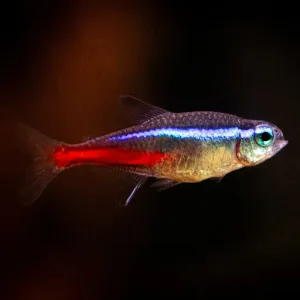
They are small and torpedo-shaped fish, bright blue and red striped. They achieve a size of approximately 1.5 inches and are a schooling, spicy type fish, and therefore should be maintained with at least 6 of them. They are highly peaceful and colorful, and they are common in local tanks.
Why They’re Great:
Extremely peaceful and non-aggressive.
Thrive in the mid-water zone.
Easy to care for with stable water conditions (70–81°F, pH 6.0–7.0).
Care Tips:
Provide plenty of swimming space and hiding areas.
Keep them in groups to prevent stress and encourage natural schooling behavior.
2. Corydoras Catfish
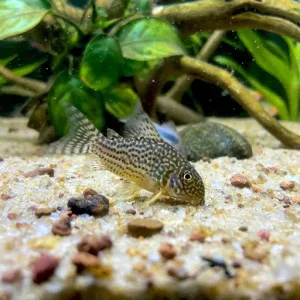
Corydoras are bottom feeders, so they maintain your tank clean by scavenging on leftover food. These fish behave in a friendly, docile manner and have cuddly-looking whisker-like barbels.
Why They’re Great:
Peaceful and social, best in groups of 4–6.
Compatible with nearly all peaceful fish species.
Active and entertaining bottom feeders.
Care Tips:
Use a soft substrate like sand to protect their barbels.
Maintain clean water with stable parameters (72–78°F, pH 6.0–7.8).
3. Harlequin Rasbora
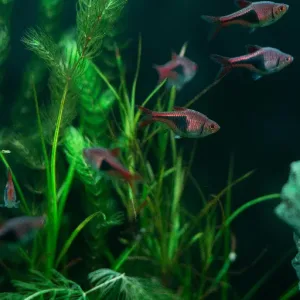
Harlequin rasboras, with their glistening copper-orange color, black triangle mark, and so on, are quite attractive. They are docile schooling fish that provide dashes of motion and beauty to the mid-water level.
Why They’re Great:
Thrive in groups, promoting vibrant group behavior.
Non-aggressive and compatible with most species.
Tolerate a wide range of conditions (72–80°F, pH 6.0–7.5).
Care Tips:
Keep in schools of six or more.
Combine with similarly-sized, non-aggressive species for best results.
4. Guppy
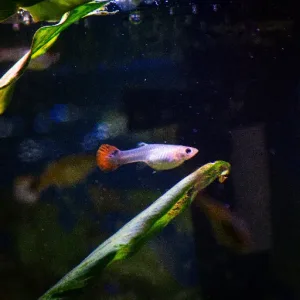
Guppies are one of the most demanded community fish because of their gorgeous tails and the variety of colors that is endless. Males are particularly bright, and females are a tad larger and lack color.
Why They’re Great:
Active, peaceful, and hardy.
Easy to breed in the right conditions.
Tolerant of a wide temperature range (72–82°F, pH 6.8–7.8).
Care Tips:
- Maintain a male-to-female ratio of 1:2 to prevent stress.
- Feed them a mix of flakes and frozen or live food for optimal health.
5. Platy
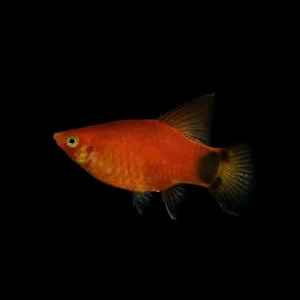
Platies are livebearers that are peaceful and have colorful patterns. They are breedable and easy to care for as they come in various colors, such as red, orange, yellow, and also in blue.
Why They’re Great:
- Friendly and adaptable to different environments.
- Coexists well with other peaceful species.
- Ideal for beginners due to their resilience.
Care Tips:
- Provide a well-planted tank for hiding and breeding.
- Keep them in small groups for social interaction (74–78°F, pH 6.8–8.0).
6. Zebra Danio

Zebra Danios are little striped fish that dart energetically around the tank. The way they are visually appealing is their horizontal stripes in blue and silver colors, and their energetic presence gives life to the tank.
Why They’re Great:
- Extremely hardy and beginner-friendly.
- Schooling fish that do well in groups.
- Tolerant of cooler water (65–77°F, pH 6.5–7.5).
Care Tips:
- Best kept in groups of at least five.
- Avoid placing with slow-swimming fish, as danios may outcompete them for food.
7. Cherry Barb
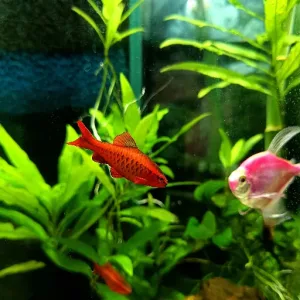
Cherry Barbs are intensely red fish who are docile and like tanks trimmed with plants. Males are brighter, particularly in breeding season assessment, whereas females are lighter.
Why They’re Great:
- Peaceful and shy; thrive in planted aquariums.
- Schooling behavior adds beauty and harmony.
- Adapt well to various water conditions (73–81°F, pH 6.0–7.5).
Care Tips:
- Keep in groups of at least six.
- Provide plenty of plants or hiding places to reduce stress.
8. Otocinclus Catfish
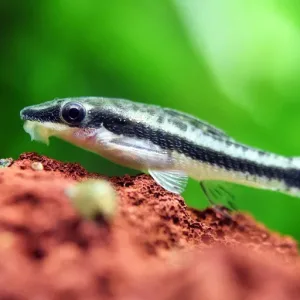
Otos or Otocinclus catfish are small algae eaters that perform an important cleanup task. These peaceful bottom feeders are nice choices in aquariums with others, especially because they will remain out of the path of more aggressive fish.
Why They’re Great:
- Peaceful and highly effective algae eaters.
- Ideal for planted aquariums.
- Thrive in groups and prefer the company of their kind.
Care Tips:
- Ensure stable water conditions and plenty of algae or supplemental algae wafers.
- Acclimate them slowly when introducing a new tank (72–79°F, pH 6.8 — 7.5).
Other Ideal Tankmates
Fish are not the only thing your community tank needs to be. It may also be desirable to make additions in the form of peaceful invertebrates, which can be both useful as well as beautiful.
The invertebrates contribute to tank hygiene and the balance of an ecosystem. They live in varied niches, minimizing coverage by algae. They also provide life in corners of the tank that fish frequently do not dwell in. So, complements both functionality and visual diversity, without breaking harmony.
1. Amano Shrimp
These are algae-eating shrimp that are hard workers to keep the biofilm and leftover food under control. They are very active, entertaining, and most peaceful fish usually take no notice of them, and therefore they qualify as a plant community for tanks.
2. Nerite Snails
Nerites are a beautiful and unobtrusive low-maintenance snail that also looks great with its patterned shells; they won’t overpopulate your tank, as they are unable to reproduce in fresh water. They slide across glass, rocks, and ornaments and maintain clean surfaces.
3. Cherry Shrimp
Cherry shrimps are brightly colored and simple to maintain, and are one of the few colorful and useful additions. They also assist in clearing up debris and uneaten food, but are better off with smaller and non-aggressive fish, as they may themselves get eaten.
Care & Maintenance Tips for a Community Tank
Routine care will keep you on track in the long run and keep your fish healthy, so you can have a lively and flourishing community aquarium. A community tank must be maintained to be healthy and free of stress:
- Water Quality Management: Measure water ammonia, nitrite, nitrate, pH, and temperature once a week. Change 20-30 percent of the water by using a dependable filter, once per week. Remove dirt from the substrate, and do not overfeed, as this can spike levels of ammonia. Fish health depends greatly on a stable nitrogen cycle.
- Feeding Strategies: Provide an array of floating flakes, sinking pellets, algae wafers, and an occasional frozen or live food so as to meet a variety of dietary needs and swimming intensity. Offer food portions twice a day and discard leftovers after five minutes.
- Quarantine Protocol: You should never add new fish to your main tank without quarantining them for at least 2 weeks to avoid transmission of diseases. Watch out that they do not show signs of sickness, act weird, or carry parasites.
- Tank Observation: Every day, it is good to perform visual observations at the tank in order to notice the early indications of stress, aggression, or illness. Check the appetite, damage to fins, or unprofessional swimming.
- Maintenance Schedule: Consider a regular cleaning schedule of the filter (monthly or what is necessary) and a trimming of the plant so that it does not get overgrown and the water can properly circulate.
Conclusion
One of the most rewarding things about fish keeping is that it is easy to build a community tank as a beginner. It integrates the beauty of the co-existence of several species with the fulfillment of building an ecologically stable environment that relies on water.
The selection of fish, knowing how they behave, and a good quality of water are factors that will determine success. Whether you like to reference Neon Tetras and Guppies, Otocinclus Catfish and Corydoras. These are just a few peaceful species that can be cohabited with delightful aesthetics.
Carefully adhering to the rules found in this guide will ensure that you are well en route to having a healthy and lively aquarium. Never forget to experiment, to share your experience, and to keep learning; your fish will be grateful!
FAQ
1. Waht’s the best fish food for community tank?
The best fish food for a community tank is a high-quality flake or pellet formula made for tropical or freshwater community fish, as it provides balanced nutrition for different species. You can supplement it with frozen or live foods like bloodworms, brine shrimp, or daphnia. Always choose food that sinks and floats at different rates so both top and bottom feeders can eat easily.
2. Which one is hardy fish for community fish tank?
Some of the hardiest fish for a community tank include guppies, platies, mollies, swordtails, zebra danios, and corydoras catfish.
3. I got a 10 gallon fish tank, can you recomend some community fish for me?
Choose small, peaceful fish that don’t overcrowd the space. Good options include guppies, neon tetras, ember tetras, harlequin rasboras, and corydoras.
6 neon tetras with 3 pygmy corys is good.
3.7 Gal Aquarium Kit: Filter, 10-Color Light, Self-Cleaning,...
Original price was: $81.99.$77.39Current price is: $77.39.



Add comment
You must be logged in to post a comment.