
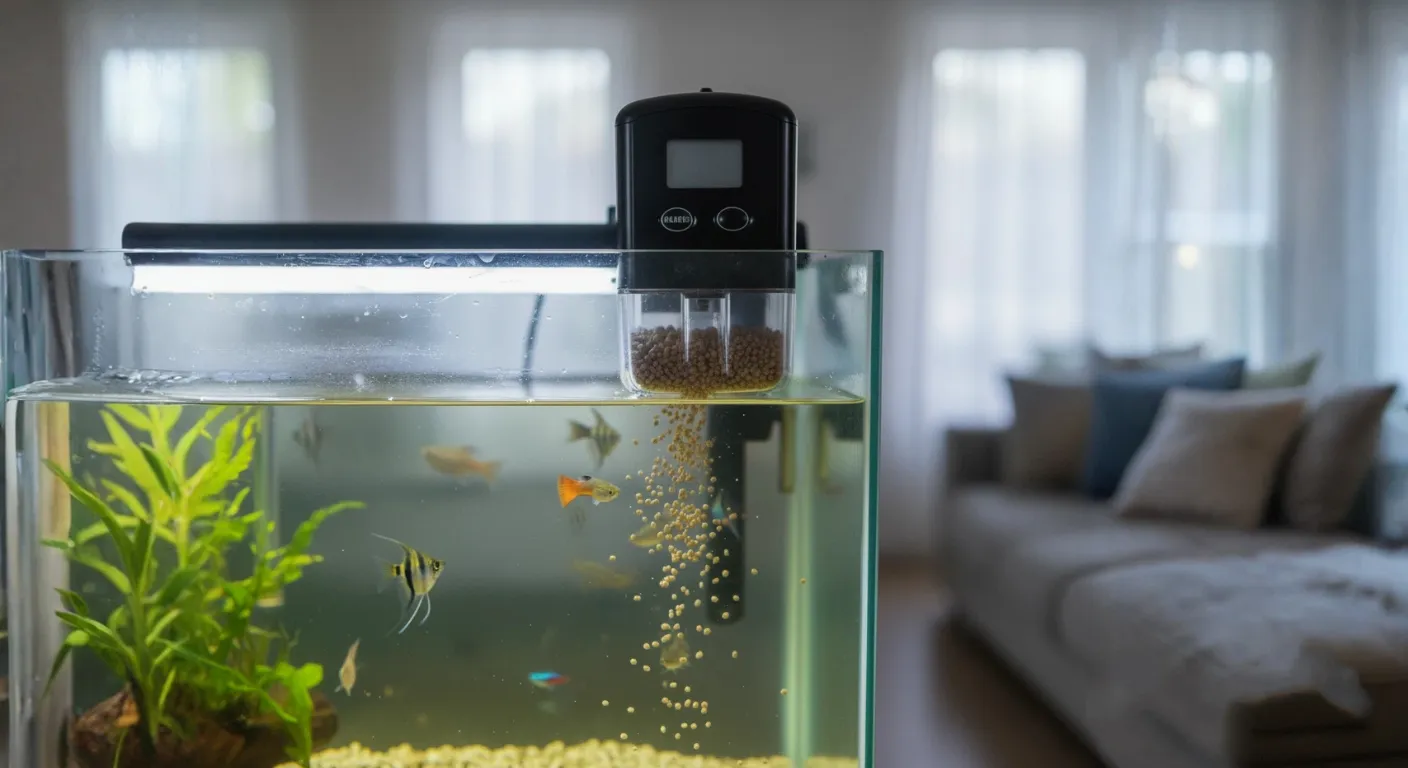
Imagine this: you have finally decided to spend some time on vacation. Perhaps it is a week at the beach or a quick mountain getaway with the family. And all this appears to be wonderful, but a single consideration pauses your thoughts: What will become of your fish when you are away?
Fish also need regular attention, particularly in relation to feeding. Lacking meals or adjustments to the feeding schedule can make them nervous. The two most used ones are an automatic fish feeder or a trusted fish sitter. Nevertheless, it is not only about feeding. It is all about proper preparation to make sure that you have healthy fish, your tank is stable, and you get back to happy and active fish.
We will look at some simple yet helpful tips to feed your fish during vacation, and a few things you have to do before you leave your fish alone.
Before Your Vacation: Why Plans Matter
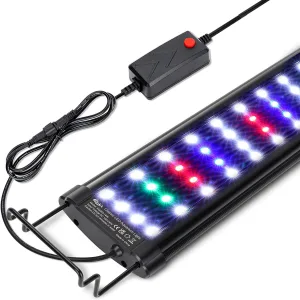
You should prepare your aquarium before you leave. Begin with the lights and put a timer on the lights to have a normal day-night cycle. Light is important in maintaining the behavior and feeding habits of fish.
Then, wash the filter and tank. Clean up the mess, replace a segment of the water, and ensure that the filter is running well. A clean tank facilitates the sustenance of the water when you are away.
Lastly, address feeding. Most fish will safely starve for a day or two, or even three, in case of a short journey–two or three days. However, in case of longer absences, feeding is mandatory. That is where the automatic feeders, slow-release blocks, or a trusted sitter would be useful.

How to Care for Your Fish While on Vacation
Before you leave, take time to prepare your aquarium. Start by setting a timer for the lights to maintain a regular day-night cycle. Fish rely on consistent lighting to regulate their behavior and feeding patterns.
Next, clean the tank and filter. Remove debris, change a portion of the water, and check that the filter runs smoothly. A clean tank helps maintain water quality while you’re away.
Lastly, address feeding. If your trip is short — say, two to three days — most fish can safely go without food. But for longer absences, feeding becomes essential. That’s where automatic feeders, slow-release blocks, or a trusted sitter come in handy.
Let’s move on to the top five tips that will help you feed your fish confidently while you’re away.
5 Tips to Feed Fish During Your Vacation
Despite having an impressive set of gadgets and the right planning, you will need a concise plan so that your fish are fed the right way. The following are five trustworthy tips that can assist you in dealing with feeding while enjoying your vacation.
1. Leverage Automatic Feeders
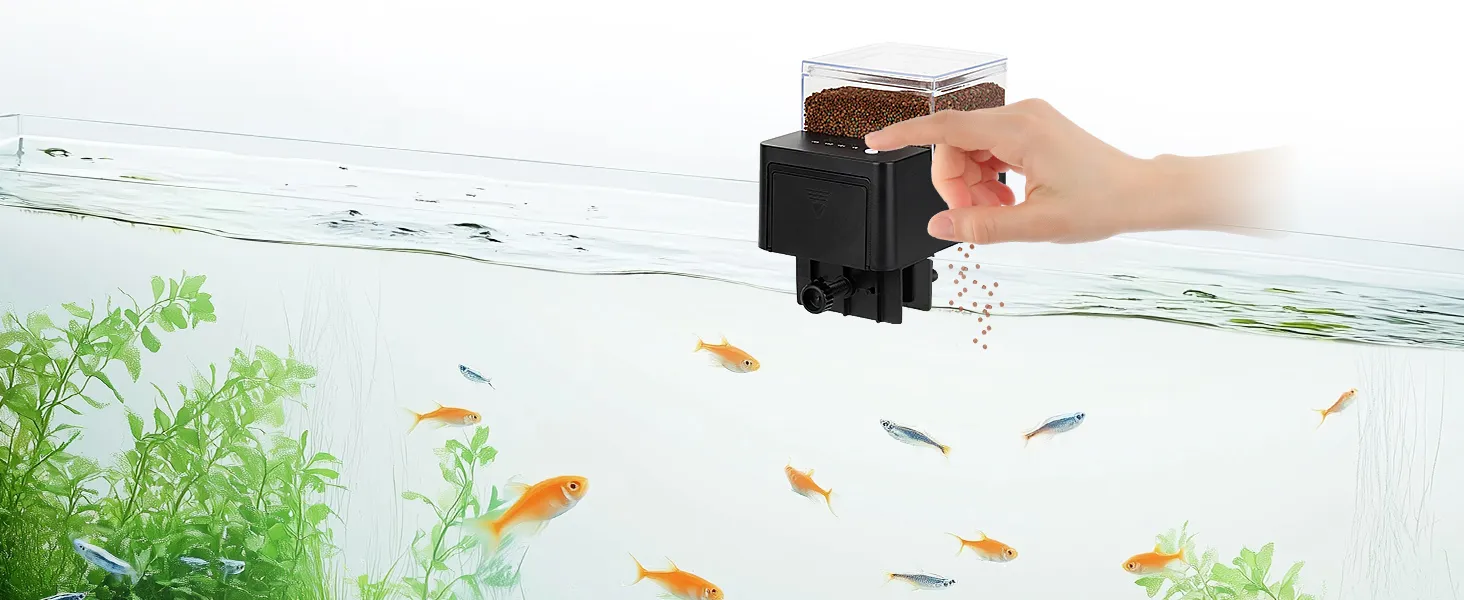
Fish feeders are also automatic, which makes them one of the best tools for fish owners on vacation. These conveniently designed machines are able to release a fixed quantity of food at the same frequency to keep your fish sticking to their routine.
When choosing an automatic feeder, look for a model that suits your tank’s needs.
Ensure it can accommodate your fish’s diet, whether flakes, pellets, or granules.
Pick a reliable, reasonably priced model that’s easy to program.
Prefer models with battery backup or power redundancy, so feeding continues during power cuts.
To verify the accuracy of the feeder, run it for a few days and then rely on it fully. Note the quantity of food it pours out and its appropriateness to your fish. Excessive feeding would contaminate the water and cause a pile of waste.
Test the quality of the water in your tank. Surplus food may result in ammonia spikes that destroy the health of your fish. Uneaten food decomposes with time and depletes oxygen, which may lead to stress or death.
Therefore, wisely use the automatic feeder. One or two more minutes of experimentation can keep your fish alive during that period when you are not there in bad water.
2. Use Slow-Release Food Blocks Wisely
Slow-release food blocks are a good alternative in case you have a simpler version. These blocks dissolve gradually in water, and the food is released within a number of days. You have the choice of 3-day, 7-day, or 14-day (depending on the duration of the trip).
When using them, keep these best practices in mind:
Match the block size to your tank size. A large block in a small tank may overfeed.
Place the block near a gentle water flow to help it dissolve evenly.
Avoid relying on them for heavily stocked tanks, as fish might compete for food.
Keep in mind that the vacation blocks are most effective in case of shorter trips or can be used as a backup. They are handy but cannot withstand extended absences because they may affect the water chemistry when they are not used in the right way.
Unless your tank is full of bottom dwellers or picky eaters, they may not find enough to eat on a block. You should test the product before your vacation to determine how your fish would react.
3. Prepare the Tank for Stability
The feeding method will not be able to work even when it is the best one, unless your tank is stable. You can also spend time preparing your aquarium before moving out to ensure that it performs at a steady level.
Here’s what to check:
Tank Checks: Check all the equipment that including filters, heaters, air pumps, and lights. Ensure that it is in good condition and is not leaking.
Lighting and Automation: Have programmable lights where day and night lighting patterns are simulated. This will reduce the stress on fish and will maintain the algae growth in check.
Documentation: Write down basic care notes, feeding instructions, and emergency contacts if someone is checking your tank.
Stable conditions will ensure that your fish is comfortable and does not come up with any unexpected problems when you are away.
4. Assign a Trusted Fish Sitter with Clear Instructions
Sometimes, technology isn’t enough — and that’s where a trusted fish sitter becomes valuable. At times, the technology is not sufficient, and that is where a trusted fish sitter comes in handy. Maintaining your tank when you are absent may be done with the assistance of a friend, neighbor, or relative.
Provide them with written guidelines. Pre-fill the food in small containers or bags with the days of feeding written on them. This will help avoid overfeeding, which is part of the most frequent errors made by sitters.
Demonstrate to them how to fill up evaporated water, verify the filter, and watch out for any signs of trouble, such as floating fish, turbid water, or filter noises.
It would be best to take a quick tour of the place before you go to demonstrate to them how you can use it. A good sitter not only feeds your fish but also gives you peace of mind.
5. Make a Plan for the Unexpected
The excellent plans may have a surprise. Before setting off, it is necessary to prepare in case of an emergency.
Make an emergency list of your sitter or your neighbor – have your vet, a local fish store, and a fellow hobbyist (who can assist with tank problems).
In case of a power failure, a battery-powered air pump should be available to keep the oxygen alive. You should have additional fish food and manual feeding instructions in case of the failure of your automatic feeder.
You need to label equipment and cables to avoid confusion. Your sitter may not be well-versed with aquarium equipment, so these little details count a lot.
More for Setups When on Vacation
The approaches to different aquariums may differ slightly. In case you have small or sensitive species, i.e., bettas, guppies, or tetra, consider more frequent and smaller feedings. Their metabolisms are higher, and they do not like big portions.
In the case of multi-tank systems, normalize feeding schedules. Feeders/portions to use should be identical or pre-measured. Regularity assists in sustaining the quality of water, and it also decreases the stress on your fish.
In case you have exotic or high-cost species, you can install remote monitoring using Wi-Fi-enabled devices. Other intelligent feeders and cameras allow you to monitor the status of your fish and tank using your phone – a nice choice to stay calm.
Plans for Post-Vacation
Once you are home, do not be tempted to feed your fish at the same time. Rather, begin with small portions so as to get them back to the normal routine. Monitor your water quality parameters, such as ammonia, nitrate, and pH, and change the part of water in case of necessity.
Check the tank for the remaining food, accumulated algae, or strange fish behavior. When all appears to be okay, then go back to regular feeding and maintenance.
These minor examinations make sure that your aquarium is healthy when you are away.
Conclusion
You do not have to be stressed when you leave your fish and go on vacation. It takes a little organization to make sure that they are safe, healthy, and well-fed.
To recap, remember these tips:
Use an automatic feeder and test it in advance.
Try slow-release food blocks for short trips.
Stabilize your tank and automate lights and filtration.
Assign a trusted fish sitter with clear, simple instructions.
Plan for emergencies and create backup options.
By being able to prepare in advance, you will go back to a clean tank and happy fish. Now, will you enjoy your vacation more knowing that your underwater friends are fine?
Did you ever leave your fish when you were away? Write about your experience or what you love to do when you go on vacation below!
FAQ
1. How long can fish go without eating?
The average adult fish is able to starve for three to seven days, depending on their health and the species. Bigger fish or slow feeders can even take up to two weeks before dying, but little or small fish require food more often. It is always worth checking and observing prior long-distance journeys.
2. I keep bettas, and for Thanksgiving, I’m leaving for 14 days. Can auto fish feeders work?
Yes, they can be used with bettas, but one that has been made to work with small tanks and pellet-sized food should be selected. Test it 7 days before going to make sure that it dispenses the correct amount. Use it with a timer to use lights, frequent tank check, etc.
AQQA Automatic Fish Feeder, 12H/24H/48H Timer, 110ml Capacity,...
Original price was: $13.19.$12.99Current price is: $12.99.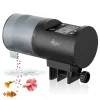
AQQA 200ML Auto Fish Feeder, Quiet Smart Timer...
Original price was: $22.39.$19.87Current price is: $19.87.


Add comment
You must be logged in to post a comment.