
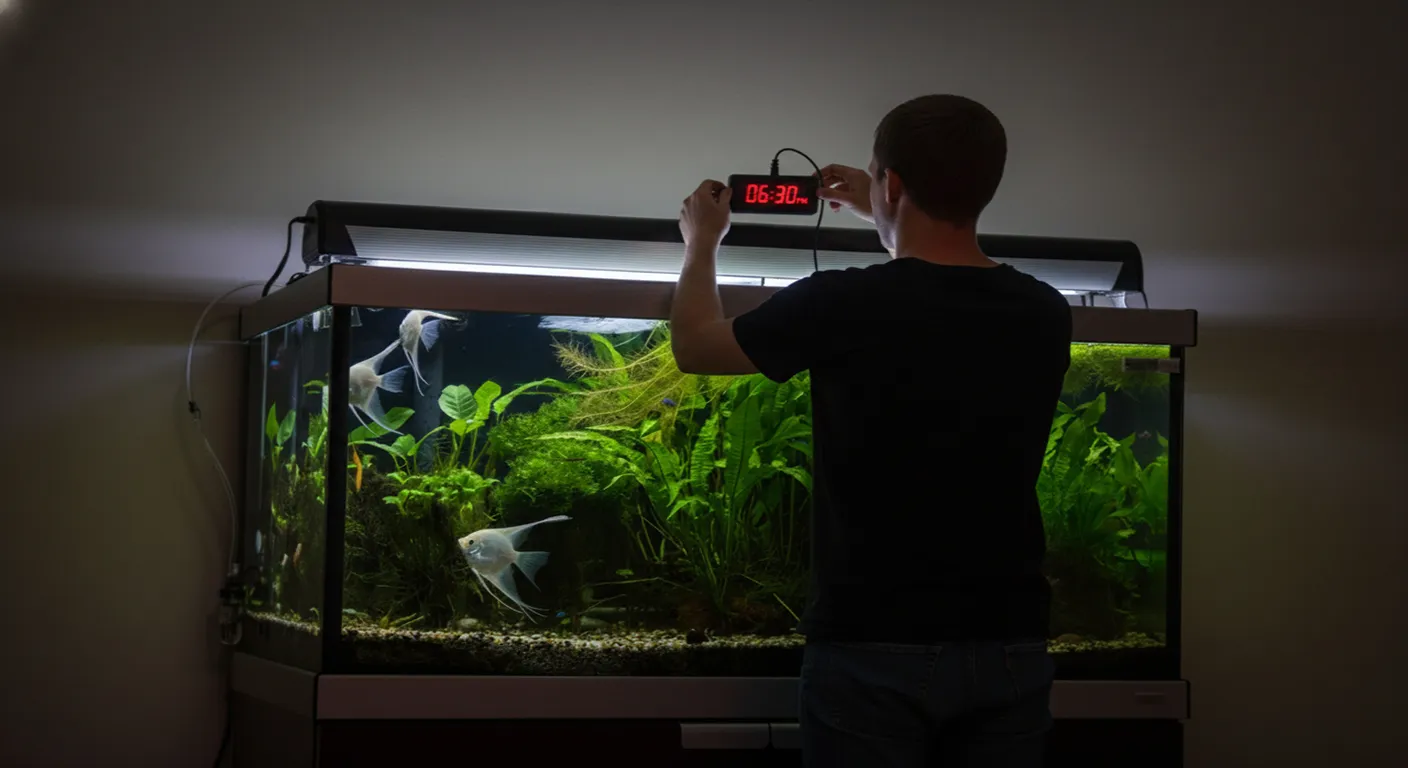
Most beginners think aquarium lighting is straightforward. You turn it on in daylight and off at night. But then this after a few weeks, problems start showing up. Plants turn brown and stop growing. Green algae spreads across the glass. Fish hide more than usual or act stressed. The issue is that lighting does more than make your tank look nice. It directly affects the health of everything in there. Plants need the right amount of light to photosynthesize and stay healthy.
Too little light and they can’t grow properly. Too much light creates perfect conditions for algae to take over. Fish also rely on consistent light cycles because they regulate their behavior and stress levels. What makes this confusing is that different tank types need different schedules:
A heavily planted freshwater tank needs more light than a basic fish-only setup.
Marine reef tanks have their own specific requirements.
So, how long should aquarium lights actually be on?
This guide covers the ideal light duration for different tank types. You’ll learn how to create a schedule that keeps plants thriving without triggering algae growth. We’ll also go over the common mistakes that throw off the balance in most tanks.
Why Aquarium Lighting Duration Matters
Are you counting the hours? This actually shapes everything happening inside your tank. Here’s how lighting influences different parts of your setup:
For Plant Growth: Your plants need light for photosynthesis. If it gets a little little then you are getting yellowing leaves and dying stems. If it gets too much and algae takes over.
For Fish Health: Fish need consistent light cycles to stay on their normal eating and resting schedule. Leave lights on too long, and they get stressed, hide constantly, and lose color.
Algae Control: Algae blow up when lights stay on forever, especially with high nutrients. Cut back your hours – easiest algae fix there is.
Oxygen & Water Balance: Plants pump out oxygen during light hours but use it up at night. A regular lighting schedule keeps oxygen steady.
Recommended Lighting Duration by Aquarium Type
| Tank Type | Recommended Duration | Tips |
| Planted Freshwater | 8–10 hours | Use timers to maintain consistency. Avoid sudden changes to prevent algae blooms. |
| Fish-Only | 6–8 hours | Enough for viewing and fish rhythm, but not long enough to fuel algae. |
| Marine / Reef | 9–12 hours (with dawn/dusk simulation) | Corals need strong light for photosynthesis. Gradually increase duration in new tanks. |
| No Live Plants | 5–7 hours | Just for visibility and fish comfort; limit to prevent algae buildup. |
Notes:
Got a new tank? Start with around 6 hours and bump it up slowly as things stabilize.
If your lights are super bright, you might need shorter periods.
How to Manage Aquarium Lighting Effectively
Managing lighting isn’t just about setting a timer – it’s about understanding how light messes with your tank’s balance. Having a solid system helps you dial in your lighting schedule and avoid algae or stressed-out fish.
1. Establish a 3-Point Check System
Keep an eye on these three things to figure out if your light duration is working:
Algae: Seeing more algae building up on the glass or plants? Cut back your light by an hour and see what happens over the next week.
Plant Growth: Are plants looking weak or barely growing? Add 30 minutes per day to your lighting until things pick up.
Fish Behavior: Fish hiding way too much, swimming all weird, or losing their color? Your light’s probably too bright or on too long – dial it back a bit.
Pro tip: Grab a digital timer or smart plug so your lights stay consistent every day, even when you’re not around.
2. Intensity vs. Duration Trade-Off
Brightness and time work against each other. Brighter light doesn’t need to stay on as long. Got powerful LEDs? You’re probably good with 7-8 hours. Running softer or low-intensity lights? Those might need to go 10-12 hours. Crank both up too high (super bright for too long) and you’re just asking for algae explosions and burned plants. You’ve got to balance them based on how deep your tank is, what species you’re keeping, and how your light spreads.
3. Lights of Dawn & Dusk
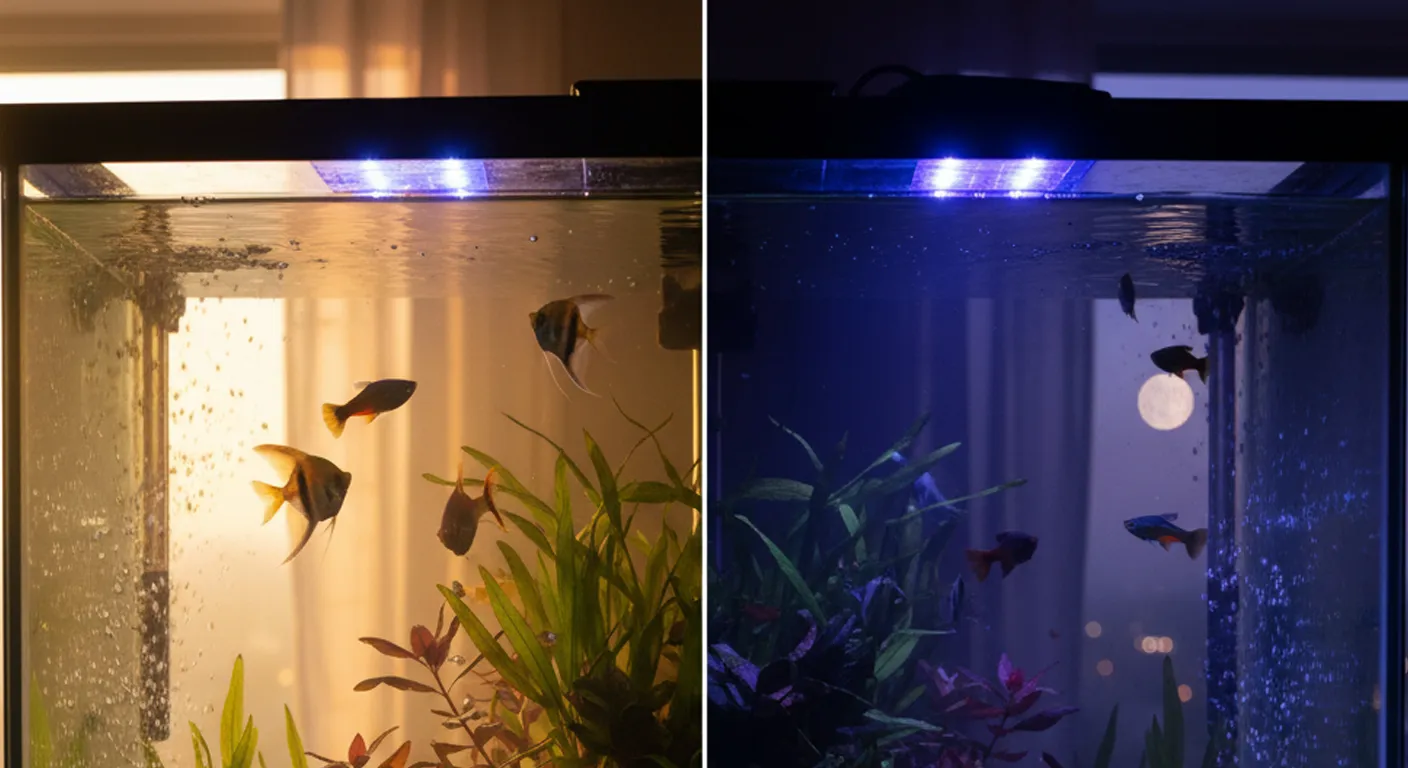
Simulating natural sunrise and sunset makes a huge difference for fish stress. Just slamming the lights on and off? This scares and messes with their rhythm. You should use dimmable LEDs with ramp timers. This will ensure the lights slowly brighten in the morning and fade at night. Fish wake up calmly and settle down without stress, plus your plants still get their consistent growth, and the photoperiod stays stable.
Common Mistakes and How to Avoid Them
A lot of beginners mess up their lighting without realizing it. This damages your plants or feeds algae like crazy. Here is what you should care about:
Overexposure: You shouldn’t be leaving lights on more than 10-12 hours. This is because it can result in algae blooms – green spot, hair algae, and brown algae. Plus, your fish get stressed.
Underexposure: Too little light and your plants just give up. Faded colors, dead leaves, the whole sad scene. Even though plants like Java fern or Anubias start looking rough if they’re in the dark too long.
Ignoring Tank Type: Don’t just copy what marine tanks do, like 10-12 hours. That’s how you’re inviting algae. Figure out what your specific tank actually needs.
Sudden Changes: Changing your light schedule by more than an hour all at once confuses everyone – plants and fish both. Go slow with it, like 15-30 minutes per week. This leads to way better results.
Conclusion
Just by fixing your lighting, you can make a huge impact in keeping your tank in good shape. Nail the duration and you won’t deal with algae explosions, your plants stay strong, and your fish aren’t freaking out.
Every tank type needs its own timing. Planted tanks? Around 8-10 hours usually does it. Fish-only setup? Stick to 6-8 hours. Reef tanks can push 12 with those sunrise/sunset transitions. Whatever you pick, consistency matters way more than perfection. Make changes gradually – jumping around with your schedule just creates more problems.
Pay attention to how your tank responds. Plants looking weak? Algae showing up? Fish acting weird? Those signs tell you what needs tweaking. Get your timing down, watch your intensity, and check on things regularly. A balanced tank isn’t complicated – it just needs you to stay on top of the basics and make changes slowly when needed.
FAQ
1. My timed aquarium light turns on too high. Is it okay?
If the intensity’s cranked up too high, you’re going to get algae or stressed fish. Drop the intensity if you can adjust it, or just cut back the duration by 1-2 hours. Dimming features work great, or throw a light diffuser on there.
2. What’s the best time to turn on the aquarium light?
Most people just match it to their own schedule – something like 8 AM to 8 PM works fine. Just don’t have them blasting on while you’re sleeping. Fish need that natural rhythm too.
3. Should I turn my fish tank light off at night?
Yeah, definitely. Fish need darkness to rest, same as we do. Leaving lights on 24/7 messes with their sleep and stresses them out long-term. Make sure they get at least 8-10 hours of darkness every day.
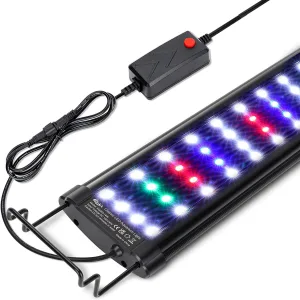
Full Spectrum Aquarium LED Light (14W for 12″-18″)...
Original price was: $18.99.$13.99Current price is: $13.99.
Full Spectrum Aquarium Clip-On LED Light (8W) with...
Original price was: $25.49.$22.99Current price is: $22.99.

Add comment
You must be logged in to post a comment.