
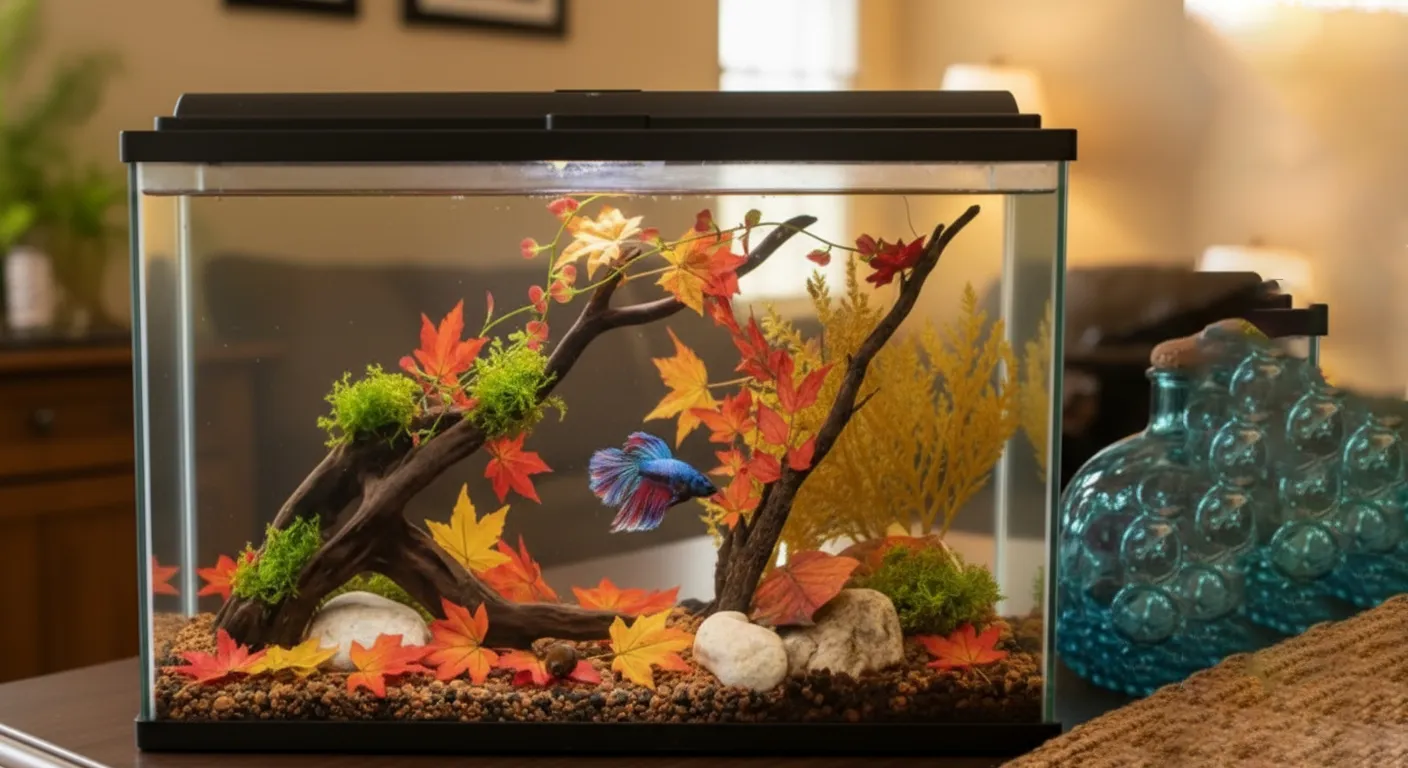
What I did last fall with my aquarium was something new. I placed natural fallen leaves in my fish tank to make it look warm, cozy, and earthly instead of using the plastic decor to DIY. The outcome was beautiful, my aquarium was like a pint of autumn forest floor.
Using real leaves plays a good role in decorating your aquarium as well as the environment. These leaves gradually fall in that they contain nutrients, shelter, and more natural habitat for your fish and shrimp. They also enhance healthy bacteria, thus a healthier aquarium ecosystem.
Nevertheless, it is also necessary to learn on which leaves aquarium silence is permissible, and in what quantities. Others may leech excess tannin, or rot away, or upset your water chemistry.
The four best leaves to use in planting your aquarium in the fall, we will cover in this paper. You will also discover the role of these leaves in supporting your fish as well as the correct way to prepare them and why each of these types suits a particular type of aquarium. And in case you are wondering these, then continue reading.
Why Use Leaves in Your Aquarium in Fall
Many species of fish in nature undergo similar shifts when changing the seasons. Leaves in rivers and ponds settle in the river basin and slowly decompose to produce useful substances. This is a natural environment that is simulated by adding leaves to your aquarium.
Autumn is the best month to utilize them since there are no wet leaves, and they can be clipped and kept so easily due to the dry and crisp leaves. They can add the seasonal warmth and reproduce the same natural environment of your aquatic animals as they would have in the wild.
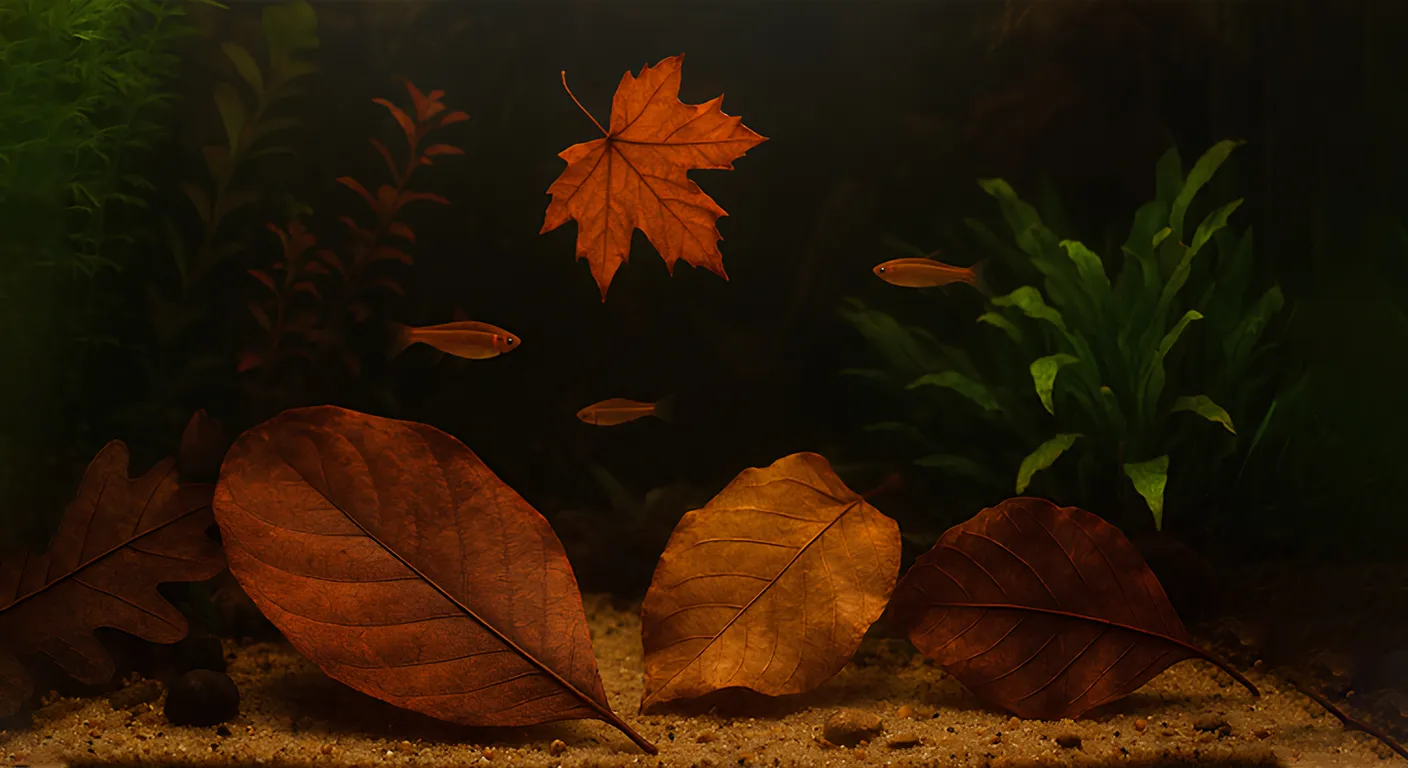
Pros of Using Leaves in an Aquarium
Here are the advantages of fall leaves in your fish tank:
Water Chemistry
The tannin that is released by the leaves naturally makes water soft, and it slightly reduces the pH of water. This provides a pure acidic atmosphere that suits several species that are native to the tropical, such as tetra, bettas ,and shrimp. It is a convenient and natural method of imitating the conditions of blackwater in their indigenous environments.
Fish Health
The compounds and tannins present in defined leaves, particularly catappa leaves, are antibacterial and antifungal. They are used to prevent infections, keep fins healthy, and accelerate the healing of small wounds.
Natural Aesthetics
Leaves will be beautiful, giving an earthy tone to your aquarium that cannot be compared to the artificial decorations. They give the appearance of a real riverbed with cozy brown colors and dark shadows, which suit autumn.
Effects for Fish and Shrimp
You can use natural leaves in your aquarium, and not only does it look well, but it is also good to keep your aquatic life alive.
Release tannins that lower pH slightly: It will reduce the unwanted bacteria and allow your tank to be balanced.
Encourage beneficial biofilm for shrimp and fry: When leaves decay, they develop biofilm and become a food source to shrimp and baby fish.
Create hiding spots and reduce fish stress: The leaves provide a natural cover, making shy or smaller fish feel secure.

Top 4 Leaves for Your Aquarium
With a proper grasp of how leaves are great in your fish tank, it is time to move on to the four best leaves with which you can have a great fall.
1. Catappa (Indian Almond) Leaves
Catappa leaves are big, oval, with a reddish-brown color when they are dry which provides your aquarium with a good earthly taste. They are smooth with certain veins on them, which give them a natural feel underwater. As they are put into the tank, they gradually sink and curl at the edges, thus providing a realistic forest-floor appearance.
Their thick construction enables them to break down slowly so that they do not produce tannins that cloud the water too quickly. The leaves also serve as plush beds on which bettas take their rest and as concealments to small shrimp or fry. Thus, to serve decorative and also practical purposes.
Health Benefits of Fish
It is the most popular leaf worldwide, which is used by aquarists. They also discharge high concentrations of tannins and humic acids, which are natural conditioners.
They possess antibacterial and antifungal qualities so that they can combat fin rot, mild infections, and stress. Catappa leaves are also used by fish breeders to enhance the rate of spawning and survival of fry.
How to Prepare and Use in Tanks
Rinse the leaves gently under warm water to remove dust.
You can either boil them for a few minutes to soften or simply place them directly into the tank. One large leaf per 20 gallons is usually enough.
Once it starts breaking down, replace it every three to four weeks.
2. Oak Leaves
Natural Look and Color Changes in Water
Oak leaves are smaller and have the classic jagged shape we associate with fall. When in water, they become soft brown and give a pleasant amber tincture to the water of your aquarium.
Tannin Release and pH Impact
These produce moderate amounts of tannins to reduce the pH without causing excessive darkening of the water. This means that they are suitable for soft water fish such as rasboras, gouramis, and corydoras.
Ideal for Biotope-Style Tanks
The oak leaves are just the right fit in biotape configurations, which recreates forest brooks or blackwater streams in South America. Their contour will provide your tank with the appearance of one that is realistic as well as wild due to their shape.
3. Beech Leaves

Unique Texture and Autumn Colors
The leaves of beech are thin and fine and keep their rich golden-brown tints in water. They appear to be a perfect fit in aquariums that have fall decor due to their cold texture and airy color contrast.
Decomposition Rate and Maintenance Tips
They are easily kept up since they degrade slowly. You will tend to change them after every 5- 6 weeks. But ensure that you remove the completely decayed pieces. So, that you do not have ammonia spikes.
Suitable Fish Species
Beech leaves are recommended in shrimp tanks, nano tanks, and other species of fish such as betta and small tetra that prefer slightly acidic water.
4. Walnut Leaves

Dark Color and Intense Tannin Effects
The leaves of the walnut are dark and give off much tannin, which makes your water a deep brown color. This produces an impressive blackwater effect that aquascapers love.
Usage Caution and Recommended Dosages
Walnut leaves do not need too much, and one small leaf of walnut should be put in 20-25 gallons. They can decrease the pH faster than other leaves, and therefore, pay attention to your parameters.
Enhancements to Blackwater Tanks
These leaves promote the natural appearance of black water aquariums where such species as angelfish and discus live. Their dark colors also minimize light refraction to enable timid fish to feel even more relaxed.
Comparison Table: Best Aquarium Leaves for Fall
Leaf Type | Tannin Strength (★) | Main Benefits | Best For | Lasts For |
| Indian Almond (Catappa) | ★★★★★ Strong | Heals wounds, improves fish health, and adds a strong tint | Bettas, shrimp, breeding tanks | 3–4 weeks |
| Oak Leaves | ★★★ Moderate | Natural tone, lowers pH, realistic look | Forest biotopes, softwater fish | 4–5 weeks |
| Beech Leaves | ★★ Mild | Decorative, slow decay, gentle tannins | Nano tanks, shrimp | 5–6 weeks |
| Walnut Leaves | •••••• Very Strong | Deep tint, powerful antibacterial effect | Blackwater tanks | 3–4 weeks |
Additional Tips for Collecting & Preparing Leaves
Now that you know which leaves to use, it’s time to learn how to collect and prepare them safely.
Collecting
Safe Sourcing: It is always important to make sure that the brown leaves that you want to use are of a fresh fall, meaning that they are fully dry. Do not use greens or those around the roads because they may contain pesticides or pollutants.
Notice Moisture: When collected, they must be spread to dry more. The leaves should be stored in a dry and airtight container to prevent the growth of mold. This helps you keep them fresh for months.
Preparation
Before adding leaves to your aquarium, it’s smart to do a little prep work.
Boil or Soak: Boiling the leaves for 5–10 minutes softens them and removes impurities. If you prefer a slower release of tannins, soak them in dechlorinated water overnight instead.
Check Water Parameters: After adding leaves, monitor your tank’s pH and color. Adjust the number of leaves if the tint gets too dark or the pH drops too much.
Observe Your Fish: Some fish may take time to adjust to the new environment. Watch their behavior for a few days to ensure they are comfortable.
Conclusion
The autumn season is the most appropriate time to introduce the nature of beauty into the aquarium. Planting real leaves would not only add decor to your tank, but the fish also would benefit with it. Since, it can enhance the quality of the water and provide a more natural habitat to the fish.
Out of the curing powers of the Catappa leaves, to the shades of olive and Walnut leaves, each kind has a little extra flavor in it. It is only necessary to remember that they should be used sparingly, watch your water chemistry, and change the old leaves when necessary.
The availability of leaves makes your aquarium look iconic and soothing, just as typical of a forest stream. It is also an easy method of enjoying the shifting season, besides keeping your fish healthy and happy.
Then, when the leaves begin to drop, take a few of them that are safe and have your aquarium lit up in the warm autumn colors.
3.7 Gal Aquarium Kit: Filter, 10-Color Light, Self-Cleaning,...
Original price was: $81.99.$77.39Current price is: $77.39.




Add comment
You must be logged in to post a comment.