
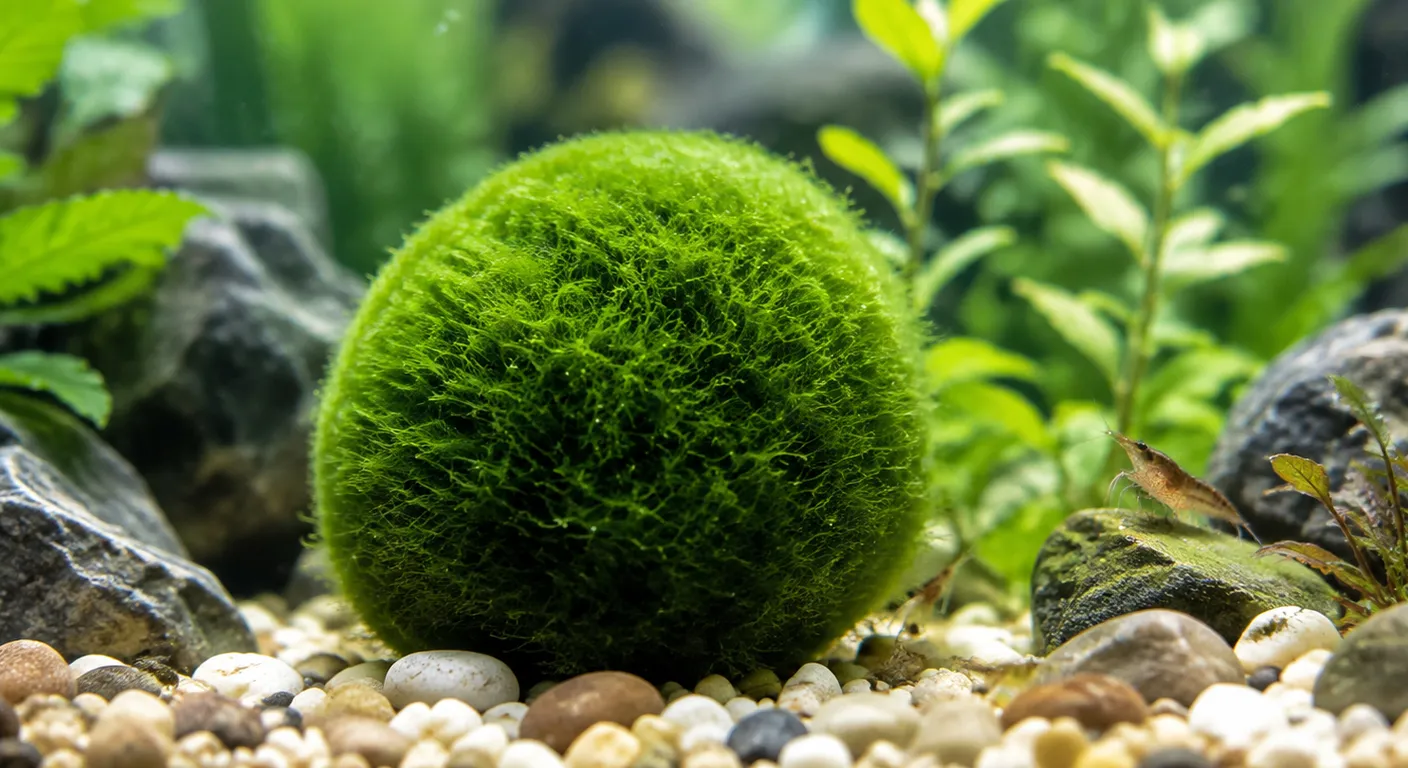
Marimo moss balls can be a good addition to many freshwater aquariums. They work well as low maintenance living decor, and they fit especially well in nano tanks, betta tanks, and shrimp setups. If you want a plant with low maintenance, no pruning, dosing, or a strong light schedule, Marimo is one of the easiest options available.
That said, it helps keep expectations grounded. Marimo can offer a small ecosystem benefit inside a tank, but it does not replace filtration, regular water changes, or a properly cycled aquarium. A tank still needs those basics whether or not Marimo is present.
One more clarification before moving forward. The name “moss ball” is common but inaccurate. Marimo is a form of algae, not a true moss. Understanding this distinction matters because it explains both why Marimo behaves the way it does and why its benefits are more limited than those of a rooted aquatic plant.
What Are Marimo Moss Balls
Marimo, scientifically known as Aegagropila linnaei, is a round colony of filamentous green algae. Over years, gentle water movement rolls the strands into a dense, velvety sphere. In the wild, this process happens slowly in a handful of lakes across Japan, Iceland, and parts of northern Europe.
In an aquarium, Marimo keeps that same soft green texture and rounded shape, though growth is extremely slow. A ball might gain only a few millimeters of diameter per year under home aquarium conditions. This sluggish growth is actually part of the appeal, since owners rarely need to trim or manage the plant.
Marimo has become popular in the hobby for a few practical reasons.
No substrate is required, so it works in bare bottom tanks.
No planting or anchoring is needed, unlike stem plants or carpeting species.
Trimming is rarely necessary given the slow growth rate.
Placement is flexible; Marimo can sit on the substrate or rest beside rocks and driftwood.
A quick note on quality. A healthy Marimo should look deep green, feel firm to the touch, and appear relatively free of debris or slime. A ball that looks pale, mushy, or coated in brown film is already stressed before it even reaches your tank.
Are Marimo Moss Balls Good for Aquariums
Marimo can genuinely improve how a tank looks and functions in small ways. It softens hardscape, gives shrimp and small fish something natural to graze on, and adds a bit of biological filtration through nutrient uptake, though that uptake is modest compared to rooted plants.
| Benefit | What It Actually Does |
| Visual appeal | Adds rounded green texture that contrasts with rock and wood |
| Nutrient uptake | Absorbs small amounts of nitrate and ammonia, at a slow rate |
| Grazing surface | Hosts biofilm and microorganisms that shrimp and fry feed on |
| Oxygen production | Contributes a small amount of oxygen through photosynthesis |
| Fry and shrimp shelter | Offers cover for young shrimp and fish hiding from adults |
It is worth being direct about the limits here, since some retailers market Marimo as a near miracle water cleaner. That framing does not hold up. Marimo grows too slowly and absorbs too few nutrients to meaningfully replace a filter or a consistent water change schedule. Treating it as a cleaning tool instead of a decorative, mildly beneficial plant sets up unrealistic expectations for new fishkeepers.
Limitations
Marimo works best as a supplement to good tank care, not as a substitute for it. A single ball, or even a small cluster of them, will not make an uncycled aquarium safe for fish. Beneficial bacteria in the filter media and substrate still need time to establish before fish are added.
There is also a common question worth answering directly. Can Marimo replace regular aquarium plants? It cannot. Rooted or stem plants grow faster, cover more surface area, and pull in far more nutrients through their root systems and leaf mass.
Marimo simply does not offer that same structure, coverage, or growth rate, so it functions as a companion piece rather than a primary planting choice.
Best Aquariums for Marimo
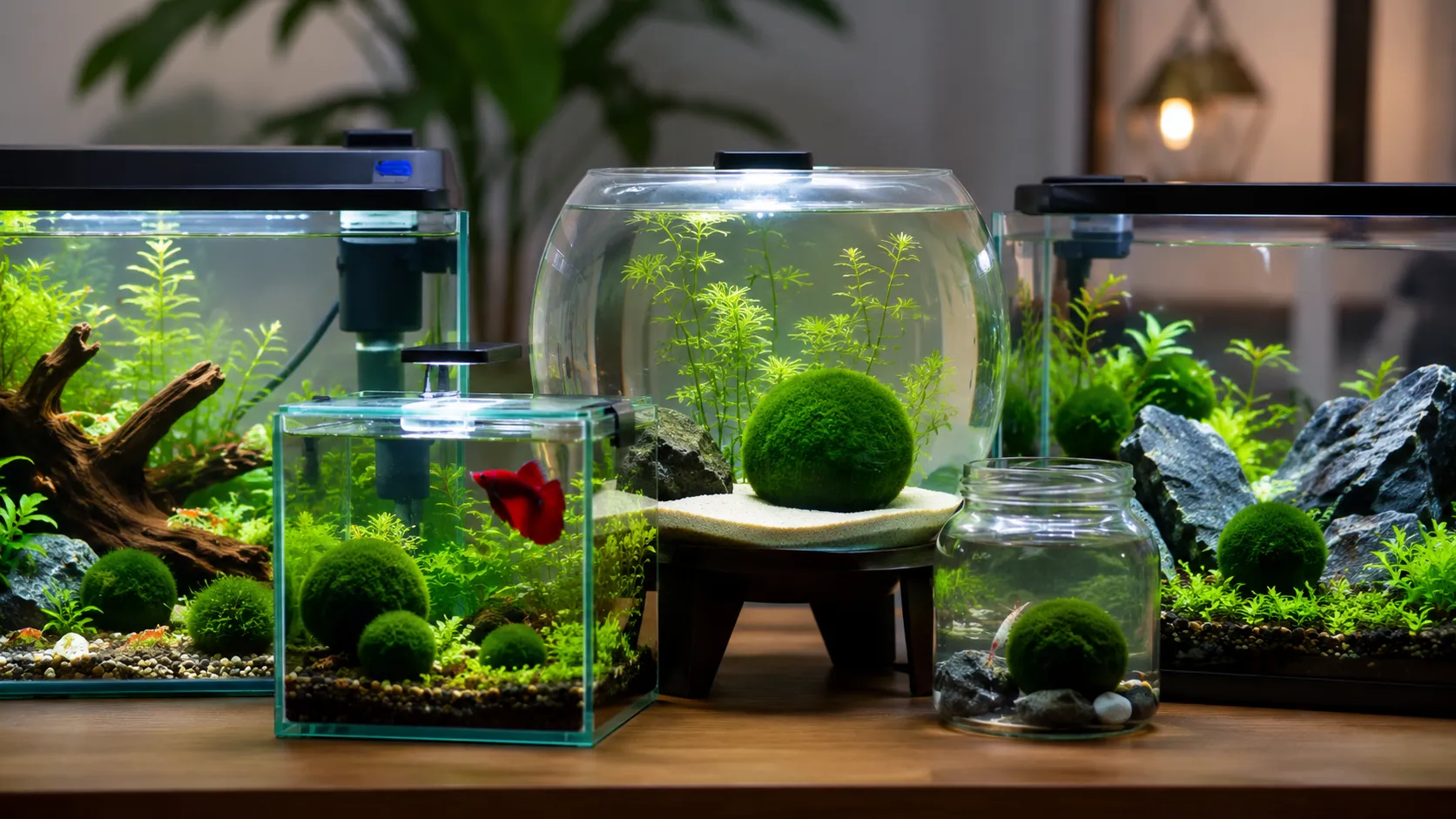
Marimo adapts to a wide range of setups, but it performs best in tanks where its slow growth and mild bioload are actually an advantage rather than a missed opportunity.
Good matches:
Shrimp tanks. Marimo offers a stable grazing surface and hiding spot without adding much bioload, which suits the sensitive water parameters shrimp need.
Betta tanks. Its soft, rounded shape will not tear delicate fins the way sharp decor sometimes can.
Nano aquariums. Small footprint and slow growth mean it will not overtake a tight space the way faster plants might.
Low-tech community tanks. Marimo tolerates lower light and minimal CO2, so it fits tanks without pressurized injection or intense lighting.
Rock and driftwood aquascapes. The green tone breaks up hard, angular surfaces without requiring substrate planting.
Use caution with:
Tanks with strong, high-flow filtration, since constant tumbling can shred or wear down the ball over time.
Aquariums with intense lighting meant for demanding carpet plants, which can bleach or brown Marimo.
Tanks stocked with fish species known to nip or peck at algae, which can fray the surface strands.
Setups where the water is already high in ammonia or nitrite, since an unstable environment stresses Marimo the same way it stresses fish.
Very warm tropical tanks running consistently above the mid 70s Fahrenheit, since Marimo prefers cooler, more temperate conditions.
How to Care for Marimo Moss Balls
Placement and light
Set Marimo directly on sand, gravel, or bare glass rather than pushing it into the substrate. Burying part of the ball traps debris and blocks light to that side.
Resting it near rocks or driftwood works well and adds visual balance without anchoring it to anything. Keep some distance from strong filter intakes, since constant suction can pin the ball against the intake or wear down its surface.
Marimo does best under low to moderate lighting. Avoid placing it in direct sunlight or under intense aquarium lighting for extended periods, since this can bleach the green color and slow the algae’s natural rolling process.
Cleaning and reshaping
A few habits keep Marimo healthy long-term.
Inspect the ball during each regular water change, checking for debris or discoloration.
When buildup appears, gently rinse and squeeze it in water removed from the tank rather than tap water.
Roll it lightly between clean hands afterward to help restore its round shape.
Rotate its position in the tank occasionally so one side does not stay flattened or shaded.
Common problems
Trapped air bubbles inside the strands can cause a ball to rise. Gently squeezing it underwater usually releases the air and lets it sink again.
Brown or pale color. Often linked to too much light, poor water quality, or a buildup of debris blocking photosynthesis.
Flattened shape. Usually the result of sitting in one position too long. Regular rolling and rotation prevents this.
Dirty surface. A sign that periodic rinsing has been skipped for too long, or that the tank itself needs more frequent maintenance.
Safe Buying and Biosecurity
This section matters more than most generic Marimo guides suggest, and it is especially relevant for aquarium keepers in the United States.
Inspect new Marimo before adding them
Buy Marimo only from a reputable, traceable aquarium supplier rather than an unverified seller. Before anything touches your tank, closely examine the ball itself along with its packaging for anything that looks out of place.
Quarantining new plants, including Marimo, is a smart habit when it is practical. Holding new arrivals in a separate container for a couple of weeks gives you a chance to spot problems before they reach your display tank.
Never release Marimo, aquarium water, or any unwanted aquarium livestock outdoors. Waterways, storm drains, and garden ponds are not safe disposal points, no matter how harmless the material seems.
Zebra mussel warning
Marimo moss balls have a documented history of carrying invasive zebra mussels into the United States. In August 2024, a Washington state wholesaler discovered zebra mussel contaminated Marimo in a shipment, prompting a rapid response from the Washington Department of Fish and Wildlife. Thimussel-contaminateder, larger incident in 2021 that affected retailers across dozens of states and several Canadian provinces.
Zebra mussels are considered a serious invasive species. California, for example, prohibits possessing, importing, shipping, or releasing them. Other states enforce similarly strict rules given the infrastructure and ecological damage these mussels can cause once established in local waterways.
If you notice anything resembling small mussels attached to a Marimo ball, do not dispose of it in a sink, toilet, or outdoor drain. Contact your state fish and wildlife agency and follow their official disposal instructions.
Federal guidance recommends destroying contaminated moss balls through freezing, boiling, or bleaching, sealing them in a plastic bag before trash disposal, and fully decontaminating any aquarium that held them.
Conclusion
Marimo moss balls can be a simple, attractive addition to many freshwater aquariums, particularly shrimp, betta, and nano setups. They bring easy care greenery and a modest grazing surface while asking very little in return.
Even so, Marimo should be a low-maintenance addition rather than a replacement for filtration, cycling, water changes, or a full planting scheme. Choosing healthy specimens, giving them suitable light and placement, and cleaning them gently as needed will keep them thriving for years.
Used responsibly, with careful inspection and attention to proper biosecurity before anything enters your tank, Marimo remains one of the easiest and most rewarding additions available to freshwater fishkeepers.
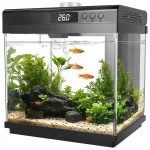
3.7 Gal Aquarium Kit: Filter, 10-Color Light, Self-Cleaning,...
Original price was: $81.99.$77.39Current price is: $77.39.













Add comment
You must be logged in to post a comment.