
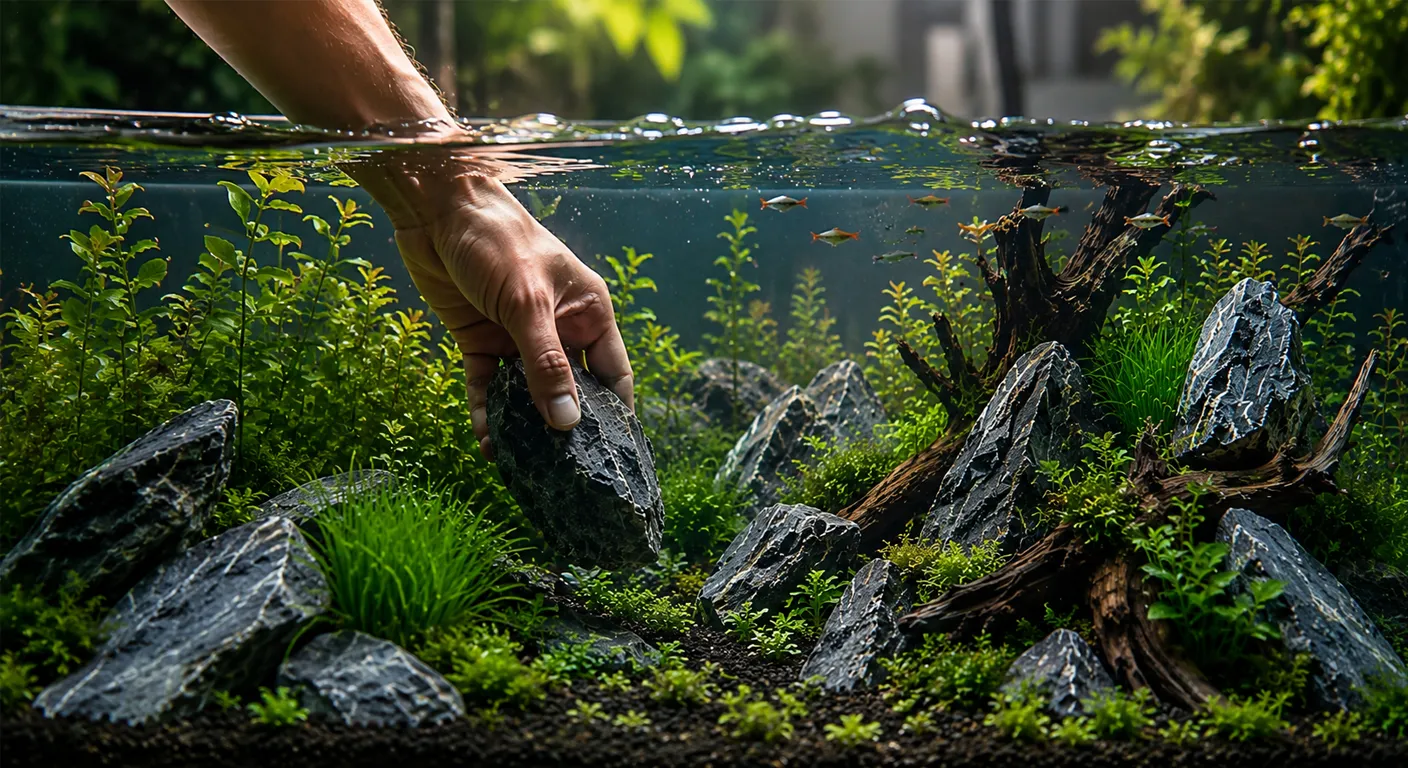
Adding rocks to an aquarium seems like a visual decision. You spot something at the fish store that looks great, you bring it home, and you drop it in. A week later, the pH reads differently than it did before. The fish are sluggish. The plants look off. And the rock is just sitting there, looking perfectly fine.
That is the problem nobody warns beginners about. Rocks are not passive decorations. Some of them are actively changing your water. The right rock for one tank is the wrong rock for another, and the difference comes down to what is already in your water before anything else goes in.
This guide covers how to match rocks to your specific water type, what parameters to watch, and how to test before a single stone enters your tank.
Why Rock Choice Matters
Not all rocks are inert. A good portion of common aquarium stones contain calcium carbonate or silica compounds that slowly dissolve in water, releasing minerals over time. That process raises pH, increases KH (carbonate hardness), and pushes GH (general hardness) higher. In a tank already running at a neutral or slightly acidic range, even a modest shift can stress fish that have settled into stable conditions.
The rate of change matters as much as the direction. A rock that releases minerals gradually may not trigger a visible problem for weeks, but the water parameters are shifting the whole time. By the time readings seem off on a test kit, the tank has already been unstable for longer than you realize.
Here is where rock chemistry creates the most risk:
Soft-water setups, such as Amazon biotopes or blackwater tanks, where fish like discus, cardinal tetras, and German blue rams need low pH and very low mineral content.
Planted tanks where CO2 and KH interact directly, since rising carbonate hardness reduces the effectiveness of CO2 injection.
Shrimp tanks, where even small parameter swings affect molting, reproduction, and survival rates.
Match Rocks to Your Water
The starting point is not the rock. It is your source of water and the target parameters for your livestock.
Soft, Neutral, or Hard Water
Your tap water already has a baseline. Before choosing any rock, get a full water test that includes pH, KH, and GH. That reading tells you what you are working with and how much room you have before parameters drift into a range your fish cannot handle.
Soft water (KH below 4 dKH, GH below 6 dGH): requires inert rocks with no carbonate content. Any reactive rock will push parameters outside the acceptable range quickly.
Neutral water (pH 6.8 to 7.4): can tolerate mildly reactive rocks, but only with regular testing to catch early shifts.
Hard water (KH above 8 dKH, pH above 7.6): benefits from carbonate-rich rocks that support buffering capacity and help maintain stability.
Why pH, KH, and GH Matter
pH measures acidity or alkalinity on a scale of 0 to 14, with 7 being neutral. KH, or carbonate hardness, measures how well the water resists pH swings. GH measures the total dissolved mineral content, primarily calcium and magnesium.
Rocks influence all three, but KH is often the most sensitive. When calcium carbonate dissolves from a rock into your water, it raises KH directly. A higher KH buffers the tank against acidic fluctuations, which can be stabilizing in hard-water setups but problematic in soft-water ones. Understanding all three values before adding rock means you are working with your water chemistry rather than reacting to it after something goes wrong.
Pick Rocks That Fit Your Tank
Once the water type is established, the next step is selecting a rock that supports your livestock and the long-term stability of the system.
Inert Rocks for Stable Setups
Inert rocks contain minimal carbonate or soluble minerals and release little to nothing into the water column over time. They are the safest choice for the majority of freshwater setups.
Common inert rock types include:
Granite: Dense, low-solubility, and widely available. Works across most pH ranges.
Slate: Flat, easy to stack, and chemically stable. Popular in planted and shrimp tanks.
Lava rock: Porous surface encourages beneficial bacterial colonies. Lightweight and inert.
Quartzite: Hard, smooth, and non-reactive. Good for tanks that need clean lines and minimal texture.
These rocks work best in:
Soft-water and blackwater biotopes
Planted tanks with CO2 injection
Shrimp tanks where parameter stability is essential
Community tanks with a wide mix of species at neutral pH
The benefit of going inert is predictability. The rock goes in, tests stay the same, and you only adjust chemistry when livestock requirements actually call for it.
Reactive Rocks for Hard-Water Tanks
Limestone, travertine, Texas holey rock, and coral-based material all contain significant calcium carbonate. In water that is already alkaline, these rocks help maintain the buffering capacity that keeps pH from crashing. They are genuinely useful in the right context.
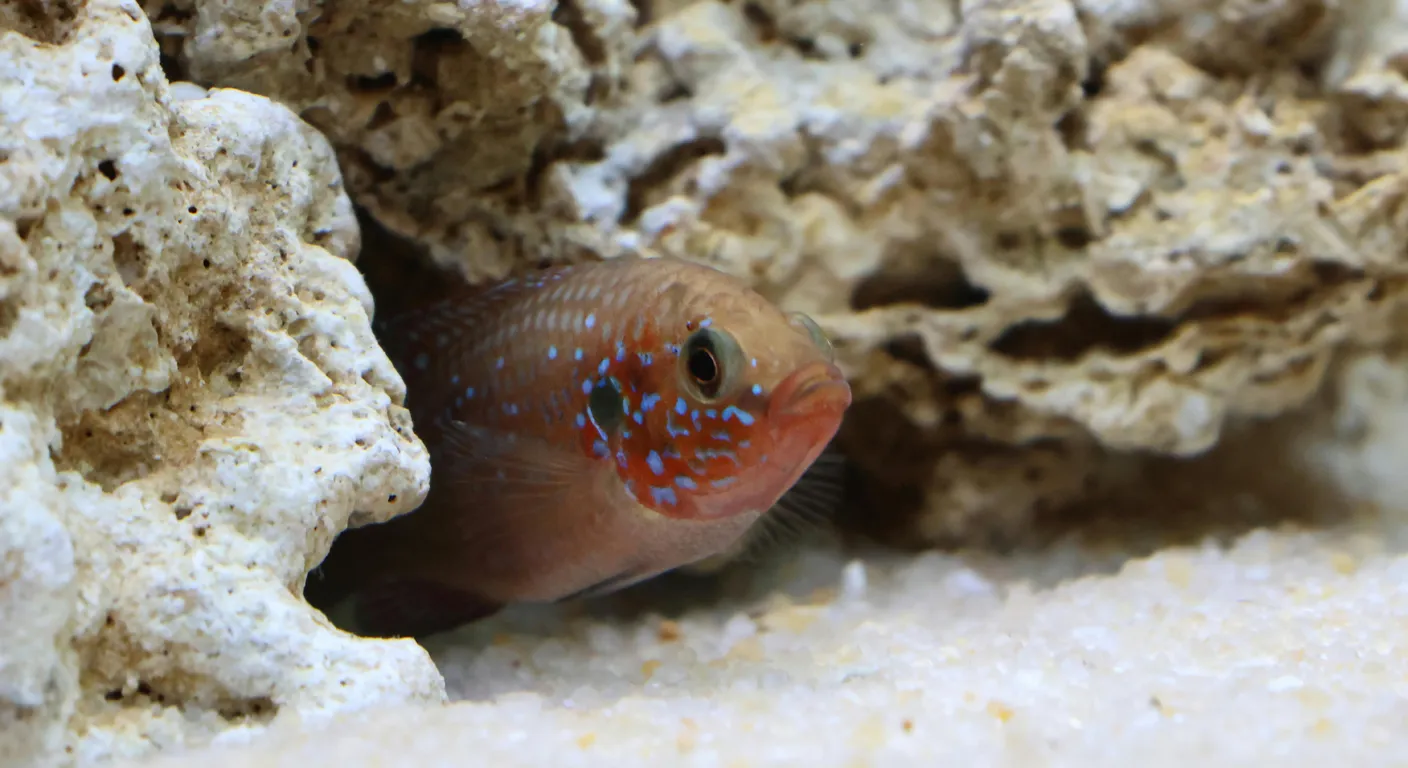
African cichlid tanks are the most common example. Lake Malawi and Lake Tanganyika species require hard, alkaline water with a pH between 7.8 and 8.5. Calcium-rich rocks not only match that chemistry but actively support it, especially in tanks where buffering capacity can drop between water changes.
That same rock in a soft-water setup will cause problems. pH climbs. KH rises past what the fish can tolerate. Plants that prefer slightly acidic water stop growing well. The rock itself has not changed. The water it is sitting in has, and that is the part that matters.
Check Before You Add Anything
No rock should go straight into the tank based on appearance alone. Testing before placement catches chemistry problems before they affect livestock and removes the guesswork entirely.
Simple Tests for Unknown Rocks
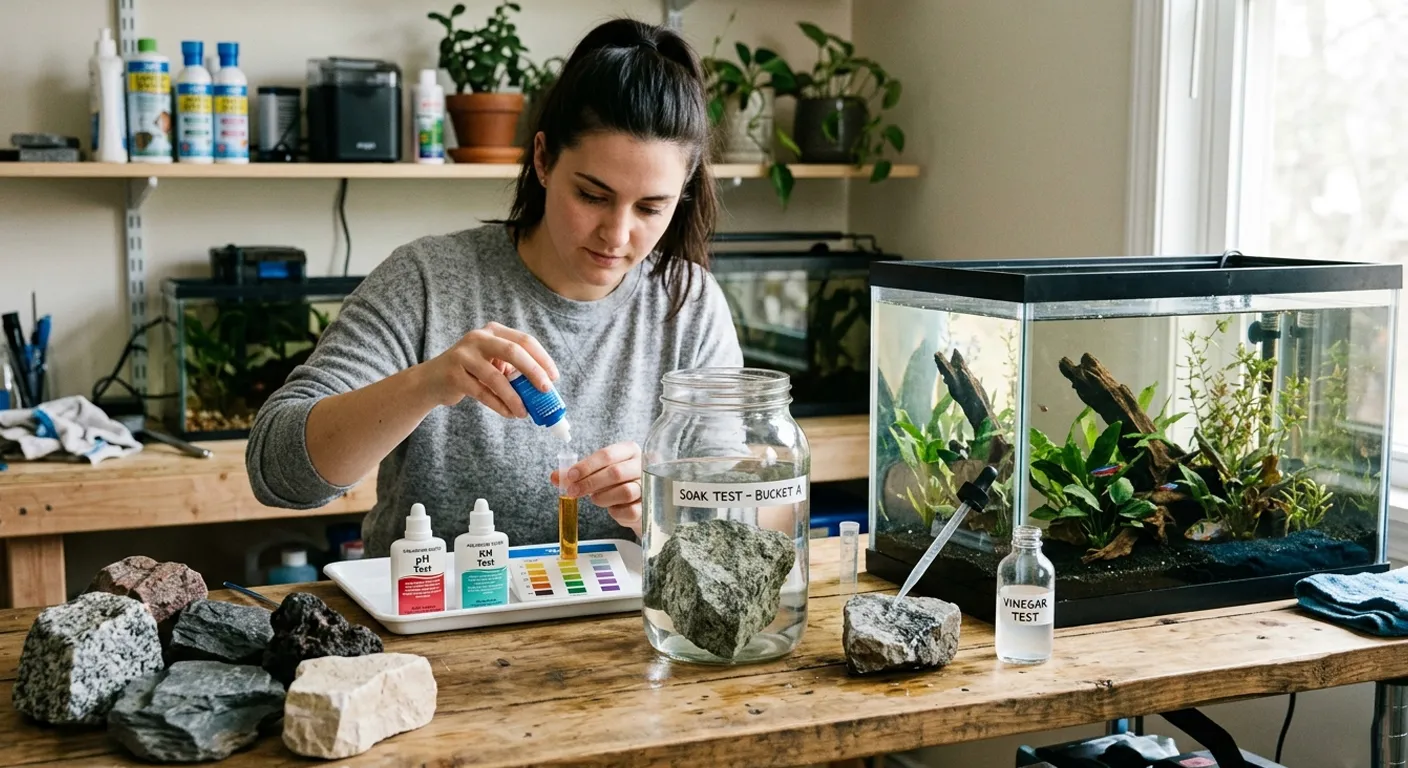
Vinegar test: Place a few drops of white vinegar directly on a dry rock surface. If it fizzes or bubbles, the rock contains carbonate compounds and is reactive. No reaction suggests the rock is likely inert, though this test confirms carbonate content and not the absence of all possible contaminants.
Soak test: Submerge the rock in a bucket of dechlorinated water for 24 to 48 hours. Test the water before and after. If pH or KH rises, the rock is leaching minerals into the water. This gives you a real sense of how the rock will behave in an actual tank environment.
Magnet test and visual inspection: Run a magnet across the surface. Attraction can indicate iron content. Also check for metallic sheens, rust staining, or unusual coatings on the surface.
Signs a Rock May Be Unsafe
Some rocks carry risks beyond chemistry. Watch for:
Unusual shiny veins running through the rock, which can indicate metallic mineral content
Rust-colored staining, which may point to iron oxide deposits that can leach into water
Surface coatings or residue that does not wash off with water
Extremely sharp edges, which can injure fish that swim close or hide inside rockwork
Rocks collected from roadsides, industrial sites, or areas near agricultural land carry a separate contamination risk. Pesticide runoff, heavy metals, and fuel residue can absorb into porous stone and slowly release into aquarium water without any visible signs. Even rocks that appear clean should be avoided if the collection site is questionable.
If a rock consistently changes water readings across multiple days of soak testing, do not use it in a sensitive tank, regardless of how good it looks.
Match the Rock to the Fish
Chemistry is one side of this decision. Livestock behavior and biology are the other.
For Planted Tanks
Planted tanks do best with inert or very low-reactivity rocks. Rising KH from a reactive stone competes with CO2 availability, which directly affects plant growth in injected tanks. Slate, granite, and lava rock all work well here. Smooth-surfaced rocks placed near plant clusters should leave enough open substrate for root spread and allow water flow to reach the lower parts of the tank.
For Cichlid Tanks
Rock placement in cichlid tanks serves a behavioral function. Piles, overhangs, and caves give fish defined territories, which reduces aggression in species that hold strong lines. Texas holey rock and limestone are common choices because they support the high pH and hardness these fish need while providing natural-looking cave structures. One practical note: cichlids dig. Anchor rockwork securely so that rearranging fish cannot topple stacked stones onto other tank inhabitants.
For Shrimp Tanks
Shrimp are sensitive to parameter shifts in ways that are not always immediately visible. A creeping rise in pH from a reactive rock may not cause obvious symptoms right away, but it affects molting cycles and reproductive success over weeks. Inert rocks are almost always the correct call in shrimp setups. Lava rock and slate are both good choices. Porous surfaces on lava rock also build biofilm patches, which shrimp actively graze on throughout the day.
Common Mistakes
Most rock problems in aquariums come from making the selection too quickly and testing too little afterward. Some of the most common errors:
Choosing a rock purely on appearance without testing the source water first
Assuming rocks sold in fish stores have already been tested or are safe for all water types
Adding multiple new rocks at once makes it impossible to identify which one caused a parameter shift
Skipping the soak test because the rock looks similar to something that worked before
Collecting outdoor rocks without considering where they came from or what they may have absorbed
Conclusion
Rock selection comes down to one sequence: start with your water, then choose a rock that works within that chemistry, then verify it before it goes anywhere near the tank. Inert rocks are the reliable default for soft, neutral, and sensitive setups.
Reactive rocks have a legitimate role in hard-water species tanks when used with the right baseline parameters. Testing is not optional. It is the step that separates a stable, well-built aquascape from a system that keeps requiring correction after the fact.












Add comment
You must be logged in to post a comment.