
A new aquarium owner buys five different species because each one looked calm at the store. Within a week, fins are torn, one fish hides behind the filter, and another refuses to eat. Nothing in that tank was inherently aggressive. The problem was compatibility, not temperament alone.
A community fish tank is an aquarium that houses multiple species living together in a stable, low-conflict environment. Building one that actually works requires more than picking fish labeled “peaceful” at the store. It means matching water needs, adult sizes, and behavior patterns before a single fish enters the tank.
This guide explains the core principles behind a successful community aquarium. You will learn how to choose compatible fish, select the right tank size, and build a stable system that holds up for years rather than months.
Core Principles of a Successful Community Tank
Before choosing fish or equipment, it helps to understand what actually makes a community tank function. Most failures trace back to a handful of overlooked details rather than bad luck.
Compatible Water Parameters and Temperament
Fish need overlapping temperature ranges, pH levels, and water hardness to coexist without chronic stress. Two species can both be labeled peaceful and still fail to thrive together if their water chemistry needs do not match.
A common mistake involves mixing soft water species with hard water livebearers. Cardinal tetras prefer soft, slightly acidic water below 7.0 pH, while platies and mollies do better in harder, more alkaline conditions. Both groups may avoid fighting, yet one group will slowly decline from constant chemical stress. Calm behavior on paper does not guarantee compatibility in the tank.
Size, Schooling, and Vertical Layering
Stocking decisions should account for adult size, not the small juvenile fish sold at the store. A neon tetra bought at half an inch will not stay that size, and neither will a common pleco, which can exceed twelve inches.
Schooling fish need proper group sizes to feel secure. Species like tetras and rasboras should be kept in groups of six or more. Smaller groups often lead to fin nipping and visible stress, since the fish redirect their instinct to shoal into chasing tankmates instead.
Layering across the water column also matters. A well-planned community includes:
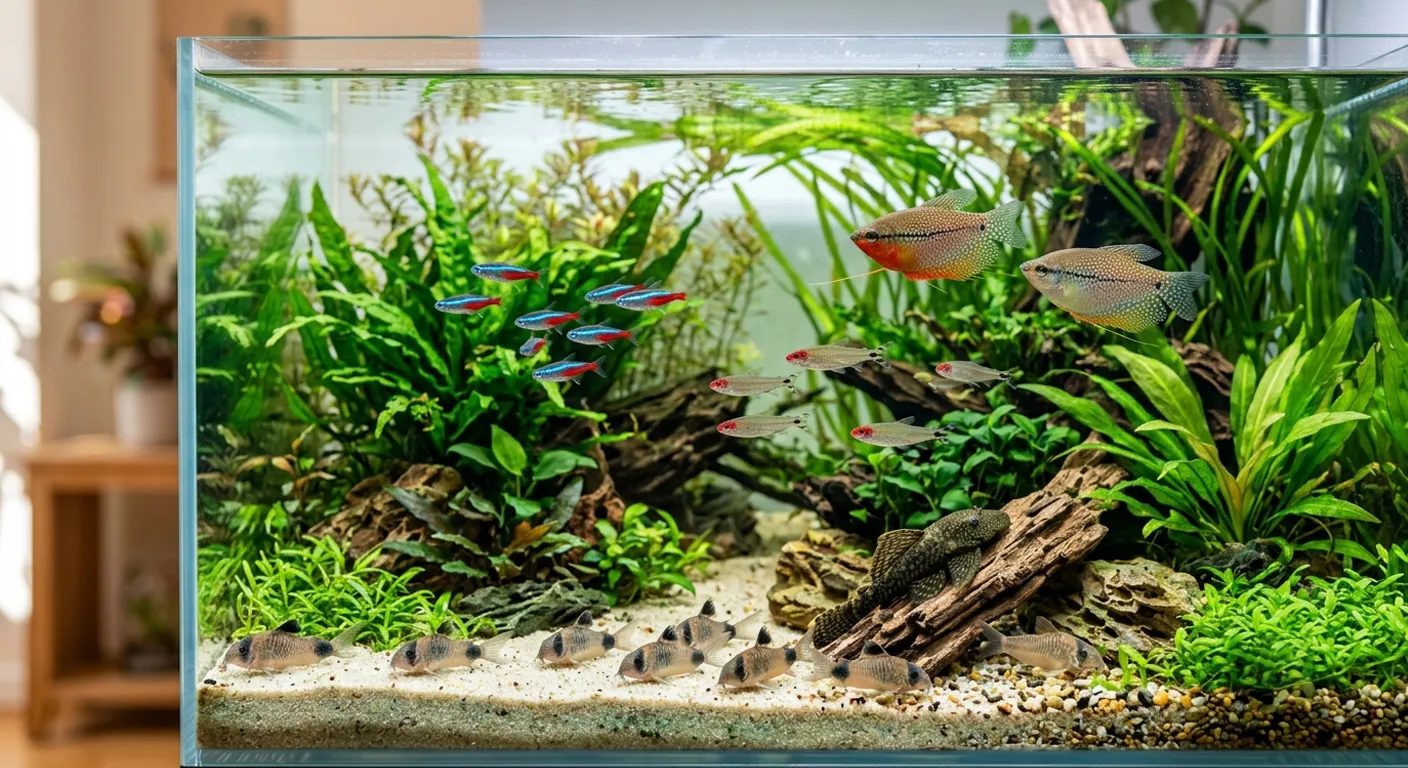
Top dwellers such as hatchetfish or guppies
Midwater species like tetras or gouramis
Bottom dwellers such as corydoras catfish
The outdated “one inch of fish per gallon” rule ignores all of this. Bioload, waste output, and adult body size matter far more than a simple length calculation. A single ten inch oscar produces more waste than fifteen small tetras combined, yet the old rule would treat them as equivalent.
Choosing Tank Size and Location
Tank size sets the boundary for what kind of community you can realistically keep. Larger volumes dilute waste, buffer temperature swings, and give territorial fish room to establish separate zones.
Recommended minimums include:
20 gallons for a small community of nano fish and a few bottom dwellers
40 gallons for a mixed community with schooling fish and a centerpiece species
55 gallons or more for a larger centerpiece fish alongside multiple schools
Location basics matter just as much as size. Place the tank away from direct sunlight to limit algae growth, away from heating vents that cause temperature swings, and on a stand rated for the full water weight. A filled 40 gallon tank weighs close to 450 pounds.
Bigger tanks are often easier for beginners, despite the higher upfront cost. Water chemistry stays more stable in a larger volume, and mistakes like a missed water change cause less damage than in a small, crowded tank.
Essential Equipment and Setup
Equipment choices directly affect water stability and fish behavior. Skipping on filtration or lighting rarely saves money in the long run, since it usually leads to sick fish and repeated purchases.
Filtration, Heating, and Lighting Basics
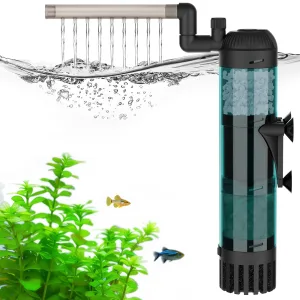
A filter should turn over the entire tank volume three to five times per hour. For a 40-gallon tank, that means a filter rated for 120 to 200 gallons per hour. Most tropical community fish thrive between 74 and 78 degrees Fahrenheit, so a reliable heater with an external thermometer is necessary rather than optional.
Lighting duration should stay consistent, typically eight to ten hours daily. Longer periods encourage algae growth without adding benefit for the fish themselves.
Substrate and Decor for Stability and Behavior
Substrate choice affects both water chemistry and fish comfort. Sand suits corydoras and other bottom feeders that sift through it, while fine gravel works well for planted setups. Sharp or oversized gravel can injure fish that dig or forage along the bottom.
Decor should include caves, driftwood, and dense plant clusters. These break sightlines between territorial fish and give shy species a place to retreat, which reduces chasing and stress across the whole tank.
Water Preparation and Cycling
Many new hobbyists rush to add fish on day one, but a properly cycled tank is not optional for a stable community. Skipping this step is the single most common cause of early fish loss.
Start by dechlorinating tap water with a conditioner, since chlorine and chloramine are toxic to fish and the bacteria a healthy tank depends on. From there, understand the basic nitrogen cycle: ammonia from waste converts into nitrite, and nitrite converts into less harmful nitrate.
A fishless cycle is recommended, using ammonia to feed the beneficial bacteria before any fish arrive. Wait until tests show zero ammonia and zero nitrite consistently before adding the first fish. This process typically takes four to six weeks.
Designing Your Community: Species Selection Framework
A strong community tank follows a simple structure. Choose one anchor species or group, then build complementary layers around it.
Schooling fish need their full recommended group size, and certain combinations should generally be avoided, such as fin-nipping species like tiger barbs alongside long-finned fish like bettas or fancy guppies.
Sample stocking plans by tank size:
20-gallon: six ember tetras, six pygmy corydoras, one dwarf gourami
40 gallon: eight rummy nose tetras, six panda corydoras, one pearl gourami, one bristlenose pleco
55 gallon and larger: ten cardinal tetras, eight corydoras, two dwarf cichlids, one bristlenose pleco
These plans balance top, mid, and bottom zones while keeping bioload within reasonable limits for each tank size.
Aquascaping and Layout for Behavior
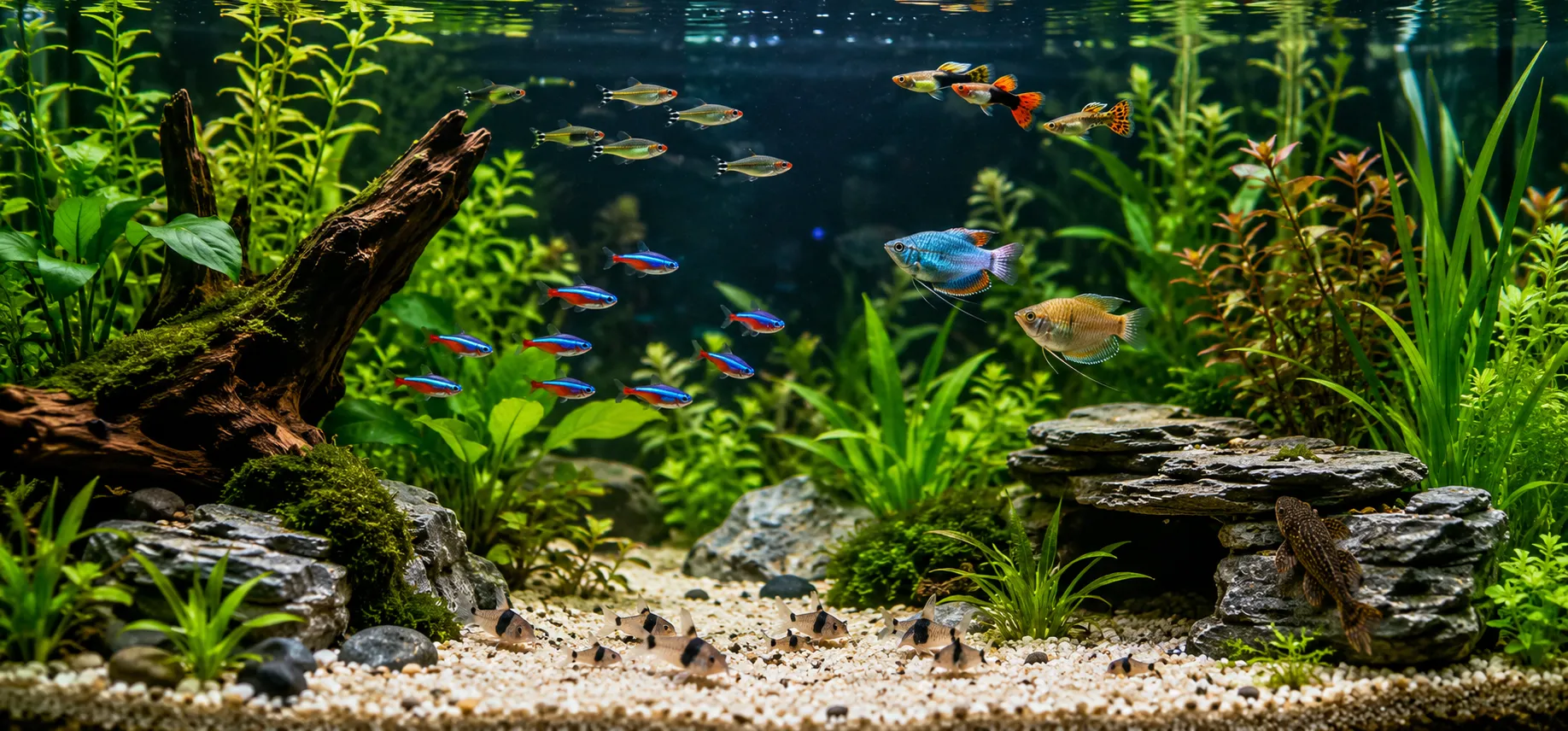
The layout should include an open swimming area alongside planted or structured edges. Fish that school need clear space to move, while shier species need cover along the perimeter.
Plants and hardscape serve a functional role beyond appearance. Java fern and Anubias suit beginners since they tolerate low light and attach to driftwood rather than requiring substrate planting. These plants also absorb nitrate, which supports overall water quality between maintenance sessions.
Feeding, Maintenance, and Health Monitoring
A varied diet keeps a community tank healthy. Most setups benefit from a quality flake or pellet as a staple, supplemented with frozen bloodworms or brine shrimp once or twice weekly. Feed only what fish consume within two minutes to avoid excess waste.
Routine maintenance should include:
Weekly water changes of 20 to 25 percent
Filter media rinsed in old tank water, never tap water
Weekly testing for ammonia, nitrite, nitrate, and pH
Behavior often signals problems before visible symptoms appear. A fish hiding constantly, refusing food, or breathing rapidly at the surface may indicate poor water quality or bullying from tankmates. Quarantine new arrivals for two weeks and be ready to rehome or adjust stocking if aggression persists.
Top Mistakes That Ruin Community Tanks
Several recurring errors account for most community tank failures:
Overstocking based on juvenile fish size rather than adult size
Ignoring adult size entirely when selecting species
Mixing fish by color or appearance instead of compatibility
Skipping the nitrogen cycle before adding fish
Keeping schooling fish in groups too small to feel secure
Combining fin-nipping species with long-fin tankmates
Building an Ecosystem, Not a Collection
A thoughtful community tank functions as a small ecosystem rather than a random assortment of attractive fish. This means designing around behavior first, choosing fewer species with proper group sizes over many species crammed together, and recognizing the difference between a true community tank and a single species colony tank.
Sustainability plays a role, too. Plants that consume nitrate, appropriately sized filtration, and stocking within the tank’s real capacity all reduce the workload on the aquarist while keeping the fish healthier long term.
Conclusion
Building a successful community fish tank means matching water parameters, respecting adult fish size, and designing layouts that support natural behavior. None of these steps requires expensive equipment, only planning before the first fish arrives.
A thriving community aquarium is not created by adding as many peaceful-looking fish as possible. It comes from treating the tank as a balanced ecosystem, where every species has the space, water conditions, and companions it actually needs to settle in and stay healthy for years.







Add comment
You must be logged in to post a comment.