

The number of fishkeeping enthusiasts in cities keeps growing. Walk into any aquarium shop in a major metro area and you will see more first-time buyers than ever before. But here is what most urban renters discover too late: their apartment is not set up for traditional fishkeeping. The lease has restrictions. The floor cannot handle the weight. Moving day becomes a nightmare.
Three things get overlooked until money has already been spent: nitrogen cycling, lease responsibilities, and transportation. This guide covers the legal groundwork tenants need, the nitrogen cycle in plain language, compact solutions that actually work in apartments, smart technology worth considering, and practical issues most beginner guides skip entirely.
What Are The Basic Responsibilities Tenants Should Fulfill
Check your lease before spending a dollar on equipment. Seriously. This step saves you from having to drain and dismantle everything after your landlord finds out.
Reading Your Lease
Most leases have language about waterbeds. Some extend that to aquariums. Look for terms like “waterbed,” “livestock,” or gallon caps. A 10 gallon tank weighs about 111 pounds when filled. A 20 gallon hits 225 pounds. Your lease might cap you at 10 gallons or ban fish entirely.
Get written confirmation from your landlord before setup. Email works. Text messages work. Verbal permission does not hold up when something goes wrong. If your lease is silent on aquariums, still ask. Document the approval. Keep it with your lease paperwork.
Liability & Deposit Protection
Renter’s insurance matters here. Standard policies often exclude water damage from aquariums, but you can add coverage. It costs maybe $10 to $20 extra per year. Worth it.
Use a drip tray under your tank. They catch spills and overflow. Document your setup with photos showing the drip tray, the stand, and the placement. If you ever need to prove you took precautions, you have evidence.
Keep your equipment receipts. If you move out and your landlord tries to claim aquarium damage that predates your tenancy, those timestamped receipts help your case.
Why Nano Tanks Are The Best Choice
For most apartment renters, the answer to “what size tank?” is the same every time. Go nano tank.
Tank Size Comparison Table
| Tank Size | Gallon Range | Weight (Full) | Apt. Suitability | Best For |
| Nano / Pico | 2.5 to 10 gal | 28 to 111 lbs | Excellent | Renters, small spaces, beginners |
| Mid-size | 20 to 40 gal | 225 to 458 lbs | Moderate | Homeowners, dedicated fish rooms |
| Large | 55+ gal | 625+ lbs | Poor | Permanent setups, structural support needed |
Why Nano Specifically Works for Renters
The advantages stack up fast:
Quiet operation with minimal filter noise. Most nano filters run silent enough for bedrooms. You will not hear them over normal apartment sounds. A larger canister filters hum and gurgle all night.
Move-friendly design. A 5 gallon tank can be drained, packed, and set back up in an afternoon. Try that with a 75 gallon system. Moving a big tank means renting a truck, recruiting help, and risking cracks.
Lower running costs. Smaller water volume means less water treatment. A 10 gallon water change uses maybe 2 gallons of conditioner per month. Electricity for heating and filtration runs about $3 to $5 monthly. Compare that to $15 to $25 for larger setups.
Perfect for remote work setups. A well-planted nano tank sits nicely in video call backgrounds. Looks professional without being distracting. Gives you something calming to glance at between meetings.
Limited floor load. Older apartment buildings have weight limits per square foot. A nano tank on a standard nightstand distributes weight safely. Anything over 20 gallons needs reinforced flooring or placement near load bearing walls.
Easier cycling process. Less water means faster nitrogen cycle establishment. You can fishless cycle a 5 gallon tank in two to three weeks. A 50 gallon might take six weeks or longer.
The Nitrogen Cycle You Need To Notice
The nitrogen cycle is the biological process that makes an aquarium livable for fish. Skip this and your fish will die within days. Not an exaggeration.
What Is Nitrogen Cycle
Fish produce waste. That waste breaks down into ammonia, which is toxic. Beneficial bacteria convert ammonia into nitrite, which is also toxic. Different bacteria then convert nitrite into nitrate, which is far less harmful. This chain of conversions is the nitrogen cycle.
In a new tank, those bacteria do not exist yet. You add fish to clean, sterile water and they immediately start producing ammonia. Without bacteria to process it, ammonia levels spike and fish suffocate in their own waste. This is called “new tank syndrome” and it kills more beginner fish than anything else.
How to Cycle Before Adding Fish
Fishless cycling is the method that actually works. Add an ammonia source to the empty tank. Pure ammonia from a hardware store works, or fish food that breaks down into ammonia. Test your water daily with a liquid test kit. Watch ammonia levels rise, then fall as the first bacteria colony establishes. Nitrite levels will spike next, then fall as the second bacteria colony grows. Finally, nitrate appears.
The whole process takes two to four weeks for nano tanks. You know the cycle is complete when you can dose ammonia and it converts to nitrate within 24 hours with no ammonia or nitrite reading. Only then do you add fish.
Some people use “bacteria starter” products. They help, but they do not skip the cycle. You still need to wait and test. There is no true shortcut here.
Fish, Aquascaping & Smart Tech
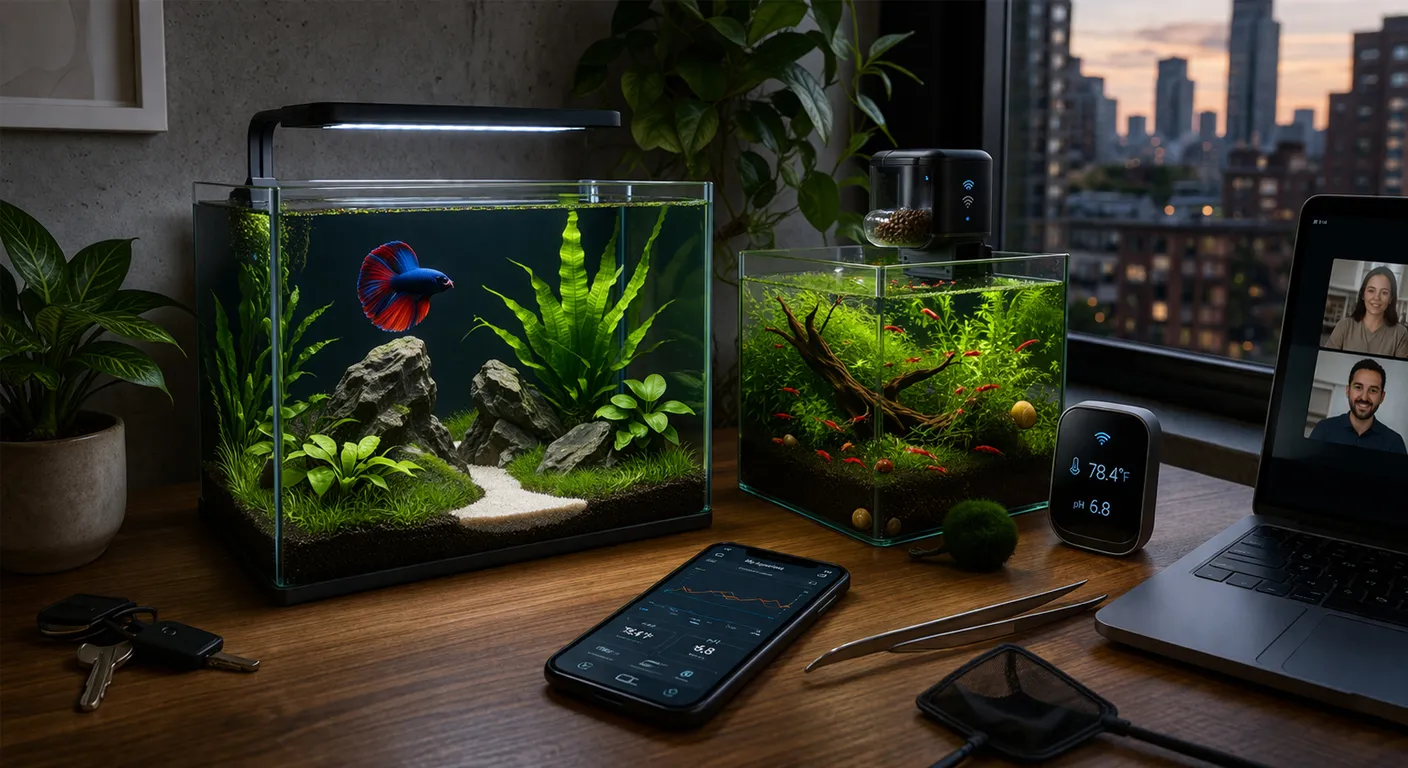
Pick the right fish for your nano tank, treat aquascaping like a creative project instead of just dumping gravel in, and use smart tools that fit a busy renter’s schedule.
Best Fish & Invertebrates for Apartment Nano Tanks
| Fish / Invert | Min. Tank | Difficulty | Community? | Why It Works |
| Betta | 5 gal | Easy | No (aggressive) | Stunning colors, personality, low bioload |
| Neon Tetra | 10 gal | Easy | Yes | Small, peaceful, schooling behavior |
| Guppy | 5 gal | Very Easy | Yes | Hardy, colorful, active swimmers |
| Corydoras | 10 gal | Easy | Yes | Bottom cleaners, peaceful, entertaining |
| Cherry Shrimp | 2.5 gal | Easy | Yes | Algae control, breed easily, tiny bioload |
| Mystery Snail | 5 gal | Very Easy | Yes | Algae eaters, interesting to watch, safe |
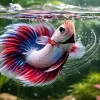
One betta in a 5 gallon makes an ideal first tank. They have personality. They recognize their owner. They do not need tank mates, which simplifies things.
Shrimp tanks are underrated. A 5 gallon planted shrimp colony is low maintenance and genuinely beautiful. Cherry shrimp breed on their own. You will end up with multiple generations in different growth stages.
Aquascaping
Three main styles dominate nano aquascaping. Iwagumi uses rocks and minimal plants for a zen minimalist look. Dutch style packs different plant species in organized rows and layers. Jungle style aims for dense, wild growth that hides equipment.
Live plants work in low light apartments. Java fern, anubias, and marimo moss balls all thrive under basic LED lighting. They improve water quality by absorbing nitrates. They give fish hiding spots. And they look infinitely better than plastic decorations.
The video call backdrop opportunity is real. A well-planted tank behind you during meetings looks polished without being showy. Coworkers always comment on it.
Smart Tech Worth Knowing
Four tools matter most for renters:
WiFi auto-feeders let you travel without asking neighbors to feed your fish. Program feeding times from your phone. Most fish can go three to four days without food anyway, but auto-feeders extend that to a week or more.
Smart water monitors track temperature, pH, and sometimes ammonia levels. They send phone alerts if something goes wrong while you are away. Worth the $50 to $100 investment if you travel for work.
App-controlled lighting simulates sunrise and sunset on schedules. Fish and plants both benefit from consistent light cycles. You can adjust intensity and timing remotely.
Self-cleaning nano tanks like certain all-in-one kits claim to reduce maintenance. They still need water changes, but some have better filtration that extends the time between cleanings. Do not trust marketing that promises zero maintenance. That does not exist.
Tips about Keeping Fish in Apartment
Successful fishkeeping depends on consistent care, practical planning, and understanding the small responsibilities that come with it.
1. Time & Cost
Expect 15 to 30 minutes weekly for water changes and filter maintenance. Monthly costs run $10 to $20 for food, water conditioner, and electricity. Budget $100 to $200 for initial setup. Unexpected costs happen. Fish get sick. Equipment fails. Keep $50 set aside for emergencies.
2. Noise, Smell & Roommates
A properly maintained tank produces no smell. If it smells, something is wrong with your cycle or you are overfeeding. Filters hum quietly. Some people find it soothing. Others find it annoying. Test this before committing. Roommates need to be on board. A tank takes up shared space and adds to the utility bill.
3. Travel
Fish can survive a long weekend without feeding. Longer trips need planning. Auto-feeders work. Asking a trusted friend works. Boarding fish at a local shop works but costs money. Never overfeed before leaving. Uneaten food crashes water quality faster than starvation harms healthy fish.
4. Moving Apartments
Drain most of the water into buckets. Save some tank water for the fish. Transport fish in bags with their original water. Move the tank empty or with just an inch of water to prevent cracking. Set up at the new place immediately. Refill with saved water mixed with fresh treated water. The bacteria colony survives on surfaces, not in the water column, so your cycle stays mostly intact.
Conclusion
Lease groundwork protects you legally. The nitrogen cycle is not optional, it determines whether your fish live or die. Nano tanks are the only realistic choice for renters. And the logistics of travel, noise, and moving are manageable with planning. This hobby rewards people who enjoy structure and observation. It takes real weekly effort. For the right person, a nano aquarium becomes one of the most satisfying parts of apartment life. The constraint of small space actually makes it workable instead of overwhelming.
3.7 Gal Aquarium Kit: Filter, 10-Color Light, Self-Cleaning,...
Original price was: $81.99.$77.39Current price is: $77.39.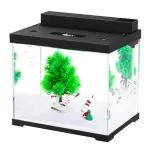












Add comment
You must be logged in to post a comment.