
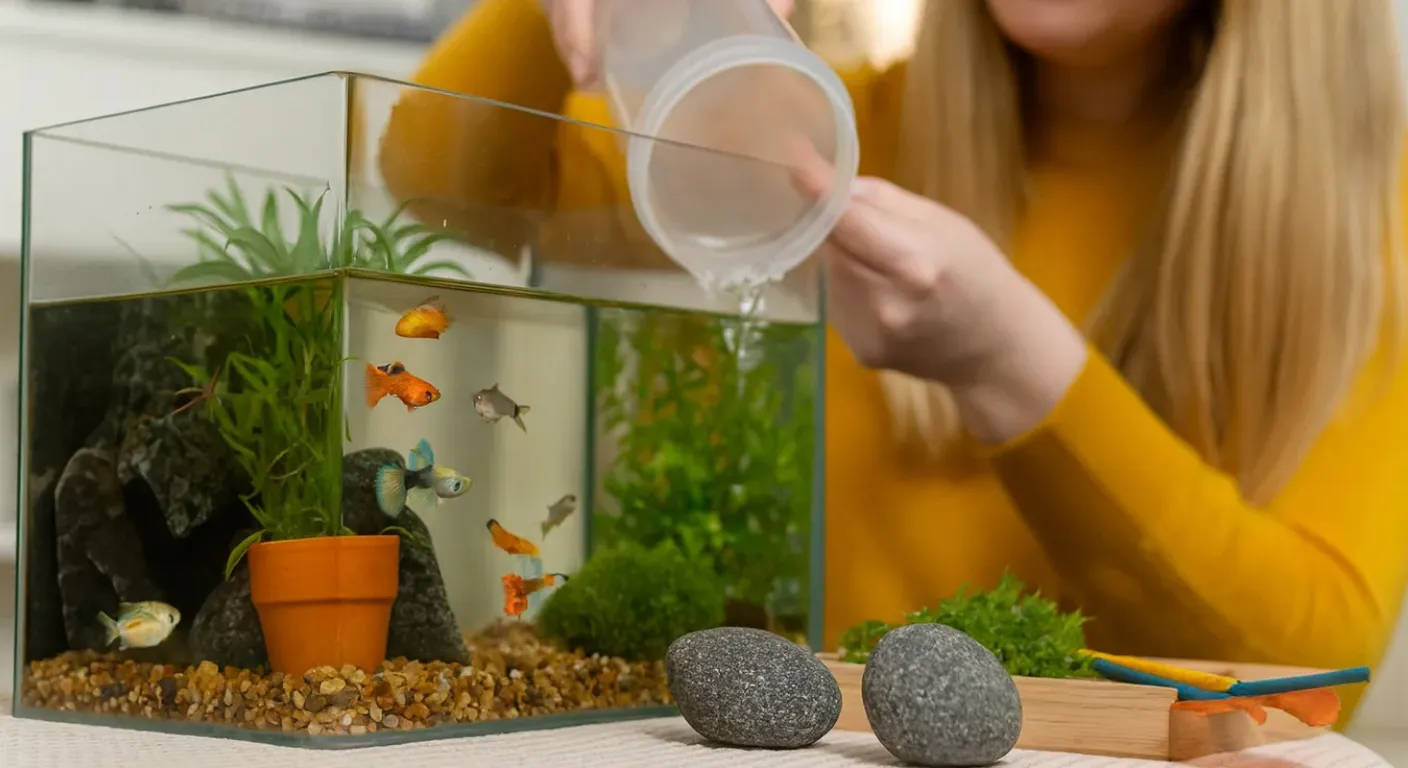
Small nano aquariums (less than 10 gallons) are the most often used by beginners due to their manageable size, low-cost equipment, and ample room to get creative with decoration.
A large number of new hobbyists love to arrange stones, driftwood, and greenery in their small tanks to create a small underwater world. But because of the small amount of water and the sensitive environment within such mini aquariums, novices are subject to unnecessary errors. This may result in stress, algae growth, or turbulent environments.
Due to the small capacity of nano tanks, a basic methodology based on easy plants, soft filtration, and a positive selection of hardscape elements is the key to successful aquascaping.
Novices make gorgeous layouts with only minimal equipment, no CO2 injection, and no intricate fertilizing programs. Even the tiniest of tanks can be made to stay straight with proper instructions, and surprisingly simple to maintain.
In this guide, we will explore nine core nano aquascaping mistakes, along with extra design, style, and temperature tips that keep tiny tanks stable, low-maintenance, and enjoyable to watch.
What Is a Simple Aquascape Design
Simple aquascaping is concerned with clean designs, simple plants, and furniture that runs smoothly and predictably. This method is ideal to use in nano tanks since small amounts react better to a programmed routine and reduced variables.
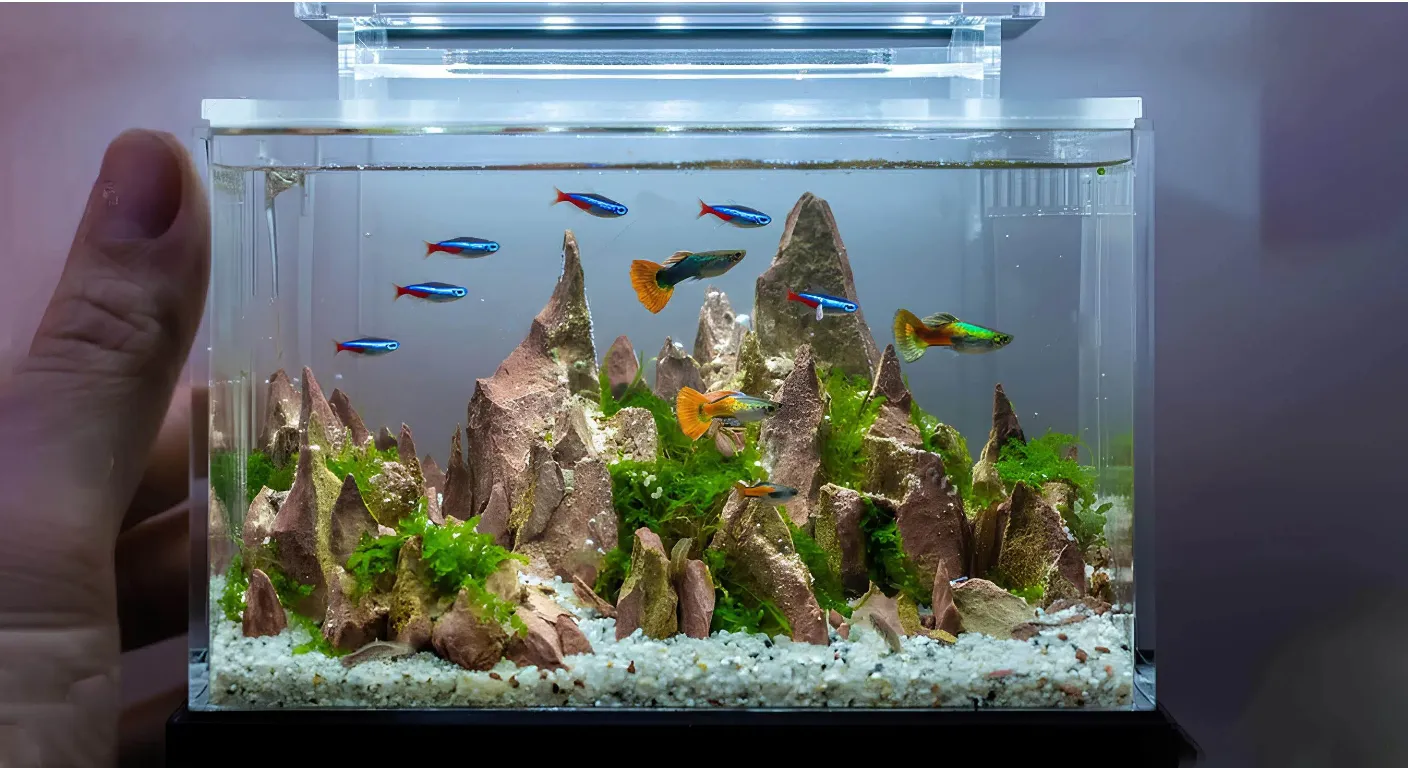
Fewer Elements, Cleaner Layers
Restricting the landscape and the type of plant will make layouts more understandable. The reduced number of species will save on maintenance and form more solid and cohesive visual layers. Small tanks are most appealing with a purpose behind every piece, avoiding cluttered tanks and bringing out the overall form of the design.
No CO₂, Easy Plants
Novices would need to depend on slow-growing and low-light plants like Anubias, Java Fern, and mosses. The use of moderate lighting and the use of easy plants will naturally keep the algae at bay. The tank is stable without injecting CO2 or with high levels of brightness, and it needs a lot less trimming or rebalancing.
9 Nano Aquascaping Mistakes You Should Avoid
These are the most widespread mistakes that beginners commit when aquascaping a nano tank.
Mistake 1: Copying Big Tank Designs Into Tiny Tanks
Most beginners attempt to recreate large aquascapes without even understanding the fact that scale does not act similarly in small aquariums. A rock or a branch that is ideal in a forty-gallon tank is too huge in a three-gallon aquarium. Large-sized garments occupy maximum space, which can no longer be used for planting or swimming pools.
How to Fix It
Choose small, branch-like hardscape pieces sized appropriately for nano aquariums.
Break larger stones or wood into smaller segments to create scale-accurate structures.
Test layouts outside the tank first to ensure the hardscape fits comfortably.
Mistake 2: Flat Substrate and No Sense of Depth
The layout appears dead and two-dimensional because of a totally flat substrate. In the absence of visual depth, nano tanks are smaller and congested than they actually are. Before starting, a lot of amateurs do not realize how the gentle slope or mound of soil can enhance the average beauty.
How to Fix It
Create a subtle slope rising from front to back to improve depth.
Build raised planting mounds using lava rock or mesh under the soil.
Use small foreground plants to reinforce the perspective effect.
Mistake 3: Overpowered Lighting on a Small Volume
Powerful lights flood nano tanks since the volume of water is too low to cushion the growth of algae. Novices tend to buy lights that are intended to be used in larger aquariums. They soon lead to algae explosions and plants that are overworked.
How to Fix It
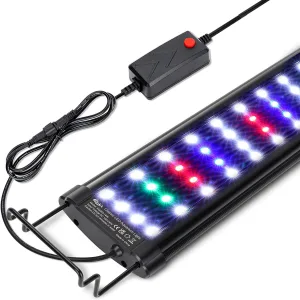
Choose low-to-medium intensity lights appropriate for easy plants.
Run lights for six to eight hours daily instead of long photoperiods.
Avoid high-powered “plant grow” lights until gaining more experience.
Mistake 4: Oversized Filters and Chaotic Flow
Strong filters cause severe currents that sweep plants, disperse substrate, and needlessly strain fish or shrimp. Nano aquariums require mild and steady flow rather than a storm turnover, which most beginners think larger filtration is better.
How to Fix It
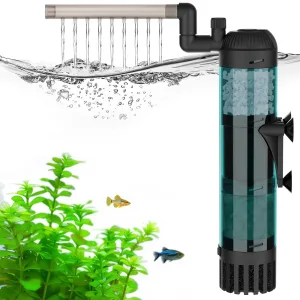
Use small sponge filters or low-output internal filters with adjustable flow.
Position the outflow to create gentle circulation rather than strong turbulence.
Add pre-filters or diffusers to soften the flow if fish appear uncomfortable.
Nano Gear Sizing for Beginner Simple Aquascapes
| Tank Size | Light Level for Easy Plants | Filter Type Suggestion | Temperature Notes |
| 2.5–3.5 gallons | Low to medium output light | Small sponge filter | Maintain 72–76°F for stability |
| 5 gallons | Medium output light | Gentle internal or sponge filter | Keep stable around 72–78°F |
| 10 gallons | Medium output light | Small hang-on-back or internal filter | Easy heating stability, 72–78°F |
Mistake 5: Too Many Plant Species in a Tiny Space
Novices tend to add all the plants they favor and end up having a cluttered and disorderly design. Excessive species cause visual clutter and increase the difficulty of maintenance since the plants will grow at varying rates and will require different trimming patterns.
How to Fix It
Limit the layout to three to five plant species total.
Choose plants with similar lighting and growth habits for consistency.
Use repetition to make the design look intentional and unified.
Mistake 6: Overstocking & Overly High Star Rating
Most nano tanks are functional-looking with a small number of gallons of real water. Excessive inventory soon increases the amount of waste and unbalances the ecosystem. Novices occasionally use high star ratings of aquascapes on the internet and try to replicate dense designs that do not fit in small tanks.
How to Fix It
Keep fish stocking extremely light to reduce bioload stress.
Rely on shrimp or small snails for nano-friendly cleanup crews.
Prioritize plant growth and stability before adding larger livestock.
Mistake 7: Ignoring Nano Tank Instability (Micro Swings)
Little aquariums are dynamic due to the fact that even a slight change in temperature, food, or fertilization may shift water chemistry. Neglecting such micro swings results in algae blooms, plant stress, or livestock issues.
How to Fix It
Perform small, consistent weekly water changes instead of large ones.
Maintain a stable room and tank temperature to avoid sudden fluctuations.
Feed lightly and monitor behavior for early signs of stress.
Mistake 8: Overcomplicating Gear and Dosing
Unneeded CO2 systems, dosing bottles, advanced lights, and complex fertilizers are some of the other items that are bought by new aquascapers. Such instruments are efficient with large aquariums but tend to flood a small nano tank with numerous variables.
How to Fix It
Use a single all-in-one fertilizer at a modest weekly dose.
Skip CO₂ injection and choose slower-growing, low-maintenance plants.
Keep your setup simple to ensure predictable, stable performance.
Mistake 9: No Plan Before Decorating
The most common mistake is the inability to start without a design plan. Novices tend to haphazardly place rocks and will later add vegetation to achieve an imbalanced design that looks clumsy or confusing.
How to Fix It
Sketch a simple layout before adding anything to the tank.
Place hard-scape pieces first and adjust them until they feel natural.
Add plants only after establishing the main structure and layout lines.
Additional Aquascaping Techniques for Beginners
It is far simpler to practice simple nano aquascaping when you are inspired by nature. Numerous novice-friendly layouts are based on a few elements and yet do not feel empty.
Simple Biomimetic Aquarium Aquascaping
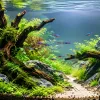
Biomimetic aquascaping is a re-creation of biological scenes using minimal plant species and minimal hardscape components. One branch with moss enclosing it and a carpet plant may seem like a walk through the forest. Even some stones and a delicate stem plant may induce a mountain valley. These simple themes form beautiful scenery without crowding the small area.
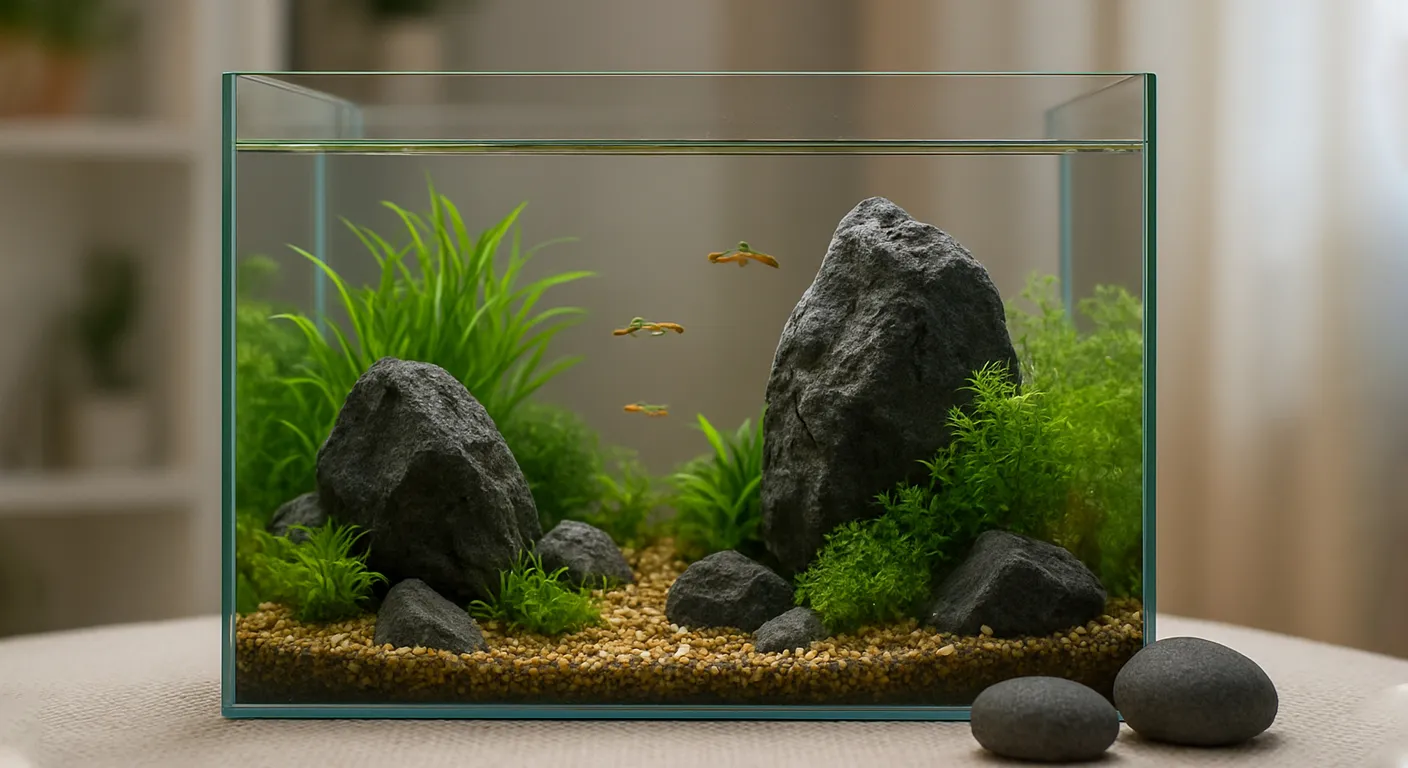
Best Aquascaping Styles for Nano Aquariums
The so-called nature-style layouts are very effective with nano tanks as they utilize the flowing lines, simple rockwork, and soft groupings of plants. Rock-oriented aquascapes or Iwagumi designs can also be appealing in the case of a close selection of stones and their arrangement.
However, Dutch aquascapes are based on a large variety of plants and frequent pruning, which is not easy when one is a beginner with a small tank. Before trying advanced techniques of Dutch designs, most beginners would be advised to begin by using natural or soft rock designs.
Conclusion
Nano aquascaping can be very fulfilling when approached with realistic expectations, consistent practice, and simple designs. Novice users are to keep in mind that small tanks need to be planned and lightened, and their temperature must be kept at a constant temperature. Beginners can avoid the pitfalls of frustration or algae problems by selecting simple plants, low-intensity filtration, and moderate stocking levels.
By avoiding many pitfalls like oversized hardscape, flat substrates, strong lighting, or unnecessary equipment, you will have a much better chance of success. The above guidelines are useful in developing a stable, beautiful nano tank that is fun to use with little work per week.
Through proper planning and simplicity, novices could easily adorn their nano aquariums and design miniature scenery underwater that can be healthy and beautiful.
FAQ
1. How much time does a simple nano aquascape take to maintain each week?
The majority of the nano aquascapes can be maintained by fifteen or twenty minutes of maintenance every week. This normally involves topping up of water and tiny water replacement, clipping plants that grow slowly, and cleaning the glass softly.
2. I’m a beginner with a small aquarium. If I have many plants, can I change the water without doing a full water change?
Yes, heavily planted nano tanks do not need large water changes unless problems appear. A small weekly change of twenty to thirty percent maintains stability without shocking sensitive livestock or disrupting plant growth.
3. How should I care for my small aquarium if I need to go on vacation?
Feed lightly for several days before leaving and perform a small maintenance session. Use an automatic feeder set to minimal amounts or ask someone to feed sparingly. Ensure the light runs on a timer and check temperature stability before departing.
3.7 Gal Aquarium Kit: Filter, 10-Color Light, Self-Cleaning,...
Original price was: $81.99.$77.39Current price is: $77.39.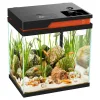

Add comment
You must be logged in to post a comment.