
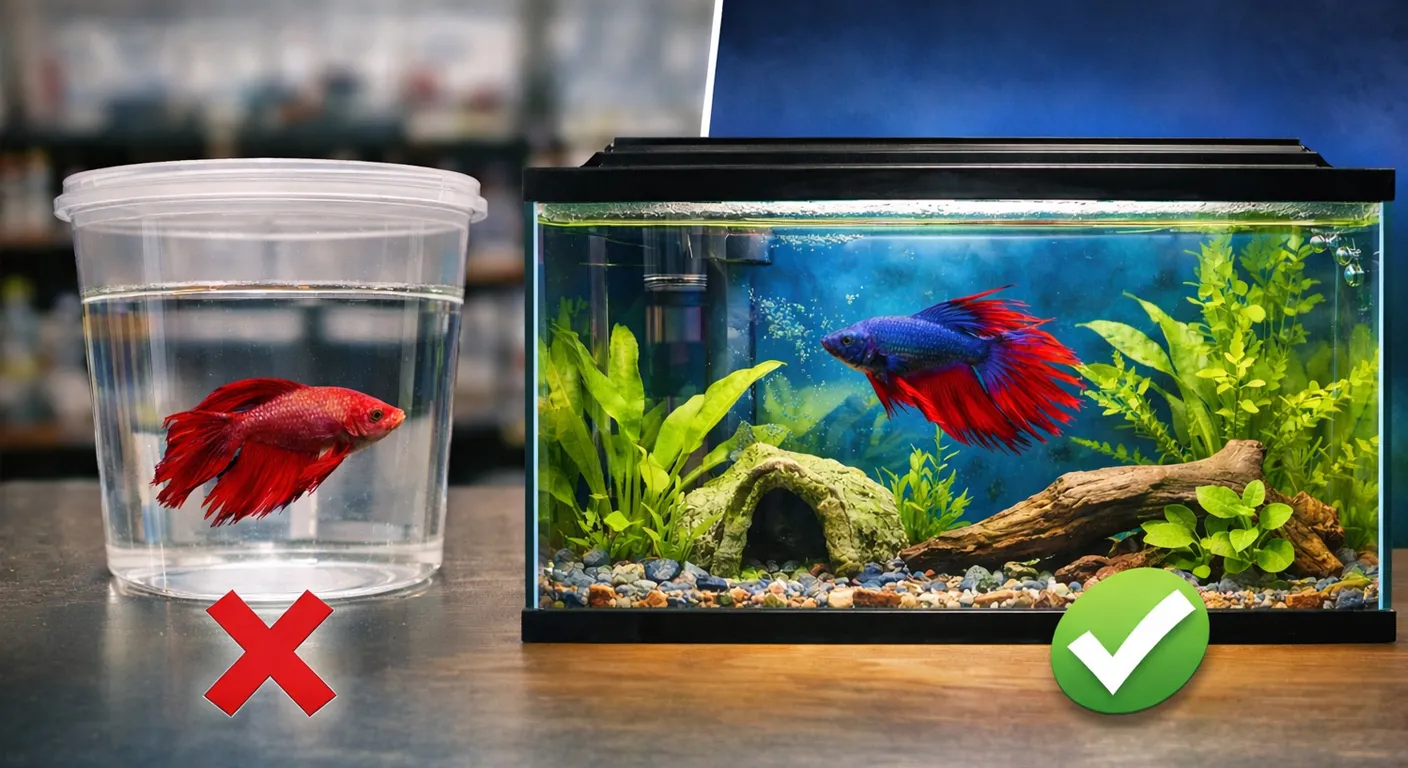
Now the retailers tend to sell betta fish in cups or bowls, which can be misleading to beginners to believe that this is enough space. These are temporary homes that are not long-term houses for your betta. A 5-gallon tank would be the minimum tank size needed to house a single betta fish, but 10 gallons would be better. Bettas require adequate space to perform optimally, display their natural behaviors, and stay healthy throughout their lives.
This is an easy-to-understand guide that avoids the use of technical terms to guide you to the required tank. You will find out the importance of size and how size will directly affect your Betta fish’s wellbeing and happiness.
Table of Content
ToggleMinimum vs Ideal Betta Tank Size
The absolute minimum tank size for one betta fish is 5 gallons, though many experts recommend starting larger. A 5-gallon tank provides enough swimming room and helps maintain more stable water conditions than smaller containers. However, a 10-gallon tank is considered ideal for beginners because it offers greater stability and forgiveness.
Larger tanks dilute waste products more effectively, reducing the risk of dangerous ammonia and nitrite spikes. They also maintain consistent temperatures better, which is critical since bettas are tropical fish requiring warmth. While a 5-gallon tank can work with diligent maintenance, a 10-gallon setup makes fishkeeping significantly easier for newcomers.
Easy Tank Size Picker Table
| Tank Size | Good For Beginners? | Cleanup Jobs | Price Range |
| Under 5 gal | No – too unstable | Daily water changes are required | $10-$30 |
| 5 gallons | Maybe – requires attention | 2-3 times weekly water changes | $30-$60 |
| 10 gallons | Yes – most forgiving | Weekly water changes | $40-$80 |
| 20 gallons | Yes – very stable | Weekly or biweekly changes | $60-$120 |
How Tank Size Affects Betta Behavior
Tank size directly influences Betta’s physical health, mental stimulation, and overall quality of life daily.
Natural Betta Behaviors That Need Space
Bettas exhibit short swimming bursts and explore their environment when they have adequate room to move. They frequently rest near the surface to breathe air using their specialized labyrinth organ. Healthy bettas investigate objects, plants, and decorations, showing curiosity about their surroundings and demonstrating active engagement. These natural behaviors require horizontal swimming space that cramped containers simply cannot provide for your fish.
Stress Behaviors Linked to Small Tanks
Constant hiding or glass surfing (repeatedly swimming along tank walls) indicates stress from inadequate space. Clamped fins held close to the body and dull, faded coloration are warning signs of distress. Lethargy or complete inactivity suggests your betta has given up trying to navigate its cramped environment. These stress behaviors can lead to weakened immunity, making your betta susceptible to diseases and infections.
Signs Your Betta Is Comfortable
Calm, purposeful swimming patterns throughout the tank indicate your betta feels secure in its environment. Curious behavior when you approach the tank shows your fish is alert, healthy, and confident. A regular, enthusiastic feeding response demonstrates your betta is thriving rather than merely surviving in captivity. These positive behaviors emerge naturally when bettas have proper space to establish territories and routines.
Why Bigger Tanks Are Easier
Larger tanks actually simplify Betta care, despite what many beginners assume about maintenance requirements and costs.
Waste Buildup Explained Simply
Fish waste, uneaten food, and decaying plant matter break down into ammonia, a toxic substance harmful to bettas. Small tanks concentrate these toxins quickly, creating dangerous conditions that can poison your fish within hours. Larger water volumes dilute waste products, giving you more time to perform maintenance before levels become lethal. This buffer zone makes larger tanks significantly safer for beginners still learning proper fishkeeping techniques.
The nitrogen cycle converts ammonia into nitrite, then into less harmful nitrate through beneficial bacterial colonies. In small tanks, these bacteria struggle to establish in sufficient numbers to handle waste efficiently. Larger tanks provide more surface area on substrate, decorations, and filter media for bacterial colonization. This robust bacterial population acts as your tank’s biological filter, processing waste continuously and automatically.
Temperature Stability Matters
Bettas are tropical fish requiring consistent temperatures between 78 and 80 degrees Fahrenheit for optimal health. Small tanks cool down and heat up rapidly with room temperature changes throughout the day. Larger tanks hold stable temperatures much longer, reducing stress from temperature fluctuations that weaken immune systems. This stability is especially important during seasonal temperature changes or in rooms with variable climate control.
Temperature swings as small as 2-3 degrees can trigger stress responses in bettas, suppressing their immune function. Cold water slows their metabolism, making them lethargic and vulnerable to bacterial and fungal infections. Fluctuating temperatures also interfere with digestion, potentially leading to bloating and swim bladder problems. A larger water volume acts as thermal insulation, protecting your betta from these dangerous variations.
Maintenance Reality for Beginners
Properly cycled tanks with established beneficial bacteria colonies typically need only weekly partial water changes of 25-30%. Larger tanks are considerably more forgiving if you miss a water change by a day or two. Small tanks require more frequent intervention because water parameters can shift dangerously within just 24-48 hours. This forgiveness factor makes 10-gallon tanks ideal for people with busy schedules or those new to aquariums.
Weekly maintenance on a 10-gallon tank takes approximately 20-30 minutes, including water testing and partial changes. The time investment remains similar to smaller tanks, but the results are dramatically more stable. You’ll spend less time troubleshooting problems and more time enjoying your vibrant, active betta. This efficiency makes larger tanks more sustainable for long-term commitment to proper fishkeeping practices.
Tank Shape Matters More Than Height
The physical dimensions and configuration of your tank affect betta comfort just as much as total volume.
Why Bettas Prefer Long, Wide Tanks
Bettas swim horizontally along the tank length rather than vertically, mimicking their natural behavior in rice paddies. Surface access is critically important because bettas breathe atmospheric air and must reach the surface regularly. Long, shallow tanks provide more swimming territory and surface area than tall, narrow tanks of equal volume. This horizontal space allows bettas to establish territories, explore, and exercise their bodies through natural swimming patterns.
A 10-gallon tank measuring 20 inches long provides significantly better swimming space than a 10-gallon cube. The rectangular shape creates distinct zones where bettas can patrol, rest, and hide comfortably. Horizontal swimming also exercises different muscle groups, promoting better physical fitness and preventing obesity. Bettas in appropriately shaped tanks display more natural behaviors and live measurably longer, healthier lives.
Ideal Tank Dimensions
For a 5-gallon tank, look for dimensions around 16 inches long, 8 inches wide, and 10 inches tall. A 10-gallon tank should measure approximately 20 inches long, 10 inches wide, and 12 inches high. These proportions provide the horizontal swimming space bettas need while maintaining reasonable water depth. Avoid tanks taller than 18 inches, as excessive depth makes surface access difficult for these labyrinth fish.
The surface-to-volume ratio becomes increasingly important when you consider oxygen exchange and beneficial bacteria establishment. Wider tanks provide more surface area where oxygen enters the water and carbon dioxide escapes. This gas exchange supplements your betta’s labyrinth breathing and supports the entire aquarium ecosystem. Greater surface area also means more space for floating plants that bettas naturally prefer.
Shapes to Avoid
Tall vases and narrow column tanks severely restrict horizontal swimming space despite appearing visually appealing for decoration. Decorative jars, bowls, and cube-shaped containers typically lack proper equipment space for heaters and filters. These inappropriate containers create stressful, unhealthy environments that lead to shortened lifespans and behavioral problems. Even if marketed specifically for bettas, avoid any tank that prioritizes aesthetics over fish welfare.
Bowl-shaped containers also make it impossible to maintain stable water parameters due to their limited volume. The curved glass distorts your view of the fish and makes it difficult to assess health. Bowls lack lids, allowing rapid evaporation and temperature loss while creating escape opportunities. These outdated housing options have no place in modern, ethical betta-keeping practices.
Lid and Flow Considerations
Bettas are excellent jumpers and will leap from uncovered tanks, especially when startled or stressed. A secure lid with small openings for equipment prevents escape while maintaining necessary air exchange. Filters should produce gentle water movement since bettas come from slow-moving waters and struggle in strong currents. Adjustable flow filters or baffle devices help create the calm environment bettas naturally prefer.
Strong currents force bettas to expend constant energy swimming against the flow, leading to exhaustion. Their elaborate fins create drag in water, making them poor swimmers in high-flow environments. Position filter outlets near decorations or use sponge attachments to diffuse water movement effectively. Your betta should be able to swim comfortably throughout the entire tank without fighting the current.
Here’s a little tool for your reference to check if your betta get a good environment:
Betta Habitat Grade Calculator
Is your tank a “mansion” or just a “closet”? Find out your habitat grade below.
Enlarge Your Fish Tank In Three Steps
Make any fish tank look bigger and function better by creating three distinct zones, like rooms in a house. Beginners should try this layout approach in either a 5-gallon or 10-gallon tank for best results.
Swimming Zone (Middle, Open)
Leave the center area mostly open with minimal decorations for unrestricted swimming and exercise. This open water allows your betta to patrol its territory and display natural darting movements freely. The swimming zone should comprise approximately 40-50% of your tank’s horizontal space for optimal balance. Bettas use this area for active swimming, hunting imaginary prey, and displaying their reflection.
Avoid cluttering this central space with decorations that impede movement or create strong currents. Your betta should be able to swim the entire tank length in a straight line. This open area also makes feeding easier and allows you to observe your fish’s health. Watching your betta navigate freely helps you spot changes in swimming patterns that indicate potential problems.
Resting Zone (Top)
Add floating plants, betta hammocks, or broad-leafed plants near the surface for resting spots. Bettas spend significant time near the top, so provide comfortable places to rest between breathing trips. Live floating plants like water sprite or Amazon frogbit create natural resting areas while improving water quality. Artificial betta hammocks placed 1-2 inches below the surface work well if you prefer low-maintenance options.
Bettas naturally rest on broad leaves near the surface in the wild, conserving energy between hunting. This behavior reduces the energy required to reach the surface for labyrinth breathing continuously. Adequate resting spots prevent exhaustion, especially in bettas with large, flowing fins that create drag. Position these resting areas in calmer parts of the tank, away from filter output.
Hiding Zone (Sides/Bottom)
Place caves, plants, and decorations along tank sides and bottom to create security and exploration opportunities. These hiding spots reduce stress and give your Betta fish places to retreat when feeling overwhelmed. Use smooth decorations without sharp edges that could tear delicate fins during investigation and exploration. Silk or live plants work better than plastic varieties that often have rough, fin-damaging edges.
The hiding zone should comprise 30-40% of the tank, concentrated along the back and sides. This arrangement keeps the front viewing area relatively open while providing security from multiple angles. Bettas feel more confident exploring when they know safe retreat spaces exist nearby. Proper hiding spots reduce stress-related behaviors and allow natural territorial instincts to emerge safely.
Conclusion
Tank size is absolutely crucial for betta health because larger water volumes create more stable temperature and water quality conditions. The extra gallons in a 10-gallon tank dilute toxins more effectively and maintain consistent parameters throughout the day.
For beginners, a 10-gallon setup is actually easier to maintain than smaller tanks because it forgives minor mistakes. Water chemistry doesn’t fluctuate as rapidly, giving you time to learn proper maintenance techniques without endangering your fish.
Whether you’re considering your first betta or upgrading an existing setup, invest time learning about proper housing. Your betta will reward you with vibrant colors, active behavior, and years of companionship in return.
Related Reading
Related Products For Your Reference
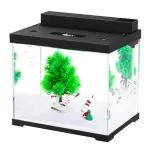
3.7 Gal Aquarium Kit: Filter, 10-Color Light, Self-Cleaning,...



Add comment
You must be logged in to post a comment.