
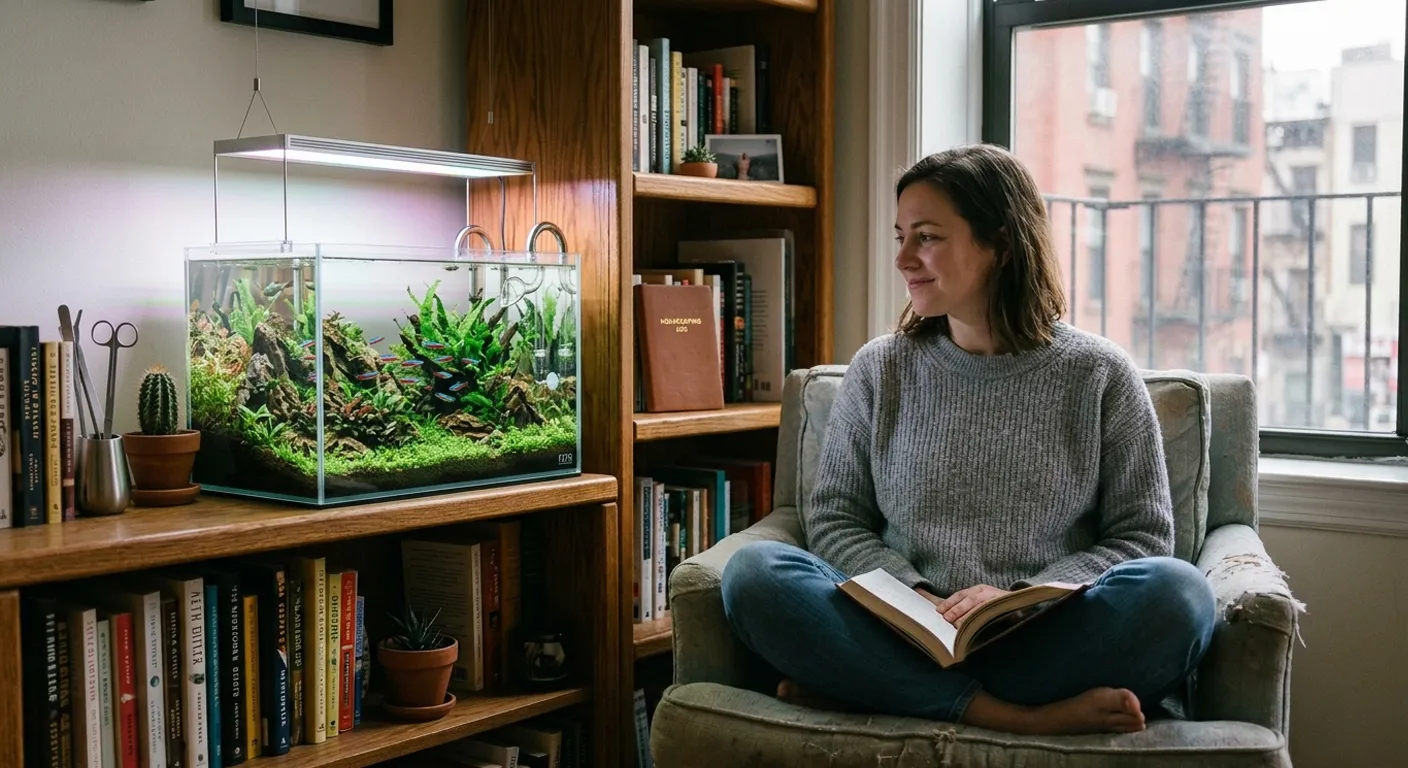
Urban life has a way of accumulating in layers you barely notice until everything feels heavy. The constant noise, the screens that never quite switch off, the apartment walls that seem to close in a little more each season. Most stress relief advice cycles through the same suggestions: exercise more, meditate, and get therapy. All valid, all worth doing. But there is one method that gets almost no serious attention despite solid research behind it, and that is keeping a fish tank. Not as decoration, but as a tool for your nervous system. This guide covers the actual reasons aquariums reduce stress, from the biology to the specific habits that make the lasting difference.
What a Fish Tank Actually Does to Your Body
Before getting into tank setups and species choices, the physiology is worth understanding first. Research shows that watching fish move through water lowers cortisol levels by approximately 20% and slows heart rate by around 11% within just a few minutes of passive observation. Cortisol is the body’s primary stress hormone, and chronic elevation of it contributes to poor sleep, digestive issues, and compounding anxiety disorders over time. A measurable drop of that size, in under five minutes, is worth taking seriously.
A study from the University of Exeter on aquarium viewing found that participants reported meaningful reductions in anxiety after spending time near inhabited tanks, and this was not limited to hobbyists. General populations, including people with existing mental health conditions, showed consistent and repeatable responses across multiple test groups. The same calming effect has been documented in hospital waiting rooms, where fish tanks reduced patient anxiety before procedures more effectively than several other environmental interventions tested alongside them.
Sound Environment
The sound environment also plays a role that most people underestimate. The low ambient noise of a filtered tank, that soft, steady flow, partially masks the intrusive audio that urban apartments absorb from streets, neighbors, and building systems around the clock. It is not complete silence by any stretch, but it shifts the sensory character of a room in a way that feels noticeable within days of setting one up.
There is also the question of visual motion.
The unpredictable but calm movement of fish activates the same parasympathetic nervous system response that structured meditation targets, except it happens through passive attention rather than deliberate mental effort. For people who struggle to sit still and genuinely clear their mind, a tank offers a practical entry point that requires no apps, no guided sessions, and no instructions to follow.
The Specific Stress Pattern Urban Life Creates
City stress is not the same as general stress, and that distinction matters when choosing what actually works for relief. It has particular qualities: sensory overload, spatial restriction, irregular schedules, and a specific kind of social exhaustion that builds slowly and then all at once.
Why Most Common Solutions Fall Short in Apartments
Dogs require outdoor space, daily exercise routines, and significant emotional availability, all of which are already stretched thin in dense city environments where most people are operating on depleted reserves. Candles and ambient playlists address surface-level agitation but do not create any lasting physiological shift or behavioral anchor that carries over into the next day. Gym memberships work well in theory, but consistency drops sharply when someone is already running on fatigue from commuting and an unpredictable work schedule.
Fish keeping addresses a set of specific urban constraints that most wellness solutions quietly ignore altogether:
It requires no outdoor space. Placing aquarium in your apartment is not that hard. A 5 to 10-gallon tank fits on a standard bookshelf or corner desk without occupying any meaningful room in a small apartment.
It operates at low volume relative to typical city noise and generates no neighbor complaints regardless of the hour.
It provides biophilic contact, which is direct exposure to living organisms in a controlled setting, without requiring emotional output from you in return.
Startup costs stay manageable. A quality nano kit typically runs between $60 and $100, which sits well below the ongoing cost of most urban wellness services or even a single therapy session copay.
The Screen Fatigue Factor
Remote work combined with commutes full of phone use has pushed average daily screen exposure for urban adults well past eight hours, and both the eyes and the central nervous system absorb the sustained cost of that. A fish tank is entirely analog, with no blue light emission, no notifications pushing through, and no response required from you at any point. Looking at one is a genuine rest state, not an engagement state, and that distinction becomes more significant the longer you have been staring at screens all day.
How a Care Routine Creates Mental Stability
Urban schedules tend to be irregular in ways that create their own layer of ongoing stress, with late deliverables, shifting priorities, no fixed break times, and weekend plans that dissolve without warning. That absence of reliable daily structure is its own quiet category of chronic tension that most people do not identify until they are well into it.
Fish care introduces a light but consistent routine without placing any real burden on your time or energy. A few natural behavioral anchors develop over weeks:
Morning feeding takes under two minutes and functions as a reliable grounding action before the inbox gets checked or the workday spiral begins.
Water parameter testing once or twice per week requires just enough focused attention to interrupt a stress loop without demanding sustained mental effort or complex decision-making.
Partial water changes, typically 10 to 20% of tank volume each week, create a straightforward and satisfying task that feels productive without the cognitive weight of actual work.
When external life feels genuinely unmanageable, the tank becomes a small system you are fully in control of, and that sense of agency over something, even something minor, has measurable effects on generalized anxiety levels over time. Researchers studying perceived control in stressful environments consistently find that having one reliable domain of mastery reduces overall psychological load across other areas of life.
Low-Effort Company for People Experiencing Social Burnout
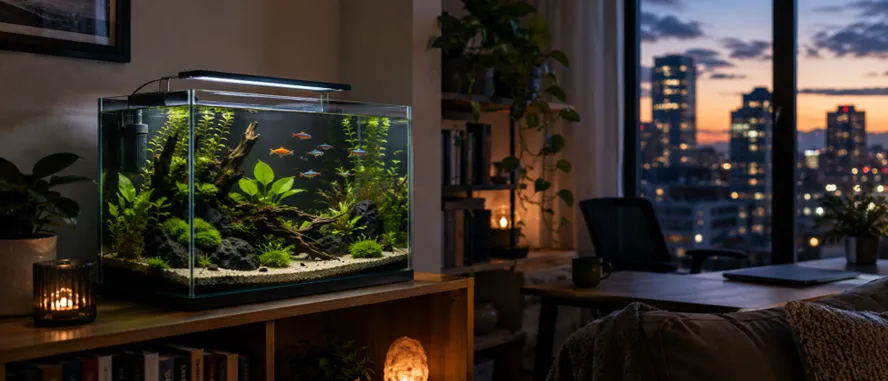
Social fatigue is a real and underreported issue in dense urban areas, and after extended contact with colleagues, commuters, and strangers across a full workday, most people return home wanting presence without the additional weight of interaction or expectation.
Fish provide exactly that kind of presence. You can name them, watch for individual personalities, and over a few weeks, you begin recognizing specific fish by their markings or consistent behavioral tendencies. That growing familiarity builds a quiet emotional bond that does not require anything from you on difficult days and carries no guilt when you ignore the tank entirely for an evening.
For people who experience both loneliness and overstimulation at the same time, this particular type of company fills a specific gap that neither social plans nor solo activities typically manage to address.
Aquascaping as an Active Creative Practice
Fish keeping is often treated as entirely passive, but the tank itself is a functional design space that most people never fully use. Aquascaping involves arranging live plants, rocks, driftwood, and substrate into an underwater layout, and it functions as a hands-on creative practice rather than a maintenance task.
For city dwellers, this matters in a specific way because urban apartments offer almost nothing that can be physically shaped or redesigned with any regularity, and an aquascape gives you a contained environment that is entirely yours to build and refine over time at your own pace.
Key elements worth knowing before you start:
Live plants such as Java fern, anubias, and moss balls stabilize water chemistry while visually developing over weeks as they grow. The slow and visible progress tends to be genuinely satisfying without placing any demand on your schedule.
Hardscape materials like lava rock and dragon stone allow for spatial composition within the tank, which is essentially a layered three-dimensional design within the footprint of a glass box.
Adjustable LED lighting lets you set the visual atmosphere of the tank at different times of day, which also influences how the surrounding room feels during evenings spent at home.
Progress in aquascaping is visible and physically real in a way that professional progress rarely is. In environments where achievements often feel abstract or slow to arrive, that tangibility carries genuine psychological weight.
Mistakes That Cancel Out the Benefits
A few consistent errors appear among new hobbyists, particularly in apartment setups, and most of them are easy to avoid with a small amount of upfront awareness:
1. Wrong tank size for the space
A one-gallon bowl is chemically unstable and generates more frustration than calm over time. A 20-gallon tank in a studio apartment becomes an overwhelming maintenance burden that defeats the purpose entirely. The 5 to 10 gallon range is the practical sweet spot for urban stress relief, specifically.
2. Noisy filtration equipment
Some filters and air pumps produce more ambient sound than a small apartment can absorb comfortably, which undermines the entire acoustic benefit of having a tank. Look specifically for filters with adjustable flow and verified quiet ratings before purchasing, rather than defaulting to whatever comes packaged in a starter bundle.
3. Skipping the care routine
Consistent feeding and regular water changes are not optional upkeep tasks. They are the actual mechanism through which the stress relief works, and a neglected tank generates guilt and anxiety rather than the calm you set it up to create.
4. Treating fish as furniture
The emotional connection matters more than most aquarium guides acknowledge. Naming fish, observing their behavior, and building even a minor sense of relationship with them is part of what makes this approach work, where passive decoration alone does not.
Conclusion
A fish tank is not a replacement for therapy, medication, or the structural changes that address the real sources of stress in your life. What it is: a consistent, affordable, research-supported tool that fits inside a studio apartment and works through several mechanisms simultaneously. The physiological effects, the care routine, the creative practice, and the quiet companionship all accumulate together over weeks and months in ways that tend to sneak up on you.
Start with a basic nano setup, pay attention to what shifts in the first few weeks, and build from there. The results tend to be subtle and gradual rather than dramatic or immediately obvious. For managing ongoing urban stress, that steady and quiet kind of relief is often what actually holds.
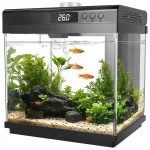
3.7 Gal Aquarium Kit: Filter, 10-Color Light, Self-Cleaning,...
Original price was: $81.99.$77.39Current price is: $77.39.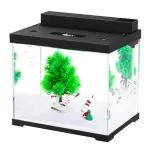













Add comment
You must be logged in to post a comment.