
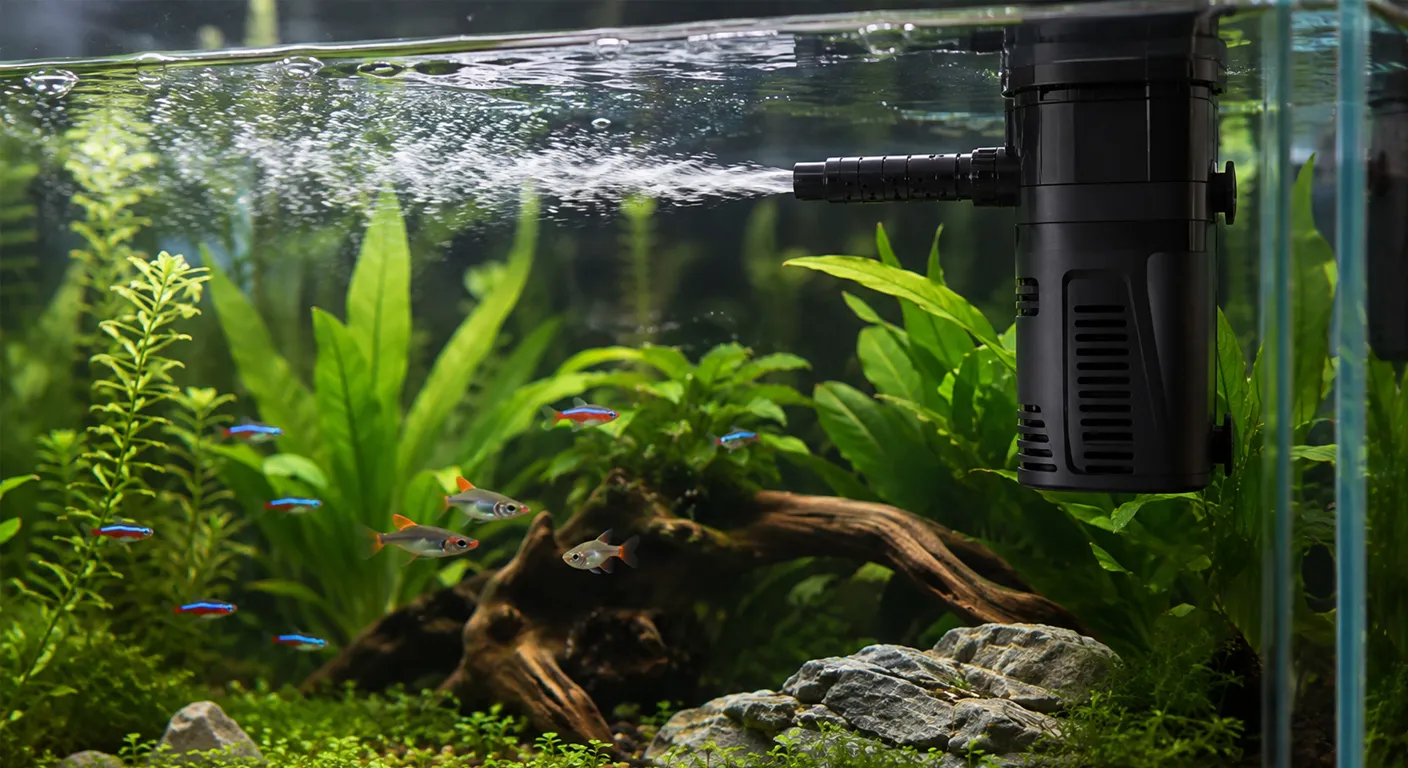
Cloudy water, visible debris, weak circulation, and loud equipment can quickly take away from the enjoyment of an aquarium. While water changes, feeding habits, and stocking levels all affect water quality, the right filter plays a central role in collecting waste and keeping water moving throughout the tank.
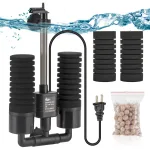
The AQQA Aquarium Internal Filter is a fully submersible power filter built for fish keepers who want a compact in-tank solution with adjustable flow, sponge filtration, and two outlet styles. Rather than being a simple sponge filter, it combines mechanical filtration, biological media, water circulation, and surface agitation in one unit.
Its strongest selling point is flexibility. You can use the spray bar for broad, gentle surface movement or switch to the wide outlet when your tank needs stronger directional flow. This makes it a useful option for many freshwater aquarium setups, provided you choose the correct model and maintain the sponge regularly.
Table of Content
ToggleWhat This Filter Is Designed to Solve
An aquarium filter is not only there to make the water look clean. A good filter helps address several everyday aquarium problems at once:
Uneaten food and loose debris drifting around the tank.
Waste settling in corners behind plants, rocks, or ornaments.
Weak surface movement and limited oxygen exchange.
Water that becomes cloudy between maintenance sessions.
Equipment noise that is distracting in a bedroom, office, or living room.
Limited space behind the aquarium for hoses or external filters.
The AQQA internal filter addresses these issues through an in-tank submersible design. It draws water through a biochemical sponge, trapping suspended debris before returning filtered water to the aquarium. The sponge also gives beneficial bacteria a place to colonize, helping support the biological filtration that processes fish waste over time.
This does not mean the filter eliminates the need for water changes. No filter can remove every dissolved waste compound indefinitely. However, it can make routine tank care more manageable by collecting solid waste, improving circulation, and helping maintain a more stable aquarium environment.
Circulation Matters More Than Many Beginners Expect
A filter’s output affects more than water clarity. It determines how water moves across the tank, whether debris reaches the intake, and how well oxygen exchange occurs at the surface.
AQQA includes an adjustable flow control, allowing you to reduce or increase the water movement based on the needs of your aquarium. This is valuable because fish do not all respond to current in the same way.
A moderate-to-strong flow can be useful in a longer community aquarium with active fish, larger filtration needs, or hardscape that creates low-flow areas. More circulation can help carry floating debris toward the filter and reduce stagnant zones behind driftwood, rocks, and decorations.
A lower flow may be more appropriate for bettas, fry, smaller fish, shrimp, fancy goldfish, or tanks with delicate plants. These animals may struggle if they are constantly pushed by a powerful outlet current.
The best approach is to start at a medium setting and observe the aquarium. You want to see gentle movement across the water surface and enough circulation to keep debris from accumulating, without fish constantly swimming against the current.
| What you observe | What it may mean | Adjustment to try |
| Fish avoid the filter outlet or struggle to hold position | Current may be too strong | Lower the flow or aim the outlet toward the glass |
| Food is pulled away before fish can eat | Water movement is too direct | Reduce flow during feeding or use the spray bar |
| Debris collects behind décor | Dead spots may be present | Increase flow or change outlet direction |
| Water surface is nearly still | Surface agitation may be too low | Raise the spray bar slightly or increase flow |
| Plants and moss are pushed constantly | Current may be excessive for the layout | Reduce flow or reposition the outlet |
Spray Bar or Wide Outlet: Which Setup Is Better
One of the most useful design details is the inclusion of two water outlet configurations. The spray bar distributes water more evenly across the surface, while the wide outlet produces a more concentrated water flow and stronger wave-making effect.
Neither option is universally “better.” They create different water patterns, so the right one depends on your livestock and aquarium layout.
The spray bar is typically the better option when you want gentler, broader circulation. Place it near the surface and angle it slightly upward to create ripples. This can help improve gas exchange while avoiding a harsh current in one part of the aquarium. It is a particularly sensible configuration for planted aquariums, peaceful community tanks, or fish that prefer slower movement.
The wide outlet is better when you need a more direct current. It can help move debris across the aquarium, improve circulation in a longer tank, or prevent water from becoming stagnant behind decorations. If the current feels too strong, aim it toward the aquarium glass. The flow will spread out after hitting the glass instead of creating a narrow stream directly across the tank.
| Outlet style | Best choice for | Main benefit | Potential drawback |
| Spray bar | Planted tanks, community tanks, calm-flow fish | Broad movement and surface agitation | Less direct force for moving debris |
| Wide outlet | Longer tanks, active fish, tanks with dead spots | Stronger directional circulation | May need repositioning for delicate fish |
The outlet choice can also change as your aquarium changes. You may use the spray bar in a newly planted tank, then switch to the wider outlet later if debris begins to settle around larger decorations. That flexibility is more useful than having a filter with only one fixed outlet direction.
How Well Does the Sponge Filtration Work
The filter uses a biochemical sponge, which handles two important filtration jobs. The first is mechanical filtration: suspended debris is drawn into the filter and caught in the sponge. This includes loose fish waste, uneaten food, plant fragments, and fine particles that may otherwise remain visible in the water.
The second is biological filtration. Over time, beneficial bacteria colonize the sponge’s surface. These bacteria help process ammonia and nitrite produced by fish waste and decomposing organic material. That makes the sponge part of your aquarium’s nitrogen cycle, not just a disposable cleaning pad.
AQQA’s design is therefore more useful than a simple circulation pump. It actively moves water while creating a home for biological filtration media.
The most important maintenance rule is not to replace or aggressively scrub the sponge too often. If the sponge becomes coated in debris, rinse it gently in a bucket of aquarium water removed during a normal water change. This clears enough debris to restore flow while helping preserve beneficial bacteria. Avoid rinsing it under untreated tap water because disinfectants in tap water can damage the bacterial colony.
How often should you clean it? There is no fixed answer. A lightly stocked tank may need only periodic cleaning, while heavily stocked fish tanks, tanks with messy eaters, or turtle tanks may need sponge maintenance more frequently. A product reviewer using the filter in a 40-gallon turtle tank said it kept the water very clear but required weekly cleaning because it trapped so much waste.
That should be viewed as a practical trade-off rather than a flaw: the more debris a compact filter catches, the faster the media can become clogged.
Quiet Performance Depends on Installation
AQQA describes this model as ultra-quiet, making it a potentially good choice for aquariums in bedrooms, offices, and shared living spaces. However, quiet operation depends on setup and maintenance as much as the filter’s motor design.
A properly installed submersible filter should produce a low, unobtrusive operating sound. If you hear rattling, loud humming, or vibration, check whether the unit is firmly secured to the glass, whether air is trapped in the filter body, and whether debris has built up around the intake or impeller area.
Follow these practical setup steps:
Mount the filter securely inside a back corner of the aquarium.
Ensure the filter is submerged as directed in the manual.
Keep the intake away from loose substrate, tall moss, or decorations that could restrict water flow.
Select the spray bar or wide outlet based on your desired current.
Start at a moderate flow setting instead of maximum power.
Watch fish behavior and outlet direction for the first several days.
Clean the sponge when water flow becomes noticeably weaker.
The in-tank installation saves external space and avoids the need for hoses, priming, or plumbing. That is especially convenient for beginner tanks, temporary quarantine tanks, and aquariums set close to a wall. The downside is that the filter remains visible inside the aquarium. Positioning it behind tall plants, wood, or background décor can make it less noticeable without blocking the intake.
Is It the Right Filter for Your Aquarium
The AQQA Aquarium Internal Filter is best suited to freshwater aquarium owners who want a straightforward filtration system with more flow control than a standard air-powered sponge filter.
It is likely a good match if you have:
A community aquarium that needs adjustable circulation.
A planted tank that benefits from a spray-bar setup.
A quarantine or hospital tank that needs quick, uncomplicated filtration.
A compact aquarium without room for an external filtration system.
A tank with visible debris collecting in low-flow areas.
A turtle or high-waste setup, as long as you are prepared for more frequent sponge cleaning.
It may not be the ideal primary filter if you have a heavily stocked large aquarium, need exceptionally high filtration capacity, or strongly prefer equipment that remains outside the aquarium. For those situations, consider combining an internal filter with another filter type or exploring larger options in the AQQA aquarium filter collection. The category includes compact filters, sponge filters, hang-on-back filters, and higher-flow aquarium filtration options for different tank sizes.
The Bottom Line
The AQQA Aquarium Internal Filter is not simply a compact device for making aquarium water look clearer. Its adjustable flow, sponge-based filtration, and choice of spray-bar or wide-outlet circulation give fish keepers practical control over their tank’s water movement.
It is particularly worthwhile for hobbyists who want an uncomplicated submersible filter that can adapt to a planted community tank, a quarantine setup, or a compact freshwater aquarium. Regular sponge cleaning is essential, and selecting the correct flow level takes a little observation, but those steps are normal parts of responsible aquarium maintenance.
When installed in the right location and maintained routinely, this filter can help create a cleaner, more stable, and quieter aquarium environment—without requiring complicated external equipment.
Related Products For Your Reference
AQQA 12W 112GPH Hang On Aquarium Filter, Power...
Dual-Use Aquarium Filter Pump For Fish Tank Filtering...
Auto Start Hang on Back Aquarium Filter, 6W/...
Aquarium Electric Sponge Filter (3W/5W) with Double Filtration...












Add comment
You must be logged in to post a comment.