
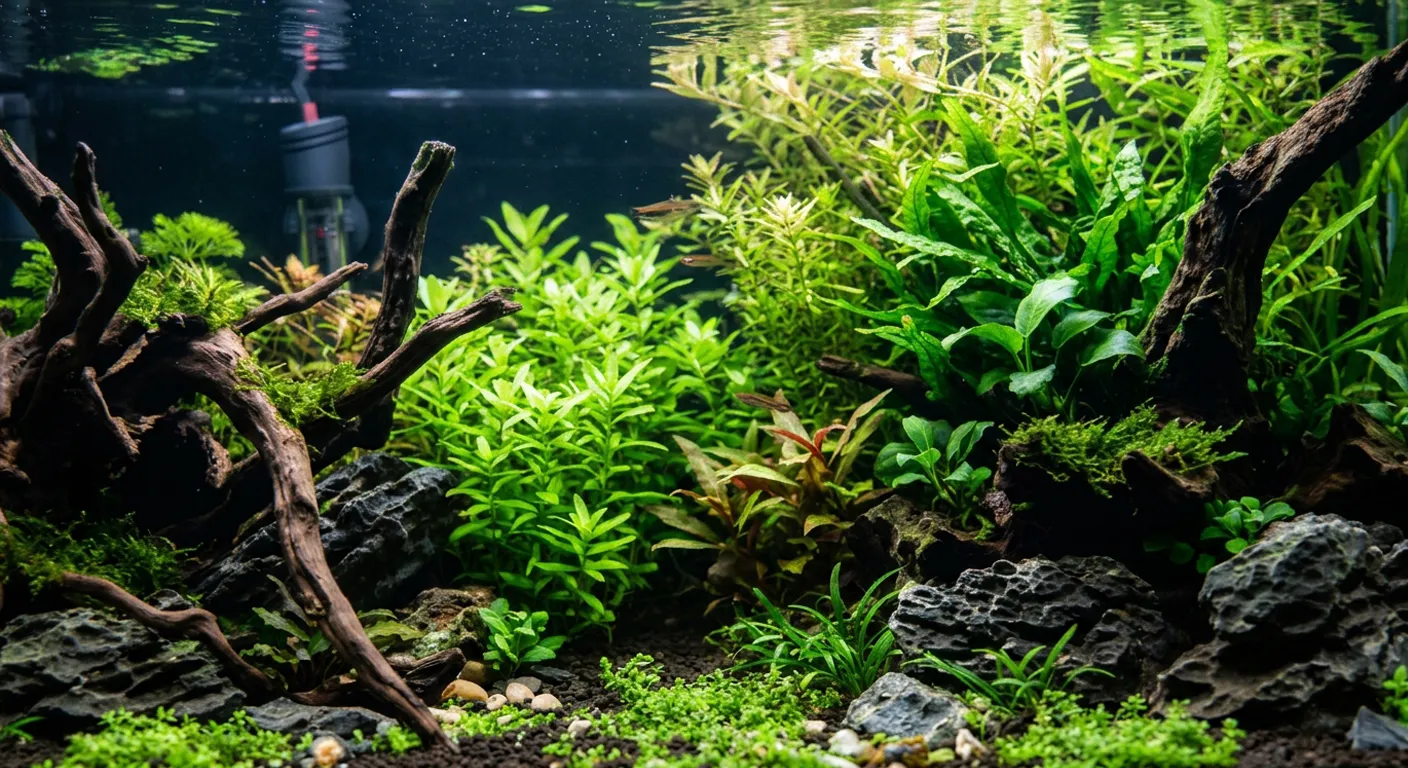
Setting up a planted aquarium takes more than dropping live plants into a tank. Substrate, lighting, filtration, water conditions, and plant choice all depend on each other. Change one, and the others shift too.
You also do not need every expensive gadget on the market. A low-tech tank with easy plants can run without CO2 injection or a heater. This guide covers the gear that matters, how to choose plants and light, when extras become necessary, and how to set up and maintain the tank step by step.
What Do You Need for a Planted Aquarium
Most freshwater planted tanks share a core kit. Other items matter only when you choose demanding plants, sensitive animals, or fast growth goals.
Essential Equipment
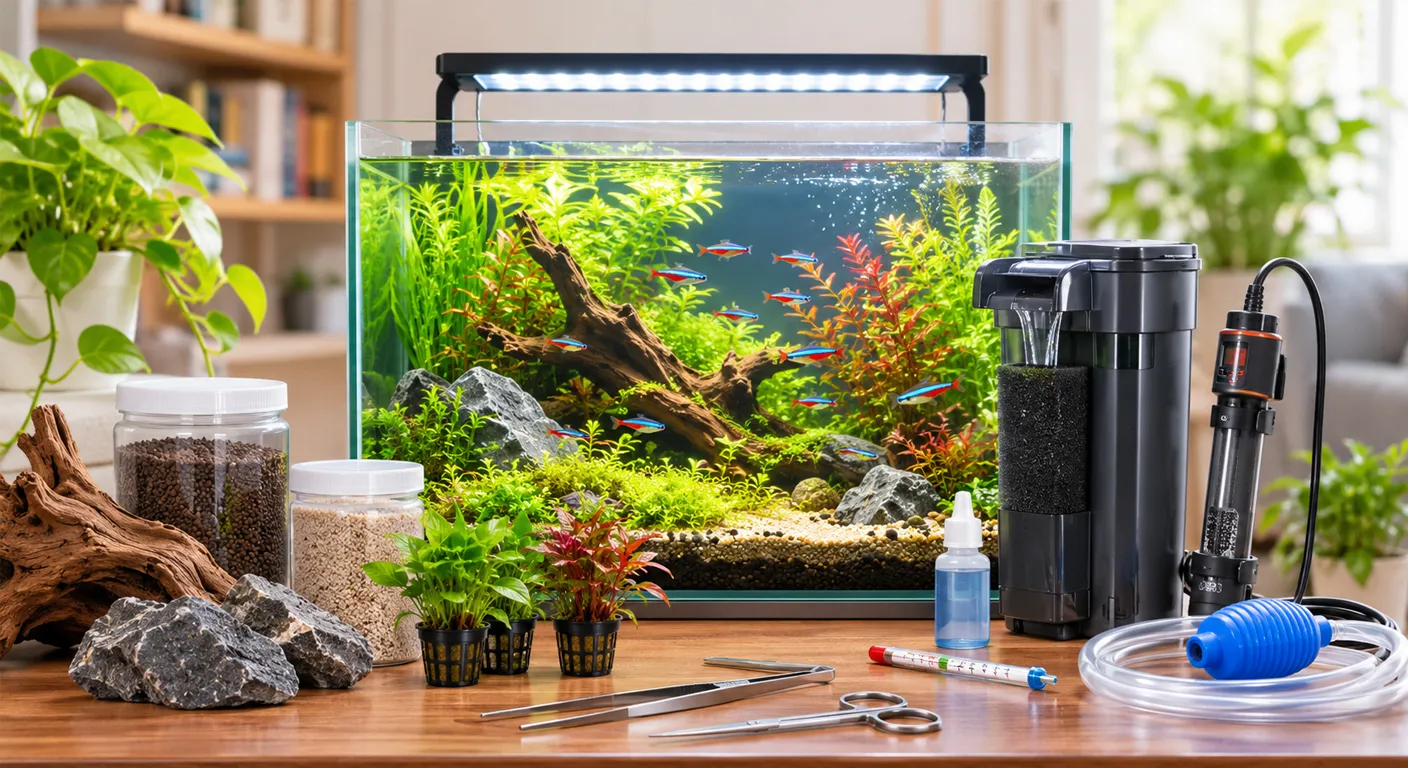
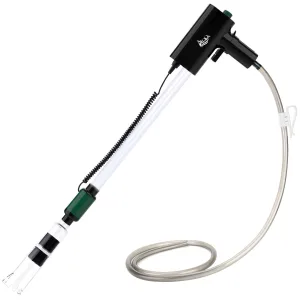
Start with a sturdy aquarium on a stable, level stand. A filled tank is heavy, so the base matters more than most beginners expect. You will also need a light suited to your plants, a substrate that holds roots, and a water conditioner to neutralize chlorine and chloramine. Add a filter with proper media if you keep fish or shrimp. A thermometer and basic tools, such as a siphon, algae scraper, and aquascaping scissors, complete the kit.
Optional Equipment for Demanding Setups
Some gear pays off only in specific situations.
| Equipment | When it becomes necessary |
| Heater | Room temperature falls outside what your plants or animals need |
| CO2 injection | You keep carpeting plants or demanding red stem plants |
| Liquid fertilizer | Growth stalls, or stocking is too light to feed the plants |
| Root tabs | Your substrate is inert, and you grow root feeders |
| Timer | You want the same photoperiod every day |
| Hardscape | You want structure and attachment points for plants |
Pick the simplest setup that meets your goals. Add gear only when a plant or animal shows a clear need.
Choose the Right Aquarium and Substrate
Tank size and substrate shape most of your later decisions. They determine planting space, equipment choices, and how much maintenance the tank demands.
Pick a Tank Size That Fits the Plan
Nano tanks look charming on a desk, but they change quickly. Temperature, water chemistry, and nutrient levels swing fast in small volumes. Tanks around 60 to 120 liters give beginners enough stability and room for a foreground, midground, and background. Larger tanks hold steadier water, though they need more light and filtration.
Measure the footprint and depth before buying. Light covers a fixed area, so a tall tank can leave bottom plants in shadow.
Choose a Suitable Substrate
Aquarium soil is nutrient-rich and suits demanding rooted plants. It breaks down over time, and in the first weeks it can release ammonia and lower pH. Gravel and sand are inert, so root feeders need root tabs placed beside their roots. Keep sand layers shallow so the bottom does not turn into a dead zone.
Prepare Hardscape and Planting Space
Rocks and driftwood create structure and attachment points. Place heavy pieces first, since moving them later disturbs everything above. Leave open swimming areas, and consider the mature size of each plant rather than its size in the store. Keep filter intakes and heater placement reachable for cleaning.
Choose Plants That Match the Setup
Plant choice controls the light you need, the substrate you use, and whether CO2 becomes necessary. Starting with undemanding species saves a lot of frustration.
Easy Plants for Beginners
Java fern and Anubias tolerate low light and grow well on hardscape. Java moss covers rocks, driftwood, and sheltered spots. Cryptocoryne fills rooted areas, though it may melt after a move and recover within weeks. For the background, Vallisneria and some stem plants add height. Hornwort and floating plants grow quickly and compete with algae for nutrients.
Match Plant Demands to Available Equipment
Sort plants into low, medium, and high light groups. Carpeting plants and many red stem plants need strong light and usually CO2 as well. A low-light fern and a high-light carpet placed together create a problem one fixture cannot solve. Build around one level of demand first, then expand.
Choose the Right Lighting for Plant Growth
Light drives photosynthesis, so it sets the pace of growth. Too little light stalls plants. Too much light without enough carbon and nutrients feeds algae. The brightest fixture is rarely the best one.
How Much Light Does a Planted Aquarium Need
Wattage on the box says little about the light reaching the leaves. Mounting height, reflector design, and water depth all change the result. Light weakens as it passes through water, so plants near the bottom of a tall tank receive far less than plants near the surface. Place demanding species high in the layout and shade-tolerant plants lower down.
What Light Color Is Best for Aquarium Plants
Plants absorb mostly red and blue wavelengths. A full spectrum white light in the 5500 to 6500 Kelvin range supports most freshwater plants well. RGB and adjustable spectrum fixtures add color tuning, and some perform well for plants too. Choose light color based on output and coverage, not color alone.
How Long Should Planted Aquarium Lights Stay On
Start a new tank at around six hours of light daily. Adjust gradually based on how the plants respond and whether algae appears. A timer keeps the schedule identical every day. Do not extend the photoperiod just because plants grow slowly. Slow growth often points to low nutrients or CO2, and longer light usually feeds algae first.
Set Up Filtration, Water Flow, and Temperature
Filtration, circulation, and temperature keep the tank stable. Each plays a different role, and heating depends most on your situation.
Does a Planted Aquarium Need a Filter
A filter removes suspended debris and gives beneficial bacteria a surface to colonize. Those bacteria convert ammonia into nitrite, and then into nitrate. Plants absorb some nitrogen compounds, but they do not replace biological filtration. Shrimp tanks need gentle filtration, so cover intakes with sponge covers or use a sponge filter.
How Much Water Flow Is Appropriate
Circulation spreads nutrients and dissolved gases, and it prevents stagnant pockets that trap debris. Strong current, however, uproots plants and stresses small shrimp. Aim for movement that sways stem tops without flattening them. Angle the outlet along the surface so water reaches the corners without stirring the substrate.
Does a Planted Aquarium Need a Heater
Requirements vary by species. Many common plants tolerate about 20 to 26 degrees Celsius, while tropical fish often prefer around 24 to 26. If your room stays within the range your animals need, a heater may be unnecessary. Rooms that run cold in winter usually need one. Choose a reliable thermostat and a heater sized for your tank volume. Stability matters more than any single number.
Check Water Quality Before Adding Livestock
A water conditioner neutralizes chlorine and chloramine before water reaches your animals. A new tank also needs cycling before fish arrive. In a fishless cycle, bacteria build up over roughly four to six weeks. Test until ammonia and nitrite both read zero and nitrate appears. Check pH, hardness, and temperature against the needs of your intended livestock.
Do Planted Aquariums Need CO2 and Fertilizer
Plants need carbon, light, and nutrients working together. Low-tech tanks with undemanding plants run fine with minimal supplementation. Demanding setups usually need injected CO2 and planned fertilization.
When Is CO2 Injection Necessary?
Most plants do not require pressurized CO2. Demanding species grow faster and color better with steady CO2, though. The benefit comes with gear: a regulator, a cylinder or canister, a diffuser, and a drop checker to dial in the dose. Liquid carbon costs less, but its results tend to be less dependable.
Do Aquarium Plants Need Fertilizer
Nutrients come from fish waste, the water column, and the substrate. Liquid fertilizers feed water column plants such as floating plants, stem plants, and mosses. Root tabs feed rooted plants that draw from the substrate. A lightly stocked tank with fast-growing plants often needs more added nutrients than a heavily stocked tank with slow plants. Adjust in small steps, since overdosing causes algae as surely as underdosing stunts growth.
Balance Light, Carbon, and Nutrients
Light, carbon, and nutrients must rise together. Raise the light without matching the others, and green spot algae or black beard algae often appear. Change one variable at a time, then wait a few weeks before judging the result.
How to Set Up a Planted Aquarium Step by Step
Each step prepares the next one, so follow the order.
Step 1: Prepare the Tank
Level the tank on its stand and clean the glass with plain water. Skip soap, since residue can harm fish and plants.
Step 2: Add Substrate and Hardscape
Spread the substrate with a gentle slope toward the back for depth. Place rocks and driftwood before planting, and seat heavy pieces firmly.
Step 3: Plant the Aquarium
Plant from back to front so finished areas stay undisturbed. Set rooted plants at their original depth. Attach Anubias and Java fern to hardscape instead of burying them.
Step 4: Install and Test the Equipment
Install the filter, heater, and light before filling so you can adjust placement. Keep the heater fully submerged whenever it runs, because a dry heater can crack. Angle the filter outlet across the surface.
Step 5: Fill the Tank and Establish Stable Conditions
Pour water onto a plate or bag to protect the substrate. Add conditioner, start the cycle, and run the light on a timer.
Step 6: Add Livestock Only When Ready
Confirm the nitrogen cycle is complete and the water suits your animals. Add a small group first, then watch behavior and water tests for a week or two before adding more.
How to Maintain a Healthy Planted Aquarium
Maintenance should respond to real conditions, not follow a rigid ritual. Heavy cleaning and frequent equipment swaps stress both plants and animals.
Clean the Tank Without Damaging Plants
Remove visible debris and clean the glass weekly. Siphon open areas gently, and avoid digging around rooted plant bases. For average stocking, change about 20 to 30 percent of the water each week. Match the temperature and dose conditioner before adding it. Rinse filter media in removed tank water so beneficial bacteria survive.
Trim Plants and Manage Floating Growth
Prune overgrown stems just above a node and replant the cuttings, since many stem plants root easily. Remove decaying leaves promptly. Keep floating plants from covering more than about half the surface, because thick mats block light.
Monitor Growth, Algae, and Water Conditions
Healthy new growth shows the normal shape and color for the species. Some plants melt after planting, which often counts as normal adaptation. Repeated decline in new growth points to a real problem. When algae appears, check light hours, nutrient dosing, and circulation, in that order.
Common Planted Aquarium Setup Mistakes to Avoid
Most early problems come from a few habits, not from the plants themselves.
Buying demanding plants before checking whether your light can support them.
Burying the rhizomes of Anubias and Java fern in the substrate.
Adding fish before ammonia and nitrite read zero.
Running the light for many hours to speed up growth.
Changing light, CO2, and fertilizer together, which hides the cause of any result.
Overcleaning, which removes the bacteria and nutrients the tank depends on.
Conclusion
A successful planted aquarium balances plant needs, lighting, substrate, water conditions, and upkeep. Beginners can start with easy plants and a simple setup, then add equipment as their goals grow. Plan the tank size, substrate, plants, and gear as one connected system. Introduce livestock only after the tank cycles, and give the aquarium a few weeks to settle before judging it.



Add comment
You must be logged in to post a comment.