
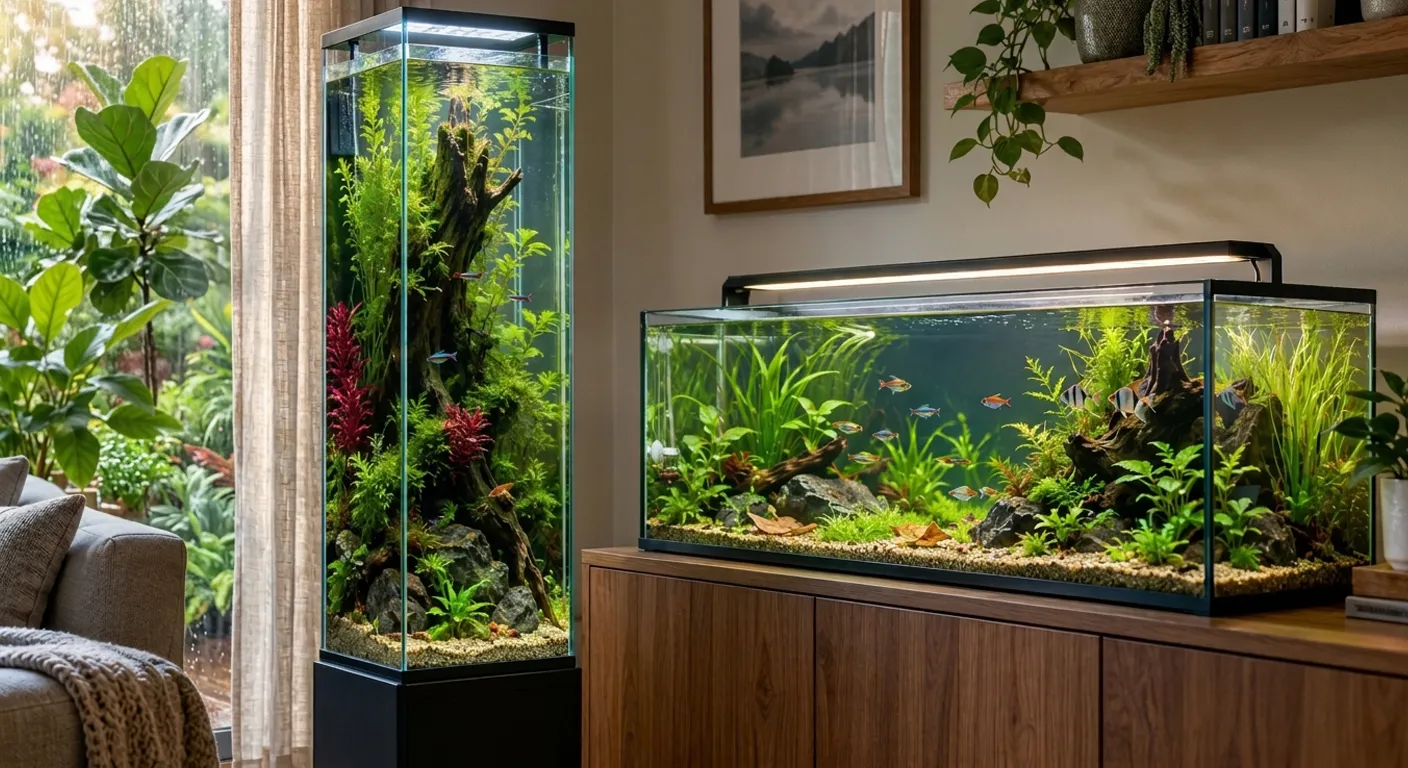
Tall fish tanks create a striking vertical display while using very little floor space. The height brings trade offs, though. Swimming length shrinks, light struggles to reach the bottom, and cleaning becomes a long reach. Some fish and setups handle this well, others do not.
This guide covers the benefits and drawbacks of tall aquariums, compares tall and long designs, and names fish that suit each. It also shows how to keep a tall tank stable week after week.
What Counts as a Tall Fish Tank
A standard tank is longer than it is tall. A long tank, often called a breeder style, stretches that length further while staying shallow. A tall tank, usually sold as a high model, rises more than it spreads. A column aquarium goes furthest, with a narrow, nearly square base that climbs like a tower.
Two 20 gallon tanks show the difference. A 20 gallon high measures about 24 by 12 inches at the base and stands 16 inches tall. A 20 gallon long measures 30 by 12 inches and stands 12 inches tall. Both hold the same water, yet the long version offers about 25 percent more surface area and six extra inches of swimming length.
So volume alone says little about swimming room, surface area, or whether a tank suits a species. Height also adds weight over a small patch of floor. Water weighs about 8.3 pounds per gallon, so the stand must be rated for the filled load.
Benefits of Tall Fish Tanks
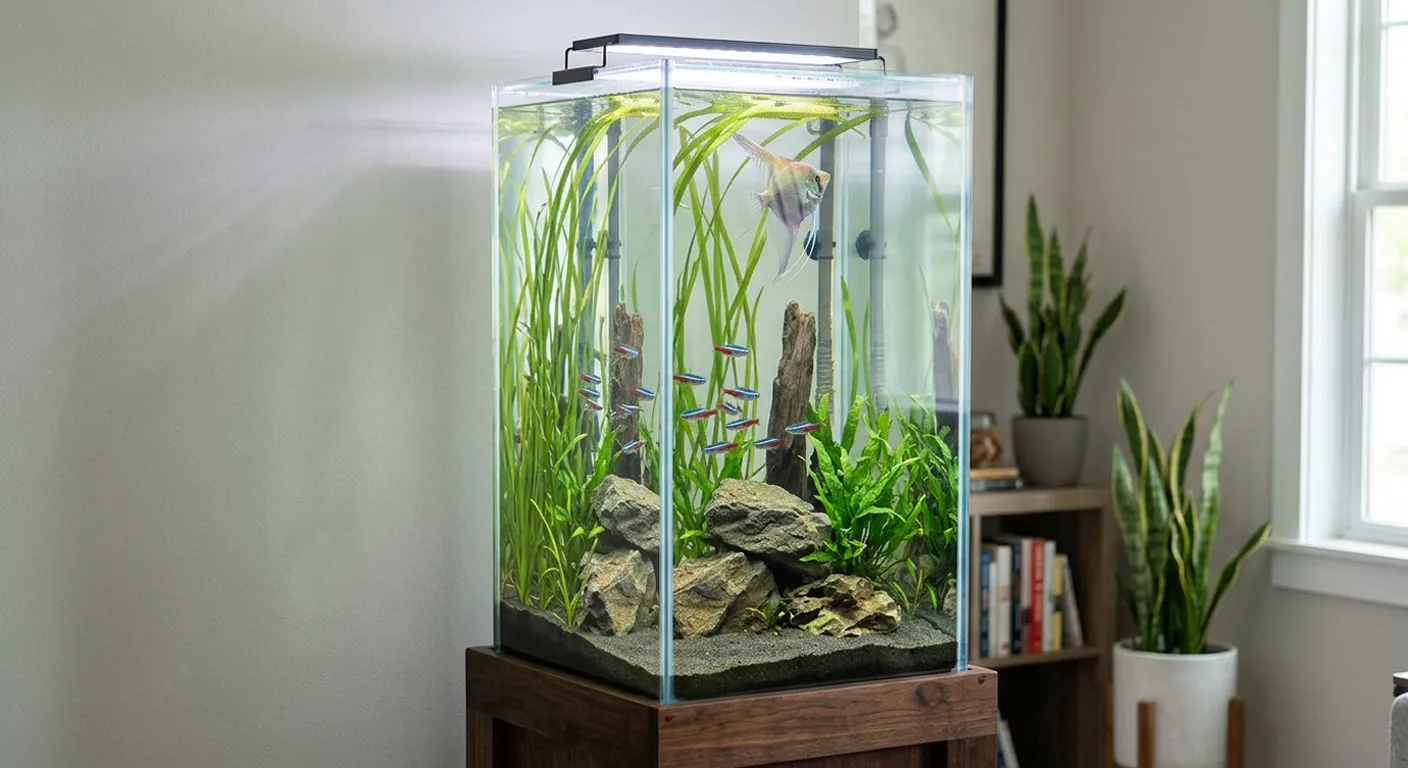
Tall aquariums save floor space, give plants and wood room to grow upward, and look unlike anything else in the room.
Make Better Use of Limited Floor Space
Small rooms, apartments, offices, and corners rarely have a spare four feet of wall. A standard 55 gallon tank is 48 inches long. A column tank measuring 18 by 18 inches at the base and 36 inches tall holds about 50 gallons on roughly half that footprint.
Create Dramatic Vertical Aquascapes
Tall driftwood can reach toward the surface, stacked rock forms terraces up the back glass, and plants such as vallisneria fill the upper space with movement. Low foreground plants keep the front open. That contrast creates depth.
Highlight Fish and Plants at Different Levels
A tall layout can separate residents by preferred level. Honey gouramis may hover near floating plants, rasboras use the middle, and shrimp graze across wood lower down. Plants follow the same pattern, with floaters on top and shade tolerant species below. Tank height should still match the adult size and habits of every resident.
Create a Distinctive Display
A tall aquarium becomes a focal point without claiming an entire wall. It works well as a planted showpiece, or as a species focused setup such as a shrimp colony or one centerpiece fish with calm companions.
Risks and Limitations of Tall Fish Tanks
The drawbacks mostly come from geometry. Less swimming length, a smaller surface for the same volume, a longer reach, and weaker light at depth all follow from height. Each can be managed, but only with a plan made before the tank is filled.
Less Horizontal Swimming Space
Most fish travel sideways. A danio gains nothing from an extra eight inches of depth, and it loses the length it needs to build speed. Bottom dwellers depend on floor area rather than water height. Territorial fish suffer most, because a small base leaves less room for each one to claim and defend a spot.
Potential Oxygen and Circulation Challenges
Oxygen enters the water mainly at the surface, so surface area and surface movement matter. A tall tank usually has less surface than a long tank of equal volume. Warm water, heavy stocking, and weak circulation can then push oxygen down. Water at 86 °F holds noticeably less dissolved oxygen than water at 72 °F.
Height alone does not decide oxygen levels, though. A tall tank with a strong surface ripple can carry more oxygen than a long tank with still water.
Harder Cleaning and Plant Maintenance
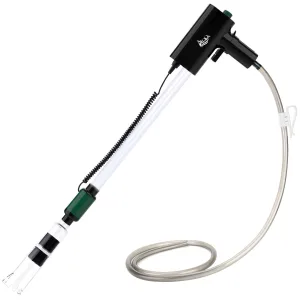
Reaching the substrate in a tank 30 inches deep means soaking your arm to the shoulder. Trimming plants, wiping glass, and clearing debris from deep corners all take more effort. Long handled tweezers, scissors, and a tall gravel siphon solve most of it. Open channels between rocks help too, since debris collects in pockets you cannot reach.
More Demanding Lighting and Aquascaping
Light weakens as it passes through water, so the floor of a tall tank receives far less than the top. Tall hardscape adds shade on top of that. Plant choice, light strength, and water flow all need to match the layout, or algae will fill the gaps that plants leave.
Tall or Long Fish Tank: Which Is Better
The answer depends on the tank and its residents, so a side by side look helps.
| Factor | Tall aquarium | Longer aquarium |
| Main advantage | Small footprint, vertical display | Wide swimming space, large surface |
| Best use | Corners, narrow spaces, planted showpieces | Community tanks and active fish |
| Swimming space | Limited length, extra height | Generous length |
| Surface area | Smaller for the same volume | Larger for the same volume |
| Maintenance | Deeper reach, harder substrate access | Easy reach to every area |
| Aquascape | Vertical layers and tall stems | Wide scenes with open sand |
| Main consideration | Stocking limited by the base | Needs more room on the stand |
Compare dimensions and footprint, not gallons. A 40 gallon breeder measures 36 by 18 inches at the base, while a tall 40 gallon tank has a much smaller one.
For most mixed community aquariums, a long tank is the more flexible starting point. It tolerates schooling fish, bottom dwellers, and beginner mistakes better.
Which Fish Can Live in a Tall Aquarium
Several fish adapt well to height, though suitability depends on the species and the actual tank dimensions.
Angelfish: Adults measure about 8 to 10 inches from top fin to bottom fin, so height helps them. Plan on a tank at least 20 inches tall, like a 55 gallon. They may eat very small fish like neon tetras.
Some gouramis: Dwarf and honey gouramis stay between 2 and 3.5 inches and enjoy planted upper layers. They breathe air through a labyrinth organ, so leave a gap of warm, humid air under the lid.
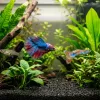
Bettas: At roughly 2.5 inches, a betta fits a modest tall tank but needs easy access to the surface. Keep the water level moderate, slow the filter flow, and add a floating leaf for resting.
Shrimp and small peaceful fish: Neocaridina shrimp graze over wood, rock, and leaves, so vertical decor adds grazing surface. Ember tetras and chili rasboras stay near one inch, provided they live in groups of at least eight.
Swimming level alone is a poor guide. A fish that lives near the top may still need length, so check adult size, activity, and temperament for each species.
Fish and Setups That May Not Suit a Tall Aquarium
Some animals struggle when length, floor area, or oxygen is limited.
Active schooling fish: Giant danios and rainbowfish swim lengthwise all day and often need four feet of run.
Bottom dwellers: Corydoras and kuhli loaches live on the substrate, and a small base crowds them.
Territorial cichlids: African mbuna divide the floor into territories, so a narrow base leads to constant fights.
Goldfish: They produce heavy waste and need strong gas exchange, which a small surface may not provide.
Very large fish: Oscars cannot turn comfortably in a narrow footprint, however tall the tank is.
Crowded or hot setups: Water above about 82 °F carries less oxygen, so heavy stocking becomes risky.
These are not blanket bans. A tall tank with a generous base behaves very differently from a narrow column, so dimensions and species care sheets settle the question.
How to Make a Tall Aquarium Safer
Surface agitation, steady circulation, modest stocking, accessible aquascaping, and suitable lighting remove most of the risks above.
1. Improve Oxygen and Circulation
Point the filter outlet slightly upward so the surface ripples without splashing. In tanks taller than about 20 inches, add a small powerhead low in the water, aimed up the back glass. Then drop a pinch of flake food near the substrate. Food that sits still shows a dead zone.
2. Stock Conservatively
Count fish by footprint instead of gallons, and use adult sizes in the math. Start with fewer fish than the label suggests, then add slowly so filter bacteria can keep pace. A margin protects water quality on hot days or after a missed water change.
Design for Maintenance Access
Leave a clear lane along one side for tools and hands. Keep rockwork stable and open at the base so a siphon can slide underneath. Attach anubias and java fern to wood within reach, and choose a lid with a section that opens wide.
3. Use Lighting and Plants Strategically
Choose a light strong enough to reach the floor, or place demanding plants higher on hardscape. Cryptocoryne and other low light species suit the dim bottom. Floating plants shade the water, so thin them regularly.
4. Plan for Nighttime Oxygen Demand
Plants release oxygen only while the lights are on. After dark, plants, fish, and bacteria all consume it. Run an air stone at night, and if you inject CO2, switch it off about an hour before lights out. Fish gasping at the surface near dawn signal a need for more aeration.
Tall Aquarium Maintenance Checklist
A routine keeps water quality and circulation steady.
Daily: Feed lightly, check the temperature, confirm filter flow, and watch for fish hanging near the surface.
Weekly: Change 20 to 30 percent of the water, vacuum the substrate, wipe the glass, and test ammonia, nitrite, and nitrate.
As needed: Trim plants, remove debris from deep corners, and top off evaporated water with treated water.
Periodically: Rinse filter media in old tank water about monthly. Check the airline, light, and heater.
Ongoing: Review stocking, record test results, and inspect the stand and seals.
Conclusion
Tall aquariums offer a distinctive way to show fish, plants, and hardscape while making good use of limited space. Their suitability depends on more than volume. Swimming room, surface area, circulation, lighting, and maintenance access all shape the environment.
Compare the actual dimensions with the adult size, swimming habits, and care needs of the intended residents. A tall tank works well for suitable species, yet extra height cannot make up for missing swimming length.
Plan before setup. Settle circulation, accessible aquascaping, lighting, and a manageable stock list first, and the tank will be much easier to enjoy.
3.7 Gal Aquarium Kit: Filter, 10-Color Light, Self-Cleaning,...
Original price was: $81.99.$77.39Current price is: $77.39.



Add comment
You must be logged in to post a comment.