

For many beginners entering the hobby with a nano tank (1–10 gallons), it’s easy to assume such a small aquarium doesn’t require much equipment. Water changes seem pretty manageable. The tank itself looks too small to need anything beyond the basics. This is why so many new aquarists ask: “Do nano tanks even need a filter?”
The short answer is yes. Nano tanks absolutely need filtration. And get this, they sometimes need even more carefully picked filters than bigger tanks. Nano aquariums have super limited water volume. That means wastes, toxins, and all that gross debris pile up way faster than you’d think. Filters also help create some gentle water movement. Your fish, shrimp, and plants actually need that for proper oxygen and staying healthy.
In this guide, you’ll learn why filters matter so much in nano tanks. We’ll cover the different filter types and filter sizes that actually work for small aquariums. You’ll see how to pick the right filter media. Plus, how to manage that flow so it doesn’t stress out your delicate nano inhabitants.
Table of Content
ToggleThe Importance of Filtration in Nano Tanks
A nano tank’s small water volume makes it crazy sensitive to changes. Even tiny amounts of waste buildup can shift water conditions super fast. So proper filtration becomes essential. Not optional.
Water Quality Challenges in Small Tanks
Nano tanks face problems that large tanks handle way more easily:
Rapid changes in chemical parameters. Ammonia, nitrite, pH, and temperature shift way faster in 1–10 gallons than in large tanks.
Limited dilution of wastes. Even a few uneaten pellets or a small dead leaf can spike ammonia. The water volume just can’t dilute pollutants like bigger tanks can.
Benefits of Filtration
Mechanical Filtration
Removes visible debris
Uneaten food
Plant leaves
Fish waste
Micro-particles that cloud the water
Chemical Filtration
Removes dissolved contaminants:
Activated carbon gets rid of odors, tannins, and toxins
Phosphate removers help control algae
Biological Filtration
The most important function of all. Provides surface area for beneficial bacteria that process ammonia into nitrite, then into nitrate.
Without this, a nano tank cannot stay stable.
Risks Without Filtration
Running a nano tank with no filter usually leads to:
Ammonia and nitrite spikes. These can kill fish or shrimp within hours.
Algae blooms. Poor circulation and waste buildup cause this.
Complete tank crashes. This happens a lot during vacation, feeding mistakes, or hot weather.
Popular Filter Types for Nano Tanks
There’s a bunch of small filters out there. But nano tanks need gentle, controlled flow.
For many beginners entering the hobby with a nano tank (1–10 gallons), it’s easy to assume such a small aquarium doesn’t require much equipment. Water changes seem pretty manageable. The tank itself looks too small to need anything beyond the basics. This is why so many new aquarists ask: “Do nano tanks even need a filter?”
The short answer is yes. Nano tanks absolutely need filtration. And get this, they sometimes need even more carefully picked filters than bigger tanks. Nano aquariums have super limited water volume. That means wastes, toxins, and all that gross debris pile up way faster than you’d think. Filters also help create some gentle water movement. Your fish, shrimp, and plants actually need that for proper oxygen and staying healthy.
In this guide, you’ll learn why filters matter so much in nano tanks. We’ll cover the different filter types that actually work for small aquariums. You’ll see how to pick the right filter media. Plus, how to manage that flow so it doesn’t stress out your delicate nano inhabitants.
The Importance of Filtration in Nano Tanks
A nano tank’s small water volume makes it crazy sensitive to changes. Even tiny amounts of waste buildup can shift water conditions super fast. So proper filtration becomes essential. Not optional.
Water Quality Challenges in Small Tanks
Nano tanks face problems that large tanks handle way more easily:
Rapid changes in chemical parameters. Ammonia, nitrite, pH, and temperature shift way faster in 1–10 gallons than in large tanks.
Limited dilution of wastes. Even a few uneaten pellets or a small dead leaf can spike ammonia. The water volume just can’t dilute pollutants like bigger tanks can.
Benefits of Filtration
Mechanical Filtration
Removes visible debris
Uneaten food
Plant leaves
Fish waste
Micro-particles that cloud the water
Chemical Filtration
Removes dissolved contaminants:
Activated carbon gets rid of odors, tannins, and toxins
Phosphate removers help control algae
Biological Filtration
The most important function of all. Provides surface area for beneficial bacteria that process ammonia into nitrite, then into nitrate.
Without this, a nano tank cannot stay stable.
Risks Without Filtration
Running a nano tank with no filter usually leads to:
Ammonia and nitrite spikes. These can kill fish or shrimp within hours.
Algae blooms. Poor circulation and waste buildup cause this.
Complete tank crashes. This happens a lot during vacation, feeding mistakes, or hot weather.
Popular Filter Types for Nano Tanks
There’s a bunch of small filters out there. But nano tanks need gentle, controlled flow.
Hang-On-Back (HOB) Filters
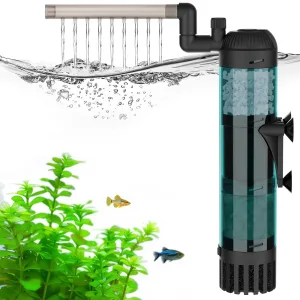
Small, powerful, and easy to maintain. Modern nano HOBs have adjustable flow, so you can dial it down.
Sponge Filters
Air-driven and super gentle. Totally shrimp-safe. These provide excellent biological filtration.
Under-Gravel Filters (UGF)
Work through the substrate. Create stable biological filtration, but you need to keep up with maintenance.
Canister Filters (Mini/Compact Models)
Strong, multi-stage filtration. Great for heavily stocked nano tanks or planted setups.
Built-In / All-In-One (AIO) Filters
Integrated compartment you find in nano cube tanks. Quiet, hidden, and efficient.
Pros and Cons of Common Nano Tank Filter Types
| Filter Type | Advantages | Disadvantages | Best Uses |
| HOB | Good mechanical/chemical filtration, adjustable flow | Intake may be too strong for shrimp | Small fish tanks, planted nano tanks |
| Sponge | Shrimp-safe, gentle flow, great biological media | Weak mechanical filtration | Shrimp tanks, betta tanks, fry tanks |
| UGF | Hidden, good biological support | Hard to deep-clean, limited chemical media | Low-tech nano setups |
| Canister | Strong filtration capacity, customizable | Needs space; can produce strong flow | Reef nanos, heavy-stocked nanos |
| Built-in (AIO) | Quiet, hidden equipment | Media space limited | Nano cubes, office tanks |
Specific Filter Media for Nano Tanks
Even the best filter won’t do much without the right media.
Because nano tanks have super limited space, picking compact and effective filtration media is key. The right media clears up your water, cuts down toxins, and keeps the nitrogen cycle stable without messing with flow.
Mechanical Media
Fine-pore sponge
Filter floss (polishing wool)
These traps fine debris and keep nano tanks crystal clear.
Chemical Media
Activated carbon in small mesh bags
Phosphate removers
Resin-based ammonia absorbers
Really useful when you’re running nano tanks with sensitive fish or shrimp.
Biological Media
Ceramic rings (mini sizes)
Porous bio-foam
Sintered nano-media
Essential for stable long-term nitrogen cycling.
Media Tips for Nano Tanks
Don’t overpack. Restricting water flow just makes things worse.
Combine 2–3 small media types instead of one bulky option.
Rinse mechanical media weekly to stop it from clogging up.
Flow Rate and Circulation Guidelines
Understanding Nano Tank Flow Needs
Nano tanks have to balance oxygenation with gentle currents.
Strong currents stress nano fish, bettas, and shrimp.
Weak flow creates dead spots where waste just sits there collecting.
Good nano filtration means gentle, consistent, evenly distributed flow.
Creating Ideal Circulation Patterns
Use flow controllers, spray bars, or adjustable powerheads.
Aim for soft, multi-directional flow. You’re trying to simulate natural environments.
Don’t blast delicate fish or shrimp directly with filter output.
Position water outlets so debris flows toward the filter intake.
Pros and Cons of Filters Relative to Nano Tank Inhabitants
Different nano species have different tolerances for water movement and filtration. Picking the right filter helps you avoid stressing them out.
Shrimp-Safe Filters
Sponge filters are what most people go with.
Prevents shrimp babies (shrimplets) from getting sucked in.
Fish That Dislike Strong Currents
Bettas
Fancy guppies
Nano rasboras
These do best with sponge filters or turned-down HOBs.
Coral-Friendly Options
Reef nano tanks need high-quality filtration and controlled, multi-directional flow.
Practical Trade-Offs
Some filters are noisy.
Others take up tank space.
Some mess with your aquascaping aesthetics.
Maintenance and Troubleshooting Of Nano Tank Filter
Maintenance is super important in nano tanks because debris builds up crazy fast.
Cleaning Schedules
Sponge filters: rinse every 1–2 weeks
HOB filters: clean impeller monthly and replace floss weekly
Canisters: clean every 4–6 weeks
Signs of Poor Filtration
Cloudy water
Ammonia smell
Excess surface film
Slow fish movement
Avoiding Clogs & Air Bubbles
Rinse sponges pretty often.
Make sure intakes aren’t blocked.
Burp canisters during reinstall.
Power Outage Backup
Use portable air pumps.
Cut back on feeding during outages.
Keep water movement going to preserve oxygen.
Conclusion
Filtration is super important for nano tanks. Their small water volume makes them really sensitive to waste, toxins, and those quick parameter swings. A proper filter keeps everything stable. Takes some pressure off beginners, too. Plus, it stops problems that water changes alone can’t fix. So yes, no matter how tiny your aquarium is, consistent filtration is something you can’t ignore.
As we guided, picking the right one depends on your nano tank size, what species you’ve got, and what you’re going for with your setup. Maybe it’s a sponge filter for shrimp. Or a gentle HOB for nano fish. Could be a built-in system for reef nanos. You got to match the flow, media type, and what your fish or shrimp can handle. That’s how you keep things balanced.
Keep up with regular maintenance. Watch your flow output. Swap out media when it needs it. That’ll keep your tank running smooth. Once you get how nano tanks work and pick the right gear, you can have a really cool little ecosystem going. Take care of it properly, and your nano tank will stay healthy, colorful, and just fun to look at for years.
FAQs
1. How often should I replace or clean the filter media in a nano tank?
Mechanical media weekly. Chemical Media Monthly. Biological media only when it’s falling apart.
2. Can I operate a nano tank filter without causing a nitrogen cycle crash?
Yeah, totally. Just don’t go crazy cleaning your biological media. And never rinse it with tap water.
3. Is it safe to combine different types of filters in a nano tank?
Yep, especially sponge plus HOB. Just make sure the flow stays gentle for nano species.
Related Reading
Related Products For Your Reference




Add comment
You must be logged in to post a comment.