
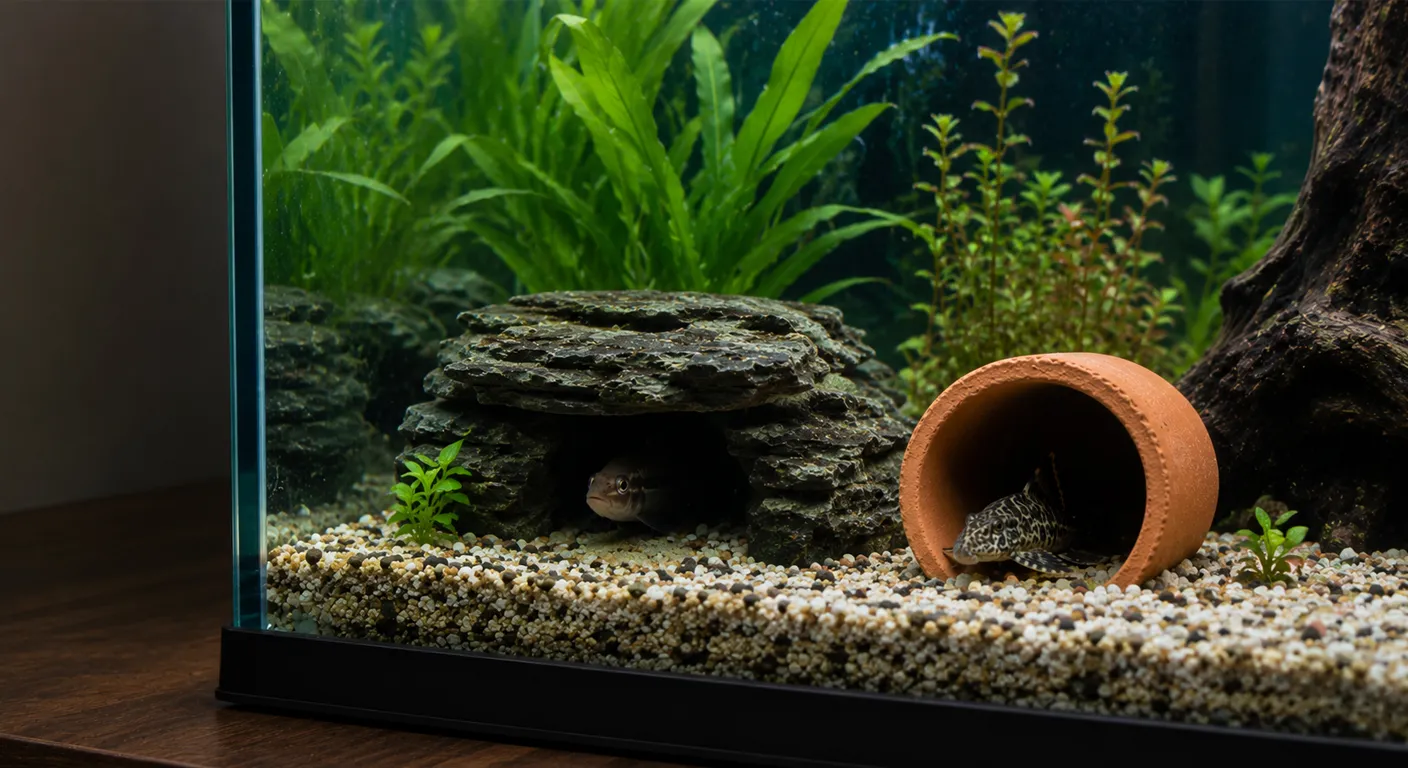
A fish pressed into the back corner of a tank, refusing to eat, darting for cover the moment a shadow crossed the glass. Most fish keepers have seen it. Most aquarium guides spend their pages on filtration curves and lighting spectrums, yet say almost nothing about one of the simplest tools for keeping fish healthy: a place to hide.
DIY hiding spots solve this cheaply. They can be built from materials already sitting in a garage or hardware store, shaped to match the fish you actually keep, and finished to look natural rather than plastic and store-bought. No expensive imported caves required.
This guide covers which materials are genuinely safe for aquarium use and which ones only look safe, how to size and shape a hide for specific fish species, and six builds that work even for someone who has never touched a hacksaw or a bag of aquarium silicone.
Why Hiding Spots Matter More Than Most Fishkeepers Think
A hiding spot is not a decorative extra. It is functional infrastructure, just like a filter or heater is. A fish with nowhere to retreat lives under constant low-grade stress, and that stress is not just an emotional inconvenience. It suppresses the immune system, reduces appetite, and shortens lifespan through prolonged cortisol exposure, the same stress hormone pathway documented in farmed and ornamental fish alike.
Some fish need a hide more urgently than others:
Shy or solitary species, such as many loaches and catfish, that naturally spend daylight hours tucked away.
New fish are still settling into an unfamiliar tank, often the target of curious or aggressive tank mates.
Females are chased by males during spawning, who need somewhere to break the line of sight.
Fish recovering from illness or injury, since healing slows under stress.
Any individual fish being bullied by a more dominant tank mate.
A well-placed hide does more than protect the fish using it. It breaks up sightlines across the tank, which reduces territorial disputes and calms behaviour tank-wide. Fish that can retreat from a rival’s gaze are far less likely to escalate a chase into a fight.
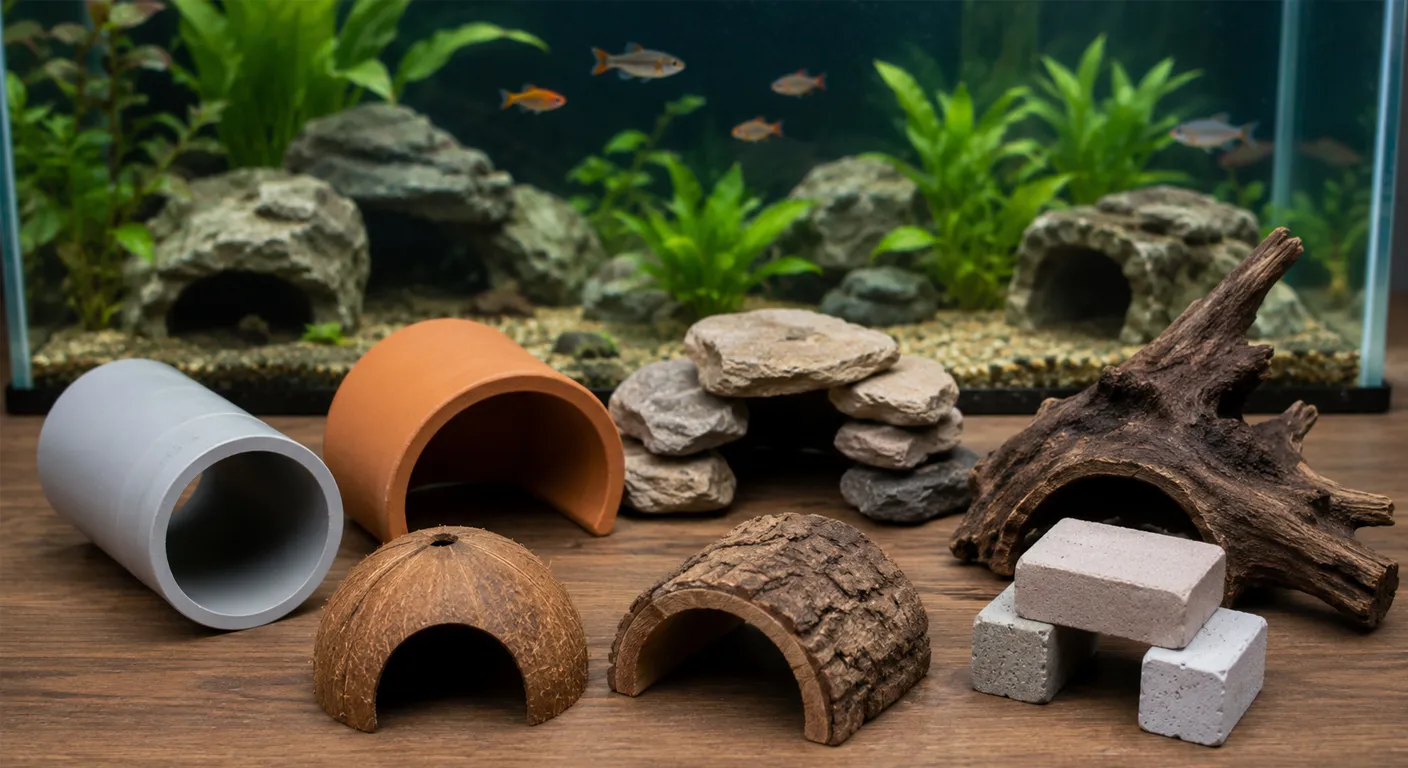
DIY Idea 1: PVC Pipe Caves
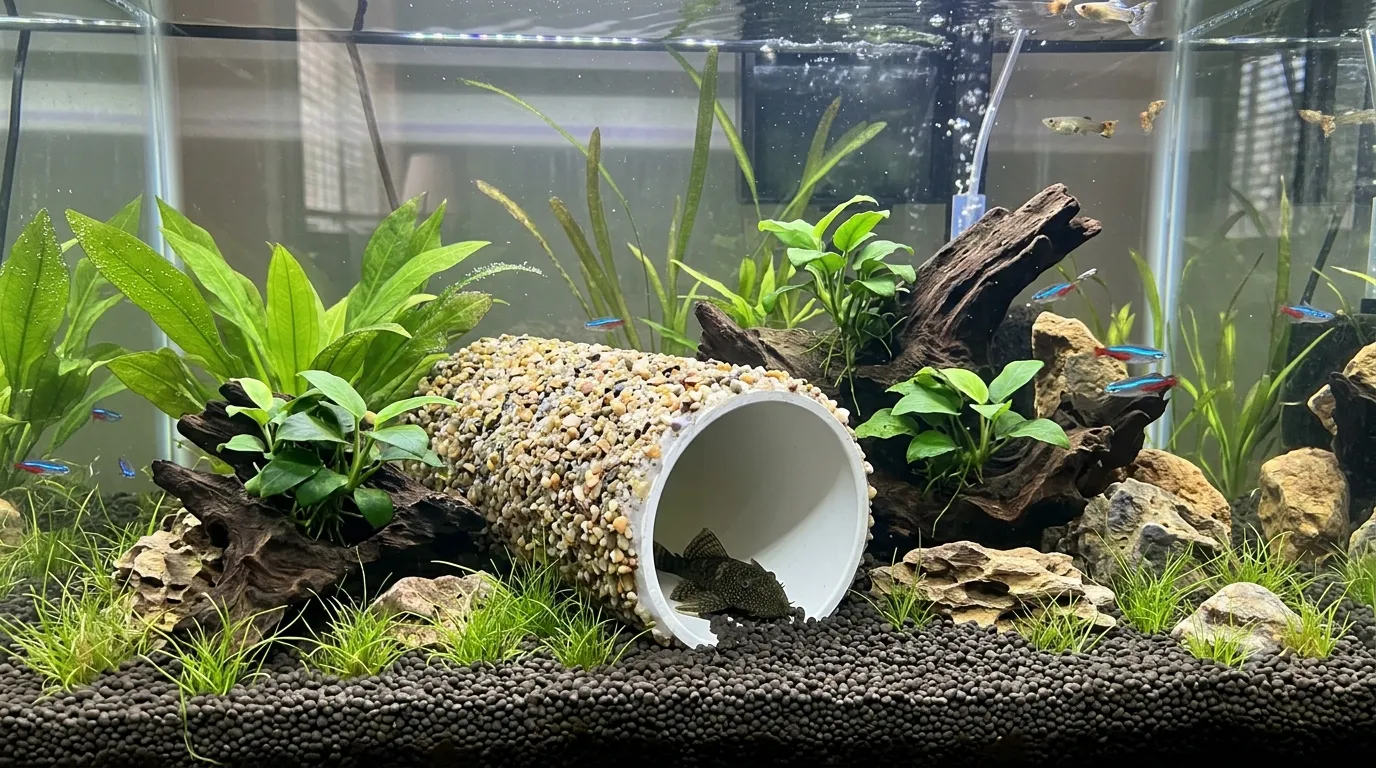
Why PVC Works
Schedule 40 PVC pipe is one of the most reliable materials for aquarium builds. It is chemically inert once cured, smooth on the interior, easy to scrub clean, and sold in enough diameters to suit everything from a school of tetras to a full-grown pleco. The main objection is appearance, since raw white pipe looks nothing like a natural tank feature. That is solved easily: bury sections partially in substrate, wrap them in aquarium-safe silicone and gravel, or coat the exterior only with a paint rated safe for submersion, keeping the interior untouched.
Step-by-Step Build
Measure the intended fish so the pipe is wide enough for it to enter, turn, and exit without squeezing.
Cut the pipe to length, typically six to eight inches for most community fish, then sand both cut edges smooth with fine-grit sandpaper to remove sharp burrs.
Rinse thoroughly under dechlorinated water. Skip soap entirely, since residue can linger in the plastic and poison the tank.
Set it horizontally on the substrate, or bury one end slightly so the fish feels fully enclosed rather than exposed at both openings.
Best for bottom-dwelling species, plecos, loaches, shy community fish, and any fish that prefers a tight, enclosed tunnel over an open cave.
DIY Idea 2: Terracotta Clay Pot Shelters
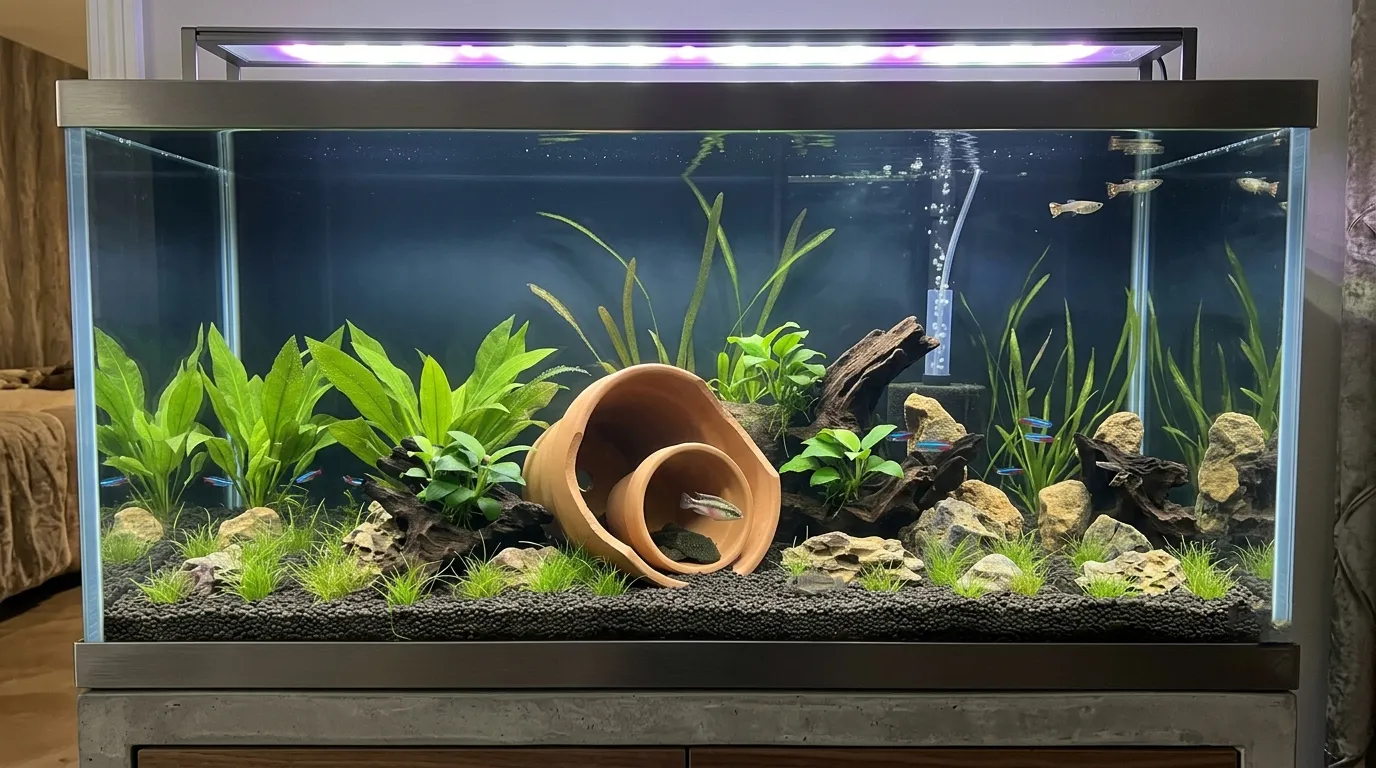
Unglazed terracotta is porous, inert, and widely used in aquascaping because it looks close to natural stone once settled into a substrate bed. The danger lies in the details. Glazed pots often carry unknown finishes that can leach compounds into the water, so stick to plain, unglazed clay only. Drainage holes on the base or sides need filing until smooth, since factory edges are frequently sharp enough to injure fins.
Before use, soak the pot in plain water for at least twenty-four hours to pull out clay dust, then scrub without soap. Break larger pots on their side and lay the curved half down to form an open cave, or stack a smaller pot inside a larger one for a two-chamber hide.
Terracotta shelters work well for cichlids that prefer a defined cave entrance, catfish, and any fish that appreciates a shaded, cooler pocket within the tank.
DIY Idea 3: Rock Caves and Stacked Stone Shelters
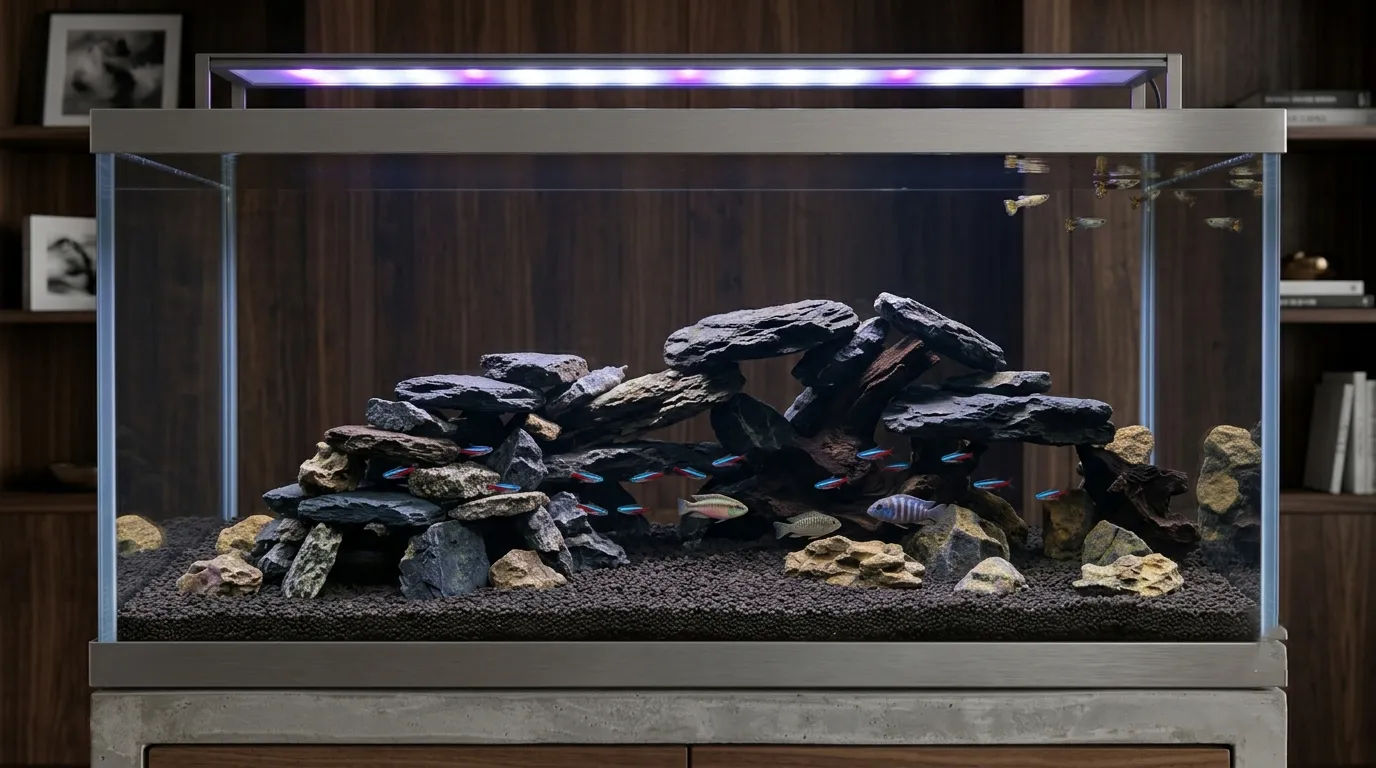
Rock hides look the most natural of any option on this list, but rock selection carries real risk. Limestone, coral rock, and many other calcium carbonate-based stones will slowly dissolve into the water column and raise both pH and hardness, which can stress or kill fish that need soft, acidic conditions. A simple vinegar test settles the question: place a drop on the rock, and if it fizzes or bubbles, the stone contains carbonate and should stay out of most freshwater setups unless a harder water tank is the goal.
Once safe stones are confirmed, dry stack them rather than gluing, since a properly built stack distributes weight evenly and will not collapse if a large fish burrows underneath. Aquarium-safe epoxy or pond foam can lock a stack in place permanently for extra security, particularly in tanks with larger, more physical fish like oscars.
Best suited to cichlids, especially African rift lake species that evolved among rocky shorelines, along with any fish that favours defined territorial boundaries.
DIY Idea 4: Driftwood Shelters
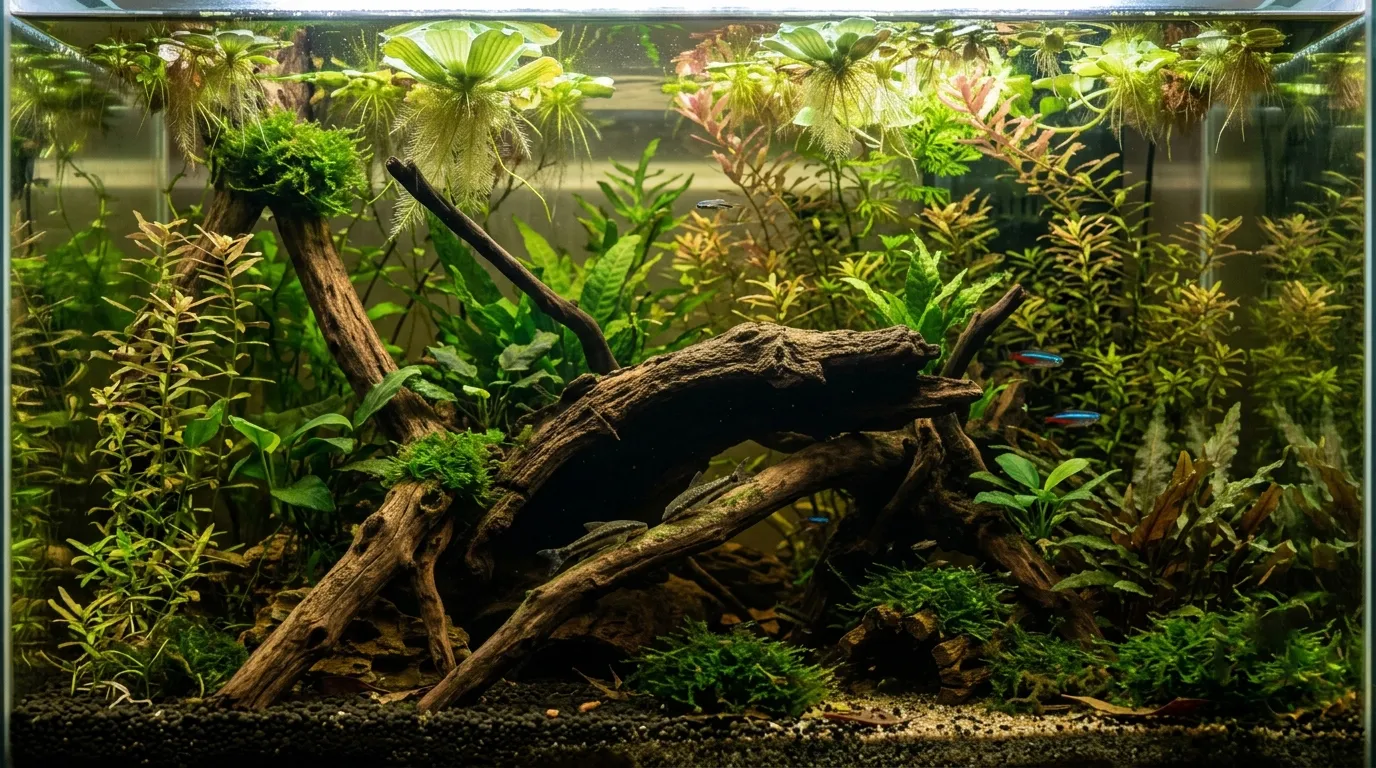
Driftwood offers cover and biological value at the same time, since many species graze the biofilm that forms on its surface. Not all wood belongs in a tank, though. Stick to types sold specifically for aquarium use, such as Malaysian driftwood, mopani, or spiderwood, and avoid anything collected outdoors, which may carry pesticide residue, mold, or rot that continues once submerged.
New driftwood floats until it saturates, so it needs boiling or a long soak, sometimes weeks, before it will sink and stay put. Boiling also helps leach out tannins, though many keepers leave some tannin release intact for its mild antibacterial effect and the amber tint it gives softwater tanks.
Arrange pieces to create overhangs and partial tunnels rather than flat, exposed logs. Best for shy fish, wood-grazing species like otocinclus, and any softwater fish that benefits from the tannins that driftwood naturally releases.
DIY Idea 5: Plant-Based Cover
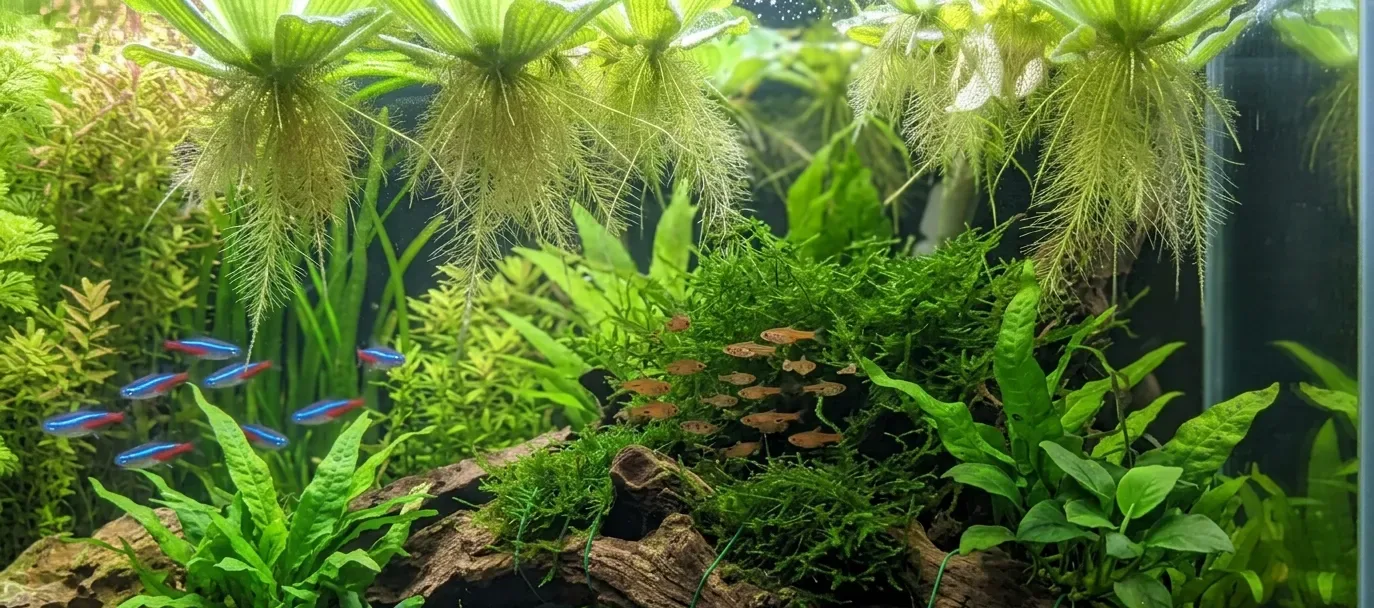
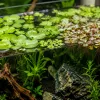
Living plants or silk plants create a movement-dampening cover that no rigid structure can match. Dense stem plants, tall background growth, and floating species like water lettuce cut overhead light and give nervous fish somewhere to vanish instantly.
Java fern and Anubias attach directly to wood or rock rather than substrate, making them useful for building layered cover around an existing hide. Moss, wedged into rock crevices or tied to driftwood with cotton thread, fills gaps that a bare structure leaves exposed and gives fry somewhere to hide from adult tank mates.
Silk plants work as a low-maintenance substitute where live plants will not thrive, though they should be checked for stiff or sharp edges before going into the tank. Best for fry, small schooling fish, and species that rely on cover from above as much as cover at the substrate level.
DIY Idea 6: 3D Printed Hides (The Modern Option)
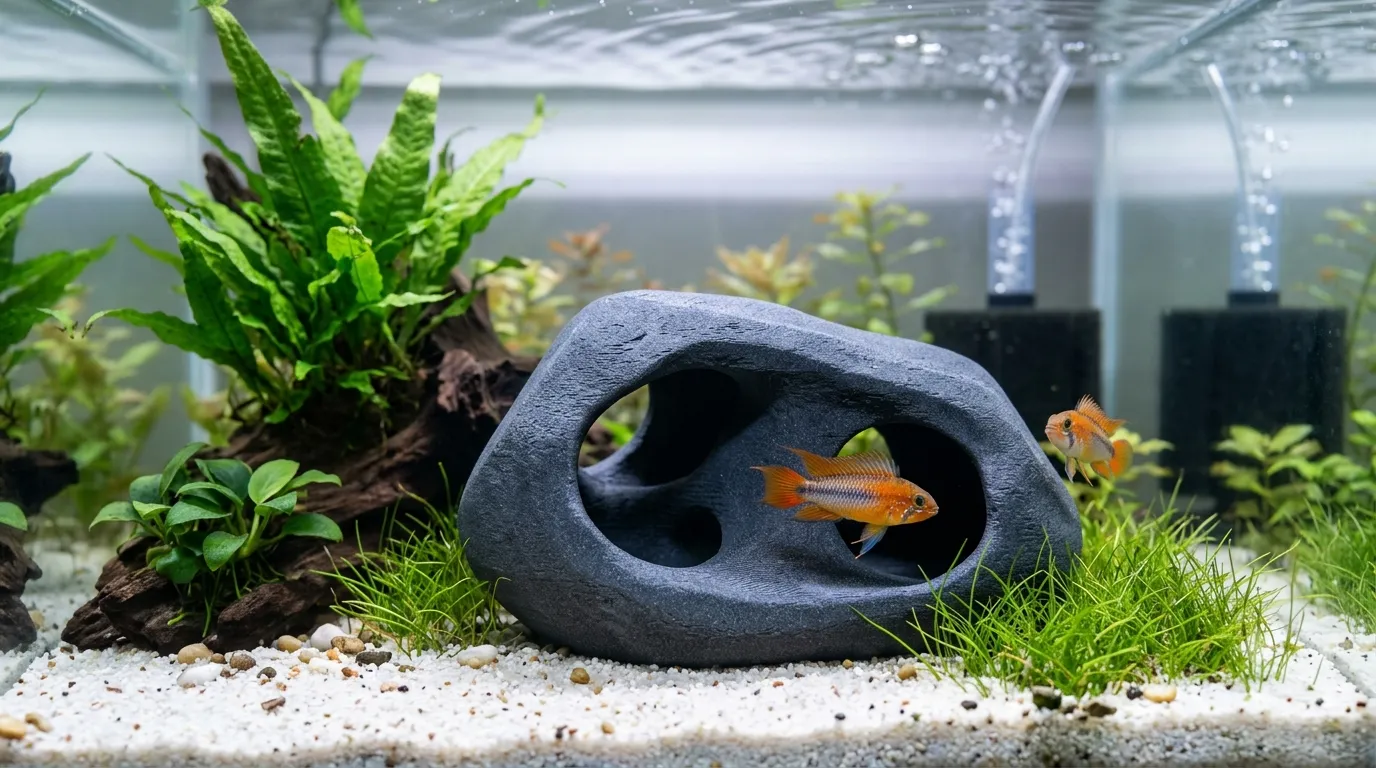
3D printing has become genuinely practical for aquarium use, provided the filament and finish are chosen correctly. PLA is the safer default compared to ABS, since PLA does not release styrene and holds up reasonably well underwater when printed with a high infill percentage to limit porosity.
Printed hides still need finishing before they go into the tank. Sand away layer lines and any sharp print artifacts, then seal the surface with an aquarium-rated epoxy if the design calls for extra durability or a smoother finish. Test any new print in a bucket of dechlorinated water for several days before introducing fish, watching for cloudiness or odor that would signal an unsafe print.
The advantage over every other method on this list is precision. A hide can be modeled to the exact dimensions of a specific fish species, with entry holes sized down to the millimeter for something as particular as a breeding pair of dwarf cichlids.
Which Hiding Spot Works for Which Fish
Matching the hide to the fish matters more than matching it to the tank’s decor theme. The table below covers the core pairings.
| Hide Type | Best Fish | Key Advantage |
| PVC pipe | Plecos, loaches, bottom dwellers | Tight, enclosed tunnel shape |
| Terracotta pot | Cichlids, catfish | Defined cave entrance, shaded interior |
| Rock cave | African cichlids are a territorial species | Mimics a natural rocky habitat |
| Driftwood | Otocinclus, a softwater species, a shy fish | Biofilm grazing plus tannin release |
| Live plants | Fry, small schooling fish | Cover from above dampens movement |
| 3D printed | Dwarf cichlids, precision breeders | Custom-sized entry and interior |
Mistakes to Avoid
Using glazed ceramic or ornamental pottery, since unknown glazes can leach into the water over time and are impossible to verify as safe.
Skipping the acid test on unfamiliar rock risks a slow pH shift that stresses fish long before it becomes visible.
Leaving sharp cut edges on PVC or drainage holes on terracotta unsanded is a common cause of torn fins.
Collecting driftwood from outdoors can introduce pesticides, mold, or wood that rots and fouls the water.
Building a single large hide instead of several small ones forces subordinate fish to compete for the only shelter available.
Placing a hide directly in the strongest current from the filter outflow, which many species avoid entirely, regardless of how well-built the hide is.
Gluing rock stacks with anything other than aquarium-rated adhesive, since standard construction glue often contains solvents.
Overcrowding the tank with hides until open swimming space disappears, which creates a different kind of stress for active swimming species.
How to Arrange Hiding Spots in the Tank
Placement carries as much weight as the build itself. A cave positioned in the wrong spot can generate more conflict than it resolves, particularly in tanks with territorial fish.
Spread hides across multiple zones rather than clustering them in one corner, since a single area invites one dominant fish to claim everything nearby. Break direct sightlines between hides so a resident in one cannot stare down a rival in another, which lowers the odds of a stand-off turning physical. Leave open swimming space at the front and center of the tank so active fish are not forced to navigate a maze. Also, position at least one hide near the substrate and one slightly elevated to suit both bottom-dwelling and midwater species.
Conclusion
Hiding spots are not accessories bolted onto a tank for visual interest. They are part of the biological and behavioural infrastructure that keeps fish healthy. Fish with adequate retreat options show less stress, less aggression, and more of the natural behaviour that makes an aquarium worth watching in the first place.
Material choice is as important as design. A single wrong decision, a glazed pot, a rock that raises pH, an unsanded edge, can quietly undermine an otherwise well-built setup. Start with the fish already in the tank, match the hide type to their species and natural behaviour, build for safety before aesthetics, and test every new addition before trusting it with a living animal.
3.7 Gal Aquarium Kit: Filter, 10-Color Light, Self-Cleaning,...
Original price was: $81.99.$77.39Current price is: $77.39.












Add comment
You must be logged in to post a comment.