
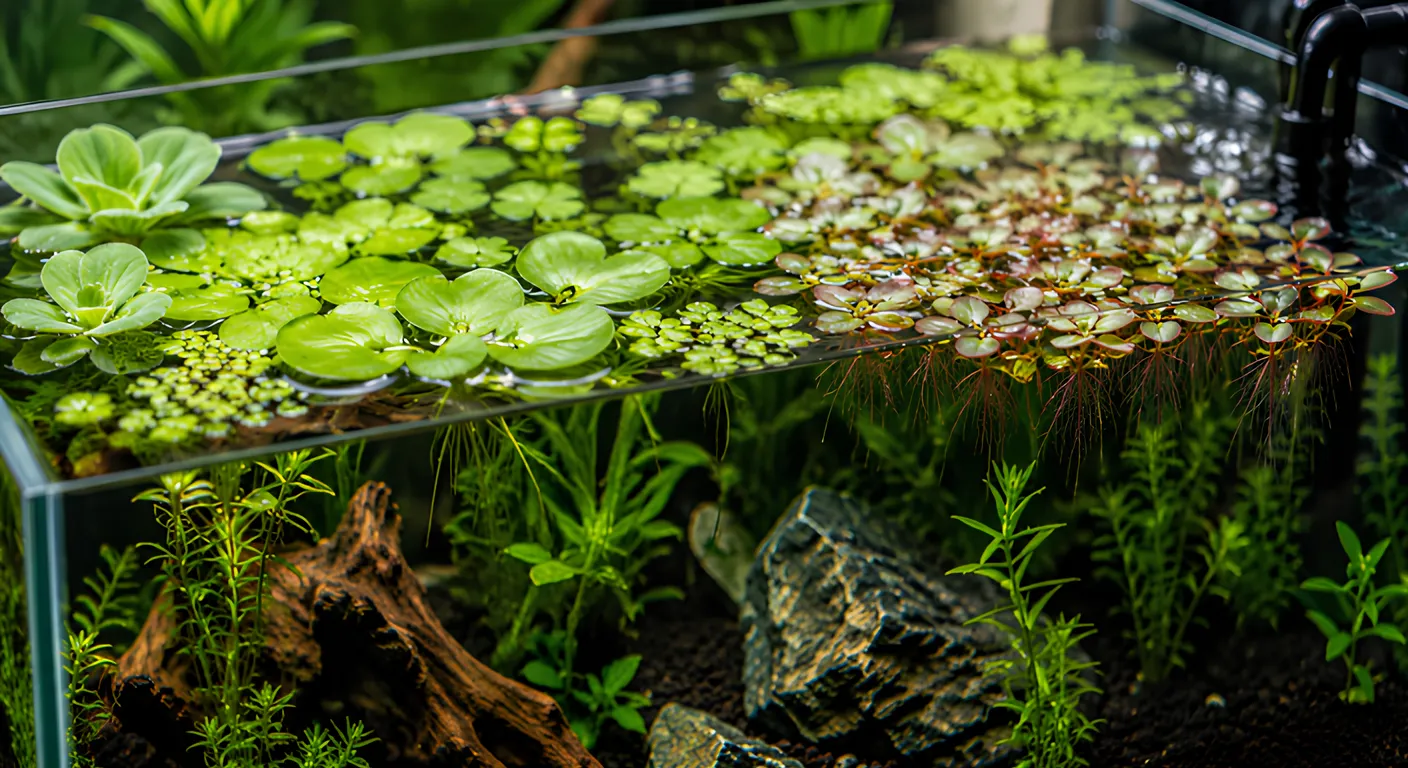
Floating plants look like the easiest addition to any tank. Drop them, and they should just sit there and grow. Yet many aquarists watch the same plants melt, turn yellow, or vanish within a couple of weeks, no matter how healthy the fish below look.
The plant itself is rarely the real problem. The tank environment around it, especially surface flow, humidity, light, and nutrient levels, usually decides whether floaters thrive or disappear. Below are five fixes worth testing at home, along with a troubleshooting guide near the end for sorting out exactly what is going wrong, and a list of mistakes that quietly undo good intentions.
Why Floating Plants Fail in Home Aquariums
Floating plants live in a far more exposed zone than rooted species. Roots in the substrate enjoy a relatively stable environment, protected from temperature swings and direct light. Leaves sitting at the surface do not get that same buffer, so they react quickly to small shifts in flow, air, or light, often within days rather than weeks.
A tank can be perfectly healthy for fish while still being too harsh for floaters. Strong filter output, dry air above the waterline, low nutrient levels, weak lighting, and unstable water conditions all stress floating plants long before they cause any visible problem for fish. That mismatch is why a tank can look fine on paper, with stable ammonia and a thriving fish population, while the floaters drifting on top are slowly dying. It is also why advice meant for rooted plants often fails to translate, since the two groups draw resources from completely different parts of the tank.
Fix 1: Reduce Surface Movement
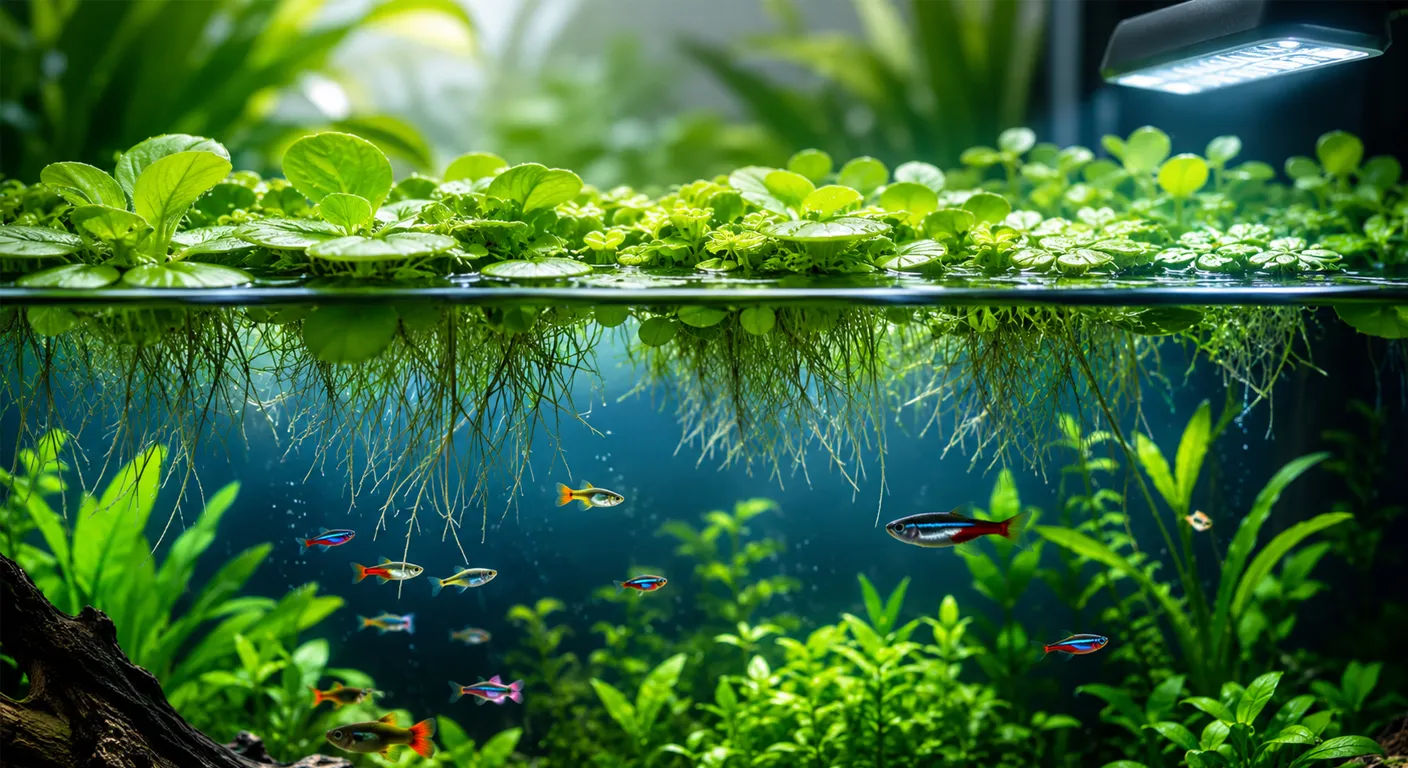
Current matters more than most people assume. Floating plants depend on calm, still water to anchor their leaf clusters and spread their root systems evenly across the surface. Strong surface agitation from a filter outlet or powerhead constantly pushes plants around, tears delicate roots, and can flip smaller species upside down. Thus, exposing their undersides to light they were never built to handle.
This single factor explains a surprising number of failed floater attempts. A tank with otherwise great parameters can still wreck a colony of frogbit or salvinia simply because the filter return creates a steady current across the entire surface.
Over time, the constant motion also prevents roots from settling into a consistent feeding pattern, which slows growth even before any visible damage appears.
Better setup options
Redirect the filter outflow toward the substrate or a side wall instead of straight across the surface.
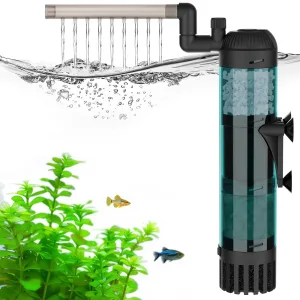
Use a spray bar angled downward to break up strong jets of water before they reach the floaters.
Add a floating plant ring or barrier to keep plants contained in a calmer corner of the tank.
Lower the filter flow rate where the equipment allows adjustment, or switch to a sponge filter for especially sensitive species.
Fix 2: Manage Condensation and Humidity
This is the hidden reason many floaters melt without an obvious cause. Most floating plant species evolved with leaves exposed to open air, not trapped under a sealed, humid lid. When condensation builds up and constantly drips back onto the leaves, it creates a film that blocks gas exchange and invites fungal growth. Both of which speed up melting and turn healthy green tissue translucent within days.
A fully covered tank with a tight glass lid often traps far more moisture than aquarists expect, especially in smaller setups with limited airflow above the waterline.
The leaves end up sitting in a constant layer of moisture rather than drying naturally between mistings. This single issue is often mistaken for a lighting or nutrient problem because the symptoms look similar at first glance.
Practical ways to fix it
Improve airflow above the waterline using a small gap or a low-speed fan pointed across the surface.
Wipe the lid regularly to clear built-up condensation before it drips back down onto the leaves.
Leave a safe ventilation gap if the tank setup allows it, even a narrow one along the back edge.
Avoid fully sealed lids when the plant species needs drier leaf surfaces, such as red root floaters.
Fix 3: Improve Light Quality and Duration
Floating plants sit closest to the light source in the tank, yet that position does not guarantee they receive enough usable light. Many aquarium lights are tuned for plants lower in the water column.
The spectrum reaching the surface may be weaker than it looks to the human eye, particularly with fixtures designed mainly for fish viewing rather than plant growth.
Low indoor room lighting, a shaded tank location, or an underpowered fixture can all cause a slow decline, even when everything else in the tank checks out. Pale, stretched stems and smaller new leaves are common early signs that light intensity is the limiting factor, and these symptoms often appear weeks before the plant visibly stops growing altogether.
What to test
Increase light gradually rather than switching to a much brighter fixture all at once, since a sudden jump can scorch leaves adapted to lower intensity.
Keep a consistent photoperiod, usually six to eight hours as a starting point, then adjust based on observed growth.
Thin out overcrowded floaters regularly so lower leaves still receive usable light instead of sitting in constant shade beneath denser growth.
Fix 4: Feed the Water Column
Floating plants still need nutrients, even though their roots dangle freely instead of anchoring in substrate. They pull nitrogen, potassium, and trace elements directly from the water column. A tank that is light on these nutrients eventually starves the plant, no matter how good the lighting looks.
This is where many planted tank owners get caught off guard. A heavily stocked fish tank often has plenty of nitrogen from waste, but trace elements like iron and potassium frequently run low, especially in newer or lightly stocked setups. Without these trace nutrients, floaters can appear green at first glance while new growth quietly slows down underneath the surface.
What helps to feed
Use a balanced liquid fertilizer dosed at a fraction of the recommended rate, then adjust based on plant response over the following week.
Watch for pale color or yellowing along leaf edges, which usually signals a nutrient gap rather than a lighting problem.
Do not overreact with massive water changes the moment growth slows, since stripping the water column of nutrients right after dosing undoes the fix before it has a chance to work.
Fix 5: Match the Plant to the Tank
Species choice makes a real difference here, more than most beginners expect. Some floating plants are hardy and forgiving. Others are picky and melt easily under conditions that barely affect tougher species, which is why the same tank setup can support one plant easily while another struggles in it.
Duckweed spreads aggressively and tolerates a wide range of conditions, though many aquarists consider it a nuisance once it takes over a tank. Frogbit grows larger, roots deeply, and handles moderate flow better than most floaters, making it a solid starting choice.
Salvinia spreads quickly in calm water but melts fast under strong current or excess humidity. Red root floaters are more demanding overall, needing bright light, still water, and careful humidity control to develop their signature red root color, which makes them a poor first choice for a beginner still learning the basics.
Best approach to match
Start with one easy species instead of mixing several at once, making it harder to tell what is actually working.
Choose floaters that match the tank’s existing light, humidity, and flow rather than redesigning the whole tank around one demanding plant.
If one plant keeps failing despite reasonable effort, switch to a more tolerant species instead of forcing the issue further.
Check Tank Stability
A stable tank matters just as much as any single fix above. Floating plants respond poorly to fluctuating temperature, inconsistent dosing, or water parameters that swing after every water change. Even a well-chosen species will struggle if conditions keep shifting underneath it, since the plant never gets enough time to adjust before the next change arrives.
| Symptom | Likely Cause | Best Fix |
| Melting leaves | Excess humidity or sudden parameter swing | Improve airflow and stabilize water changes |
| Yellowing | Nutrient deficiency, often iron or nitrogen | Add a balanced liquid fertilizer at a low dose |
| Roots shrinking or disappearing | Strong current or low nutrient uptake | Reduce flow and dose trace elements |
| No growth | Insufficient light reaching the surface | Increase light intensity or duration gradually |
| Plants are constantly drifting away | Excess surface movement from filtration | Redirect flow or add a containment ring |
Common Mistakes to Avoid
A few habits cause more floater losses than any single environmental factor, and most of them come from good intentions applied at the wrong time.
Buying floating plants without checking whether the species suits the tank’s current flow and lighting setup.
Mixing several floater species at once makes it difficult to identify which one is actually struggling.
Over-cleaning the tank surface and skimming away too much biofilm, which floaters rely on for partial nutrition.
Dosing fertilizer heavily after one bad week instead of adjusting gradually and observing the response.
Ignoring early yellowing until the entire colony has already declined past the point of easy recovery.
Placing floaters directly under a strong filter outlet without testing calmer spots first.
Assuming all floating species behave the same way, when growth habits and tolerance vary widely between them.
Conclusion
Floating plants often struggle in home aquariums for reasons that have little to do with the plant itself. Surface flow, humidity, light intensity, and nutrient levels at the waterline usually explain the decline far better than blaming the species alone.
Most floating plant problems trace back to conditions at the water’s surface, not a flaw in the plant. Treat floaters as part of the tank’s overall ecological balance rather than a decoration dropped on top, and the fixes above tend to resolve most cases of melting, yellowing, or slow disappearance within a few weeks of consistent adjustment.
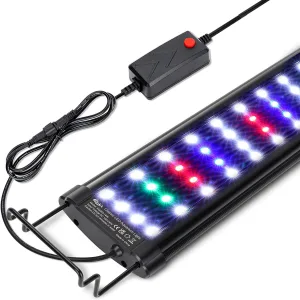
Full Spectrum Aquarium LED Light (14W for 12″-18″)...
Original price was: $18.99.$13.99Current price is: $13.99.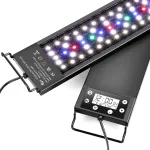
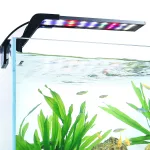
Full Spectrum Aquarium Clip-On LED Light (8W) with...
Original price was: $25.49.$22.99Current price is: $22.99.

Add comment
You must be logged in to post a comment.