
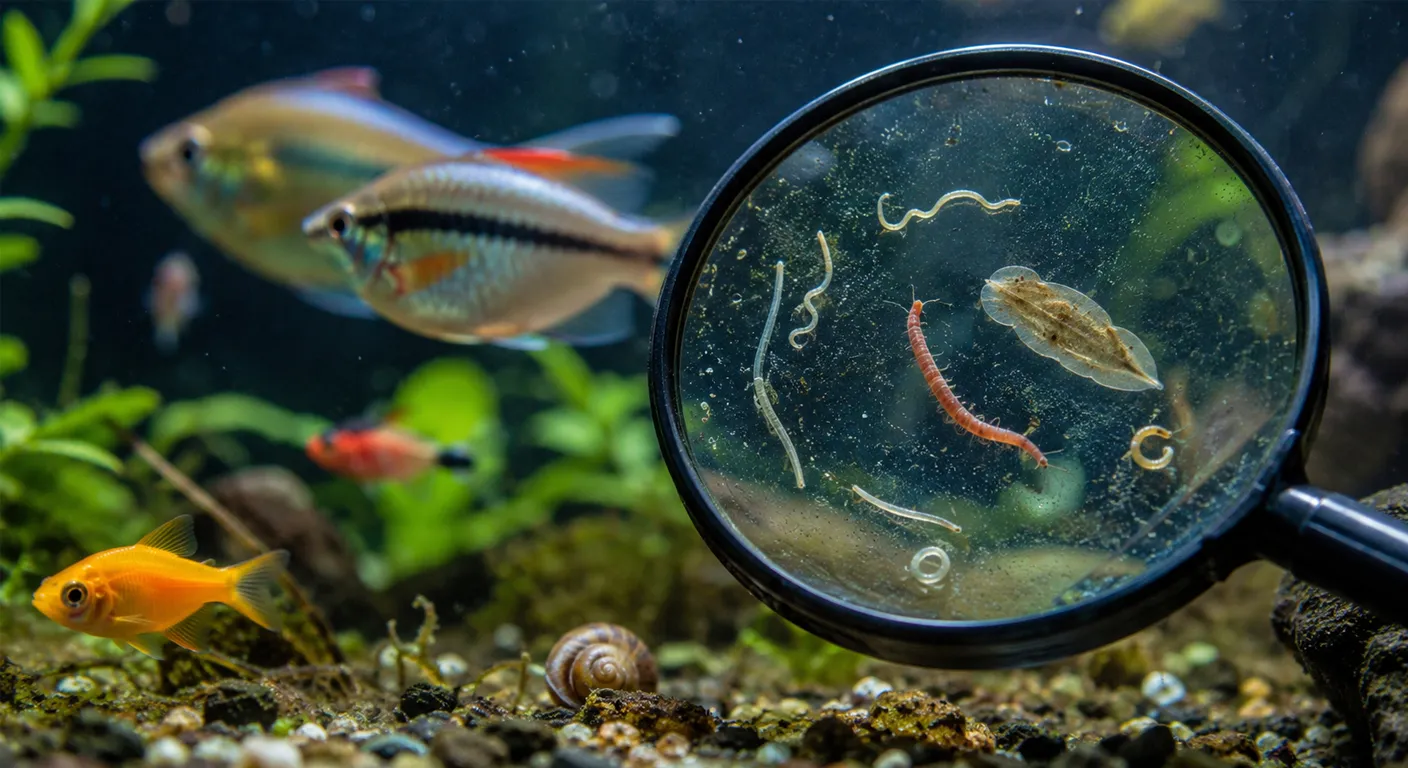
A long, red, thread-like creature appears near the vent of one of your fish. Or something pale and flat is gliding smoothly across the glass. The reaction is the same for most fish keepers: immediate alarm, followed by a search that leads to a dozen different answers and even more confusion.
Most worm guides start with biology. This one skips that. Instead, it works the way a fish keeper actually observes a problem: by what the worm looks like, where it appears, and what level of urgency that combination signals. Whether the tank is freshwater or saltwater, the approach is the same throughout.
This guide covers how to identify aquarium worms by location, which ones are harmless versus genuinely dangerous, exact treatment options for each parasite type, and what to verify before reaching for any medication.
Start Here: Where Is the Worm
Location is the single fastest clue available. Before comparing photographs or searching species names, answer one question: where is the worm appearing? That answer alone eliminates roughly half of all possible species immediately.
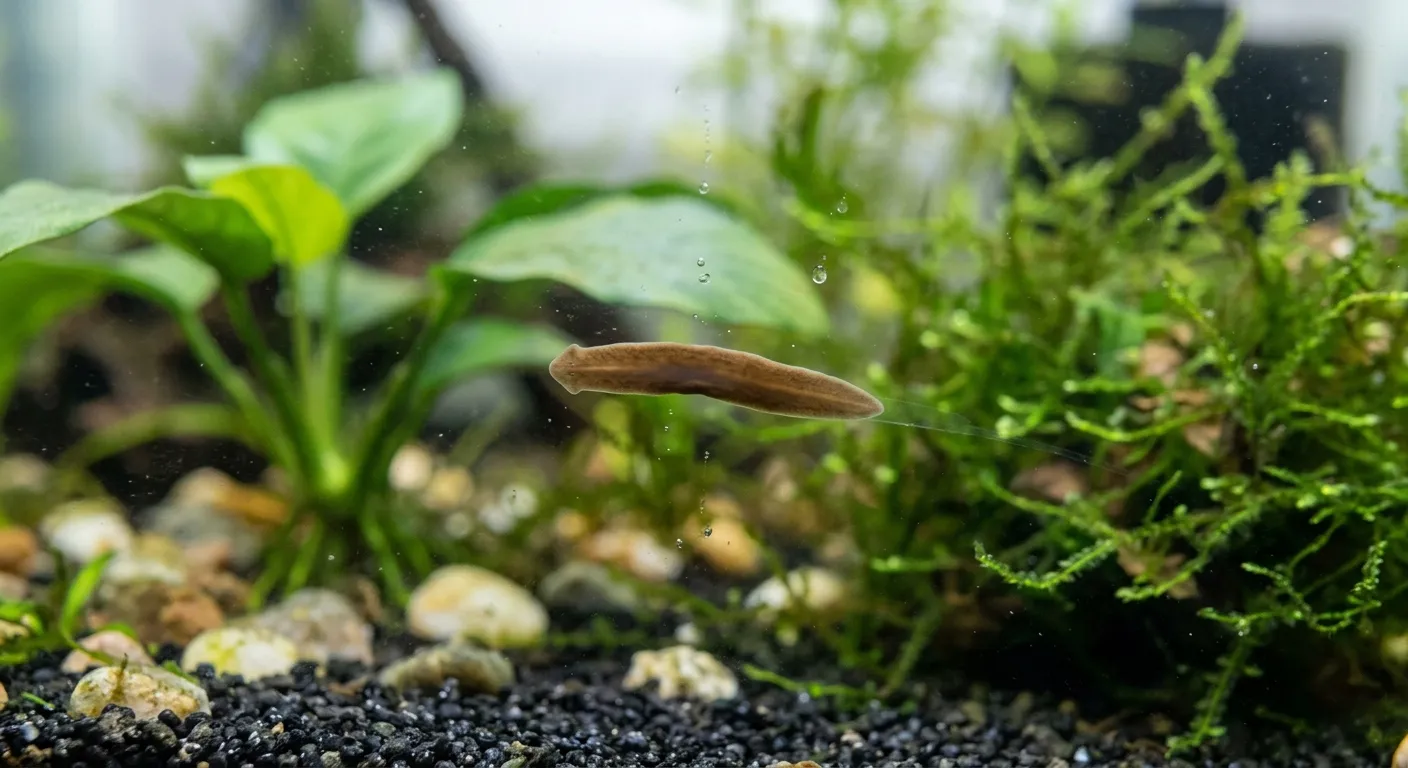
On the glass, gliding flat with no visible wiggle: Almost certainly Rhabdocoela or Planaria. Both are flatworms that travel by gliding rather than swimming. Neither is immediately life-threatening, but Planaria becomes a serious threat in shrimp tanks.
In the substrate or gravel, wriggling upward during water changes: Detritus worms. Present at low levels in virtually every established tank, their sudden appearance in numbers signals a maintenance problem rather than a parasite outbreak.
Attached directly to the fish body, with a threadlike tail visible at the skin surface: Anchor worms. These are crustacean copepods embedded in tissue and require physical removal.
Protruding from the fish’s vent or anal opening: Camallanus worms. A serious internal parasite that requires immediate treatment of the entire tank, not just the affected fish.
Fish rubbing against surfaces repeatedly, no worm visible, with clamped fins or red skin patches: Flukes (Trematodes). Microscopic and diagnosed entirely through fish behavior rather than direct sighting.
Emerging from live rock in a saltwater setup, bristled and segmented: Bristle worms. Common scavengers that are mostly harmless, although larger fireworm varieties can damage corals.
Starting with location rather than species narrows the field right away and points toward the correct response before any other identification step is even needed. Then we can find out how the worms get in.
All 7 Common Aquarium Worms at a Glance
Use this table to cross-reference what you are seeing and get a fast verdict before reading further.
| Worm | Looks Like | Tank Type | Dangerous? | Action Needed |
| Detritus Worms | Thin, white, wriggling threads in the substrate | Freshwater | No | Gravel vacuum, reduce feeding, water change |
| Rhabdocoela | Tiny white specks gliding on glass | Freshwater | No | Improve the maintenance routine |
| Planaria | Flat, pale worms with triangular heads | Freshwater | Conditionally | Fenbendazole; remove invertebrates first |
| Camallanus | Red or orange worms at the fish vent | Freshwater | Yes | Levamisole or Fenbendazole, whole-tank dose |
| Anchor Worms | Threadlike tufts embedded in fish skin | Freshwater | Yes | Manual removal plus Dimilin-X for larvae |
| Flukes | Invisible; diagnosed by fish behavior | Freshwater and Saltwater | Yes | Praziquantel, multiple treatment rounds |
| Bristle Worms | Segmented, bristled, one to twelve or more inches | Saltwater | Mostly no | Population control: remove fireworms manually |
The Harmless Ones: When to Do Nothing
Detritus worms and Rhabdocoela fall into a category that surprises most new fish keepers. They are a warning signal about tank conditions, not a medical emergency. Medicating for either type causes more disruption to the tank than the worms themselves ever would, and it does not address the actual problem driving their population up.
Detritus Worms
These are thin, pale, threadlike worms that live in the substrate and are present at low levels in almost every established aquarium. Under normal conditions, the numbers stay low enough to go completely unnoticed.
A sudden visible bloom, with worms wriggling up into the water column during water changes, points to one specific cause: the substrate is accumulating more organic waste than the tank is processing. Overfeeding, infrequent gravel cleaning, or reduced filtration efficiency are the three most consistent drivers. The worm population expanded because the food supply was first.
Rhabdocoela
Rhabdocoela are smaller than detritus worms and move differently. Rather than wriggling, they glide in smooth, fluid motions across the glass or along surfaces. They are frequently mistaken for Planaria, but the two are distinct species. Rhabdocoela lack the arrow-shaped or triangular head that Planaria carry and pose no direct threat to shrimp or other invertebrates.
Like detritus worms, a visible population surge in Rhabdocoela reflects tank conditions. The fix is the same for both.
The steps below address both worm types at the root cause:
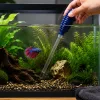
Perform a thorough gravel vacuum to pull accumulated organic debris from the substrate
Complete a 30 percent water change on the same day as the vacuum
Cut feeding back to once daily, or every other day, for two to three weeks
Test water parameters for ammonia, nitrite, and nitrate to confirm no underlying water quality issue is driving the bloom
Inspect the filter for buildup and rinse media in the tank water to avoid killing beneficial bacteria.
With consistent follow-through, worm populations typically decline within two to three weeks and return to unnoticeable baseline levels.
The Dangerous Ones: Symptoms, Urgency, and Treatment
These four worms cause real harm. Some announce themselves visibly, others work quietly for months before any obvious sign surfaces. Correct early identification is what separates a manageable treatment from a full tank loss.
Planaria
Planaria are flat, pale, and move with the same gliding motion as Rhabdocoela, but they are larger, slightly opaque, and carry a recognizable triangular head when viewed up close. In a community fish tank, they are mostly a nuisance. In a shrimp tank or a breeding setup, they become a genuine threat, attacking shrimp directly and preying on eggs and juvenile fish.
Treatment: Fenbendazole, sold under names like Panacur or No Planaria, is the standard option. Remove all invertebrates before dosing, as the medication affects them. Fenbendazole is generally safe for planted tanks, which makes it the preferred choice over more aggressive alternatives.
Camallanus Worms
Camallanus is the most serious parasite on this list, partly because of the damage it inflicts and partly because of how long it evades detection. The visible sign, a reddish-orange worm protruding from the fish’s anal opening, appears late in the infection. Before that point, the early signals are easy to dismiss: slower growth than expected, a drop in fry production, fish that seem off without any obvious cause, and occasional unexplained losses spread across several months.
Treatment: Dose the entire tank, not just the visibly affected fish. Both Levamisole and Fenbendazole are used for Camallanus, and both carry risks for shrimp and loach species. A follow-up dose at 21 days is necessary to catch larvae that survived the first round. Carbon must be removed from the filter before dosing either medication.
Anchor Worms
Despite the name, anchor worms are not worms at all. They are crustacean copepods from the genus Lernaea that embed themselves into the fish’s skin and muscle tissue. They appear as thin, threadlike protrusions with a forked tail visible at the surface of the body. The attachment site becomes inflamed, and without removal, secondary bacterial infections develop at the wound.
Treatment: Manual removal with fine tweezers under close observation, followed by a topical antiseptic applied to the wound site. Dimilin-X (diflubenzuron) treats larvae and free-swimming juvenile stages in the water column. Check every fish in the tank, not only those with visible parasites, since early-stage infestations may not yet be visible.
Flukes (Trematodes)
Flukes are microscopic, which means the worm itself is never seen directly. Diagnosis comes entirely from fish behavior. A fish with flukes will repeatedly scrape its body against tank surfaces (called flashing), display red or irritated patches on the skin, hold its fins clamped close to the body, or show rapid and labored breathing. These symptoms are frequently misread as stress from aggression or a water quality issue, which delays treatment by weeks.
Treatment: Praziquantel is the standard medication for both skin flukes and gill flukes. Multiple treatment rounds are required because a single dose does not reliably eliminate the full lifecycle, including eggs. Complete the entire course even when fish appear to recover early.
What You Must Know Before Dosing
The most common treatment mistake is selecting the wrong medication. It is using the right medication in the wrong tank. Before dosing anything, match the treatment to the specific inhabitants of the tank.
Fenbendazole: Targets Planaria, Camallanus, and some other internal parasites. Harmful to shrimp and invertebrates. Generally safe for planted tanks.
Levamisole: Targets Camallanus and certain nematode parasites. Toxic to shrimp and requires careful use around loach species. Remove filter carbon before dosing.
Praziquantel: Targets skin and gill flukes. Considered safe for most fish and plants. Multiple rounds are required to address the full lifecycle.
Dimilin-X: Targets crustacean parasites, including anchor worm larvae. Not suitable for tanks containing shrimp, crabs, or other invertebrates.
No medication: The correct response to Detritus worms and Rhabdocoela. Medicating for either type only stresses the tank’s biological balance without solving the underlying problem.
If the main display tank contains a mix of sensitive species, treat it in a quarantine tank instead. Moving affected fish reduces the risk to other inhabitants while still allowing a complete course of treatment.
One Rule That Prevents Most Worm Problems
The majority of parasitic worm introductions trace back to one skipped step: quarantine. A minimum four-week quarantine period for every new fish intercepts Camallanus, flukes, anchor worms, and most other parasites before they ever reach the main display. Symptoms that are invisible at the point of purchase typically become observable within two to four weeks in an isolated environment where the fish can be watched closely and treated without putting other tank residents at risk.
Other Ways Worms Get In
New fish are the most common entry point, but not the only one.
Live aquatic plants can carry Planaria eggs and detritus worm populations in substrate clinging to the roots.
Live rock in saltwater setups is a primary introduction route for bristle worms, including fireworm varieties.
Transferring substrate, decorations, or equipment between tanks without proper cleaning moves both eggs and adult parasites directly into a new environment.
The quarantine setup does not need to be elaborate. A bare tank with a sponge filter, a heater, and basic water testing equipment is more than adequate. The habit itself matters far more than the hardware supporting it.
Conclusion
Most aquarium worms are not emergencies. Detritus worms and Rhabdocoela respond to routine maintenance adjustments and require no medication whatsoever. Planaria, Camallanus, anchor worms, and flukes each require specific treatments, and identifying them correctly before reaching for medication is what determines whether the treatment actually works.
Avoid panic dosing. Cut back on overfeeding. Monitor fish behavior closely during and after any treatment, and complete the full medication course even when fish appear to recover ahead of schedule. Check quarantine tanks, filter media, and any equipment moved between tanks regularly as part of a standard prevention routine.
Worm problems return when the conditions that allowed them in the first place go unaddressed. Stable maintenance habits, consistent quarantine for every new addition, and careful observation over time are what keep a tank clean long term. A one-time treatment solves the immediate problem. The habits prevent the next one.
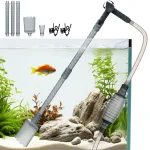
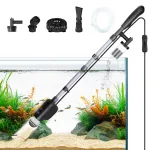
AQQA 5-in-1 Aquarium Gravel Cleaner Set For Removing...
Original price was: $35.59.$30.39Current price is: $30.39.












Add comment
You must be logged in to post a comment.