
Your betta is flaring less. His colours look faded. He is hovering near the bottom and barely moving.
You cleaned the tank yesterday. It looked spotless. So what went wrong?
This is one of the most frustrating experiences in betta fish care and it happens more often than you would think. A well-intentioned cleaning session can stress a betta more than a neglected tank ever would. The fish does not need a pristine environment. It needs a stable one.
Most cleaning mistakes are not about effort. They are about method. Changing too much water at once. Scrubbing the filter too clean. Skipping the water conditioner. These small errors quietly destabilise the aquarium chemistry your betta depends on to stay healthy.
Table of Content
Toggle1. Too much water changed at once
Replacing a large amount of tank water seems like a fresh start. In reality, it causes sudden shifts in temperature, pH, and other water parameters. Bettas are sensitive to abrupt changes, even when the new water looks clean.
Small tanks are especially vulnerable. A single large water change can completely alter the environment. That puts your fish under serious stress.
What to do instead
Change 20 to 50 percent of the water at a time, never the whole tank.
Stick to a consistent weekly or bi-weekly schedule instead of large, infrequent sessions.
Always dechlorinate new water before it goes in.
Match the replacement water temperature to the existing tank water.
Gradual changes protect your betta far better than dramatic cleanings ever will.
2. Over-cleaning the filter
What goes wrong
The filter is not just mechanical equipment. It is home to beneficial bacteria that process waste and keep the nitrogen cycle stable. That biological balance is what makes a tank safe for fish.
These common cleaning habits destroy that balance:
Rinsing filter media under tap water (chlorine kills the bacteria)
Replacing all media at once
Heavy scrubbing that wipes out a colony that took weeks to build
The result is an ammonia or nitrite spike — both dangerous for bettas.
What to do instead
Rinse media in a container of removed tank water only, never under the tap.
Replace media only when it is physically breaking down, not just because it looks dirty.
Never replace all filter parts at the same time.
Clean the filter separately from substrate and décor sessions.
Think of the filter as part of the tank’s living ecosystem. The goal is to clean without resetting the biology.
3. Using untreated tap water puts bettas at risk
What goes wrong
Tap water contains chlorine or chloramine. Both can irritate bettas and harm the beneficial bacteria in the tank. Water that is safe for humans is not automatically safe for fish.
This mistake happens during full water changes, small top-offs, and emergency cleanings. In a small aquarium, even a brief exposure to untreated water causes stress.
What to do instead
Add a water conditioner to new water before it enters the tank, every single time.
This applies to full water changes, top-offs, and emergency refills alike.
Check the water temperature. Cold or warm water shocks the fish just as badly as chlorine does.
Keep a bottle of water conditioner next to the tank so it is never skipped.
4. Scrubbing everything spotless upsets the tank’s balance
What goes wrong
A healthy aquarium is not a sterile one. Light algae on the glass and thin biofilm on surfaces are both normal in an established tank. They are signs of a working biological environment, not signs of neglect.
Deep-cleaning every surface at once disrupts the tank’s balance. Scrubbing décor, substrate, and hardscape together during the same session can destabilize the entire aquarium. That is harmful to the betta, not helpful.
What to do instead
Wipe algae from the glass only when it blocks visibility.
Rinse décor gently only if visible waste has built up on it.
Leave surfaces that look aged but are biologically active completely alone.
Never deep-clean the filter, substrate, and decorations in the same session.
A maintained tank and a stripped tank look very different. Aim for maintained.
5. Cleaning on the wrong schedule
Why timing matters in betta fish care
Only cleaning when the tank looks dirty is a reactive habit. It means waste builds up between sessions. Cleaning too aggressively or too frequently creates the opposite problem. An unstable tank that keeps the betta under constant stress.
The right schedule depends on several factors:
Tank size: smaller tanks need more frequent attention
Filtration: unfiltered tanks build up waste faster
Plant load: live plants absorb waste and extend the window between cleanings
Feeding habits: overfeeding accelerates waste build-up
A small unfiltered bowl needs more frequent attention. A larger, well-filtered, planted tank can go longer between full cleanings.
Building a consistent aquarium maintenance routine
Weekly light maintenance beats occasional deep cleanings every time. A simple weekly routine looks like this:
Check water parameters
Remove visible debris and uneaten food
Wipe the glass if needed
Do a partial water change
Filter maintenance can happen once or twice a month — and should always be done gently and separately from other cleaning tasks.
Consistency is the goal. A stable routine creates a stable tank. A stable tank creates a healthy betta.
6. Vacuuming the substrate too harshly
The two extremes to avoid
Some keepers never touch the substrate. Others vacuum it like a bucket of dirt. Both approaches cause problems.
Waste collects quickly in gravel and sand. Uneaten food and fish waste decay at the bottom. That decay raises ammonia levels and clouds the water. Left too long, it causes real harm.
But heavy vacuuming stirs up too much at once. It disturbs the whole aquarium in a single session. That is also hard on the betta.
How to vacuum substrate the right way
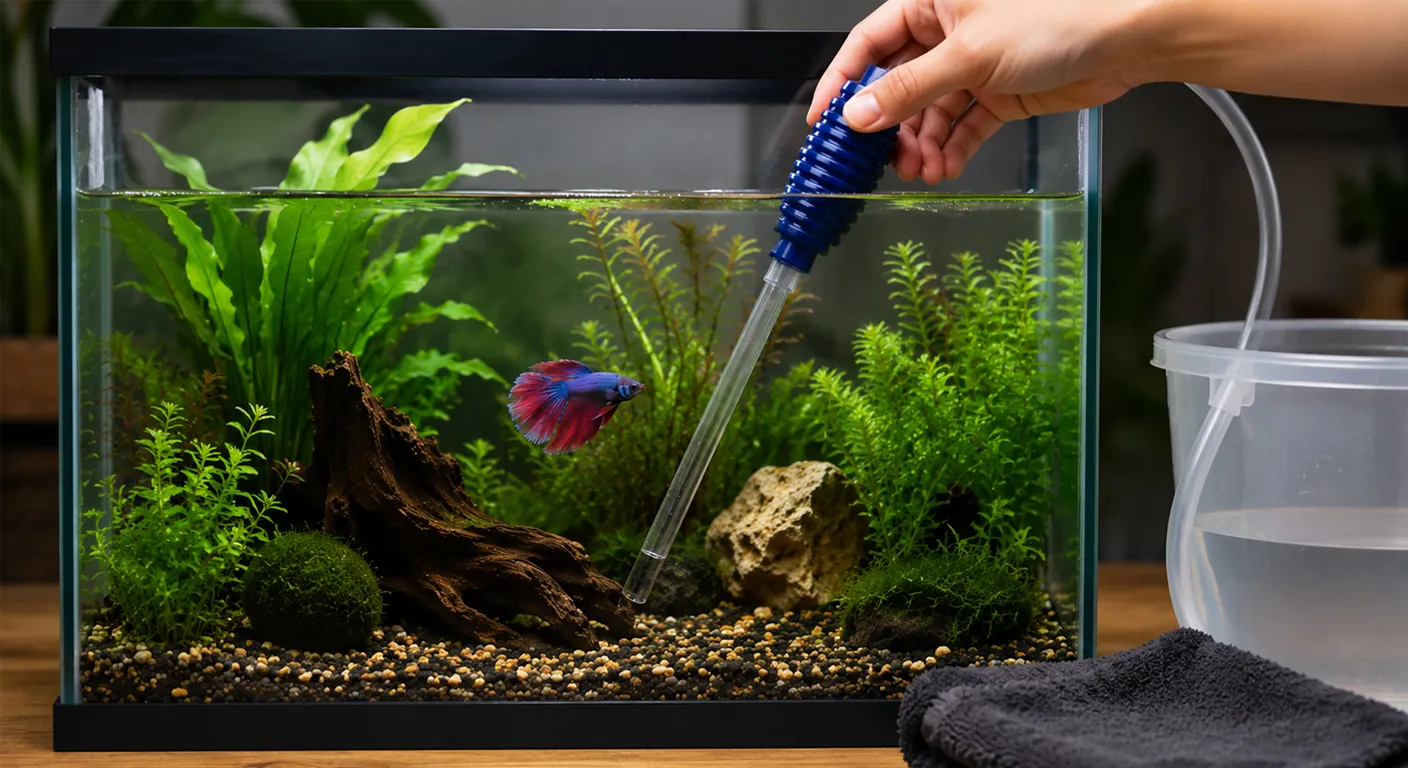
Use a gravel siphon or substrate vacuum with a light hand. Focus on the spots where waste visibly collects. You do not need to cover every inch in a single session.
Treat substrate care as regular maintenance, not deep excavation. A little attention each week is far more effective than one aggressive cleaning every month.
7. Skipping water testing before and after cleaning
Why clear water is not the same as safe water
Many betta keepers judge tank health by appearance alone. Clear water feels safe. But ammonia and nitrite are invisible. Both are dangerous and both can spike right after a cleaning session.
Over-cleaned filters, large water changes, and disturbed substrate can all shift water parameters quickly. Without testing, you have no way to know. The betta often shows stress signs only after the damage is already done.
What to test and when
Test regularly, not just when something looks off. After any cleaning session, a quick check catches problems before the betta shows symptoms.
The four key parameters to monitor:
Ammonia: should always read 0 ppm
Nitrite: should always read 0 ppm
Nitrate: keep below 20 ppm with regular water changes
Temperature: betta prefer 76–82°F (24–28°C)
Water testing is not an advanced step in betta fish care. It is a basic one. Knowing what is actually in the water is always better than guessing from how it looks.
How to clean a betta tank step by step
Use this routine to avoid all seven mistakes above. Keep it simple and consistent.
Test the water first. Check ammonia, nitrite, and temperature before touching anything. This tells you whether cleaning is urgent or routine.
Remove debris and uneaten food. Use a net or siphon to clear visible waste from the surface and substrate.
Vacuum the substrate lightly. Focus on areas where waste collects. Work slowly. Do not disturb the whole tank floor at once.
Do a partial water change. Replace 20 to 50 percent of the water. No more.
Rinse filter media gently if needed. Use removed tank water only. Never use tap water on the media.
Wipe the glass and décor only as needed. Leave surfaces that are clean enough alone.
Refill slowly with treated water. Match the temperature to the tank. Add water conditioner before it goes in.
Watch your betta afterward. Active, curious behaviour means the tank is stable. Clamped fins or hiding near the bottom signals stress.
How do I clean a betta tank without killing beneficial bacteria
The key is to never clean everything at once. Follow these rules:
Rinse filter media in removed tank water, never tap water
Replace filter media in stages, not all at once
Vacuum the substrate partially each session, not all of it
Avoid scrubbing every surface in a single clean
Keep filter, substrate, and décor cleaning on separate schedules
Leaving some established biological material in place is what protects the nitrogen cycle.
Conclusion
Betta tank cleaning is about balance. Too little maintenance lets waste build up. Too much, or the wrong kind stresses the fish and damages the beneficial bacteria keeping the tank alive.
The safest betta fish care routine is gentle, regular, and consistent. A healthy betta tank is not the cleanest tank in the room. It is the most stable one.
FAQ
How often should I clean my betta tank?
Light maintenance, a partial water change, debris removal, and glass wipe should happen once a week. Filter maintenance can be done once or twice a month, and only very gently. Deep cleaning is rarely necessary in a healthy, established tank.
How much water should I change in a betta tank?
Change 20 to 50 percent of the water at a time. Smaller, more frequent changes are safer than large, infrequent ones. Never replace all of the water in a single session unless there is a serious contamination emergency.
Can I use tap water in a betta tank?
Not directly. Tap water contains chlorine or chloramine, both of which harm fish and beneficial bacteria. Always treat tap water with an aquarium water conditioner before adding it to the tank. Also match the temperature to the existing tank water before adding it.
Related Products For Your Reference

















Add comment
You must be logged in to post a comment.