
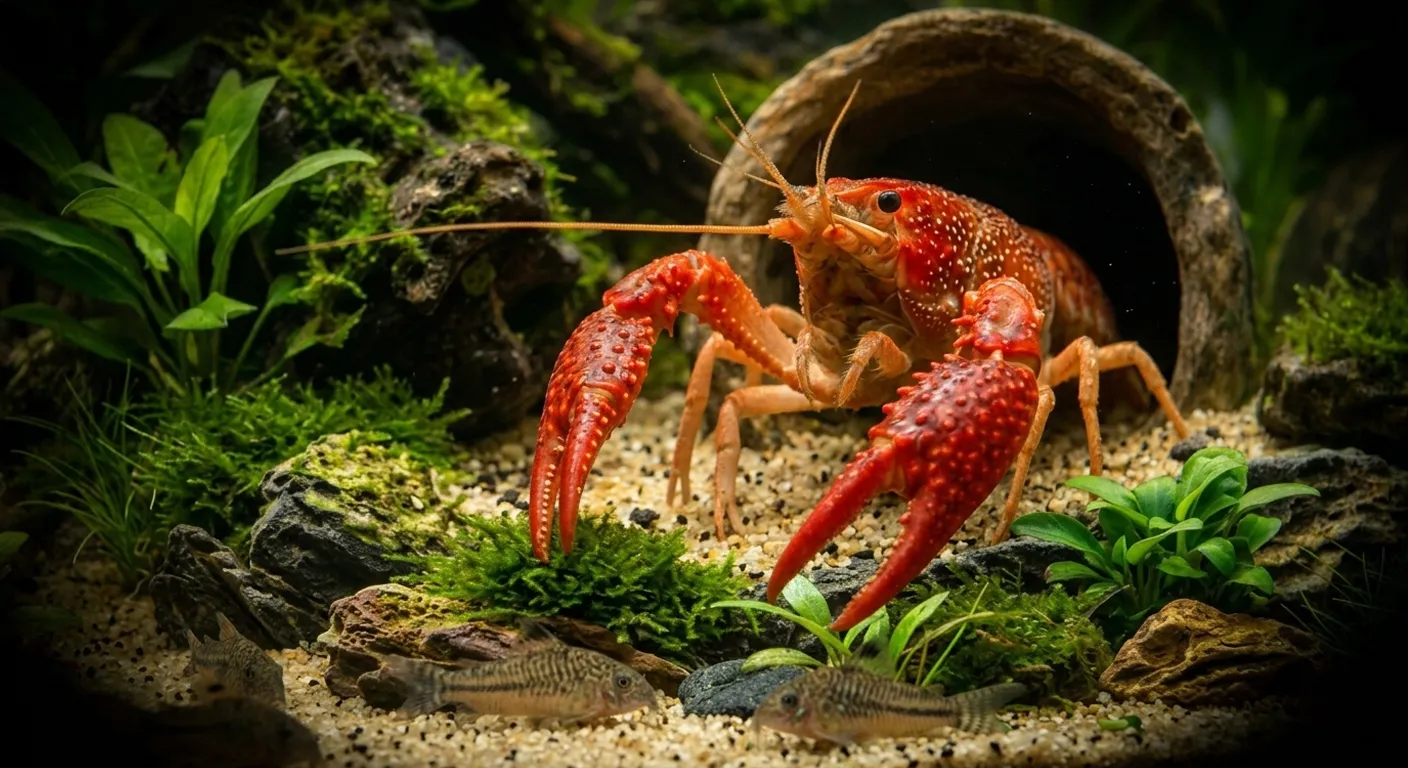
Someone on Reddit once posted about picking up a “free” crayfish from a neighbor. Within one night, the guppies were mauled, the plants were uprooted, and the tank lid was somehow flung to the floor. One animal, one night, and total chaos.
That is not an outlier story. That is what happens when a crayfish ends up in the wrong setup.
Crayfish aggression comes from three things: territory claims, hunger pangs, and the vulnerability that hits during molt cycles. The good news is that five prevention strategies, including the right species choice, spacious hides, stable water, smart feeding, and vigilant monitoring, keep claws in check and create a setup where the animal actually thrives.
This guide covers the full picture: tank basics, essential gear, cycling musts, species and mate picks, aquascaping, feeding routines, and the top pitfalls that trip up most beginners.
1. Tank Essentials and Real Capacity
The Gap Between the Label and the Reality
A 20-gallon tank does not give you 20 gallons of usable space. Once a one-to-two-inch sand substrate goes in, plus two or three caves and some decorations, you are realistically working with 15 to 18 gallons. That 20 to 30 percent loss is not trivial for an animal that is wired to claim and defend territory.
Here is how the numbers break down:
| Tank Size | Labeled Volume | Usable After Substrate and Hides |
| 20-gallon | 20 gallons | 15 to 18 gallons |
| 30-gallon | 30 gallons | 21 to 24 gallons |
The one to two-inch sand layer alone displaces a meaningful chunk of volume. Add caves, and that number drops further. Choosing a tank based on the label alone leads directly to problems for your Crayfish.
Why Cramped Space Fuels Fights
A tight tank does two things that directly amplify aggression. First, limited water volume means waste concentrates faster. Ammonia builds up quicker in a smaller dilution, putting the crayfish in a state of physical stress that shows up as snapping and lunging at anything nearby.
Second, and this part gets overlooked constantly: crayfish release pheromones. In a small, poorly diluted tank, those chemical signals stay concentrated. Elevated pheromone levels trigger territorial responses, and the crayfish starts treating its environment like it is under constant threat, even when nothing is actually wrong.
Stable dilution in a larger volume prevents that cycle from starting. A 30-gallon setup for a single crayfish is not excessive; it is a better baseline.
2. Equipment for Peaceful Setups
Core gear for a crayfish tank prioritizes security, gentle water flow, and reliable monitoring. Aesthetics are an afterthought.
| Equipment | Role in a Crayfish Tank | Notes |
| Filter and Heater | Maintains water quality and stable temperature | Use gentle flow; strong currents stress the animal and provoke defensive behavior |
| Lid and Lights | Prevents escapes; supports plant growth | Crayfish escape regularly. An open tank also causes evaporation that shifts water parameters over time |
| Test Kit and Hides | Tracks water chemistry; gives the crayfish a secure retreat | Liquid test kits only. Test strips are not accurate enough. Provide at least one hide per animal plus one extra |
The hides are not decorative. A crayfish without a secure cave becomes chronically stressed. Chronically stressed crayfish attack, every single time.
3. Cycling and Species Selection
Cycling Basics
The nitrogen cycle is what makes a tank safe to live in. Beneficial bacteria convert ammonia from waste and uneaten food into nitrite, and then into nitrate, which is far less harmful and gets removed through regular water changes.
Without that bacterial colony in place, ammonia accumulates and burns the fins and gills of the crayfish. That physical damage directly provokes aggressive behavior. An uncycled tank is a tank running on a short fuse.
The cycle takes four to six weeks. There is no reliable shortcut. Run it with an ammonia source before adding any animal, test every few days, and wait until ammonia and nitrite both hold at zero before moving forward.
Best Low-Aggression Species
Not all crayfish behave the same way. The two most manageable species for home aquariums are:
Dwarf Orange Crayfish (CPO): They are one to two inches at full size. Noticeably calmer than larger species and a realistic candidate for a carefully chosen community tank. They will not bother fast-moving surface fish.
Electric Blue Crayfish: They are more territorial than CPO but workable in a solo setup with adequate space and hides. Females across most species also tend to be milder than males. They are worth noting when picking animals at a store.
Species to avoid:
Red Swamp Crayfish: These grow large, hunt aggressively, and will go after nearly anything in the tank. Widely marketed as a beginner option, which is a misleading label. Somehow, they are a poor fit for community tanks or smaller setups.
4. Tank Mates and Aquascaping
Safe (But Rare) Tank Mates
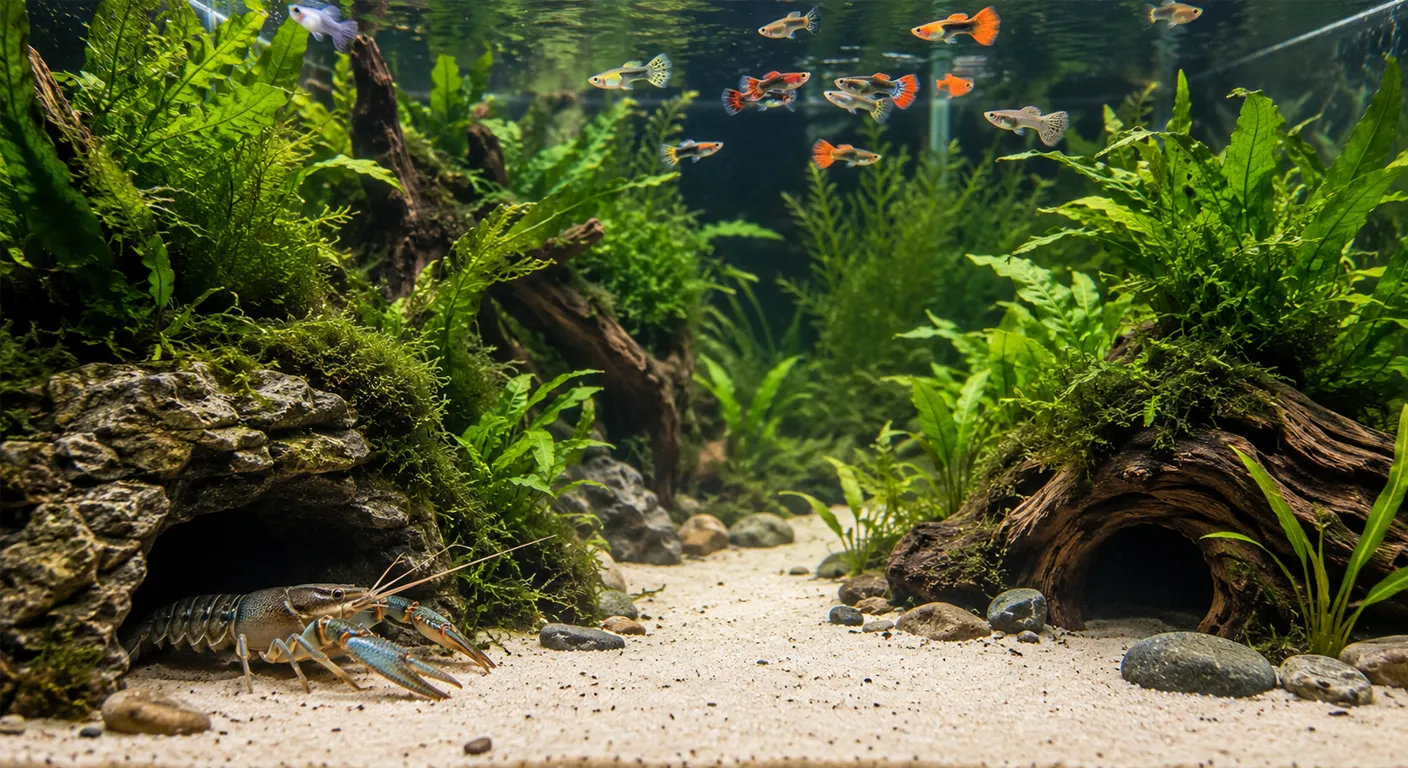
Community success with crayfish is genuinely uncommon. Most experienced keepers end up going the solo route because it is simply more predictable. That said, fast surface-dwelling fish sometimes coexist:
Guppies
Other fast surface-active fish
The logic is positional. Crayfish operate from the bottom, and the fish that stay near the surface stay out of claw range. Shrimp and bottom-dwelling fish do not have that buffer. Avoid adding shrimp to a crayfish tank. As you can see, the outcome is predictable.
Aquascaping Strategies
The physical layout of the tank meaningfully reduces territorial pressure. The goal is to break up sight lines so the crayfish cannot patrol the full tank from a single position.
Effective strategies:
Java fern and Java moss walls attached to driftwood or rocks create natural dividers that split the tank into zones
Driftwood tunnels give the animal a defined home base. When a crayfish has a clearly owned space, it patrols less aggressively through the rest of the tank.
Open sand areas in the foreground for foraging without obstruction
It all comes to maintaining the right balance. Too many barriers create a different kind of stress. Too much open space leaves the animal feeling exposed. Your aim must be separation without confinement.
5. Feeding and Maintenance Routines
Smart Feeding Plans
Hunger is a direct aggression trigger and also one of the easiest to address. An underfed crayfish chases tankmates and becomes far more reactive to anything that enters its space.
Feed three times per week in the evenings. Crayfish are nocturnal, so evening feedings align with when the animal is naturally active. What to feed:
Sinking pellets formulated for bottom feeders as the primary food source
Blanched vegetables like zucchini or spinach as a supplement
Extra food during molt periods, when the animal needs more nutrition to rebuild its shell
Remove uneaten food within 24 hours. Decomposing scraps drive ammonia up, ammonia stresses the crayfish, and stress turns into snapping. That chain is consistent and entirely avoidable.
Water Changes and Testing
Weekly 25 percent water changes are the standard. Not biweekly. Not monthly. Weekly.
Target parameters:
Temperature: 68 to 74 degrees Fahrenheit, held steady
pH: 7.0
Ammonia: 0 ppm
Nitrite: 0 ppm
Any fluctuation outside these ranges creates physiological stress. Physiological stress presents as behavioral aggression. Keeping parameters stable is not optional maintenance; it’s a direct tool for managing crayfish temperament.
Common Mistakes and Molt Monitoring
1. Pitfalls to Avoid
A few errors come up repeatedly among new crayfish keepers:
Overstocking: Two crayfish in a 20-gallon tank are already overstocked. The space and water quality requirements do not allow for it
No lid and no hides: An open tank creates evaporation-driven parameter shifts that accumulate quietly over weeks. A crayfish with nowhere to retreat stays in a state of constant stress
Ignoring reflections: A crayfish sees its own reflection in the tank glass as a rival. It will exhaust itself trying to drive that “rival” away, which creates ongoing, unresolved stress. You can adjust the lighting or reposition the tank to reduce this.
2. Watching the Molt
Molting is when a crayfish sheds its old exoskeleton to grow. During the 24 to 72 hours it takes for the new shell to harden, the animal is completely defenseless. Soft-shell crayfish get attacked by tankmates almost immediately if left unmonitored.
Do not remove the shed exoskeleton, as the crayfish eats it to reclaim the calcium needed to harden the new shell. Removing it extends the vulnerable window and increases the risk of injury or death. Moreover, you also need to keep the tank undisturbed during this phase and watch any tankmates closely.
Conclusion
A crayfish dismantling its tank is not malfunctioning. It is responding to the conditions it has been placed in. Getting this right comes down to a solo 20-gallon or larger setup with proper hides, a fully cycled tank with stable parameters, a secure lid, consistent evening feedings with scraps removed promptly, and regular water testing to catch any shifts early.
Those five foundations channel the animal’s instincts without giving them anywhere destructive to go. Crayfish are genuinely interesting animals to keep. They forage, explore, and interact with their environment in ways most fish simply do not. Set the tank up correctly, and that behavior becomes something worth watching closely. Get the fundamentals wrong, and it compounds into a mess fast.
The setup is worth the patience it takes to do right. Start there and build from it.
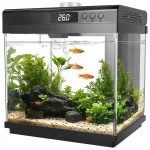
3.7 Gal Aquarium Kit: Filter, 10-Color Light, Self-Cleaning,...
Original price was: $81.99.$77.39Current price is: $77.39.














Add comment
You must be logged in to post a comment.