
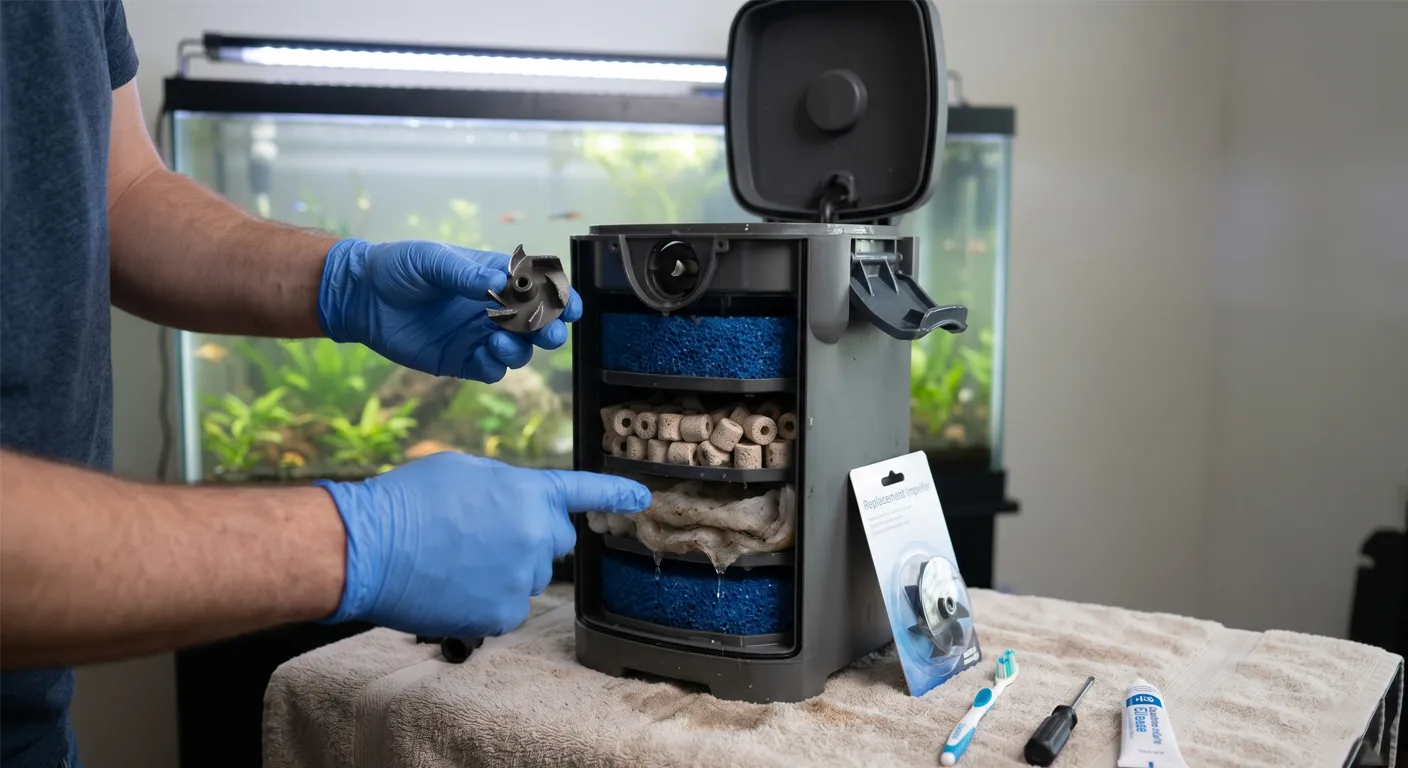
One afternoon, the canister filter on a 55-gallon setup started making a low grinding noise, and the flow dropped noticeably. The immediate instinct was to order a replacement. Then the decision came to open it up instead, figure out what was actually wrong, and fix it. Turned out to be a cracked impeller blade. A three-dollar part.
Aquarium filters are the life-support system of any tank, managing mechanical, biological, and chemical filtration simultaneously. When they fail, even partially, water quality drops fast. Fish get stressed. Algae takes hold.
This guide covers 10 common filter problems, their root causes, quick DIY fixes, troubleshooting references, maintenance routines, and practical tips to keep filtration running reliably long-term.
Understanding How Aquarium Filters Actually Work
Before diagnosing problems, it helps to understand what the filter is doing and where failures tend to originate.
Every aquarium filter handles three distinct processes simultaneously:
Mechanical filtration captures solid particles, uneaten food, fish waste, and debris by passing water through sponge foam, filter floss, or fine mesh media.
Biological filtration grows colonies of beneficial bacteria on porous media surfaces. These bacteria convert toxic ammonia into nitrite and then into the far less harmful nitrate.
Chemical filtration uses activated carbon or other reactive media to absorb dissolved organic compounds, medications, and tannins from the water.
When any of these three layers fails, the effect on water quality shows up fast. Common causes across all filter types include improper initial setup, skipped maintenance cycles, impeller wear, power fluctuations, and media that has reached the end of its effective lifespan.
Quick Reference: 10 Common Filter Problems at a Glance
| Problem | Likely Cause | Difficulty to Fix |
| Filter not turning on | Power issue, jammed impeller | Easy |
| Weak water flow | Clogged media, partial blockage | Easy |
| Grinding or rattling sounds | Debris in the impeller, worn shaft | Easy |
| Leaking filter | Failed O-ring, loose fittings | Easy to Moderate |
| Cloudy water despite the filter running | Bacterial bloom, overstocked tank | Moderate |
| Foul odor or slime buildup | Anaerobic bacterial growth | Easy |
| Filter not priming | Air lock, clogged intake | Easy |
| Vibrations and humming | Misaligned impeller, worn motor | Easy |
| Filter stops mid-cycle suddenly | Thermal shutdown, power surge | Easy |
| Frequent clogging | Overstocked tank, inadequate media volume | Moderate |
Problem 1: Filter Not Turning On
Symptoms: Complete silence from the motor, no water movement in the tank, and the indicator light is off.
Likely causes:
Power supply disconnected or outlet failure
Jammed impeller from debris accumulation
Motor burnout from an extended blockage
Fix: Start at the outlet. Test it with another device. If the outlet works, unplug the filter, remove the impeller cover, and pull the impeller out. Rinse it under tap water and remove any plant matter, gravel, or debris wrapped around the shaft. Reinstall and test.
After any power surge or outage, always unplug the filter for 30 seconds before restarting. Attempting to restart a filter immediately after a surge can cause the motor to lock. A 30-second reset allows capacitors to discharge properly before the motor attempts to spin again.
Problem 2: Weak or Slow Water Flow
Symptoms: Noticeably reduced output from the spray bar or outlet nozzle, surface agitation nearly absent, livestock showing signs of low oxygen.
Likely causes:
Mechanical media fully saturated with debris
Intake tube partially blocked by algae or plant roots
Impeller partially clogged
Fix: Rinse all mechanical media in a bucket of tank water, never tap water. Tap water kills the beneficial bacterial colonies that biological media depend on. Check the intake tube for blockages and clear it with a flexible brush. If the flow is still weak after cleaning, the media may be compacted beyond effective rinsing and need replacement.
A flow rate drop of 30 percent or more typically indicates a maintenance interval that has been pushed too long.
Problem 3: Grinding or Rattling Sounds
Symptoms: New or worsening mechanical noise from the filter housing, grinding sensation when touching the unit.
Likely causes:
A gravel or sand particle caught in the impeller
Worn impeller shaft or ceramic bearings
Cracked impeller blade
Fix: Remove and inspect the impeller thoroughly. Even a single grain of coarse gravel jammed against the shaft produces significant noise and accelerates wear. Replacement impellers for most brands cost between two and eight dollars and take less than five minutes to swap. Running a damaged impeller wears the motor mount over time, which turns a four-dollar fix into a filter replacement.
Problem 4: Leaking Filter
Symptoms: Pooling water around the filter housing, drips from lid seams or output tubing connections.
Likely causes:
Deteriorated or dislodged O-ring
Overtightened or cracked lid
Loose hose fittings
Fix: Drain and disassemble the filter fully. Inspect all O-rings for compression flattening, cracking, or displacement. Replace any O-ring that does not spring back to its round profile when pressed. Apply a small amount of aquarium-safe silicone grease to new O-rings before reassembly. Never overtighten canister lids as the locking mechanism is designed to seal under water pressure, not under hand torque.
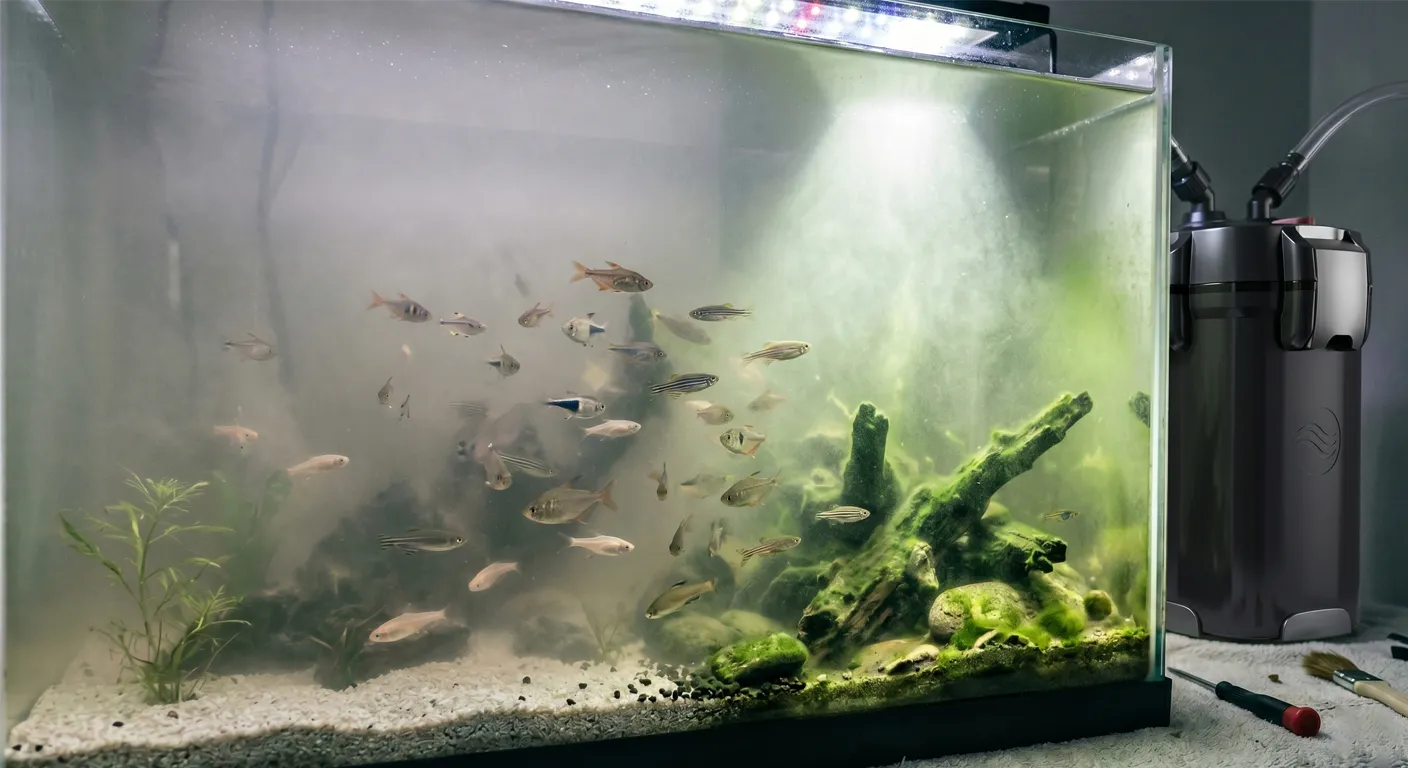
Problem 5: Cloudy Water Despite the Filter Running
Symptoms: Persistent white, grey, or green cloudiness that does not clear within 24 to 48 hours of the filter running.
Likely causes:
New tank bacterial bloom from nitrogen cycle establishment
Overstocked tank producing more waste than the filter can process
Chemical media exhausted
Fix: White cloudiness in a new tank is almost always a bacterial bloom and resolves on its own within 3 to 5 days as the cycle stabilizes. Green cloudiness indicates suspended algae from excessive lighting or nutrients. Greyish cloudiness after a water change often signals dechlorinator shock to the bacterial colony. Replace activated carbon if it has been in service longer than 4 weeks. Carbon exhaustion allows dissolved organics to recirculate.
Problem 6: Foul Odor or Slime Buildup
Symptoms: Hydrogen sulfide smell, rotten egg odor, visible dark slime on filter media or housing interior.
Likely cause: Anaerobic bacterial colonies developing in areas where water flow has stopped, typically inside compacted media, dead spots in canister corners, or underneath bio-balls.
Fix: Perform a full media rinse in tank water. Remove and scrub the interior housing with a brush. Restructure media layers so mechanical filtration sits upstream of biological media, preventing debris from burying the bio-media and creating anaerobic pockets. Ensure flow passes through all media layers evenly rather than finding a path of least resistance around compressed areas.
Problem 7: Filter Not Priming or Losing Suction
Symptoms: Canister filter fails to start after a cleaning, hang-on-back filter loses flow entirely, and urgent sounds.
Likely cause: Air lock trapped in the impeller housing or intake tubing.
Fix: For canister filters, use the self-priming button 5 to 8 times in quick succession, then hold it down for three seconds. If no priming button exists, fill the canister completely before closing the lid and allow gravity to push water through the intake tubing before starting the motor. For hang-on-back filters, verify the intake tube is submerged below the water line and free of air pockets.
Problem 8: Vibrations and Humming
Symptoms: Noticeable vibration transferred to the tank glass, louder than usual motor hum.
Likely causes:
Filter housing is not level or sitting on an uneven surface
The impeller shaft is slightly bent or misaligned after cleaning
Loose intake or output tubing fittings
Fix: Place a small rubber mat or folded cloth under the filter to isolate vibration from the tank glass. Recheck impeller alignment after any maintenance. A shaft that is even slightly canted off-center creates significant vibration at operating RPM. Tighten all tubing connections to hand-firm.
Problem 9: Filter Stops Suddenly Mid-Cycle
Symptoms: Filter shuts off unexpectedly, restarts after cooling, and cycles on and off repeatedly.
Likely cause: Thermal protection shutoff triggered by motor overheating. This happens when the impeller is partially blocked, and the motor works harder than its rated load to push water.
Fix: Allow the filter to cool for 20 minutes before restarting. Clear any blockage from the impeller before restarting. If the filter continues thermal cycling after cleaning, the motor windings may be degraded, and replacement of the motor assembly or the entire filter unit is warranted.
Problem 10: Filter Keeps Getting Clogged
Symptoms: Mechanical media requires rinsing every few days rather than every two to four weeks.
Likely causes:
The tank is overstocked relative to the filter’s rated capacity
Feeding too heavily, leaving excess uneaten food
Media volume insufficient for bioload
Fix: The filter should be rated for at least 1.5 times the actual tank volume to account for real-world bioload. A filter rated for 30 gallons on a 20-gallon heavily stocked tank will clog constantly. Adding a pre-filter sponge over the intake tube captures large particles before they reach the main media, significantly extending the time between cleans.
Keeping the Filter Running Longer
Most filter failures are preventable with a consistent maintenance schedule.
Weekly checks:
Confirm normal flow rate visually
Listen for any new noise changes
Check for any drips or moisture around the unit
Monthly tasks:
Rinse the mechanical media in the tank water
Inspect the impeller and remove debris
Check O-rings on canister units
Every 3 to 4 months:
Replace activated carbon
Inspect all tubing for algae buildup
Check the intake strainer for cracks
For hang-on-back filters, the impeller chamber should be cleaned every 4 to 6 weeks. Canister filters run longer between full cleanings, typically every 6 to 8 weeks, but the pre-filter sponge on the intake should be rinsed monthly. Sponge filters require squeezing in tank water every 2 to 3 weeks and benefit from occasional gentle scrubbing to maintain porosity.
Pro Tips for DIY Filter Repairs
A few tools and habits that make a real difference:
Keep a tube of aquarium-safe silicone grease for O-ring maintenance
Use a toothbrush or flexible tube brush for impeller housing and intake tube cleaning
Test the outlet power with a multimeter before assuming motor failure
Keep one spare impeller per filter model in use
A small bucket designated for filter rinsing prevents tank water from going to waste
Useful household tools for filter repairs include flathead screwdrivers for impeller covers, rubber gloves for handling biological media, a turkey baster for targeted debris removal, and needle-nose pliers for pulling stuck impeller shafts.
When to Replace the Filter Entirely
Signs that repair is no longer the right call:
Cracked housing that cannot be sealed with silicone
Motor burnout confirmed by multimeter testing
Repeated thermal shutdowns after cleaning
The impeller housing was warped enough that no impeller seats could be installed correctly
Most quality hang-on-back and canister filters have a realistic service life of 5 to 10 years with consistent maintenance. Sponge filters, having no moving parts, last indefinitely. Replacement is warranted when repair costs approach 50 percent of the replacement cost of the unit.
Conclusion
Aquarium filters fail in predictable ways, and most of those failures are fixable without replacing the unit. This guide covered how the three filtration types work, 10 specific problems with their root causes and targeted fixes, and the maintenance habits that prevent most issues from developing in the first place. The core approach is simple: monitor flow rate, listen for noise changes, and rinse media on schedule.
Small problems caught early stay small. Engage with the aquarium community, keep spare impellers on hand, and treat filter maintenance as a regular habit rather than an emergency response.
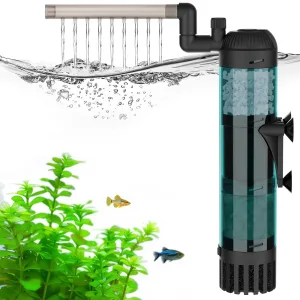
Dual-Use Aquarium Filter Pump For Fish Tank Filtering...
Original price was: $15.99.$9.99Current price is: $9.99.
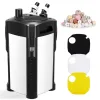
25W 475GPH Canister Filter, Ultra-Quiet External Aquarium Canister...
Original price was: $98.99.$69.99Current price is: $69.99.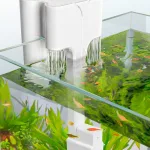
AQQA 12W 112GPH Hang On Aquarium Filter, Power...
Original price was: $14.99.$9.99Current price is: $9.99.


Add comment
You must be logged in to post a comment.