

Regardless of whether you are setting up a simple fish-only aquarium or just getting into aquatic plants. You will have to make decisions regarding what type of light, where to place the light, how long and what color temperature it should be, and how to handle the algae.
To set up aquarium lighting, mount the fixture evenly above the tank using adjustable brackets, a hood clip, or a hanging kit so light covers the full water surface. Connect it to a plug-in timer and run it on a consistent 7-8 hour daily cycle to mimic natural day/night patterns. Keep the light 4-6 inches above the waterline to limit heat and evaporation, and match the spectrum (5,000K-6,500K for fish-only, 6,500K-7,500K for planted tanks) to what’s living in your tank.
In this guide, you will be told 5 fundamental things you ought to learn ahead of the lights turning on. Want to know more? It is time to get glowing.
What’s Your Aquarium Light Used For?
Aquarium lighting plays different roles depending on whether your setup is a fish-only tank or a planted aquarium, and understanding its function is essential to maintaining a healthy environment.
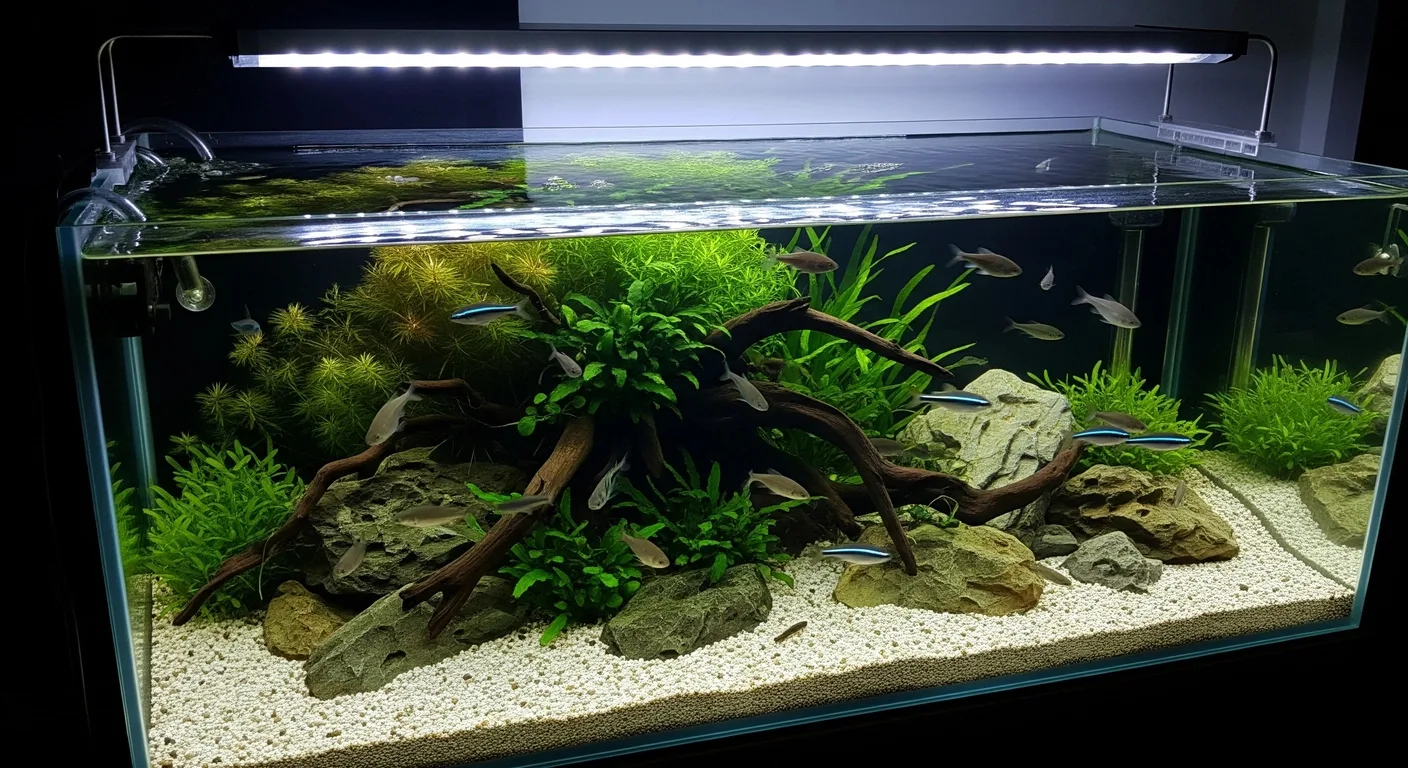
For Fish-Only Aquariums
The variation of lighting between a fish-only tank and a planted aquarium is different. With a fish-only tank, the primary task that lighting undertakes is to simulate the day-night light cycle inside the wild, called the circadian rhythm.
Here is what light can do for your aquariums:
Circadian rhythm controls most of the body’s processes, including sleeping, feeding, and socializing. The absence of light signals regularly can make the fish stressed. Hence, reducing their immune system, stunting their appetite, or exhibiting unusual behavior patterns.
Light can also assist keepers to watch well in the tank, thereby identifying signs of illness, injury, or stress in the tank at the earliest stage.
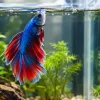
Many fish have their natural color enhanced by good lighting as well, reds, blues, and yellows are the most obvious, bettas, guppies, and cichlids being particularly noticeable.
Lighting in fish-only tanks does not require very bright or full-spectrum lighting. Strong lights or very warm colored lights may encourage the growth of algae. Particularly, when combined with overfeeding and a lack of water flow.
A moderate output LED or fluorescent light in the 5,000K–6,500K range is typically sufficient for showcasing fish without triggering algae issues.
For Planted Aquariums
Within a tank that has live plants, there should be light to have photosynthesis. Photosynthesis converts light into chemical energy and emits oxygen. It also extracts nutrients such as ammonia, nitrate, and CO2 out of the water. As a result, it makes the water cleaner and reduces ordinary cleaning.
Planted tanks require full-spectrum light (around 6,500K to 7,500K) that contains red and blue wavelengths. Those wavelengths assist the plants in the production of healthy leaves and chlorophyll. The pale leaves, slow growth, and slack plant health may appear because of weak or incorrect lighting. To say it briefly, illumination is as critical as filtration in a planted aquarium.
Why Aquarium Lighting Matters
Lighting cannot be considered a cosmetic aid because it has direct impacts on biological stability and health. Lighting in fish-only tanks and planted tanks affects circadian rhythms, photosynthesis, and nutrient balance.
An effective lighting system also controls the behaviour of fish, maintains the growth of the plants, and preserves the whole ecosystem as well.
The improper lighting can make fish stressed, damage the plants, and even result in problems such as algae and a lack of oxygen.

How Does Light Affect Fish?
To maintain their circadian rhythms and regulate the circadian activities, feeding, and resting, fish require regular light. In nature, the light gradually varies from morning until night. This cycle is challenging to reproduce in the aquarium. But artificial lighting plays a role in providing a predictable environment to fish. Rapid fluctuations of changes, e.g., sudden brightening in a dark room, can stress fish, making them dart or conceal themselves.
Light also enhances fish coloration in a blue and red color spectrum. The fish (neon tetras, guppies, and discus) are some of the most popular fish that become more colorful in the presence of the correct lighting. Too much light or too high intensity of light may overstimulate fish, resulting in chronic stress in fish (exceeding 12 hours a day).
Conversely, insufficient lighting may dull their color, reduce activity, and disrupt breeding patterns in light-sensitive species.
How Does Light Affect Plants?
Photosynthesis in planted tanks is dependent on light as the primary source of energy. This is where plants help make energy with light. It also makes oxygen and removes excess nutrients and CO2 from water. A lot of light is also good for water quality.
Without sufficient brightness or the right spectrum, the plants may become tall, spindly, or yellow/brown, or just die.
Do Beginners Need to Set Aquarium Lights?
Yes. Setting up proper aquarium lighting is essential, even for beginners. It directly impacts fish health, plant growth, and overall tank stability. Here are five key reasons why beginners must prioritize lighting from the start:
1. Supports Fish Health and Behavior
Light assists fish in the maintenance of their daily routines. Regulation of predictable lighting helps to lessen stress and engage in natural behavior, such as eating or resting. Fish can be confused by fast and total dark events or by continuous intense lights.
2. Essential for Plant Growth
Alive plants require certain doses of light of the proper spectrum to perform their photosynthesis. When light is insufficient, a plant fades, the level of oxygen reduces, and the water becomes poor.
3. Controls Algae Growth
Novel hobbyists tend to turn on lights excessively, and this leads to algae growth. Regular lighting reduces the sunlight exposure time, hence the algae cannot grow fast.
4. Enhances Aquarium Aesthetics
Fish colors and the textures of the plants are clear and bright under good lighting. When the lighting is insufficient, the water may be clean, yet the tank appears cloudy.
5 Tips for Beginners on Setting Up Aquarium Lighting
Lighting is an important way to facilitate the formation of a healthy and balanced, beautiful aquatic environment in the aquarium. However, when it comes to the choice of lights, places, timers, and settings. So many kinds of them exist that novices might be extremely confused.
Here is the good news? It does not require an expert to install it properly. You can do it right the first time by following only a few major principles of light, i.e., type, placement, timing, spectrum, and algae control. These five tips are given to help you along.
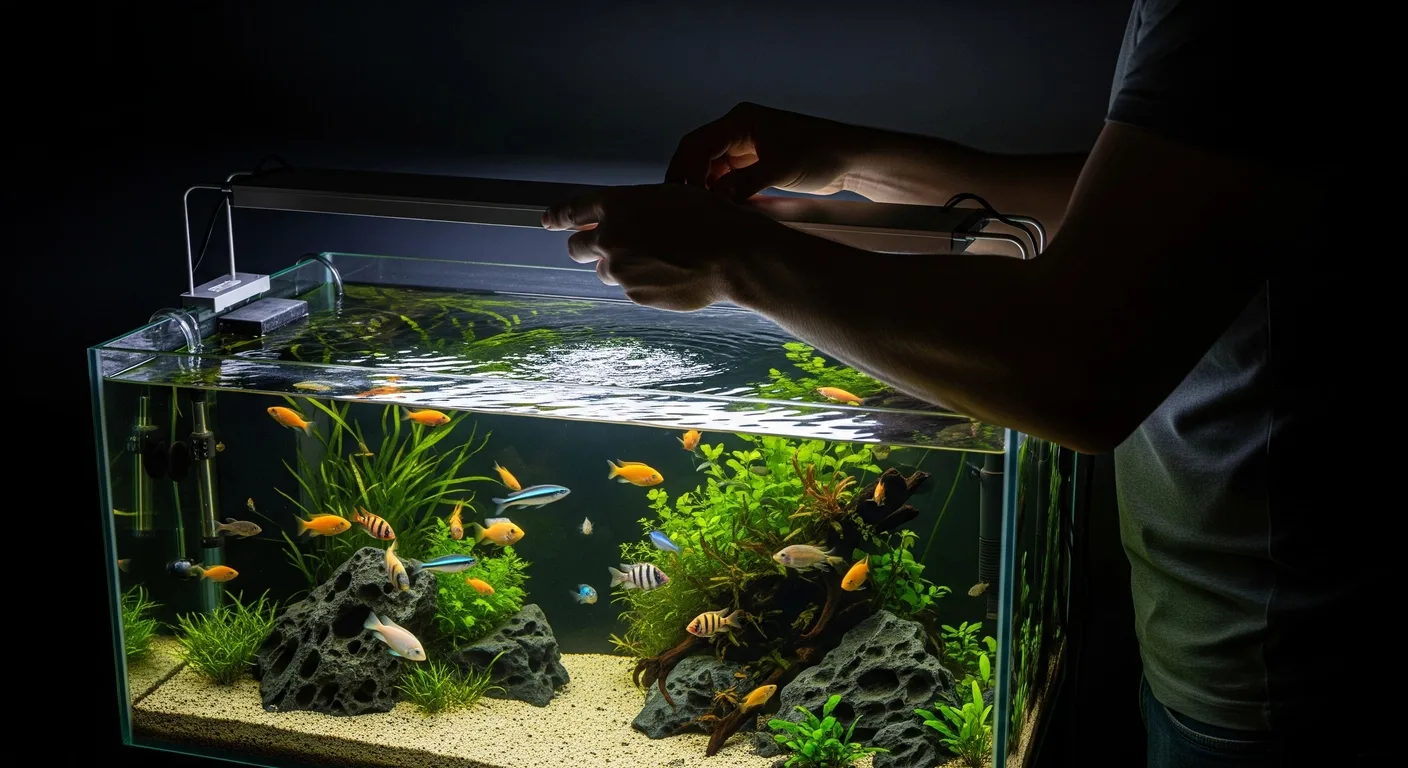
1. Choose the Right Type of Lighting
Depending on the kind of light you use is the key to the rest of it all. The various types of aquariums need different levels of light, together with spectra. Hence, you should ensure your light goes hand in hand with the type of tank you are using.
Common Lighting Types:
Fluorescent Lights (T5 or T8): The standard light that is applied in freshwater aquariums. These are cheap, less energy-efficient, and they produce more heat.
Compact Fluorescent Lights (CFLs): They are smaller than tube fluorescents and well-fitted to be used in shorter tanks.
LED Lights: The most common solution at the moment. They apply to all forms and types of tanks. Low-heat, energy-efficient, long-lasting, and optionally available with a full-spectrum bulb.
To the novices, LED light systems are most recommended. They are simple to put in place, provide variable color temperatures, and are generally fitted with timers or dimmers.
The majority of beginner kits have an LED light source as they are safe, run cooler, and are easily modified to fit fish-only systems or, in the case of planted tanks.
The list of LEDs to be chosen should include the PAR (Photosynthetically Active Radiation) values and temperature in Kelvin (K).
In the case of planted tanks, we need 6,500K-7,500K full-spectrum LEDs. In fish-only lamps, 5,000K-6,500K is usually enough to boost coloration and produce a day/night effect.
2. Position Your Lights for Healthy Fish and Plants
The type of light placement determines the level of light that serves your tank, including the comfort of the fish and plant growth. Poorly placed light might lead to dark spots, lights where it is too bright, or a heated spot. As a result, your aquarium will be unbalanced.
Best Practices for Light Placement:
Aim the light unit in the middle of the tank so that it covers the water surface evenly.
Do not bring the lights very near the water surface, particularly with systems that do not use LED lights. The additional heat may influence the temperature of the water and kill sensitive fish or plants.
Place the light fixture on brackets of light or a secure lid that raises it and fixes it in place. Positioning is also made precise with adjustable brackets.
Wash the lid of the light and tank. Light may be obstructed or deflected by dust, algae, or the build-up of minerals, thereby becoming less effective with time.
In case of planted aquariums, make sure that there is sufficient light on plants in front and back of the tank. Larger or drifting plants might be used to cover lower plants. Therefore, light diffusing is important. Reflective backgrounds or light diffusers may be used to distribute more light in the tank.
3. Set the Right Lighting Schedule
Leaving your light on your aquarium throughout the day may appear like a good idea. However, overlighting can lead to more destruction than construction, particularly when considered against components like algae growth and stress levels of fish.
Varying or inadequate lighting, on the other hand, can disturb the entire ecosystem, leading to the withering of plants.
How Long Should Aquarium Lights Be On?
Here is table for better understanding of the routine lighting for your aquarium.
| Type of Aquarium | Light Requirement | Recommended Daily Duration |
| Fish-Only Tank | Low | 8-10 hours |
| Fish-Only (with Nocturnal Species) | Low (with dim options) | 8-10 hours (plus dim period) |
| Low-Light Planted Tank | Low to Medium | 7-9 hours |
| High-Light Planted Tank (with CO₂) | High | 8-10 hours |
| Reef Tank (Corals) | High / Specialized | 8-12 hours |
| New or Algae-Prone Tank | Varies | 4-6 hours (initially) |
Tips for Maintaining Consistent Timing:
Use a timer or smart plug: Forgetting about turn-offs and turn-ons is a problem that a timer can solve, and maintaining your light schedule consistently, also crucial to your tank’s biological clock.
Mimic natural conditions: Program your lights to go on in the mornings and go off at night. Avoid sudden changes in lights, use dimmers or sunrise/sunset functions, where possible, in your LED system.
Adjust for your lifestyle: In case you cannot be home during the day, you may adjust to the afternoon and evening light. And then this way, you can enjoy the tank and still provide your fish with some proper rest time.
4. Understand the Spectrum and Color Temperature
Not every white light is the same. Light spectrum and temperature affect the appearance of your tank, the health of your plants, and the fish. In planted tanks, full-spectrum light with a temperature of 6,500K-7,500K would be most useful for photosynthesis in the freshwater tank.
Here’s a quick guide to help:
| Light Spectrum | Color Temperature (Kelvin) | Best For |
| Warm White | 2,700K–3,500K | Aesthetic glow; not ideal for plants |
| Neutral White | 4,000K–5,000K | Aesthetic glow; not ideal for plants |
| Cool White | 6,000K–7,000K | Enhancing fish colors, basic plant growth |
| Full Spectrum | 6,500K–5,500K | Optimal plant photosynthesis |
| Actinic Blue | 10,000K+ | Reef aquariums enhance coral color |
5. Prevent Algae with Balanced Lighting
Algae is a very common problem with growers who are new to the hobby. When you notice the water turns green, it often because of algae. Light is one of the most governing factors of whether one is going to have algae or not. Algae are fine with excess nutrients (such as nitrate and phosphate), and readily grow with too much light. It is particularly when the photoperiod is excessive, or the spectrum works more in favor of algae than plants.
How to Prevent Algae Through Lighting:
Provide 8-12 hrs/day of light, depending on the type of your tank and bio-load.
It is best to avoid direct sunlight, which will contribute more uncontrollable light and also heat the tank.
When algae start to develop, reduce either the intensity or the length by 1-2 hours and measure the results.
Instead of manual override, use timers to avoid regular overrides. The balance of the aquarium is broken by uneven lighting.
If algae persists even with good lighting habits, take a look at filtration, feeding habits, and plant coverage. Algae can be naturally prevented by fast-growing live plants that normally compete with algae for nutrient availability.
Conclusion
Lighting in an aquarium is not a matter of taste, but an essential feature of your aquarium ecosystem. When properly configured, your lighting can help keep your fish in good condition. It helps algae grow faster and can provide a lovely underwater spectacle that you will love to see on a daily basis.
Let’s recap the five essential tips:
Choose the right lighting type (LEDs are beginner-friendly, energy-efficient, and customizable)
Position your lights carefully to ensure even coverage and avoid overexposure.
Set a consistent daily schedule with a timer to mimic the natural light cycle.
Understand spectrum and color temperature to match your tank’s needs.
Prevent algae by balancing light intensity and duration.
These beginner tips will help you get your tank properly lit without damaging your fish, your plants, or encouraging algae growth. There is no need to complicate aquarium lighting. Keep it easy, monitor your tank, and make adjustments where necessary. Soon, you will have eyes to see what works in your setup.
FAQ
1. I got a small aquarium like 5-10gal, is there any recomended led light for me?
Depending on whether you plan to have live plants. For a simple setup with no plants, any light is ok.
However, if you intend to grow live plants, you should look for a light specifically labeled for planted tanks, which typically offers a higher intensity and a full spectrum of light.
2. I have some plants in my aquarium. what color light is best for aquarium plants?
For most aquarium plants, a light with a “full spectrum” is best. Look for lights that advertise a color temperature in the 5500K-7000K range, as this mimics natural daylight and is ideal for plant growth.
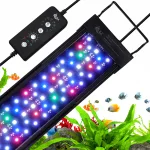
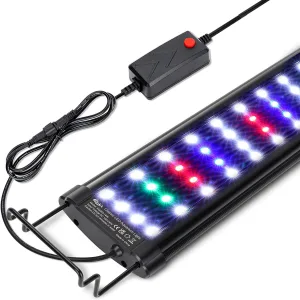
Full Spectrum Aquarium Plant Light (14W) with 3...
Original price was: $29.99.$21.99Current price is: $21.99.
Aquarium LED Light, 24/7 Mode, IP68 Waterproof, for...
Original price was: $26.99.$24.59Current price is: $24.59.


Add comment
You must be logged in to post a comment.