
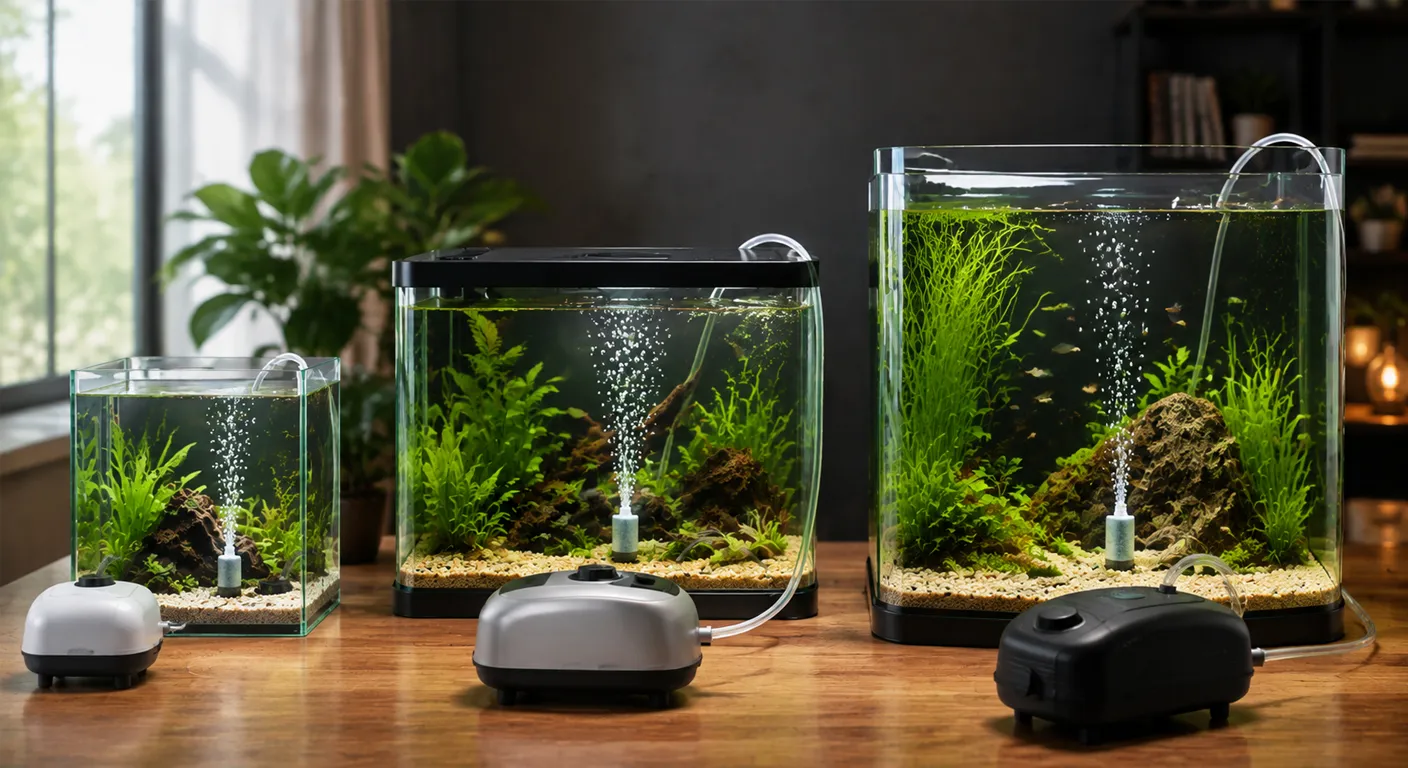
Choosing an air pump is not just about matching a number on the box to the gallon size of your tank. Tank depth, shape, the number of air-driven accessories running at once, and how much noise you can tolerate in the room all shape which pump actually works for you.
A 10-gallon tank, a 20-gallon tank, and a 29-gallon tank each place slightly different demands on a pump, even though people often assume a bigger tank simply means a bigger pump.
This guide walks through what to check before buying, what tends to work best for each tank size, and the mistakes that lead people to return a pump within a month of buying it. By the end, you should be able to avoid a pump that struggles to push air through your setup, and avoid one so strong it rattles the shelf every time it kicks on.
What to Consider Before Buying an Air Pump
Before looking at specific models, it helps to understand the factors that actually determine performance. Tank size alone does not tell the full story. A pump rated for a certain gallon range can still fall short if your tank has an unusual shape or if you plan to run several accessories from the same outlet.
This section covers the groundwork. Once you understand these factors, the size-specific recommendations later in this guide will make a lot more sense.
1. Tank Size and Shape
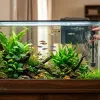
A 10 gallon tank is shallow and compact, so it needs less air pressure to circulate water from top to bottom. A 20 gallon tank, especially a 20 gallon long, spreads water across a wider footprint, which means a single air stone may not distribute oxygen evenly across the whole tank. A 29-gallon tank is deeper than both, often around 18 inches tall, so the pump needs enough pressure to push air stones or sponge filters near the substrate.
Shape matters as much as volume. A long, shallow tank needs airflow spread across a wider area, sometimes through two smaller airstones instead of one large one. A tall, narrow tank needs more pressure per stone rather than more total volume of air. Keep this distinction in mind, because two tanks holding the same number of gallons can need very different pumps.
2. Airflow, Noise, and Accessories
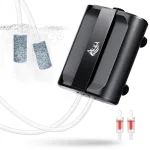
Airflow output, usually listed in liters per hour or gallons per hour, determines how well a pump can run sponge filters, air stones, and other air-driven equipment. A sponge filter needs steady, moderate airflow to pull water through its foam and create biological filtration. An air stone alone needs far less.
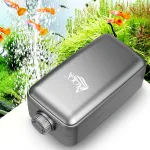
Noise matters more than most first-time buyers expect. A pump sitting in a living room or bedroom needs to run quietly, since even a soft rattle becomes noticeable at night. Cheaper pumps often use a basic diaphragm that vibrates against a hard plastic base, which creates a buzzing sound. Pumps with rubber feet or a suspended diaphragm design tend to run quieter.
The number of connected accessories also changes what you need. Running one air stone is very different from running a sponge filter and two air stones off the same pump through a splitter. Every additional accessory pulls from the same limited output, so adding devices without upgrading the pump often results in weak bubbles everywhere.
Best Air Pump Type by Tank Size
Each tank size in this guide benefits from a different pump category. This section focuses on the type of pump that fits each setup rather than pushing specific brands, so you can shop with a clear target in mind.
Best Choice for a 10 Gallon Tank
A small, quiet, single-outlet pump is usually enough for a 10-gallon tank. Look for a pump rated around 1.5 to 3 liters per minute, enough to run one sponge filter or one or two air stones without overdoing it.
Overpowered pumps are a common mistake here. A pump built for a 40 or 55 gallon tank will often push far more air than a 10 gallon setup needs, forcing you to use a valve to cut output down anyway. Buying closer to the actual need saves money and reduces noise from the start.
Best Choice for a 20 Gallon Tank
A 20-gallon tank, whether standard or long, needs a bit more airflow than a 10-gallon tank, generally in the range of 3 to 4 liters per minute. Stable output still matters here, since sudden pressure drops can starve a sponge filter of the flow it needs to filter properly.
A simple adjustable pump with one or two outlets tends to work well at this size. If you plan to run a sponge filter plus a decorative air stone, an adjustable model lets you balance the two without starving the other.
Best Choice for a 29 Gallon Tank
A 29 gallon tank often needs more flexibility than a 10 or 20 gallon setup, both because of its depth and because owners at this size frequently run more equipment. Multiple air stones, a sponge filter, and sometimes a second filter for backup can all draw from the same pump, so a stronger unit with two or more outlets is worth considering.
Depth plays a real role too. Air pushed down 18 inches of water column needs more pressure than air pushed down 12 inches, so a pump rated for 29 to 40 gallons, even on a 29-gallon tank, often performs more reliably than one rated at the exact minimum.
Recommended Options by Use Case
Matching a pump to your actual setup, rather than only your tank size, gives a clearer answer. The table below breaks down what to prioritize based on common use cases.
| Tank Size or Use Case | Best Pump Trait | Best For | Notes |
| 10 gallon tank | Low output, quiet operation | Single air stone or one small sponge filter | Avoid oversized pumps rated for larger tanks |
| 20 gallon tank | Moderate, stable output | Sponge filter plus one air stone | Adjustable single or dual outlet works well |
| 29 gallon tank | Higher pressure, multiple outlets | Deeper tanks with two or more accessories | Depth requires more pressure, not just more volume |
| Quiet home setup | Suspended diaphragm design | Bedrooms and living rooms | Check reviews specifically for noise complaints |
| Budget setup | Basic single outlet pump | Simple tanks with one accessory | Add a check valve to prevent backflow |
| Multi-accessory setup | Dual or quad outlet with valves | Sponge filters, air stones, and ornaments together | A gang valve helps balance airflow across outlets |
Common Mistakes to Avoid
Most air pump complaints follow a handful of avoidable mistakes. Understanding these before you buy saves money and frustration later.
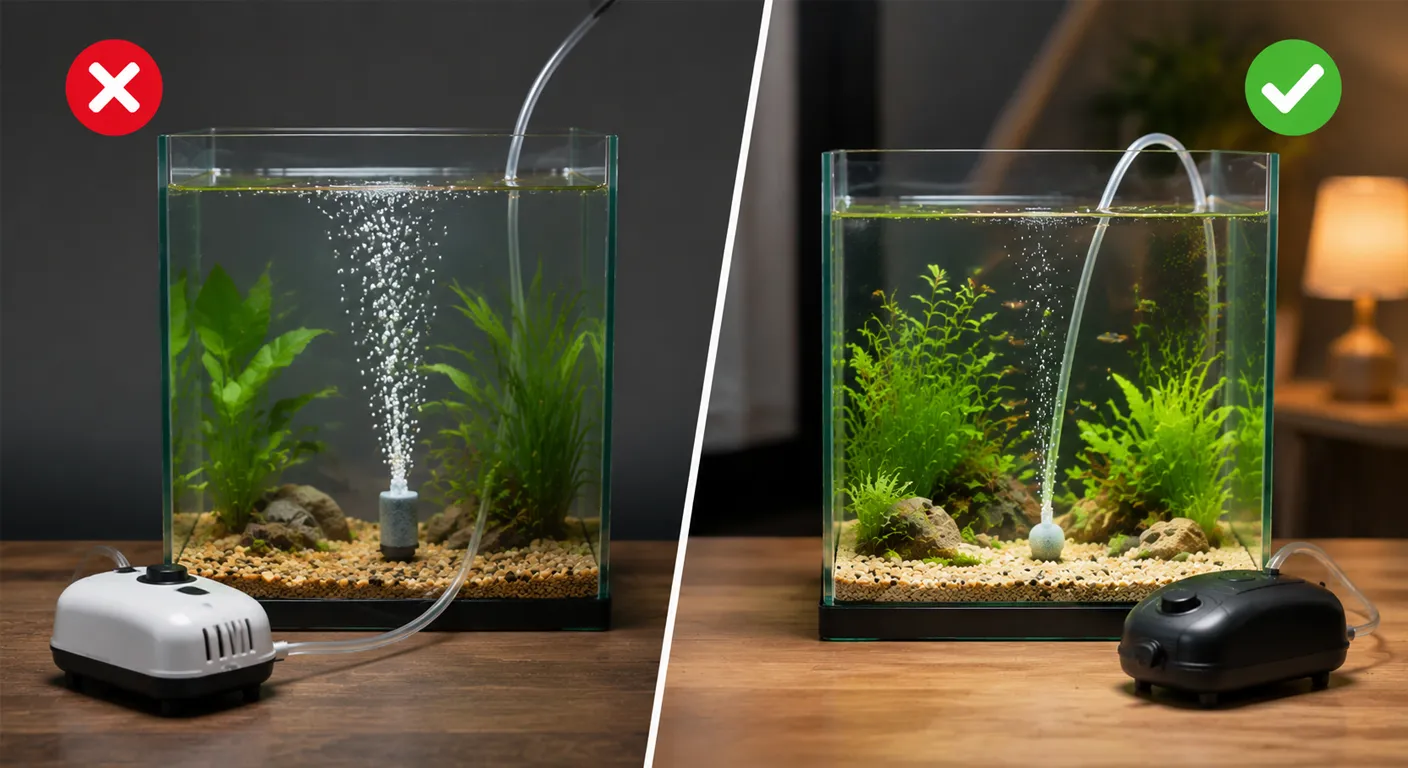
1. Buying Too Small
An underpowered pump produces weak, inconsistent bubbles and struggles to push water through a sponge filter properly. Sponge filters depend on a steady stream of air to pull water through the foam, and a pump that cannot keep up leaves the filter doing very little biological filtration.
This mistake shows up most often when someone buys the cheapest available pump without checking its liters per hour rating against their tank size. A pump technically rated for a 10-gallon tank may still fall short if it is also running a second accessory.
2. Buying Too Large
The opposite mistake happens just as often. An oversized pump creates strong, forceful bubbling that can be noisy and unpleasant, especially in a quiet room. Excess airflow can also stress fish that prefer calmer water, particularly species used to slow-moving streams or heavily planted tanks.
Adjustable output solves much of this problem. A pump with a built-in dial, or one paired with an inline valve, lets you dial back airflow without buying a smaller unit. This flexibility is often worth the small extra cost compared to a fixed output pump.
Quick Decision Guide
For readers who want a quick answer without reading each section, this table summarizes the main priorities by scenario.
| If the Reader Has… | They Should Prioritize… | Why It Matters |
| A 10 gallon tank | Low output, quiet single outlet pump | Prevents overpowering a small, shallow tank |
| A 20 gallon tank | Stable, moderate output with adjustability | Balances a sponge filter and an air stone evenly |
| A 29 gallon tank | Higher pressure with multiple outlets | Handles depth and multiple accessories reliably |
| A bedroom or office tank | Suspended diaphragm, quiet design | Keeps noise low during sleep or work hours |
| Multiple air devices | Dual or quad outlet pump with valves | Avoids weak airflow across all connected devices |
Conclusion
The best air pump for your tank depends on more than the gallon number printed on the glass. Tank depth, tank shape, the number of accessories running at once, and how much noise you can tolerate all shape the right choice as much as size does. A 10-gallon tank rarely needs the same pump as a 29-gallon tank, even though both are common beginner sizes.
Rather than buying the biggest or cheapest pump available, match the pump to your actual setup. Count how many accessories you plan to run, consider how deep your tank is, and think about where the tank sits in your home. Comparing options with your specific tank in mind, instead of relying on gallon size alone, leads to a quieter, more reliable, and longer-lasting setup.






Add comment
You must be logged in to post a comment.