
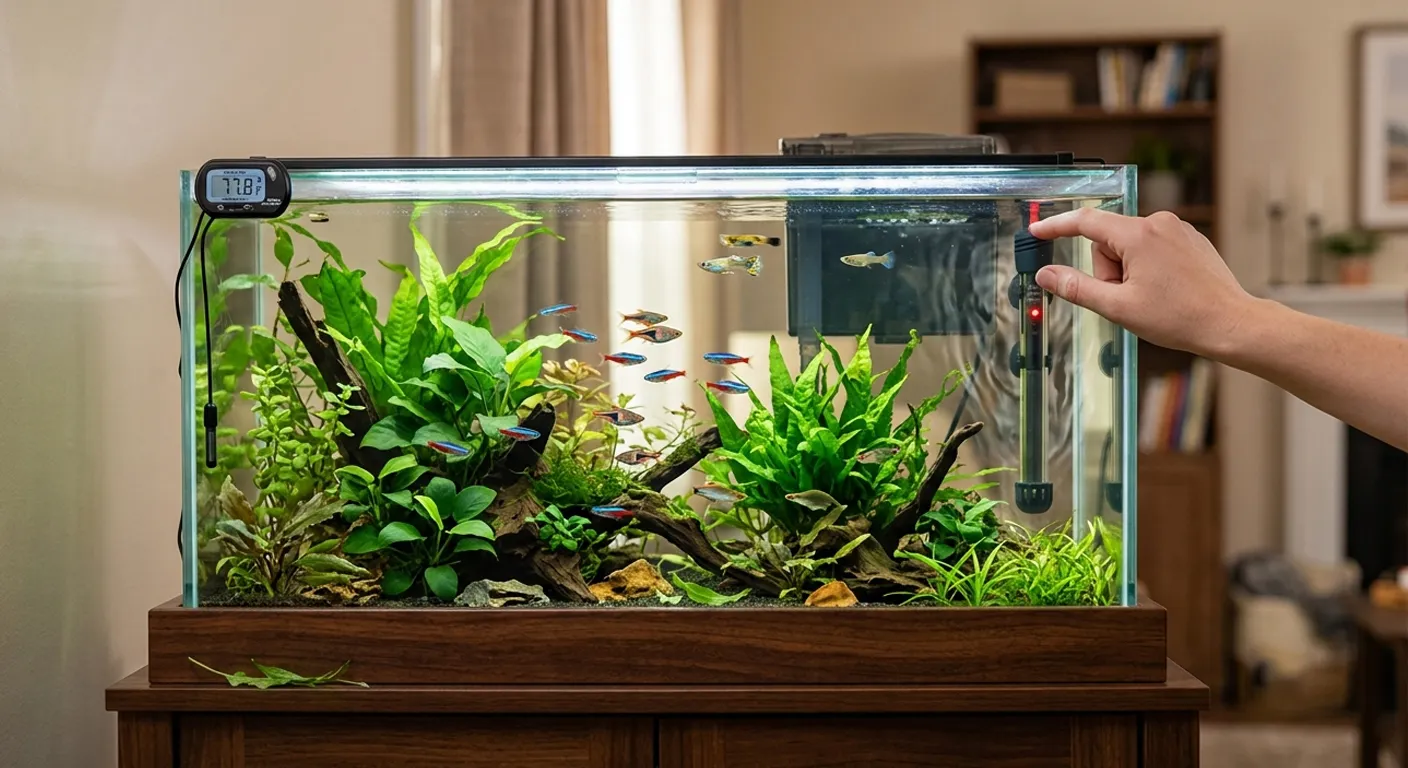
Stable temperature matters more than hitting an exact number on the thermometer. A tank sitting at 77 degrees all week beats one that bounces between 74 and 80 every few hours. Sudden swings stress fish, weaken their immune response, and make them far more prone to disease.
There is no single fix that works for every tank. The right approach depends on tank size, room conditions, your heater setup, and how often the environment around the tank shifts. A small tank in a drafty room needs different care than a large tank in a climate-controlled space.
This guide walks through what causes instability, how to set up a tank that resists temperature swings, and what to do when things go wrong. Read on for practical steps you can apply today.
Why Temperature Stability Matters
Fish are ectothermic, meaning their body temperature follows the water around them. When water temperature shifts rapidly, their internal processes shift with it. Even small fluctuations affect feeding behavior, immune function, and stress levels in ways that are not always obvious at first glance.
A tank that swings two or three degrees within a single day puts steady pressure on fish. Over weeks, that pressure adds up.
How Temperature Swings Affect Fish
Unstable water causes measurable stress. Fish become less active, hide more often, and eat less consistently. Some species stop displaying normal color patterns when stressed, which is often an early warning sign owners miss.
Repeated swings weaken a fish’s ability to fight off common illnesses like ich and fin rot. A fish under constant thermal stress spends energy adjusting instead of growing or maintaining its immune defenses. That is why tanks with unstable temperatures often see more disease outbreaks than tanks with stable but slightly imperfect temperatures.
What Causes Unstable Temperature
Most instability traces back to a handful of common causes:
Drafts from windows, doors, or air conditioning vents near the tank
Heaters that are undersized, malfunctioning, or aging past their reliable lifespan
Direct sunlight hitting the tank during part of the day
Poor tank placement near exterior walls or uninsulated floors
Power outages that cut heating for extended periods
Identifying which of these applies to your setup is the first step toward solving the problem, rather than reacting to symptoms after they appear.
Set Up the Tank for Stability
Prevention beats correction. A tank designed with stability in mind needs far less daily adjustment than one set up without planning. Getting placement and equipment early on saves time and reduces risk to your fish later.
Choose the Right Tank Location
Tanks placed near windows, vents, exterior doors, or in direct sunlight are harder to keep stable no matter how good your heater is. Sunlight can raise water temperature several degrees within hours, and drafts pull heat away just as fast.
A more protected spot, away from these sources, reduces the daily swings your equipment has to fight against. Interior walls tend to hold temperature better than exterior ones, particularly in colder climates.
Use the Right Heater and Thermometer
A reliable heater paired with an accurate thermometer forms the foundation of temperature control. Skipping either one, or choosing cheap versions of both, leads to guesswork rather than management.
Heater wattage should match tank size. A general guideline is roughly 3 to 5 watts per gallon, with the higher end used in colder rooms or larger temperature gaps between room and target water temperature. An underpowered heater will run constantly and still fail to hold steady readings, especially in winter.
For larger tanks, splitting heating power across two smaller heaters instead of one large unit offers two advantages. Heat distributes more evenly across the tank, and if one heater fails, the other still provides partial heating until you notice and replace it.
Monitor Temperature Consistently
Checking temperature regularly catches problems before they become emergencies. Consistency in monitoring matters more than occasional correction after something has already gone wrong.
Build a Simple Monitoring Routine
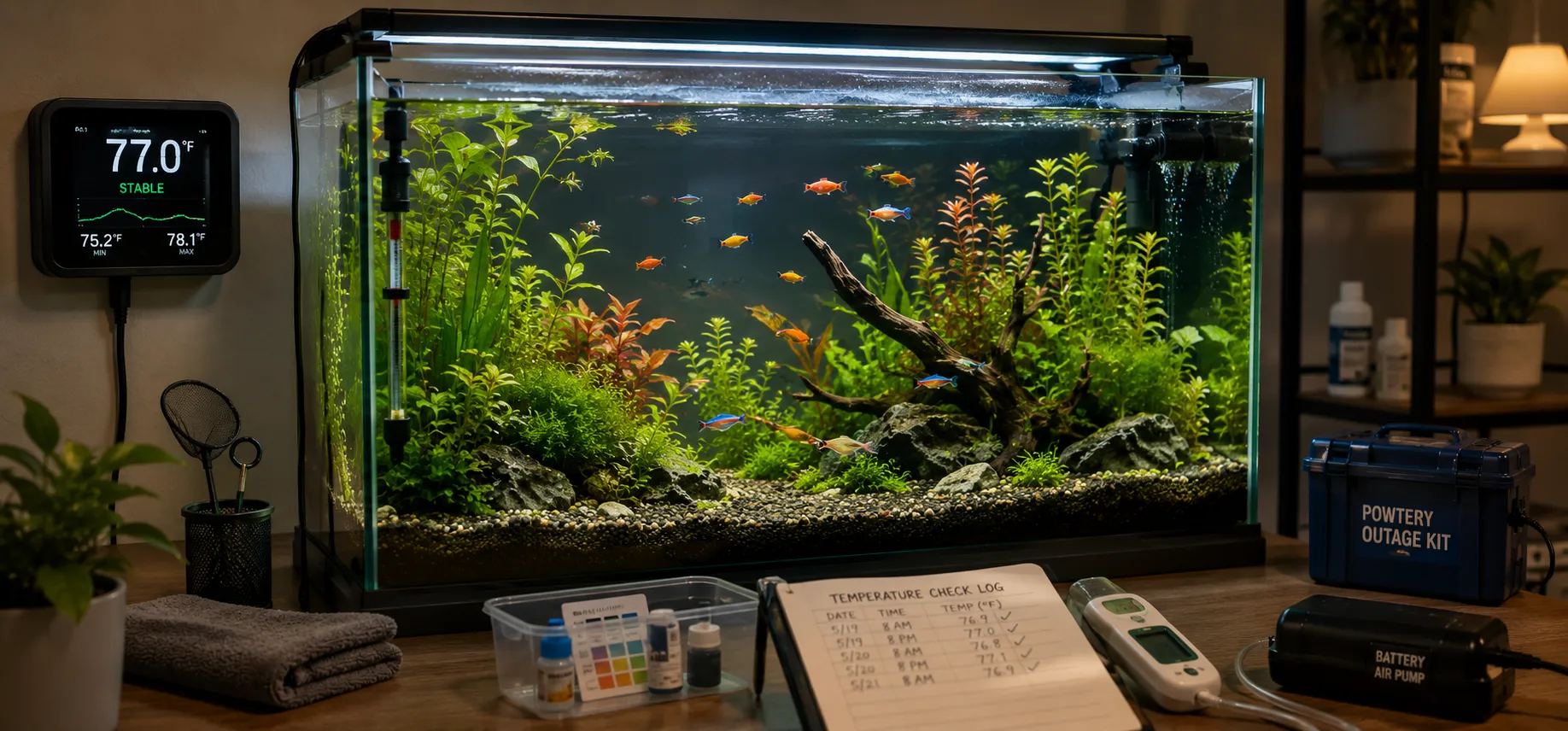
Checking at the same times each day, morning and evening, for example, makes patterns easier to spot. A tank that reads normal in the morning but climbs by evening tells you something specific about your setup, information you would miss with random spot checks.
Logging readings over a week or two reveals slow drift long before it becomes a visible problem. A simple notebook or spreadsheet works fine for this.
Check temperature at consistent times, ideally twice daily
Record readings somewhere you will actually look back at
Watch for gradual drift, not just sudden spikes or drops
Consider a smart plug or heater controller for automatic tracking and alerts
Smart plugs are optional, but they add a layer of reassurance for anyone who travels or cannot check the tank in person every day.
Respond Quickly to Temperature Changes
Stability depends heavily on how fast you respond when temperature moves out of range. Correction should almost always happen gradually. Sudden fixes create a second shock on top of the first one.
When the Tank Gets Too Warm
Start by identifying the heat source. Reduce nearby heat if possible, improve airflow around the tank, and move it away from direct sunlight if that is the cause. Cooling the water itself should happen slowly, over hours rather than minutes, to avoid shocking the fish a second time.
When the Tank Gets Too Cold
Check the heater first. A heater that has failed or is undersized for the room will show up here quickly. Insulating the tank with a cover or foam backing on exposed sides helps retain warmth. If the tank sits against a cold exterior wall or an uninsulated floor, relocating it to a warmer interior spot often solves the problem permanently.
The goal is always to restore warmth slowly, giving fish time to adjust rather than forcing a fast correction.
Handling a Power Outage
A power outage cuts heating, but most fish tolerate a brief, gradual temperature drop reasonably well. Insulating the tank with blankets or towels and keeping the lid closed slows heat loss significantly.
A battery-powered air pump is worth keeping. Oxygen levels matter as much as temperature during an outage. Fish under thermal stress need adequate oxygen even more than usual. This is a situation to manage calmly. Most outages resolve before temperature drops far enough to cause real harm.
Matching Water Temperature During Water Changes
Adding water that is too hot or too cold during a water change can shock fish even in a tank that has been perfectly stable otherwise. This is one of the most overlooked causes of stress events.
Check new water against tank temperature before adding it. A thermometer gives an exact reading, while the back-of-hand method works reasonably well for small, routine adjustments where precision matters less.
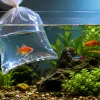
For sensitive species, drip acclimation offers a slower, safer method. It introduces new water gradually over an extended period, giving fish time to adjust rather than facing an abrupt shift.
Quick Temperature Stability Guide
The table below summarizes common problems and their likely fixes for quick reference.
| Problem | Likely Cause | Simple Fix |
| Temperature keeps dropping | Undersized or failing heater, cold room, draft | Upgrade heater wattage, relocate tank away from cold sources |
| Temperature keeps rising | Direct sunlight, nearby heat source, oversized heater | Move tank out of sunlight, adjust heater settings |
| Temperature swings daily | Poor placement near windows or vents | Choose a more insulated, interior location |
| Heater not holding steady | Aging equipment, poor thermostat calibration | Test with a separate thermometer, replace if needed |
| Temperature changes after water changes | Mismatched new water temperature | Match temperature before adding, use drip acclimation |
| Temperature drops during power outage | Loss of electric heating | Insulate tank, use battery-powered air pump |
Common Mistakes to Avoid
A short recap of the biggest errors serves as a final checklist before wrapping up.
Relying on Guesswork Instead of Equipment
Judging temperature by touch or feel is not accurate enough for fish health. An accurate thermometer, checked regularly, removes the guesswork entirely.
Making Sudden Temperature Changes
Abrupt shifts, whether from a broken heater or a poorly matched water change, put unnecessary stress on fish. Gradual correction is safer in nearly every situation, even when the instinct is to fix things fast.
Conclusion
Stable temperature comes down to three things working together: thoughtful setup, reliable equipment, and consistent monitoring. Getting placement and heater sizing right from the start prevents most problems before they start.
Preventing swings matters more than responding to them after the fact. Keep the tank protected from drafts and direct sunlight, check readings often enough to catch drift early, and correct any changes slowly rather than all at once. Fish handle a stable environment far better than a perfect number that never holds steady.
800W AQQA Aquarium Heater, Submersible Fish Tank Heater...
Original price was: $33.99.$31.99Current price is: $31.99.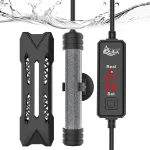
1000W Large Fish Tank Submersible Heater, Adjustable Temp...
Original price was: $48.44.$45.59Current price is: $45.59.


Add comment
You must be logged in to post a comment.