
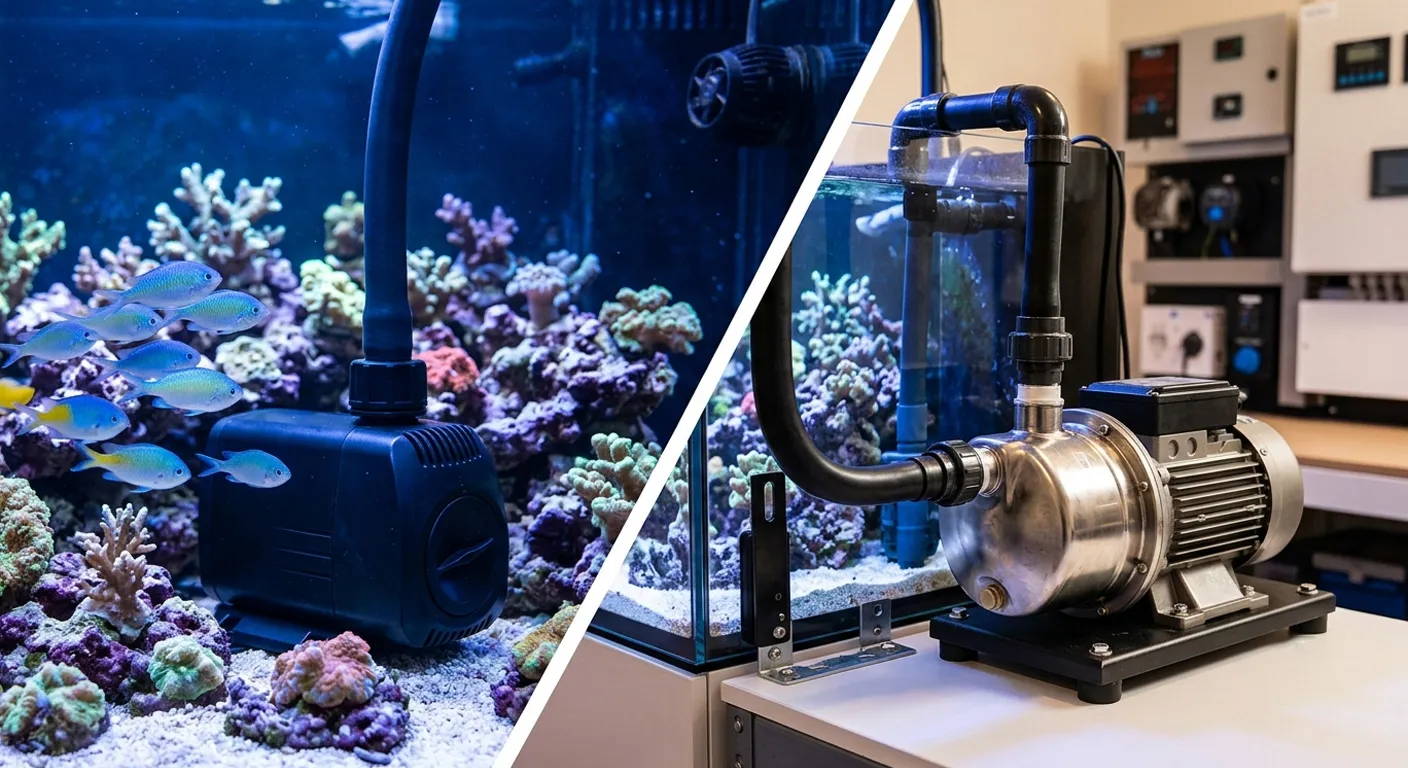
Most people pick a pump based on price or what fits the budget. That’s the wrong way to think about it. This is an engineering decision. Heat output, energy draw, and head pressure all have real measurable differences that directly affect your tank.
Independent testing shows submersible pumps can raise water temperature more than double what an equivalent external pump does over the same time period. That’s not a small gap. In a reef tank or a setup with sensitive species, that difference matters a lot.
In this guide, we use documented test data and manufacturer specs to settle the debate for your specific setup. Not opinion. Actual numbers.
Quick-Answer Comparison Table
| Factor | Submersible Pump | External Pump |
| Best Tank Size | Under 50 gallons | 75 gallons and above |
| Installation | Plug and play | Plumbing, priming, and leveling required |
| Heat Transfer | High: transfers heat directly into water | Low: minimal heat enters tank |
| Noise Level | Quiet water dampens motor sound | Louder open-air motor |
| Upfront Cost | Lower | Higher |
| Typical Lifespan | 2 to 5 years | 5 to 10 years |
How Each Pump Type Works
The core difference comes down to where the motor sits. That one thing drives every other difference between these two pump types.
Submersible Mechanics
A submersible pump sits completely underwater. It’s self-priming, which means it starts moving water the moment you plug it in. No setup needed. The motor is cooled by the surrounding water, which sounds like a good thing until you realize that cooling process transfers heat directly into your tank.
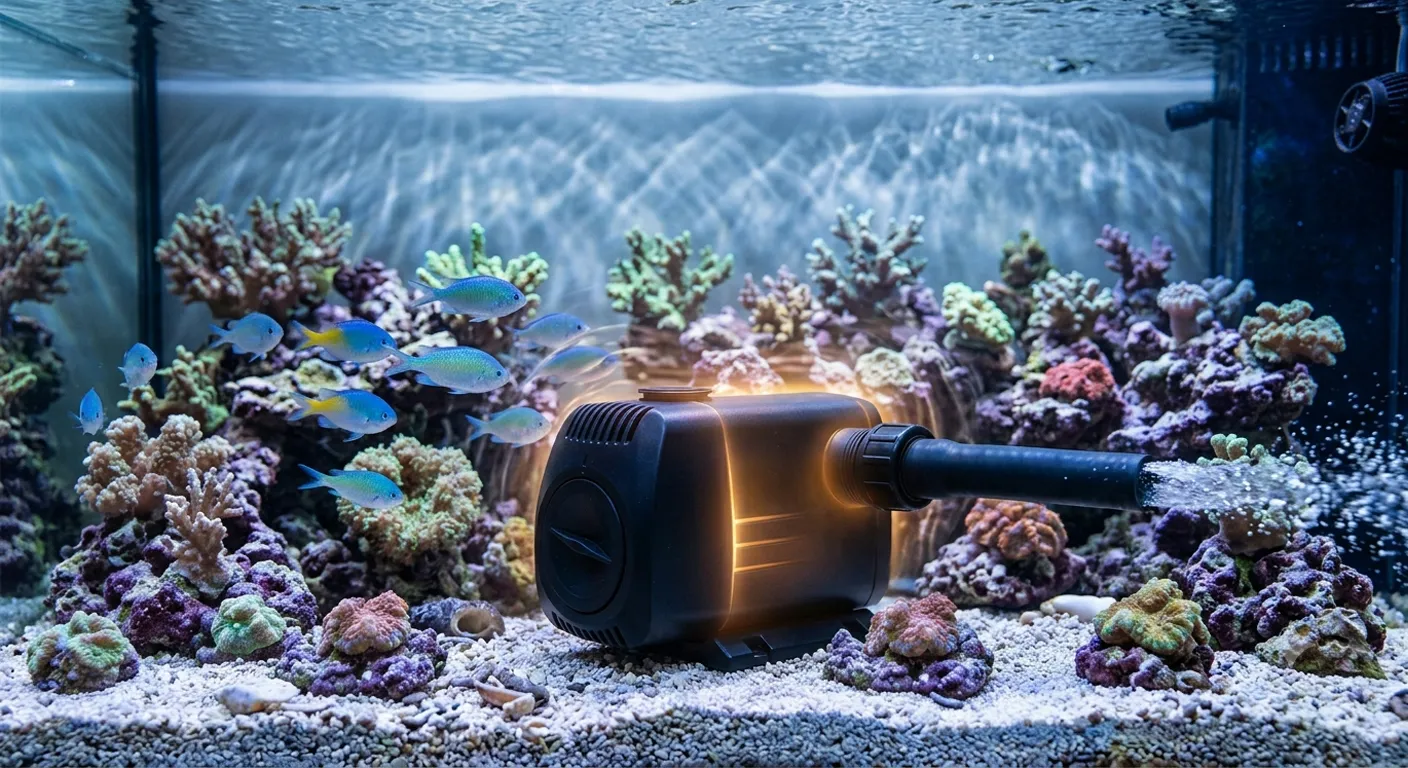
Because the whole unit is submerged, it’s simple to install and works in almost any setup. Small tanks, desktop tanks, sump returns, beginner builds. It just works. The tradeoff is that everything the motor generates thermally goes straight into the water around it.
External Mechanics
An external pump mounts outside the tank completely dry. It needs airtight plumbing to pull and push water without losing prime. Installation takes more effort, and the pump has to be positioned carefully relative to the water level because it relies on gravity and head pressure to function properly.
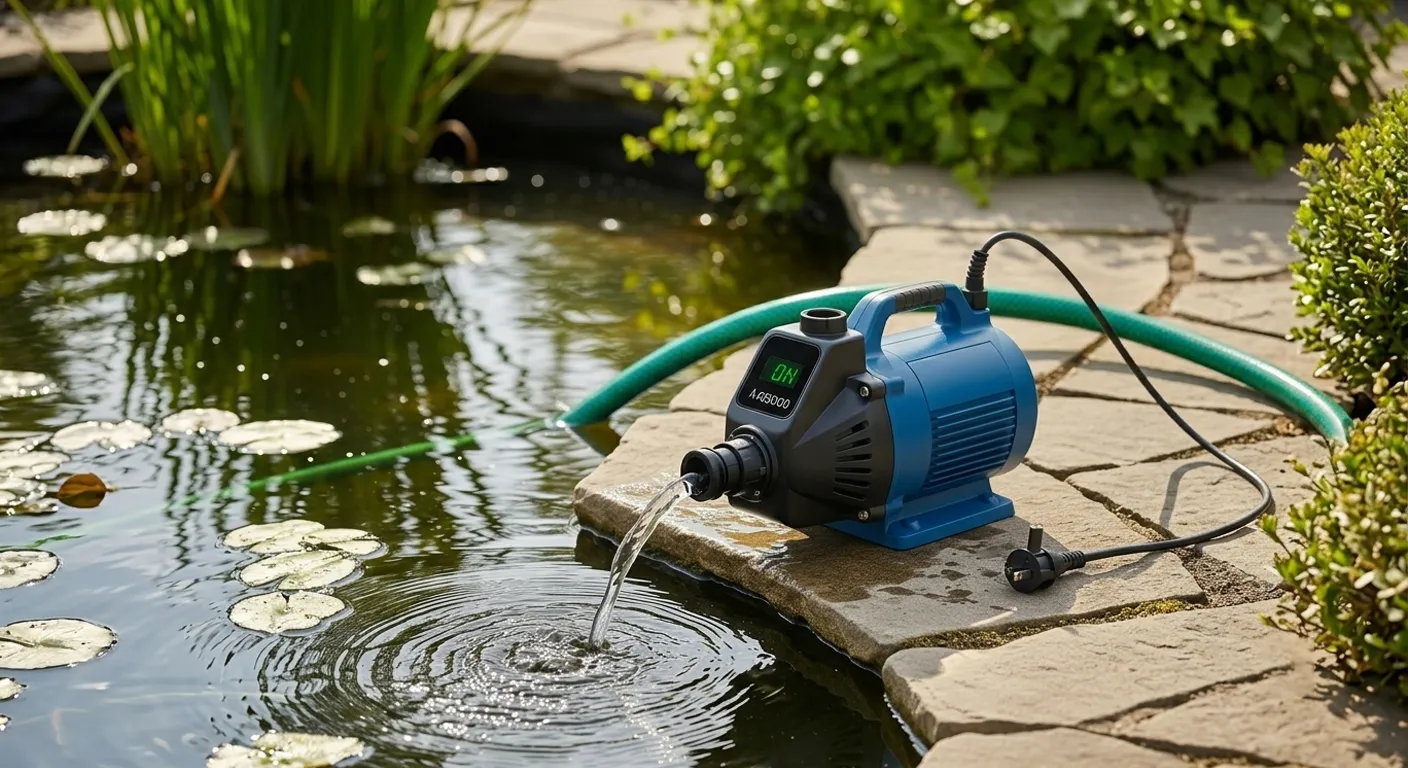
The motor runs in open air and dissipates heat into the room instead of the tank. That’s the key advantage. For temperature-sensitive setups like reef tanks or discus tanks, that difference is significant. The tradeoff is complexity. More plumbing, more points of failure, and more to manage during maintenance.
Root Cause of All Other Differences
One design choice drives everything. Where the motor sits. Underwater and you get simplicity, warmth, and easy setup. Outside the tank and you get efficiency, heat control, and harder installation. Every other difference in noise, maintenance cost, and lifespan flows from that single decision.
Heat Output: What the Data Actually Shows
Test Data
The numbers here are worth paying attention to.
In a 5-gallon test starting at 79°F over 3 hours, an external pump raised the water by 7°F. A submersible pump in the same conditions raised it by 16°F. That’s more than double the heat transfer in the same time period.
Scale that up to a 55-gallon tank running a 150 GPH pump, and a submersible adds around 0.5°F in the first 24 hours and 1.7°F over 72 hours. That sounds small, but in a reef tank or a species sensitive to temperature swings, it compounds fast.
Wattage Rule of Thumb
A rough engineering estimate puts it at around 1 watt, adding approximately 10°F per gallon over time. A 93-watt pump running continuously is basically the equivalent of a 93-watt heater running 24 hours a day. Most people never think about their pump as a heat source. It is.
When It Becomes a Problem
Pumps don’t work alone. Add strong lighting, UV sterilizers, and multiple circulation pumps, and the heat stacks up fast. In a reef tank, this combination can push temperatures high enough that people end up buying a chiller they wouldn’t have needed with an external pump. That’s an expensive fix for a problem that started with the wrong pump choice.
Noise Installation & Maintenance
Where the motor lives also decides how loud it is, how hard it is to set up, and how annoying it is to service.
Noise
Water absorbs sound. A submersible motor running underwater is naturally quiet. An external pump runs in open air and the motor noise travels freely. That said, both can be managed. Cabinet enclosures and vibration dampening pads under external pumps bring noise down significantly.
Install Complexity
Submersible pumps are plug and play. Drop it in, connect the outlet tube, and you’re done. External pumps need plumbing. Inlet and outlet lines have to be airtight; the pump needs to be primed before first use, and positioning relative to water level matters for maintaining proper flow. It’s not complicated, but it’s not instant either.
Maintenance Access
External pumps win here. Everything is dry and accessible. No reaching into the tank, no disturbing the substrate, no knocking over corals or uprooting plants. Submersible maintenance means getting your hands wet and working around whatever is living in the tank. In a reef setup, that can be genuinely problematic.
Cost Efficiency & Lifespan
| Metric | Submersible | External |
| Price (equivalent GPH) | Lower upfront cost | Higher upfront cost |
| Energy Efficiency | Lower runs warmer uses more power | Higher runs cooler more efficient long term |
| Lifespan | 2 to 5 years average | 5 to 10 years average |
| Impeller Wear | Faster wears quicker in continuous use | Slower better suited for long term continuous running |
Smart & Convertible Pumps
Hybrid Models
Some pumps skip the either/or decision entirely. The SICCE Syncra SDC is a good example. It runs submersible or inline depending on how you set it up. That kind of flexibility is useful if your setup changes or if you want the option to switch without buying new equipment.
App Control & Alerts
WiFi and DC-powered pumps now offer mobile alerts for dry run detection, blocked rotors, and temperature spikes. For a reef tank or an expensive build, that kind of monitoring adds real peace of mind. You get notified before something fails completely rather than coming home to a problem.
Fail-Safe as a Buying Criterion
This one matters more than most people realize. Cloud-dependent pumps stop responding if your WiFi drops. Look for pumps with local processing and a fail-to-last setting mode. That means if the connection drops, the pump keeps running at whatever setting it was last on. A pump that shuts off because the internet went down is a serious risk in an unattended tank.
Decision Framework
Choosing the right aquarium pump comes down to tank size, system setup, and what you value most day to day.
By tank size:
Under 50 gallons: submersible is the practical choice
50 to 75 gallons: either works depending on priorities
75 gallons and above: external is the better long-term decision
By priority:
Cost and simplicity: submersible
Efficiency and heat control: external
By system type:
Sump or reef plumbing: external
Standalone tank or beginner setup: submersible
Conclusion
This guide compared submersible and external pumps across heat output, noise, installation, maintenance efficiency, lifespan, and smart features. Both types work. Neither is universally better. What matters is which one fits your specific setup.
Don’t pick a pump based on price alone. Match it to your tank size, your plumbing situation, and what matters most long-term. If heat control and energy efficiency are priorities for your build, the data in this guide points clearly toward external. If simplicity and low upfront cost matter more, submersible gets the job done.
Use the size-based recommendations here as your starting point. Read the specs before you buy and pay attention to the details that most people skip over. The right pump choice made early saves a lot of money and headaches later on.
800-3200GPH Multifunction Controllable Water Pump for Salt/Freshwater
Original price was: $109.99.$104.49Current price is: $104.49.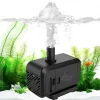
AQQA Submersible Aquarium Water Pump, Fountain Pump For...
Original price was: $12.79.$12.15Current price is: $12.15.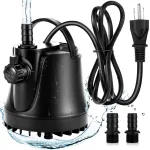
Ultra-quiet 265-800GPH Submersible Water Pump with High Lift,...
Original price was: $18.99.$16.14Current price is: $16.14.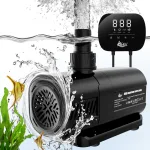
Aquarium Water Pump, 25W, with LCD Display &...
Original price was: $51.29.$48.59Current price is: $48.59.










Add comment
You must be logged in to post a comment.