
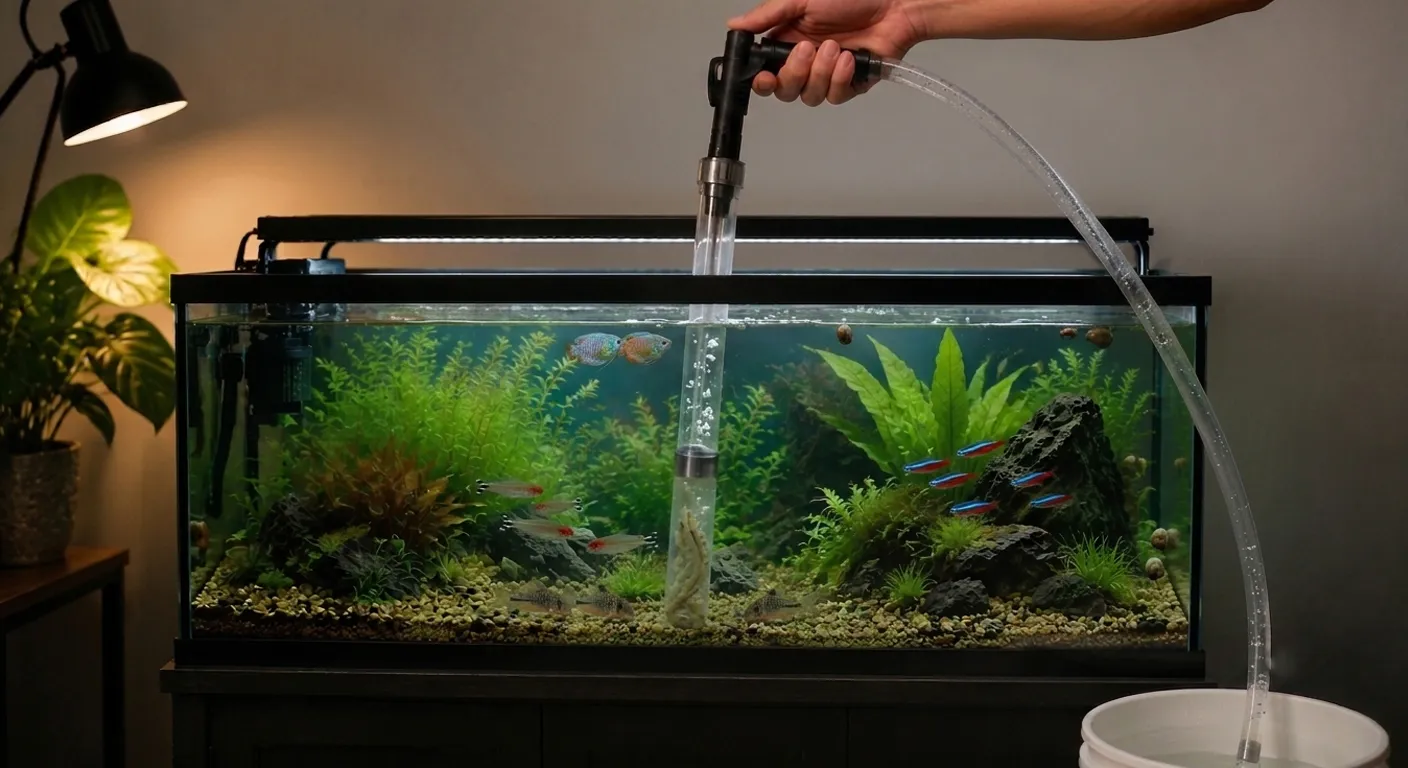
Pick the wrong gravel vacuum and you’ll know it fast. Too powerful in a small tank and the water’s half gone before you’ve cleaned anything. Too weak in a large tank and you’re pushing the tube around for an hour doing basically nothing.
Tank size is what decides which tool you need. Waste sits in the gravel and breaks down slowly. The water can look fine and still be building up ammonia underneath. Vacuuming regularly fixes that. But only when the vacuum actually fits the tank.
This guide shows you exactly what to use and when so you get it right the first time.
Quick-Answer Comparison Table
| Tank Size Tier | Tank Volume | Recommended Vacuum Type | Tube Diameter | House Length | Best For |
| Small | 5 to 20 gallons | Narrow tube manual siphon | 1 to 1.5 inches | 4 to 5 feet | Nano tanks, bettas, shrimp tanks |
| Medium | 20 to 55 gallons | Standard manual or electric | 1.5 to 2 inches | 5 to 6 feet | Community tanks, planted tanks |
| Large | 55 gallons and above | Wide tube electric or heavy-duty manual | 2 inches and above | 6 feet or more | Cichlid tanks, reef tanks, large setups |
How to Choose the Right Gravel Vacuum
Most people just grab whatever’s cheapest or whatever shows up first. That’s how you end up with the wrong tool. Tank size is where you start, and then tube diameter and hose length are what actually decide if the thing works.
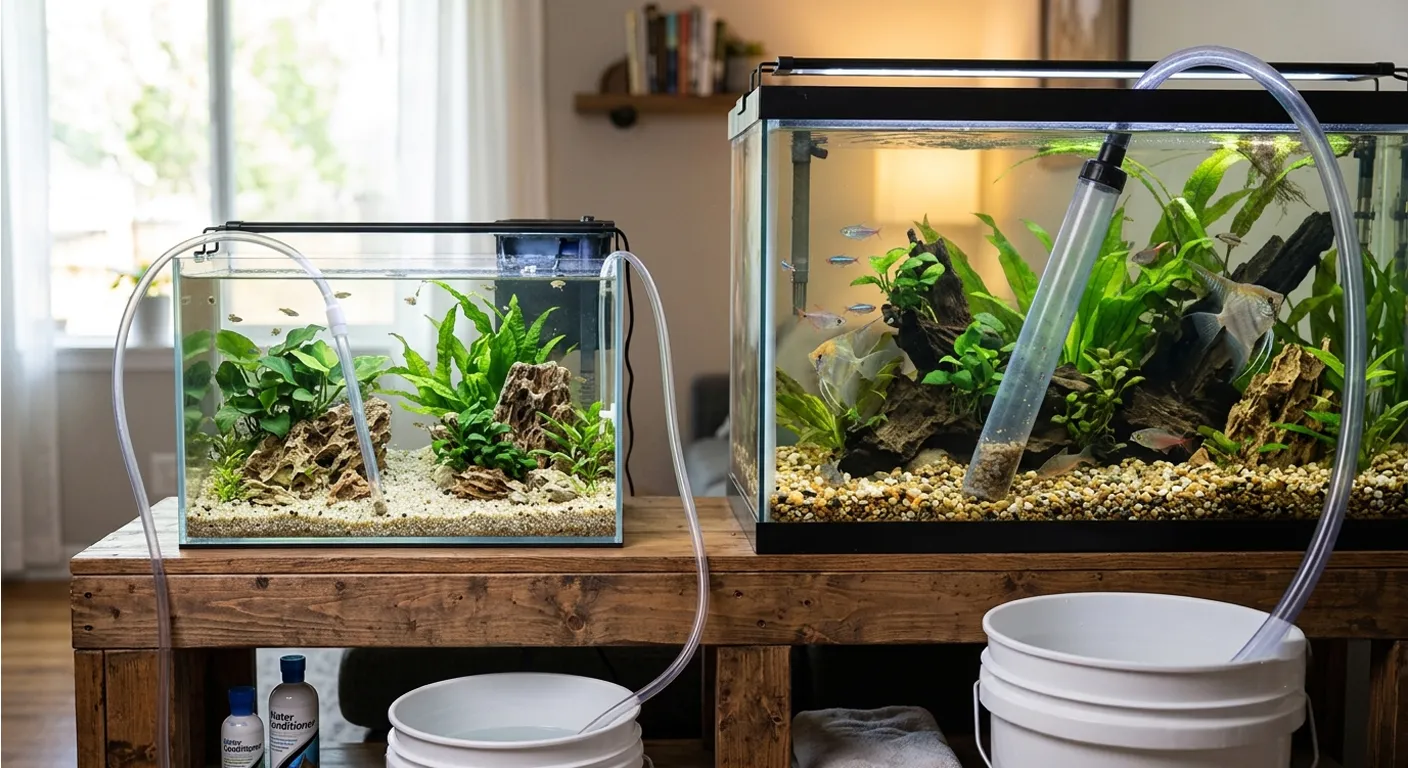
Why Tank Size Matters
A deeper tank needs more pull to lift debris off the bottom. A shallow nano tank needs almost nothing. Same vacuum in both tanks behaves completely differently.
Too big a vacuum in a small tank and the water drains faster than you can control it. Half the tank gone before you’ve touched half the substrate. In a 10 gallon that’s bad for the fish and bad for your stress levels.
Too small a vacuum in a large tank and the suction barely moves anything. You push the tube around the same spots, and the water coming out is almost clean because it’s not pulling hard enough to reach what’s sitting at the bottom.
Tube Diameter and Hose Length
Wider tube means faster flow and stronger pickup. Great for large tanks. In a small tank, that same flow stirs everything into a cloudy mess and pulls shrimp straight into the hose.
Hose length only becomes obvious when you’re mid-clean, and it won’t reach the bucket. Short hose in a large tank means constantly stopping and repositioning. Longer hose lets you finish the job without breaking your rhythm.
Check these two specs before anything else. A vacuum labeled for large tanks with a narrow tube is still the wrong choice. Don’t trust the packaging.
What Small Tanks Need
Small tanks need gentle flow and a narrow intake. Too much suction in a 10-gallon tank pulls gravel and shrimp in alongside the waste. Control matters more than speed here. A narrow intake also lets you work around plant roots and hardscape without uprooting everything every time you clean.
Recommended Picks
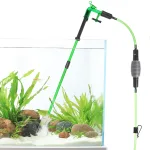
AQQA 5-in-1 Multi-purpose Grit Cleaner
A solid all-in-one option built specifically for smaller setups. The narrow intake gives you precise control over exactly where you’re cleaning without disrupting the whole tank at once. The 5-in-1 design means it handles more than just gravel vacuuming, which is genuinely useful in a small tank where you want to do a full clean in one session without swapping between multiple tools.
It works well for spot cleaning around plants and decorations and is one of the better options for shrimp tanks where suction strength needs to stay gentle. Small shrimp can get pulled into a vacuum easily, so having a narrow, controlled intake matters a lot in those setups.
Trade-off: It’s slower than wider vacuums. In a small tank that’s actually fine because you don’t need speed. But if your tank grows or you upgrade to something larger, this vacuum won’t keep up. It’s sized for small work, and that’s where it stays useful.
Best Gravel Vacuums for Large Tanks
What Large Tanks Need
Large tanks need faster water movement, a wider intake, and enough hose length to reach comfortably without stretching across the room. The main goal is covering more ground per cleaning session without it dragging on for an hour. In a big tank, physical effort adds up fast. Leaning over a 75-gallon tank with a weak vacuum that barely moves debris gets tiring quickly, and the job still doesn’t get done properly.
Wide intake tubes matter here because large tanks accumulate more waste, and it tends to settle deeper into the substrate. A narrow tube just doesn’t move enough water to pull heavy debris off the bottom of a deep gravel bed. You need proper flow to actually lift waste rather than just nudging it around.
Hose length also becomes much more important in large tanks. Most people set up their cleaning bucket or connect to a sink drain several feet from the tank. A short hose means constant stopping and repositioning, which slows everything down and makes the whole process more frustrating than it needs to be.
Recommended Picks
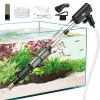
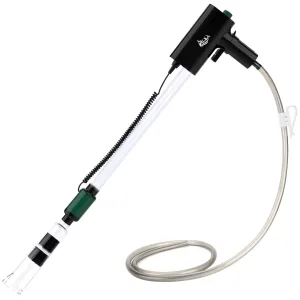
1. AQQA All-in-one Design Gravel Cleaner with Manual Siphon Pump
Built for larger setups where you need real suction without a weak manual pull to get things started. The wider tube moves debris out efficiently without needing multiple passes over the same area. The built-in manual siphon pump starts the flow immediately without the mouth siphon method, which most people want to avoid anyway.
Good all-round pick for tanks in the 55 to 100 gallon range. It handles regular maintenance cleaning well, and the flow rate is strong enough to pull waste from deeper substrate without spending forever in one spot.
Trade-off: More components means more to rinse and store after each use. The wider intake also makes it less useful for getting into tight corners or cleaning precisely around delicate plants. It’s a tool built for coverage, not precision.
2. Fish Tank Cleaning Kit – Multifunctional, Durable, and Powerful
This one goes beyond basic gravel vacuuming. For larger tanks where you want to handle multiple cleaning tasks in a single session, it covers more ground than a single-purpose vacuum. The durable build holds up to regular heavy use, which matters in a big tank where cleaning sessions are longer and happen more often.
The stronger suction makes a real difference in tanks with deep substrate or heavy fish like cichlids that produce a lot of waste. It pulls debris out cleanly rather than just stirring it up and resettling it elsewhere in the tank.
Trade-off: Higher cost than basic single-function vacuums. More parts to manage and maintain. The wider intake and stronger suction make it unsuitable for small or nano tanks where that level of flow would cause more problems than it solves. This is strictly a large tank tool.
Conclusion
The right gravel vacuum comes down to matching the tool to the tank. This guide covered why tank size affects suction and flow, how tube diameter and hose length determine real cleaning performance, and which products actually fit small versus large setups properly.
Don’t buy based on price or brand name alone. A cheap vacuum matched to the right tank size does a better job than an expensive one sized for something completely different. The specs on the label matter more than the marketing.
Not sure where to start? Go back to the comparison table at the top. Find your tank size tier, and it points you straight to what you need without having to guess.




Add comment
You must be logged in to post a comment.