

A hobbyist brought home a few new fish. Looked healthy. Active. No red flags at all. He dropped them straight into his community tank. Two weeks later, his old fish started getting sick. Fish that had lived in that tank for years. What started with a few new arrivals took down the whole tank? By the time he figured it out, it was too late.
Harsh lesson. And a lot of fish keepers learn it exactly the same way.
A quarantine tank is just a small temporary setup where new fish go before they touch your main tank. You watch them there. Treat any problems there. Keep your main tank out of it completely.
In this guide, we’ll cover what equipment you need, how to deal with the nitrogen cycle, how to set everything up, and what to watch for once the fish are in.
Why Quarantine New Fish
Fish can look completely healthy and still be carrying disease.
Transport beats up their immune system. They need time to recover.
Treating fish in a small separate tank is cheaper and way less risky than medicating your whole setup.
Problems are much easier to catch in a simple bare tank than in a full community aquarium.
Essential Equipment for a Quarantine Tank
You don’t need much. But what you do need actually matters. Skip the wrong thing, and the whole point falls apart.
Filtration and Aeration
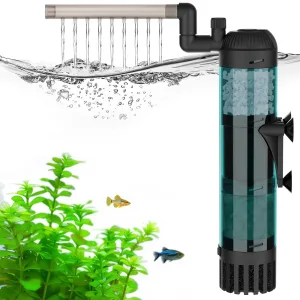
Get a sponge filter. It’s gentle, it won’t suck up small or weak fish, and it builds up good bacteria over time. Connect it to an air pump, and you’re sorted. That’s really all you need for filtration in a quarantine setup.
Heating and Temperature Control
A submersible heater sized for your tank is fine. 50 to 100 watts covers most small quarantine tanks. Don’t use stick-on thermometers. They lie. Get a digital one. Temperature swings stress fish out at the worst possible time, so you want an accurate reading you can actually trust.
Water Treatment and Testing
Dechlorinate every water change. Every single one. Tap water straight in will hurt their gills and set everything back. For testing, liquid kits beat strips every time. Strips miss too much. Watch these four things: ammonia, nitrite, nitrate, and pH.
Understanding the Nitrogen Cycle
Most quarantine failures come down to nitrogen cycle. People skip it and then can’t figure out why fish keep dying in what looks like perfectly clean water.
Why It Matters in a QT Tank
A brand new tank has no good bacteria in it. Nothing to break down waste. Ammonia builds up fast in a small tank and can hit lethal levels within days. Fish that survived the stress of transport and would have been totally fine end up dying from ammonia poisoning in what was supposed to keep them safe.
Your Four Cycling Options
| Method | Description | Best For |
| Seeded media | Move a sponge filter or substrate from your main tank | Fastest and most reliable |
| Bottled bacteria | Add a commercial bacterial product | Good when no established tank is available |
| Fishless cycle | Does ammonia without fish present | Best when you have 2 to 4 weeks to wait |
| Fish-in cycle | Cycle with fish using daily water changes | Last resort only, needs constant monitoring |
Setting Up the Tank
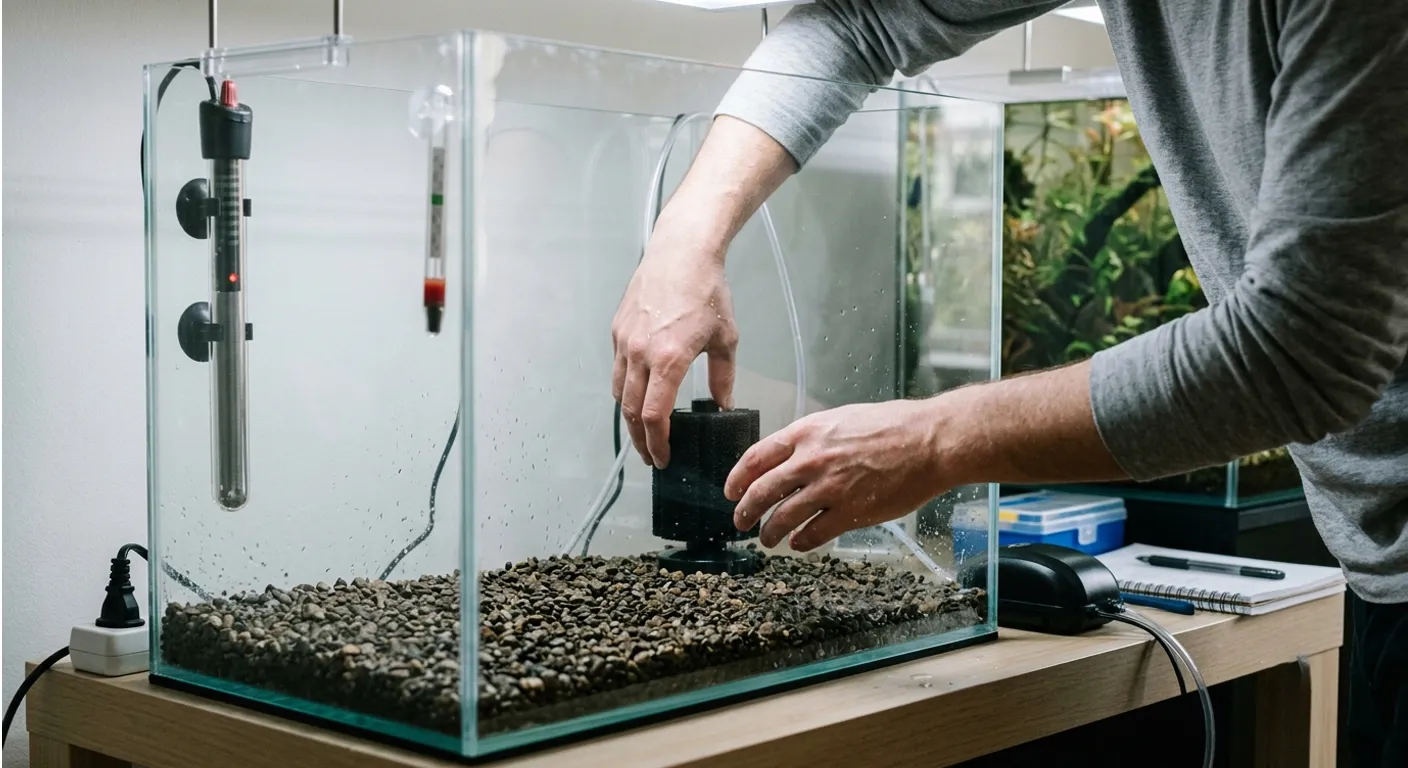
Rinse the tank with plain water. No soap. Nothing chemical. Just water.
Add substrate or leave the bottom bare. Bare is easier to clean and makes fish easier to observe.
Put the sponge filter in and hook it to the air pump.
Place the heater and match the temperature to your main tank.
Fill with dechlorinated water and run everything for at least 24 hours before any fish go in.
Run a full water test before adding anything. Write the numbers down. That’s your baseline.
Acclimating New Fish
Store water and your tank water are different. Temperature, pH, chemistry. Drop fish straight from one into the other, and their bodies take a hit. That’s osmotic shock. Slow acclimation stops it from happening.
Float Method
Float the sealed bag in the quarantine tank for 15 minutes.
Open the bag and roll the top down so it floats on its own.
Add a small cup of tank water into the bag every 5 minutes for about 30 minutes.
Net the fish out and put them in the tank.
Throw the bag of water out. Never pour it in.
Drip Method
Float the bag first to equalize temperature, then pour fish and bag water into a clean bucket.
Run airline tubing from the tank to the bucket. Use a knot or valve to slow the flow.
Drip at 2 to 4 drops per second until the bucket’s water has doubled in volume.
Net the fish and move them to the tank.
Dump the bucket of water.
Use the drip method for sensitive species or when the store water is very different from yours. Slower but much gentler.
| Scenario | Minimum Duration |
| Healthy fish, no symptoms | 2 to 4 weeks |
| Fish showing mild stress | 4 weeks minimum |
| Fish treated for disease | 4 to 6 weeks after the last symptom |
| New fish added mid-quarantine | Clock restarts from day one. |
| Fish from unknown or mixed source tanks | 6 weeks to be safe |
Add a new fish mid-quarantine, and the clock resets for everyone. That’s just how it works. Patience here is what actually makes quarantine worth doing.
Daily Observation
Same time every day. Same routine. You need to know what normal looks like for your fish before you can spot what’s wrong. Showing up randomly means you miss the early signs.
What to Look For
| Category | Healthy | Concern |
| Appetite | Eats well at feeding time | Ignoring food for more than 2 days |
| Swimming | Steady and normal for the species | Listing, sinking, erratic movement |
| Breathing | Calm, regular gill movement | Rapid breathing or gasping at the surface |
| Apperance | Clear eyes, clean fins, good color | Cloudy eyes, torn fins, spots, fading |
| Behavior | Active and responsive | Hiding constantly, clamped fins, lethargy |
| Waste | Regular and normal color | Stringy, white, or nothing for several days |
When to Treat vs. Continue Observing
Hiding, not eating, sitting at the bottom. That’s normal for the first couple of days. Transport is rough. Give it time. If things improve, keep watching. If symptoms are still there after three or four days or getting worse, that’s an illness, not stress.
Don’t just throw medicine at a fish because you’re worried. Medicating without a clear diagnosis causes more harm than good and makes real treatment harder later.
Common Mistakes to Avoid
Easy to set up. Easier to mess up once the fish are in.
Water quality mistakes: Skipping water changes because the water looks fine, forgetting to dechlorinate, and not testing until something goes visibly wrong.
Husbandry mistakes: Overfeeding in a small tank and letting waste pile up, using the same net or equipment between tanks without disinfecting, keeping the quarantine tank somewhere noisy or busy that keeps fish permanently stressed.
Judgment mistakes: Ending quarantine early because the fish looks okay, adding new fish without restarting the clock, medicating just to feel like you’re doing something when there’s no clear symptom to treat.
Transitioning Fish to the Main Tank
Four weeks minimum. Eating well. Swimming normally. No symptoms. That’s the bar. Looking fine for two days doesn’t count.
Water drifts during quarantine. Your main tank and quarantine tank won’t have the same parameters after four weeks. Re-acclimate the fish before moving them. Same process as when they arrived. It takes half an hour, and it’s worth it.
Add new fish when the lights are off or right after a water change. Existing fish are less territorial when things are slightly disrupted. It gives newcomers a fighting chance to settle before anyone gets territorial.
Once the fish are out, clean everything properly. Empty the tank. Wipe everything down with diluted bleach, rinse it well, and let it dry completely before storing. Store it dry, and it’s ready when you need it next time.
Conclusion
It’s not a complicated setup. Right equipment, biological filtration sorted, slow acclimation, daily water tests, and eyes on the fish every day. That’s the whole thing. Nothing here is hard. All of it matters.
Quarantine only works if you actually do it properly every time. Stable water, consistent observation, no rushing, and treat based on what you actually see. Skip any of that, and you’re just going through the motions.
The fish keepers who never deal with tank-wide outbreaks aren’t lucky. They quarantine every new fish every single time. That habit is the whole difference.
3.7 Gal Aquarium Kit: Filter, 10-Color Light, Self-Cleaning,...
Original price was: $81.99.$77.39Current price is: $77.39.

Add comment
You must be logged in to post a comment.