
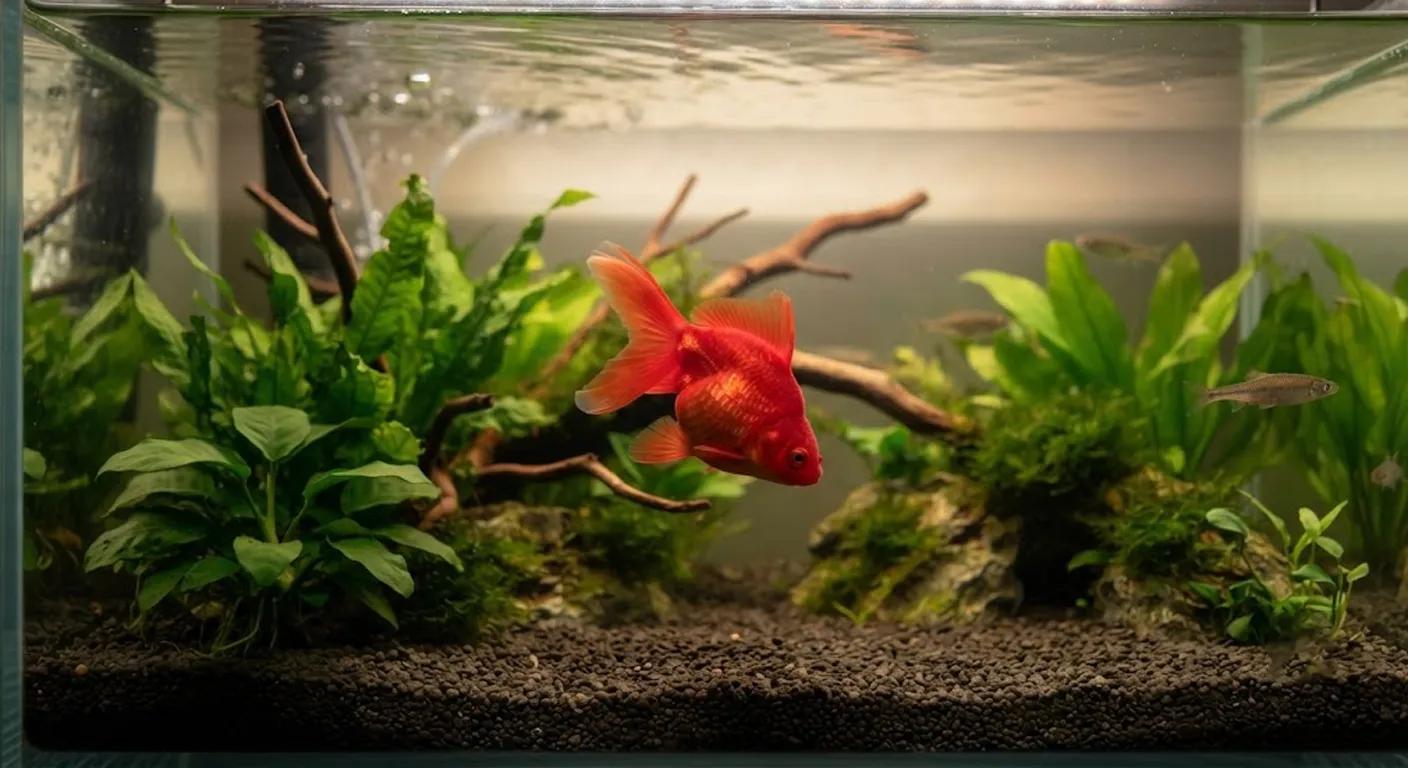
You’re watching your tank, and something stops you. Your fish is going in circles. Over and over. Same pattern. You stand there trying to figure out if this is just something it does or if something is actually wrong.
Some circling is totally normal. But it can also mean stress, bad water disease, or something wrong on the inside. You can’t judge it from the circling alone. You have to look at the whole picture.
This guide covers how to tell normal from abnormal, what causes it, how to diagnose it, how to fix it, and when to get help.
Is It Actually a Problem? Normal vs. Abnormal Circling
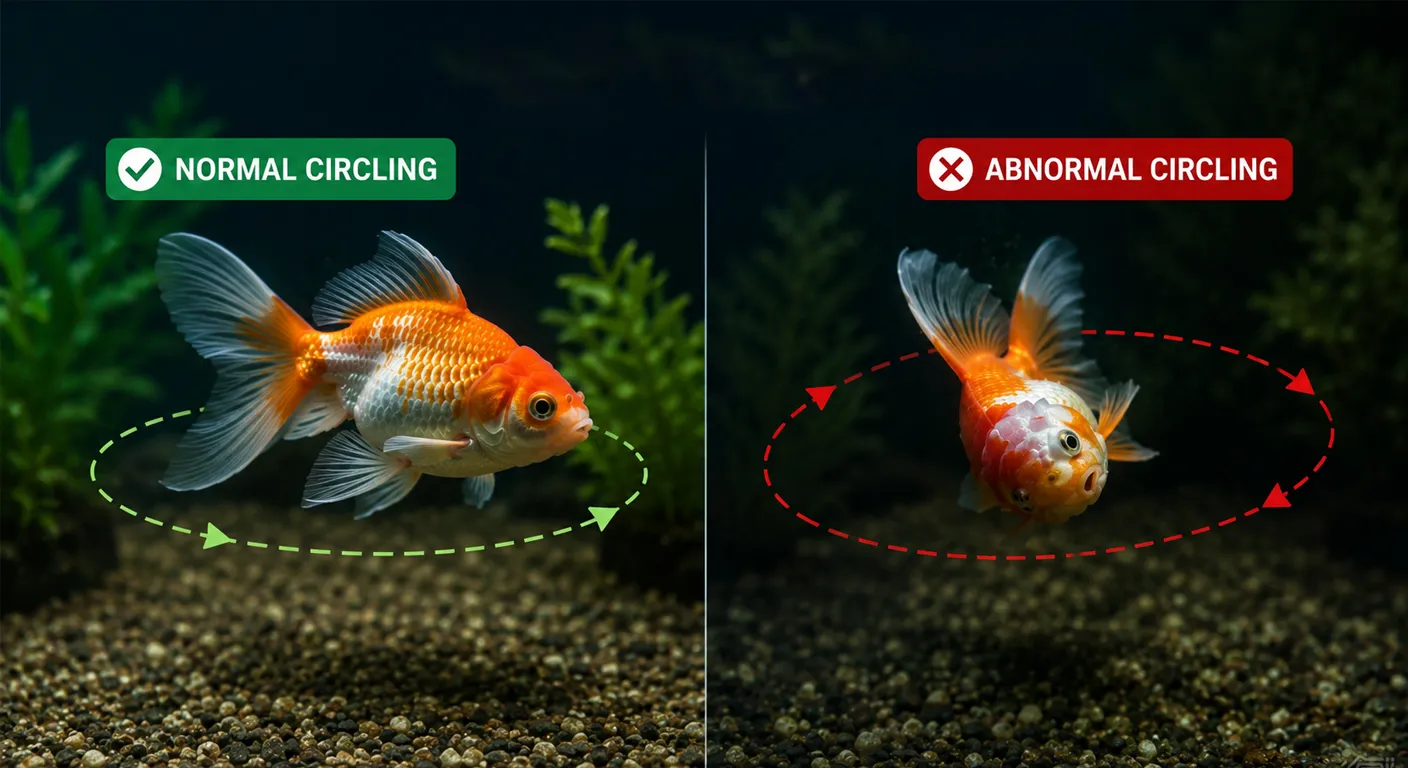
Not all circling is a red flag. Fish explore. The school. They get excited at feeding time. A fish doing relaxed laps while looking alert and balanced is probably fine.
What matters is how it looks. Fast and frantic is different from slow and steady. Tilted is different from straight. A fish that looks disoriented or keeps losing its balance is telling you something. Watch the speed. Watch the posture. Check if it responds to you. One odd sign doesn’t mean much. Two or three together means dig deeper.
Quick Diagnostic Table: Circling Pattern vs. Likely Cause
Use this as a starting point. It’s not a full diagnosis, but it tells you where to look next.
| Circling pattern | Key extra signs | Likely cause |
| Fast laps along glass | Alert responsive, no balance issues | Stress reflection boredom |
| Tight tilted circles | Struggling to stay upright due to bloating | Swim bladder disorder |
| Jerky, circling, rubbing decor. | Flashing, scratching, color changes | Parasitic skin irritation |
| Slow circling, gasping at the surface. | Lethargy, loss of appetite | Low oxygen and poor water quality |
| Pacing one tank side | Chasing territorial behavior | Aggression stress from tankmates |
Common Causes & Explanations
Circling comes from a lot of different places. Some causes are inside the fish. Some are in the water. Some are just behavior. Here’s what to look at.
Physical & Internal Issues
The swim bladder controls how the fish moves through the water. When it’s not working, the fish tilts and spins and can’t swim straight. Overfeeding is a common trigger. Constipation puts pressure on the swim bladder from the inside and causes the same thing. A knock against the glass or a fight can also cause damage. Look for bloating or trouble staying at a normal depth.
Environmental & Water Quality Triggers
Bad water makes fish act strangely. Ammonia and nitrite stress fish out fast, even at low levels. Low oxygen does the same. Strong current pushes smaller fish into patterns that look like circling. A sudden temperature shift affects the whole tank at once. If more than one fish is acting off at the same time, it’s almost always a water problem.
Disease & Parasites
Parasites irritate the skin and gills. Fish respond by rubbing against things and swimming erratically. Internal infections can hit the nervous system or the swim bladder and cause loss of coordination. White spots, sores, color changes, or a fish that has stopped eating, alongside the circling, all point toward disease.
Behavioral & Genetic Factors
Some circling is just normal behavior. Territory patrol. Reacting to its own reflection. Boredom in a bare tank. Stress from a tank that’s too small. Some ornamental breeds are also prone to mild balance issues from selective breeding. That type of circling is usually consistent, mild, and doesn’t come with other symptoms.
How to Diagnose: A Simple Step-by-Step Check
Work through this in order. Don’t start treating randomly.
Observe behavior: Watch quietly. How fast is it circling? Is it tilted? Does it respond when you come close? Note everything before touching anything.
Check physical signs: Look at the body closely. Bloating? Spots? Torn fins? Injury? Unusual color or mucus? These narrow things down fast.
Test water parameters: ammonia, nitrite, nitrate, pH, temperature. Do this before anything else.
Review recent changes: New fish? New decor? Equipment changed? Feeding shifted? Missed a water change? Something has usually changed recently.
Compare to species norms: Know what’s normal for your specific fish before deciding something is wrong.
Consider isolation: If aggression is involved or you need to watch closely, move the fish to a separate tank.
| Step | What to look for | Goal |
| Observe behavior | Speed posture timing | Understand the pattern |
| Check physical signs | Bloating spots and fin damage | Identify visible symptoms |
| Test water | Ammonia, nitrite, nitrate, pH, temp | Rule out environmental causes |
| Review recent changes | New fish decor equipment feeding | Find the trigger |
| Compare species norms | Typical behavior for that fish | Separate normal from abnormal |
| Consider isolation | Aggression monitoring needs | Better observation and treatment |
Fixes and Treatment Options
Start with the environment every time. Stabilize that first, then move to everything else.
Environmental Fixes
Do a partial water change first. It costs nothing and helps in almost every situation. Check filtration and aeration. Fix the temperature if it’s drifted. Adjust the current if it’s pushing the fish around. A lot of circling cases clear up just by sorting the water.
Internal / Swim Bladder Support
Fast from fish for two to three days. That fixes a lot of mild swim bladder cases on its own. After fasting, offer high-fiber food like a small blanched pea for plant-eating fish. Cut portion sizes going forward and keep the water clean while the fish recovers.
Disease and Parasite Treatment
Only medicate when you actually see clear signs. White spots, sores, flashing visible worms. Figure out what you’re dealing with first, then use the right treatment for that specific problem. Don’t mix multiple medications at once.
Behavioral and Environmental Adjustments
Add plants, rocks, and hiding spots. Break the line of sight between aggressive fish. Cover reflective surfaces on the outside of the glass if the fish keeps reacting to its own reflection. If the tank is too small for the species, no amount of decoration fixes that long-term.
When to See an Aquatic Vet
Severe circling that won’t stop, alongside open sores, deformities, complete loss of appetite, or multiple fish affected at the same time, is beyond a home fix.
Write down your water test results, tank size, stocking list when symptoms started, and what you’ve already tried. Take a short video of the circling. The more you bring, the faster the vet can help.
Prevention Tips Going Forward
Do regular water changes and keep parameters stable. Most circling problems build up slowly over time, not overnight.
Don’t overstock. A crowded tank is a stressed tank, and stressed fish develop problems faster.
Quarantine every new fish before they go into the main tank. Always.
Don’t overfeed. It’s one of the most common triggers for swim bladder issues.
Handle fish gently and acclimate properly whenever moving them between tanks.
Give them places to hide and things to interact with. A bare, empty tank causes boredom and chronic stress.
Conclusion
Circling means different things depending on what’s going on. This guide covered the main reasons for swim bladder issues and bad water, including parasites, stress, and plain behavior. Most cases have a clear cause once you actually look properly.
Don’t react to the circling alone. Look at the whole fish and the whole tank. One behavior by itself tells you very little. Put it together with other signs, and it gets clear fast.
Good habits make most of this rare. Clean water, steady conditions, proper feeding, and daily attention to your tank. That’s what keeps small problems from turning into big ones.





Add comment
You must be logged in to post a comment.