
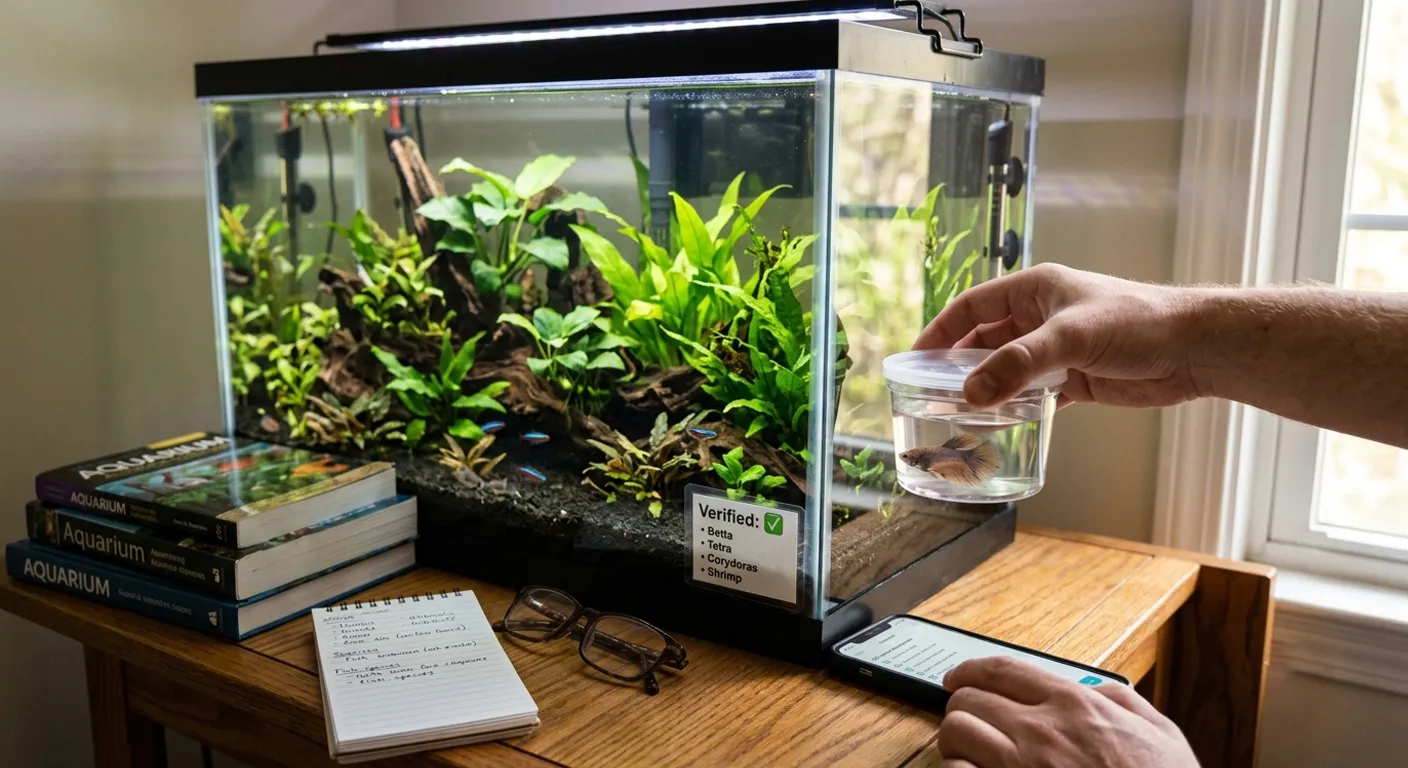
A fish keeper in the Midwest spent nearly two years raising a species he had ordered online, feeding it, growing it out, and building an entire tank around its needs. Then a routine conversation with a wildlife officer revealed the truth. That fish had been illegal to own in his state the entire time. He had broken no rule knowingly. He simply never checked.
This scenario plays out more often than most hobbyists realize. Whether an aquarium fish is legal to keep depends on far more than federal law. State and local regulations often carry more weight than anything written in Washington, and they can differ sharply from one border to the next.
In this guide, we will explain how to verify whether an aquarium fish is legal in your state. We will cover the federal and state rules that affect hobbyists, clarify ownership and permit requirements, and walk through the species most commonly restricted across the country. By the end, you should have a clear process for checking any fish before you buy it, not after.
Table of Content
ToggleHow to Check If an Aquarium Fish Is Legal in Your State
Many fish keepers only look at federal rules. That is a mistake. Federal law sets a floor, not a ceiling, and most of the restrictions that actually affect hobbyists come from state wildlife agencies, not Congress.
A complete legal check covers five separate layers, and skipping any one of them can leave a gap.
| Checkpoint | What to verify | Where to check |
| Federal law | Whether the species appears on the injurious wildlife list | U.S. Fish and Wildlife Service, 50 CFR 16 |
| State law | Whether your state prohibits, restricts, or permits the species | Association of Fish & Wildlife Agencies — State Agency Directory |
| Local rules | Whether your city or county adds further limits | Municipal code or American Legal Publishing |
| Seller rules | Whether the seller ships legally to your state | Seller’s shipping restriction page or direct inquiry |
| Ownership status | Whether existing owners are grandfathered or must surrender the fish | State agency guidance on possession of restricted species |
Skipping the local layer trips up more people than any other step. A fish legal under state law can still be banned by a city ordinance, particularly in urban areas with strict exotic pet codes.
Federal Fish Laws That Affect Aquarium Owners
Federal law rarely names individual aquarium fish by species. Instead, it works through broader categories, and hobbyists need to understand two of them.
| Rule type | What it restricts | Example species affected |
| Injurious wildlife listing | Import and interstate transport | Snakeheads, certain carp species |
| Lacey Act enforcement | Trade in illegally taken or possessed wildlife | Any species violating state law during interstate sale |
| State and local release laws | Deliberate release into public waters | Nearly all non native aquarium fish |
The injurious wildlife listing, maintained under the Lacey Act, is the piece most likely to affect a hobbyist directly. Once a species lands on this list, it becomes illegal to import into the United States or move across state lines without a federal permit, usually reserved for zoos, research institutions, or approved facilities.
What “Injurious Wildlife” Actually Means for Fishkeepers
The term sounds broad, and in practice it is. A species gets listed as injurious wildlife when federal wildlife officials determine it poses a risk to native ecosystems, agriculture, or human health if it escapes or is released. The listing does not require proof that harm has already occurred in every state. It only requires a documented risk somewhere in the country.
This is why the label can feel disconnected from a hobbyist’s day-to-day experience. A snakehead kept quietly in a home aquarium poses little obvious threat, sitting in a tank. But the federal listing exists because of what happens if that same fish ends up in a river or lake, where it can outcompete native species and disrupt an entire food web. The rule targets the pathway, not the individual fish in front of you.
Why State Aquarium Fish Laws Matter Most
Of all the legal layers covered in this guide, state law is the one most likely to determine whether a specific fish is legal for you to keep. It is also the layer that changes most frequently, which is why a fish you researched two years ago may now carry a different status.
A few patterns show up again and again across state regulations.
The same species can carry completely different statuses depending on the state.
Permit systems are common for higher-risk species. Grass carp, for example, are often legal only as sterile triploids, and only with a state-issued permit.
Some states regulate by genus rather than naming every individual fish. Every Channa species, not just the well-known snakehead, may fall under a single blanket restriction.
Building a State Rule Comparison Table
Before buying any fish with a questionable reputation, it helps to sketch out how different states classify it. A simple comparison table, built from your own research, keeps the picture clear.
| State rule type | Meaning | Example species |
| Fully legal | No special permit or restriction applies | Guppy, betta, neon tetra |
| Permit required | Legal only with state-issued documentation | Grass carp (triploid only) |
| Restricted | Legal only under specific conditions, such as closed systems | Some large cichlids in certain states |
| Prohibited | Illegal to import, sell, or possess | Piranha in several states, walking catfish in Florida |
Why “Legal in One State” Does Not Mean “Legal Everywhere”
A fish sold freely in a Florida pet store may be prohibited in Georgia or require a permit in Texas. This is not an accident. States base their restrictions on local ecological risk, meaning what is invasive in one climate may pose no threat in another.
A cold winter climate might make a tropical fish incapable of surviving a release, while a warm, humid state faces a real risk of establishment. Never assume a fish is legal in your state just because it was legal where it was sold.
Restricted Aquarium Fish Species
Certain species show up on restricted or prohibited lists across a wide range of states. Knowing them by name saves time during the research phase, even if you still need to confirm your specific state’s rule.
| Species | Risk category | Typical legal status |
| Snakehead (Channa spp.) | Federal injurious wildlife | Banned or heavily restricted nationwide |
| Walking catfish (Clarias batrachus) | Established invasive species in warm states | Prohibited in Florida and several southeastern states |
| Asian swamp eel (Monopterus albus) | Established invasive population | Restricted or prohibited in multiple states |
| Grass, silver, black, and bighead carp | High risk to waterways | Permit required, sterile triploid only in most states |
| Piranha (Serrasalmus, Pygocentrus spp.) | Predatory, banned by genus in some states | Prohibited in several states, permitted in others |
| Electric eel (Electrophorus electricus) | Safety and handling concern | Legal in most states, restricted in a few |
| Flowerhorn cichlid, a large tilapia species | Aggressive or invasive potential | Legal in many states, restricted where tilapia have established wild populations |
Usually Legal Aquarium Fish Checklist
Most fish sold in ordinary pet shops carry no special legal burden at all. These species make up the bulk of the hobby, and for good reason.
Guppy (Poecilia reticulata)
Betta (Betta splendens)
Neon tetra and cardinal tetra
Molly, platy, and zebra danio
Corydoras species
Cherry shrimp, mystery snail, and nerite snail
None of these carries a federal injurious wildlife listing, and state restrictions on them are rare. Still, a quick search costs nothing, and confirming legality takes less time than driving to the pet store.
How to Verify Legality, Step by Step
Checking a fish properly takes five steps. Skipping any one of them increases your risk.
| Step | What to do |
| 1 | Search the species name alongside your state name and the word “prohibited” |
| 2 | Find your state’s official prohibited or restricted species list throu AFWA |
| 3 | Check whether a permit exists for conditional ownership |
| 4 | Review local ordinances for any additional city or county limits |
| 5 | Save proof of legality, including screenshots and dates, in case rules change later |
That last step matters more than it seems. Regulations shift, sometimes without much public notice, and having dated proof of what was legal when you purchased the fish can protect you if enforcement ever questions your ownership.
What to Do If You Already Own One
Discovering that a fish you already own falls into a restricted category creates a stressful moment. How you respond depends heavily on your specific situation.
| Situation | Best action |
| You discover the fish is restricted, such as a piranha, which you did not know was banned | Contact your state wildlife agency directly and ask about surrender or amnesty programs |
| You are unsure of the law | Do not guess. Call the agency before taking any action |
| The fish is now banned | Ask whether existing owners are grandfathered, and get any answer in writing |
| Bought legally but later restricted | Keep your purchase records and check if a grandfather clause applies to your situation |
Many states run amnesty or surrender programs specifically for hobbyists in this position. These programs exist because wildlife agencies would rather receive a fish safely than have it released into a waterway out of panic. Reaching out proactively almost always produces a better outcome than waiting for someone else to raise the issue.
Conclusion
Whether an aquarium fish is legal to keep depends on laws that most hobbyists never think to check. Federal injurious wildlife rules set the baseline, but state law almost always carries the greater weight, and local ordinances can tighten the picture even further. Ownership status and permit requirements add another dimension entirely, particularly for species like grass carp or certain cichlids that fall into conditional categories.
Never assume a fish is legal simply because it is sold online or at a local pet store. Sellers do not always track every state’s regulations, and shipping something to your address is not the same as confirming it is legal to keep once it arrives.
Building legal research into every livestock purchase protects more than your collection. It protects your investment, your standing with local wildlife authorities, and the ecosystems these regulations were written to defend in the first place.
Related Products For Your Reference














Add comment
You must be logged in to post a comment.