
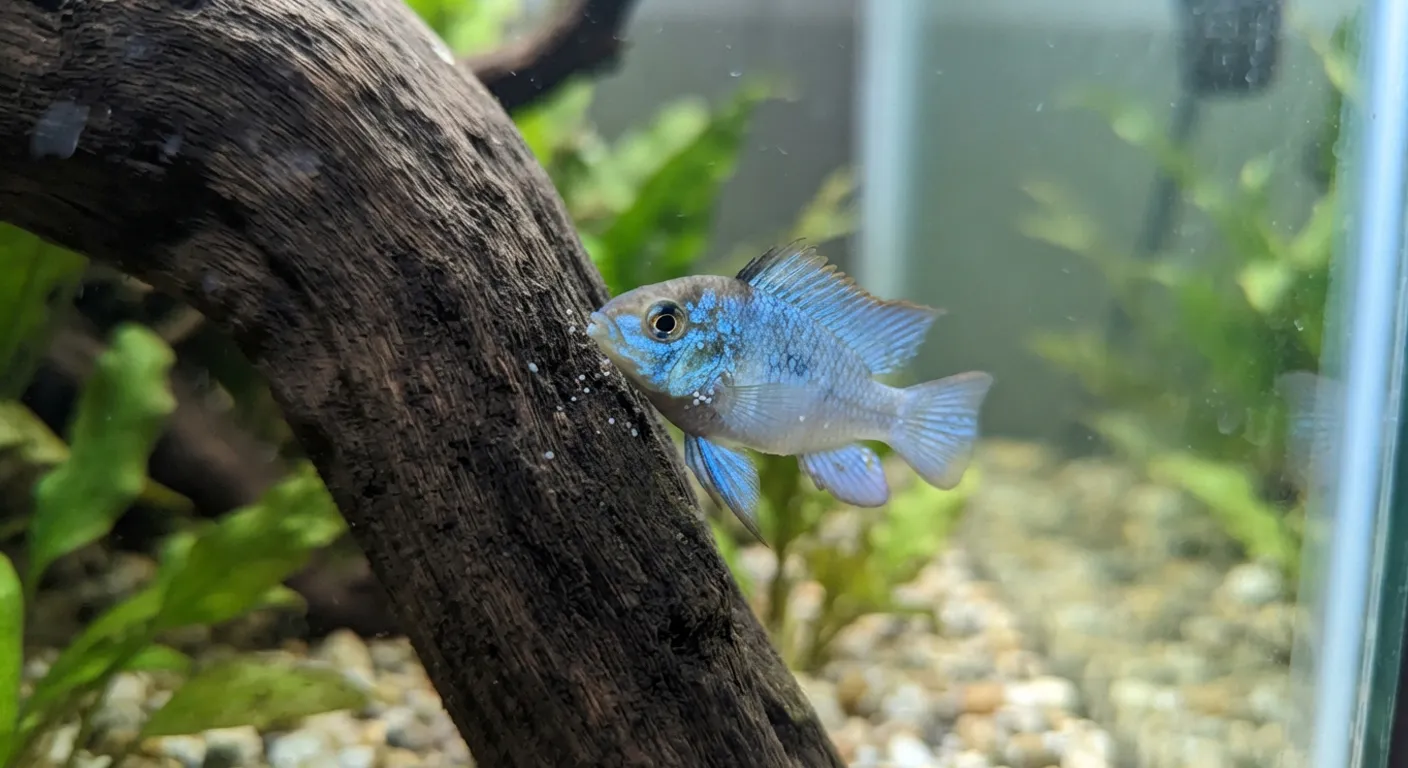
If your fish keeps rubbing its body against rocks, gravel, plants, the heater, or even the aquarium glass, it is performing a behavior aquarists call flashing. A single flick here or there is not automatically a red flag. Repeated scratching, though, usually means something is irritating the fish’s skin or gills.
Ich is one of the most common reasons behind flashing, particularly when you also spot small white spots that look like grains of salt. But it is not the only cause. Water quality problems, leftover debris, chlorine exposure, and other parasites can all trigger the same behavior. Before reaching for medication, it helps to know what to check first.
This guide walks through what fish flashing actually means, how to separate normal behavior from a genuine warning sign, and how to figure out whether ich is really the culprit.
What Does It Mean When a Fish Rubs Against Things
Scratching in fish is not itching in the way we experience it. It is a physical response, an attempt to dislodge or relieve something irritating the skin or gill surface. You might see it described as rubbing against rocks, scraping on gravel, darting into décor, or flicking against the glass. These are all the same underlying behavior with slightly different presentations.
What matters more than the behavior itself is the pattern around it. How often is it happening? How many fish are affected? What other symptoms show up alongside it. A single scrape tells you very little. A pattern tells you a lot.
It also helps to remember that stress plays a supporting role here. A fish already weakened by poor conditions, a cramped tank, or aggressive tankmates is more likely to react strongly to a minor irritant than a fish living in stable, comfortable conditions. Two tanks with identical water readings can produce very different flashing behavior depending on how stressed the fish already are.
Is Occasional Flashing Normal
One brief scrape against a rock, especially right after feeding or after you have rearranged the décor, does not always point to disease. Fish sometimes react to small food particles, minor stirred-up substrate, or simple contact with a surface while swimming past it.
Where you need to pay closer attention is frequency. If the scratching becomes more forceful, happens repeatedly, or starts showing up across several fish rather than just one, treat that as a signal worth investigating. Repeated flashing over several hours, or across multiple days, should prompt water testing and closer observation of the tank.
When Is Fish Scratching a Problem
A few signs push flashing from mildly curious to genuinely concerning:
The fish scratches repeatedly throughout the day, not just once or twice.
More than one fish in the tank is rubbing or darting against objects.
White dots, excess mucus, clamped fins, or reddened patches appear on the body.
The fish breathes rapidly, hovers near the surface, or shows irritated-looking gills.
Appetite, activity level, and normal social behavior all start to decline.
The behavior began right after a water change, a new fish addition, or some other disruption to the tank.
Ich is one of the most recognizable explanations for this pattern, but it should be identified through a combination of these signs. Scratching by itself is not enough to confirm it.
Is My Fish Scratching Because of Ich
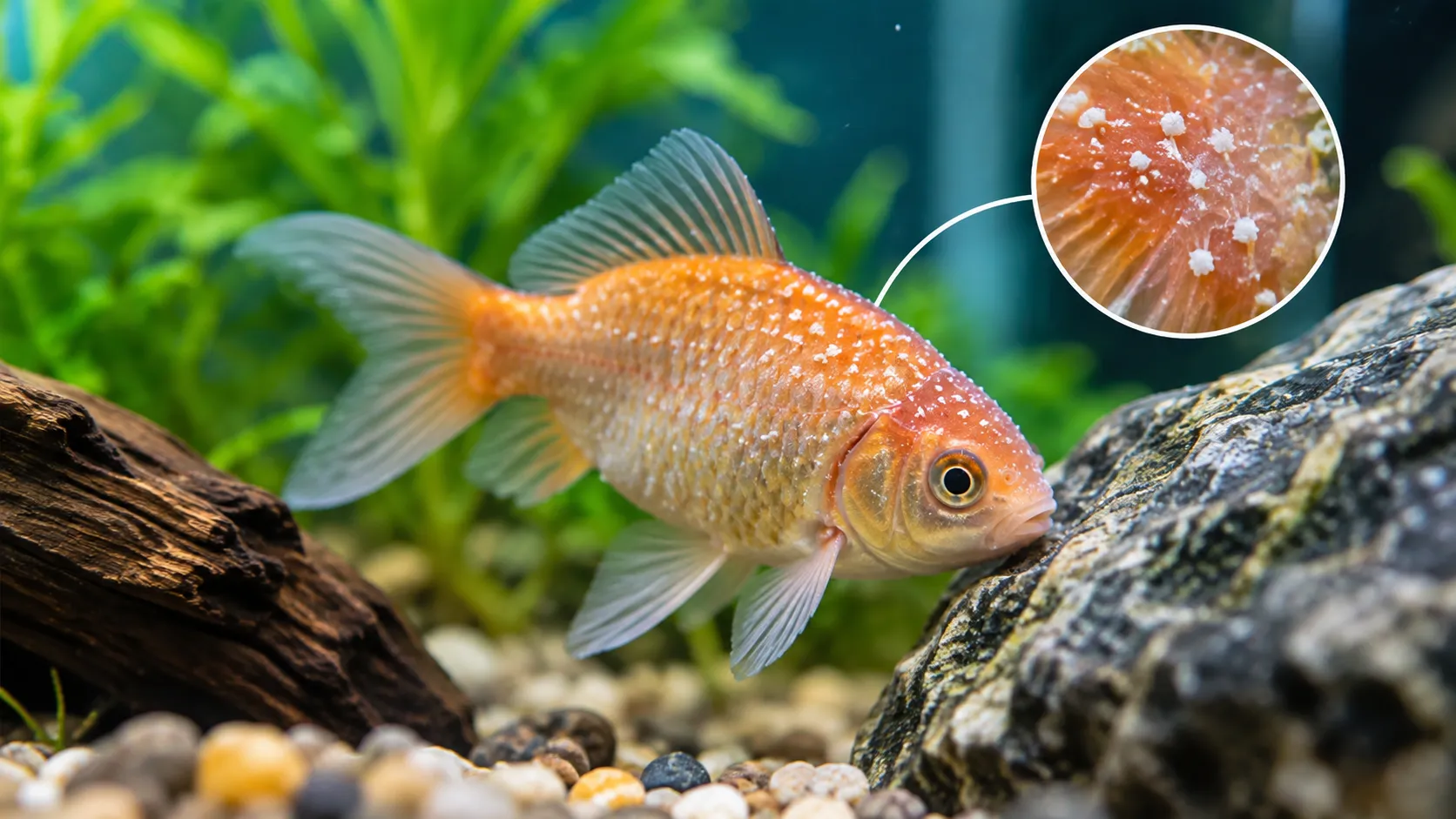
Ich, sometimes called white spot disease, is caused by a protozoan parasite that burrows into a fish’s skin and gill tissue. That burrowing is what irritates, and the irritation is what drives the scratching. Not every fish that flashes has ich, so it is worth resisting the urge to jump straight to that conclusion.
The telltale white spots are the most recognizable sign of an ich infection, but they work best as one piece of evidence among several, not as the sole deciding factor. A fish can actually start scratching before the spots become visible to you, particularly if the gills are affected first, or the infection is still in an early stage.
Certain conditions make an outbreak more likely, and knowing them gives you an early warning system rather than a reaction after the fact. Newly introduced fish are a frequent source, since ich can travel on a fish that looks perfectly healthy at the pet store. Sudden temperature drops also weaken a fish’s immune response, which is why outbreaks often follow an unheated water change or a heater malfunction during colder months.
Common Ich Symptoms to Look For
Watch for this combination of signs rather than any single one in isolation:
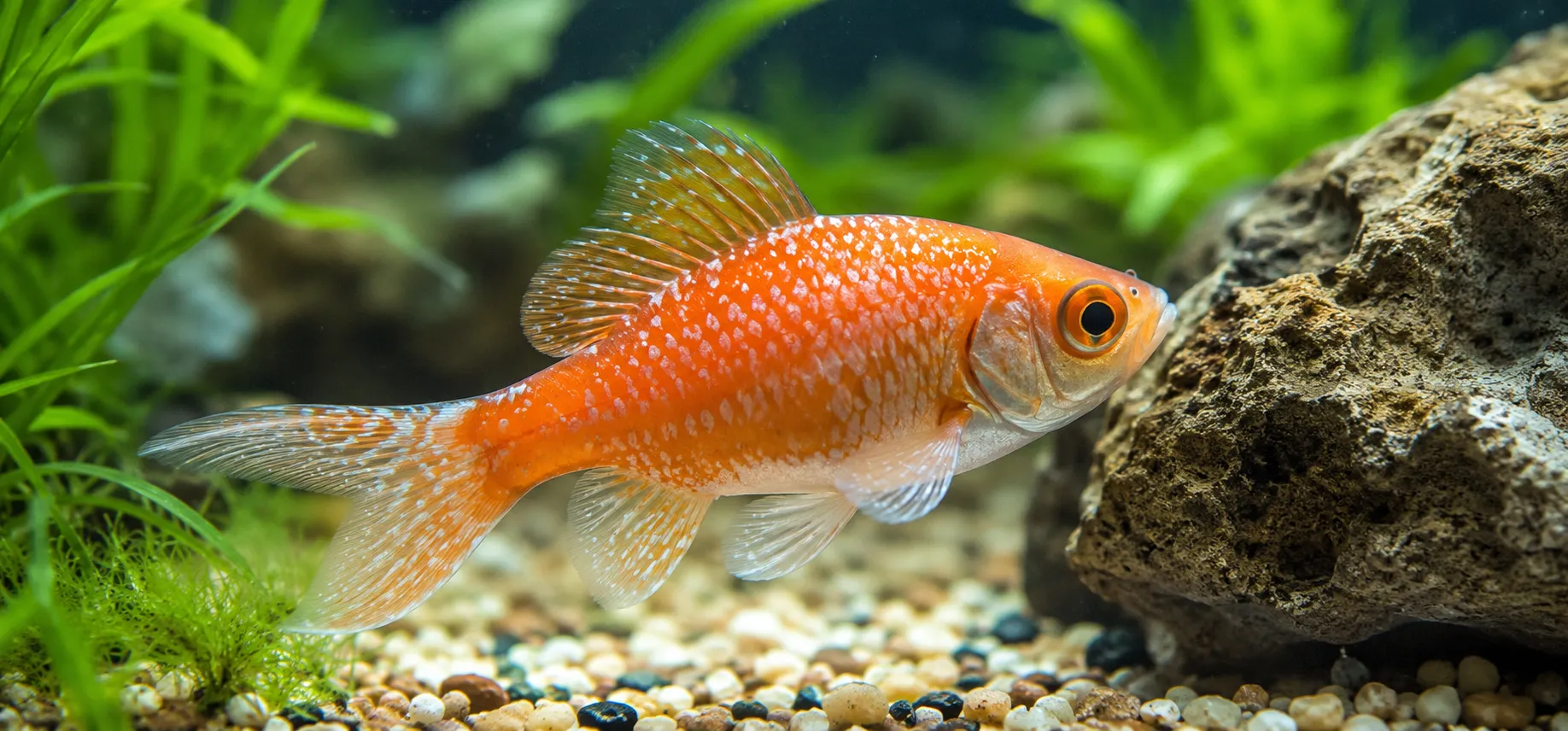
Tiny white spots resembling grains of salt scattered across the body or fins.
Repeated flashing against rocks, substrate, plants, filters, or the aquarium glass.
Fast or labored breathing, especially noticeable if the gills carry the infection.
Clamped fins, hiding behavior, lethargy, or a general drop in activity.
Reduced appetite or a fish that ignores food it normally goes after.
Several fish in the same tank developed similar symptoms within a short window.
Not every pale mark on a fish is ich. Air bubbles clinging to the skin, natural coloration, breeding tubercles in some species, minor fin damage, and certain fungal or bacterial infections can all be mistaken for white spot disease. If you are uncertain, watch for the full pattern of symptoms rather than fixating on spots alone.
Why Does Ich Treatment Take Time
Ich has a life cycle with more than one stage, and this is exactly why treatment cannot be rushed or stopped early. The white spots you see are only one visible phase of the parasite. Underneath that, the parasite eventually drops off the fish, forms a cyst on the substrate or décor, and multiplies before releasing free-swimming young that go searching for a new host.
Most medications only work against the parasite during this free-swimming stage, when it is exposed in the water column rather than embedded in the fish. That is why treatment instructions call for continuing medication well past the point when visible spots disappear. Stopping too early often lets the cycle restart from parasites still hiding in the tank, sometimes in the substrate rather than on any fish at all.
How Ich Spreads Through a Tank
A single infected fish rarely stays the only affected fish for long. Because the free-swimming stage of the parasite disperses through the water, it reaches every fish sharing that space within days rather than weeks. This is precisely why an outbreak in a community tank tends to show up on multiple fish at roughly the same time, and why treating the whole tank, rather than isolating one visibly spotted fish, is usually the more effective approach.
If It Is Not Ich, What Else Causes Fish Flashing
Persistent scratching without any white spots does not mean there is no problem. It actually makes it more important to look into other causes before treating for ich, since ich medication will do nothing for a fish suffering from a different issue entirely.
| Possible Cause | Key Signs | What To Check |
| Poor water quality | Rapid breathing, gasping, unusual behavior | Ammonia, nitrite, nitrate, temperature |
| Chlorine or chloramine | Sudden distress after a water change | Whether conditioner was added correctly |
| Gill flukes or parasites | Flashing with no visible spots, fin clamping | Gill appearance, isolation behavior |
| Debris or dirty substrate | Localized rubbing, no other symptoms | Substrate cleanliness, filter output |
Water Quality, Chlorine, and Aquarium Irritants
Ammonia and nitrite are both capable of irritating a fish’s gills and skin directly, and this irritation frequently shows up as flashing paired with rapid breathing or generally unusual behavior. Untreated tap water introduces another risk, since chlorine or chloramine can burn delicate gill tissue on contact. Dirty substrate and suspended particles in the water column add to the irritation as well, even when ammonia and nitrite read at safe levels.
pH swings deserve a mention too, since they get overlooked far more often than ammonia or nitrite. A sudden pH shift after a large water change can sting a fish’s gills in much the same way chlorine does, even in an otherwise healthy tank. Fish generally tolerate a stable pH outside the ideal range better than a correct pH that swings sharply within a single day.
Run through this testing checklist whenever flashing shows up without obvious spots:
Ammonia should read 0 ppm.
Nitrite should read 0 ppm.
Nitrate should stay within the appropriate range for your specific fish species.
Temperature should remain stable and suited to the species you keep.
Water conditioners should be confirmed as used correctly during every single water addition.
Gill Flukes and Other Parasites
Gill flukes and other microscopic parasites can cause the same repeated scratching pattern as ich, particularly in cases with no salt-like spots anywhere on the fish. Affected fish often breathe faster than usual, hold their fins close to the body, isolate themselves from tankmates, or show visible irritation around the gill area.
Resist the temptation to treat blindly with whatever medication is on hand. Different parasites respond to different medications, and using an ich treatment on a fluke infestation will not solve the actual problem. Narrowing down the likely cause first, through observation and water testing, is both safer for the fish and more effective overall. A local fish store or aquatic veterinarian can also examine a gill sample under magnification if home observation does not give you a clear answer.
What To Do When Your Fish Keeps Scratching
A methodical response beats a panicked one, and it usually gets better results too.
A 24-Hour Fish Flashing Checklist
Observe the fish closely for a full day, tracking how often the scratching happens and whether it involves one fish or several.
Test the aquarium water for ammonia, nitrite, nitrate, and temperature to rule out water quality as the cause.
Review any recent changes, including new fish, new décor, or a recent water change that might explain the timing.
Check the entire tank for debris, algae buildup, or anything else that could be causing physical irritation.
Avoid reaching for panic medication before you have gathered enough information to know what you are actually treating.
Act promptly once a clear cause becomes apparent, whether that means a water change, a targeted treatment, or an equipment fix.
Preventing Future Flashing Episodes
Prevention tends to matter more than any single treatment, since a tank prone to repeated irritation will keep producing the same symptoms no matter what medication you use. Quarantining new fish for two to three weeks before adding them to an established tank catches most parasite problems before they ever reach your main population.
Keeping a consistent maintenance schedule, rather than letting water changes slip and then doing one large change all at once, avoids the sharp parameter swings that stress fish in the first place. Stable temperature, steady filtration, and regular but moderate water changes do more to prevent flashing than any product on a store shelf.
Conclusion
Fish scratch against surfaces for a range of reasons, and this guide has covered how to tell normal flashing apart from a genuine warning sign. Ich, poor water quality, parasites, and general environmental irritation all produce similar symptoms on the surface, which is exactly why a careful look at the entire picture matters so much.
Scratching is a symptom, not something to medicate away without understanding it first. Test your water, watch for additional signs beyond the scratching itself, and identify the actual cause before reaching for treatment. That approach saves your fish from unnecessary stress and unnecessary expense.
Use the checklist and the prevention steps covered here to keep water conditions stable, reduce irritation at the source, and give your fish a clean, balanced environment to recover and stay healthy in.


Full Spectrum Aquarium LED Light (14W for 12″-18″)...
Original price was: $18.99.$13.99Current price is: $13.99.




Add comment
You must be logged in to post a comment.