
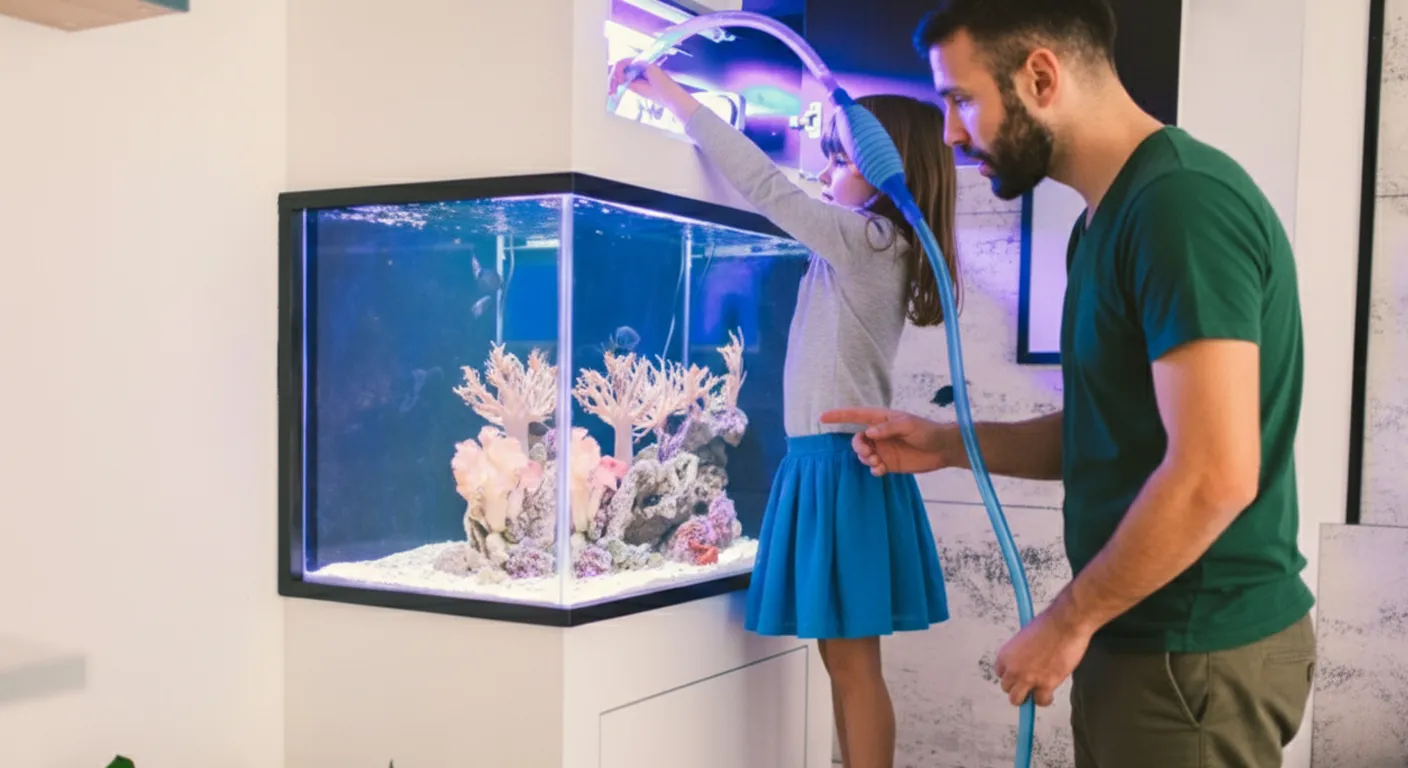
You have not been alone in your experience when having problems with buckets, hoses, or spilled water when cleaning the aquarium. Water changing is one of the most exhausting aspects of tank maintenance, which is, in many cases, done by fish keepers. It does not take long to make a fun hobby a chore by lifting heavy buckets, filling cups with water, and throwing them everywhere.
The good thing is that you can simplify this job with only a few upgrades. When equipped with the correct tools and installation, it will be possible to process water much quicker, more safely, and more effectively. Thus, keeping your fish healthy and making your workload low.
In this article, you will be taught three effective methods that you can use to improve your process of changing your water. You will also learn about useful tips, the indicators that you should upgrade, and how such systems could make the process of taking care of the aquarium easier.
Why Water Change Is a Problem
Water change is extremely important in keeping an aquarium healthy, yet the whole procedure can be a burden. Conventional approaches are associated with strenuous load, a lengthy relocation process, and a change in temperature. When buckets are employed, the fresh water might not correspond to the temperature and chemistry of the tank. This will put a lot of strain on your fish.
Left-behind garbage or debris that could slowly contaminate your aquarium may also result from inconsistent or hurried water changes. In the long run, it might result in turbid water, algal accumulation, or even fish health problems. Manual changes can also be inconsistent. One week you might replace 10%, and the next week 40%, which disrupts water stability.
If this sounds familiar, upgrading your water change method can make a huge difference.
What Makes a Good Water Change
A good water change routine should be consistent, efficient, and stress-free for your fish. Several factors determine its quality:
Frequency: The weekly water change of most aquariums contains 10-20% of the freshwater in the aquarium. Tanks with high stock levels or a large number of people in them might have to be changed more frequently.
Quantity: One should not add excess water simultaneously because this may cause a quick change in water chemistry and temperature.
Consistency: It is healthier to make smaller and regular changes than big and irregular ones.
Temperature Control: The Refill water must be near the current temperature of the tank in order not to shock fish.
So, how can fish keepers make this process easier and more efficient? We shall consider three upgrade options that are efficient for tanks of both sizes.
Quick Guide: Upgrade Your Water Change
You do not have to spend much or have complex procedures to upgrade your water change system. You can begin small and upgrade depending on the size of your tank and configuration. The following are three simple systems that can revolutionize your water change routine.
1. Basic Siphon + Bucket
A simple siphon and bucket system is still sufficient in small aquariums (5-20 gallons). It is cheap, easy, and does not need any type of plumbing changes.

How It Works: You apply a siphon hose in order to pump out tank water in a bucket. When it is emptied, add clean conditioned water to the tank.
Tips for Less Mess:
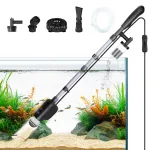
Use a gravel vacuum: This helps remove debris from the substrate while draining water.
Clip the hose to the tank: Prevents the hose from slipping and spilling water.
Tilt the bucket slightly: This reduces splashing when refilling or emptying.
Though this is efficient in small tanks, it will be exhausting in case you have to handle multiple or large aquariums. Transporting several buckets may also lead to spillages or backaches.
2. Faucet-Powered Systems (Python Style)
With a medium or large tank (20-75 gallons), a faucet-based water change system will be a real time-saver, such as the Python No Spill Clean and Fill.

How It Works: This system is directly attached to your faucet. It siphons dirty water using water pressure and refills the tank using clean and treated water – without lifting a single bucket.
Why It’s an Upgrade:
Speeds up the water change process dramatically.
Eliminates heavy lifting and bucket trips.
Reduces the chance of spills and temperature mismatches.
Important Tips:
Check faucet compatibility: Some faucets need adapters to fit the hose.
Ensure proper hose length: Measure to make sure it reaches your aquarium easily.
Add water conditioner: Always treat tap water for chlorine and chloramine before adding it to your tank.
Most home aquariums can be served using faucet-powered systems, which provide an excellent combination of convenience and affordability.
3. Semi-Automatic Systems (Pump-Powered)
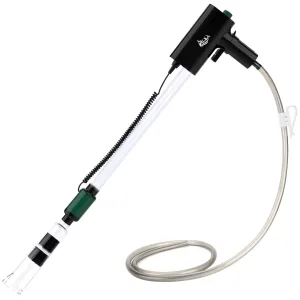
The final convenience is with a semi-automatic pump system that is suitable for larger or multi-aquariums. In this technique, a submersible or inline pump is used to empty the tank and fill it with a high degree of precision.
How It Works:
Wastewater is pumped out of your tank to a drain, sink, or outside. Then repeat the process to fill your aquarium with pre-conditioned water.
Why It’s Ideal:
Works perfectly for multiple tanks or large aquariums.
Can partially automate the draining or refilling process.
Reduces physical effort and maintenance time.
Helps maintain consistent water quality with minimal disruption to fish.
Although this system is more expensive in the short run, it will save hours in the long run, particularly for serious hobbyists or breeders.
Comparison Table
| System Type | Cost | Key Benefit |
| Siphon + Bucket | Low | Simple, affordable, suitable for small tanks |
| Faucet-powered (Python) | Medium | Fast, clean, and easy for mid to large tanks |
| Pump-powered / Semi-automatic | High | Efficient and ideal for large or multiple tanks |
Signs You Need an Upgrade
Wondering if it’s time to upgrade your setup? Here are a few clear signs:
You own multiple tanks and spend hours changing water.
Your aquarium is over 30 gallons, and manual siphoning feels exhausting.
You experience frequent spills, leaks, or inconsistent water temperatures.
Your fish show stress signs after water changes due to sudden shifts in conditions.
You skip water changes because the process feels too time-consuming.
If any of these sound familiar, investing in a better system will make your aquarium maintenance smoother and more enjoyable.
Upgrade vs. Optimize: How To Choose
You should review your existing arrangement before purchasing new tools. Take into account the size of your tank, the number of fish, and the frequency with which you replace water. There are also cases when quite simple optimization of your current process, such as the addition of a gravel vacuum or a hose securing, can save you time.
But when you have a large tank or a heavily loaded tank, upgrading is the wiser thing to do. More efficient equipment implies the reduction of labor, risks, and the overall health of the aquarium.
Key Considerations Before Upgrading
When selecting a water change system, keep these important factors in mind:
Flow Rate: Make sure your pump or faucet system can handle your tank’s water volume efficiently.
Drain Access: Plan where the dirty water will go. A nearby sink or outdoor drain works best.
Plumbing Safety: Avoid using contaminated hoses or connectors that may leach harmful chemicals.
Equipment Maintenance: Rinse hoses and pumps after each use to prevent algae or bacteria buildup.
Cost-Benefit Analysis: Balance your budget with convenience. Sometimes, a mid-range system offers the best value.
Space Availability: Check you have room to store hoses, pumps, or adapters between uses.
Conclusion
The reason to upgrade your water change system is not only to save time but also to provide a better environment for your fish and enjoy the process of being an aquarist. Healthy fish, clear water, and reduced stress are the benefits of having a clean and stable tank, both to you and your fish.
To recap, there are three main ways to upgrade your water changes:
Siphon + Bucket System: Best for beginners and small tanks.
Faucet-Powered System (Python Style): Perfect for medium to large aquariums.
Semi-Automatic Pump System: Best for advanced hobbyists and large setups.
By choosing the right method, you’ll spend less time maintaining your aquarium and more time enjoying it.
FAQ
1. What is the Python No Spill Clean and Fill system?
Python is an apparatus that uses water pressure to drain and replenish aquarium water using a hose made of pipes filled with faucets. It avoids the use of buckets, and water change is faster and easier.
2. Is it safe to refill my tank directly from the faucet?
Yes, but you should have a water conditioner, one that gets rid of chlorine and chloramine before your water gets into your tank. Furthermore, make sure the temperature is the same as that of your aquarium so that you do not stress the fish.
3. What size tank benefits most from pump-powered systems?
Pump-powered or semi-automatic systems are suitable when dealing with a large tank with a capacity exceeding 75 gallons or several aquariums. They conserve time, save labor, and create consistency.
AQQA 5-in-1 Aquarium Gravel Cleaner Set For Removing...
Original price was: $35.59.$32.39Current price is: $32.39.






Add comment
You must be logged in to post a comment.