
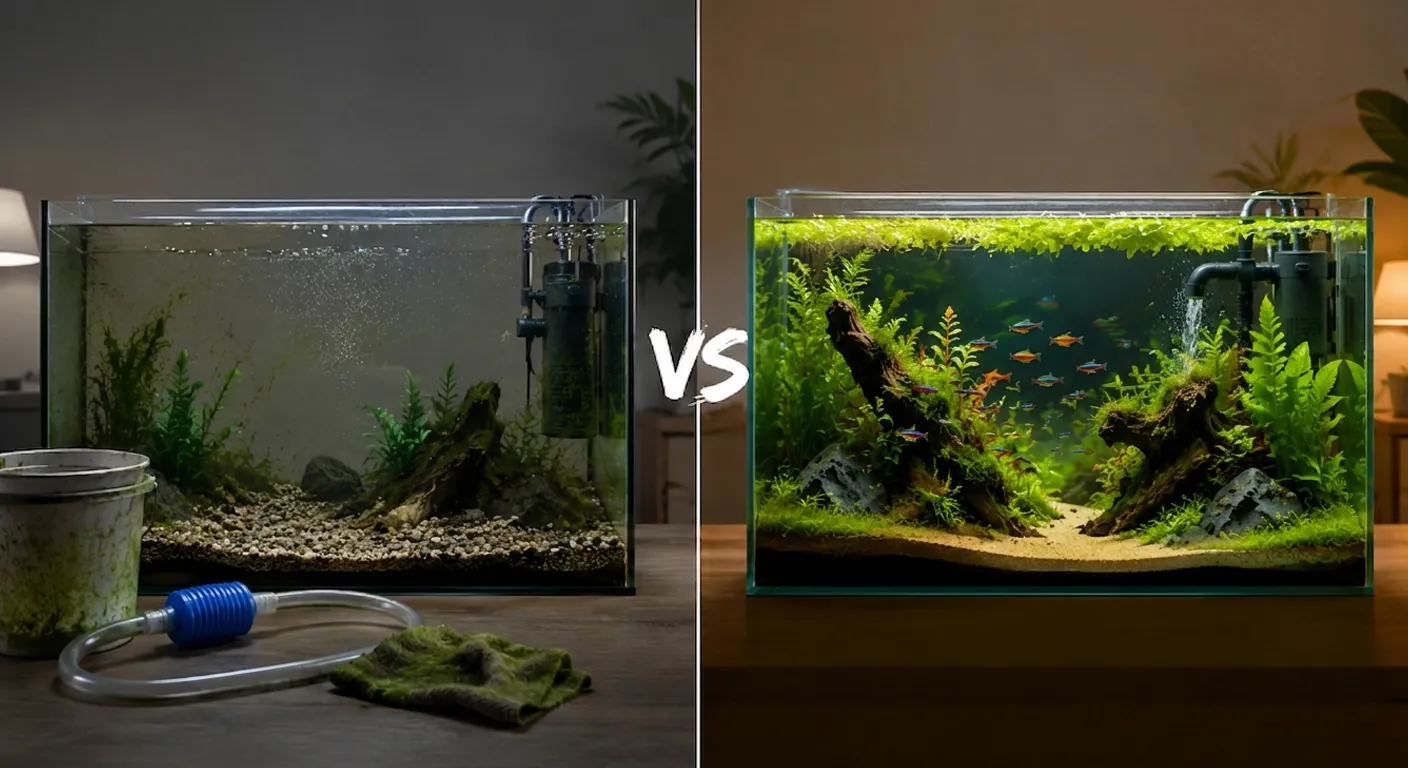
The phrase “self-cleaning aquarium” gets searched thousands of times every month, and the reasons are easy to understand. People want fish in their homes but dread the idea of scrubbing glass every weekend, hauling buckets, or dedicating an entire afternoon to a water change. Minimalist interior trends have also pushed demand for tanks that look effortless. Add to that a growing number of first-time fish owners who assume aquarium keeping is too technical, and the market for low-effort tank solutions has never been larger.
This guide covers what self-cleaning aquariums genuinely are, the main types available, how to choose the right one based on your living situation, how to set one up properly, and what a realistic maintenance routine looks like once the tank is established.
Before going further, one thing must be clear. Self-cleaning means lower maintenance, not zero maintenance. Any product that tells you otherwise is not being honest about fish biology. The goal here is a tank that practically runs itself on most days, with fish that actually thrive.
Table of Content
ToggleWhat Is a Self-Cleaning Aquarium
A self-cleaning aquarium is a tank designed so that its biology and physical layout handle most of the daily waste processing without manual effort. Live plants absorb ammonia and nitrates directly from the water. Beneficial bacteria colonies break down fish waste before it builds up visibly. Water movement is arranged so that debris collects in specific spots rather than spreading across the entire substrate.
Compare that to a basic low-maintenance tank, which is simply a well-filtered aquarium with a manageable fish load. A self-cleaning setup goes deliberately further by engineering the biological system: a heavier plant mass, a stocking level kept well below the filter’s capacity, and a water flow pattern that works with the tank’s layout. The result is stability. Water chemistry changes slowly. The mess stays small. Tasks stay quick.
Why Zero-Maintenance Fish Tanks Are a Myth
Even in a healthy, heavily planted aquarium, the water does not stay balanced on its own forever. Minerals get depleted as plants consume them. Dissolved solids accumulate steadily. pH and water hardness drift over weeks, particularly in smaller tanks. Fish produce waste continuously, and no biological system captures every bit of it.
Products marketed as “never change water again” solutions are selling a simplified version of aquarium keeping that does not hold up in practice. Keeping fish in unchanged water causes slow nitrate poisoning even when ammonia and nitrite readings look fine. Fish kept in stale, unmaintained water live shorter lives and become more vulnerable to disease.
That said, done correctly, a self-cleaning aquarium can eliminate deep scrubbing sessions, cut active maintenance time to under fifteen minutes per week, and go several weeks between water changes without any visible decline. That version of the promise is entirely real and worth pursuing.
Types of Self-Cleaning Aquariums
Self-cleaning aquariums are not a single product category. They range from carefully designed, planted ecosystems to compact commercial kits built for convenience. Understanding what each type actually does helps avoid buying the wrong setup.
Planted Self-Cleaning Aquarium
A planted ecosystem tank uses live plants as its primary filtration layer. The typical setup includes a nutrient-rich substrate, a moderate fish load, gentle water circulation, and a consistent lighting schedule. Plants such as Java fern, Anubias, Cryptocoryne species, and fast-growing stem plants like Rotala absorb ammonia directly through their roots and leaves, processing waste before the biological filter even needs to act on it. When plant density is proportionate to the fish load, the tank maintains clear water and stable chemistry for extended periods.
This type suits living rooms, apartments, and anyone who enjoys the aesthetic of a natural aquascape. It is the most popular format among serious low-maintenance fishkeepers because the biology genuinely works. It does require some interest in plant care, since plants need occasional trimming and basic fertilization, but that involvement is part of what makes the system function.
Self-Cleaning Fish Tank Kits
Commercial self-cleaning kits come in several forms, including countertop units with built-in drainage systems, all-in-one tanks with oversized filtration chambers, and desktop units marketed toward offices and children’s rooms. What these products actually do is make small water changes faster and less messy. A drain-and-refill mechanism removes the bucket from the process, which is a real practical benefit.
Where these kits consistently fall short is in the size they offer. Most commercial self-cleaning units hold three to ten gallons. Marketing photos typically show them stocked well beyond what that volume can support, creating unstable water conditions that require more frequent intervention, not less.
These kits can work reliably with very light stocking, such as a single betta or a small school of nano fish, paired with an upgraded filter and consistent weekly attention. For anyone who wants a tank that genuinely runs itself most of the time, a standard 20-gallon planted setup will almost always outperform a commercial self-cleaning kit at the same price point.
Choose the Right Self-Cleaning Tank
We’ve made a calculator for your reference:
Tank Stability & Maintenance Predictor
Estimate how stable and low‑maintenance your planted tank will be based on basic setup choices. Not a substitute for testing water parameters.
And here are some more detail:
Best Self-Cleaning Tank for Beginners
Beginners are often drawn to the smallest, most marketed products because those seem the most approachable. In practice, small tanks are chemically less stable, require more frequent water changes, and leave almost no room for error. A ten-gallon tank with four fish will require attention far more often than a 20-gallon tank with the same fish.
A beginner aiming for genuine low maintenance should start with at least 20 gallons. Hardy species like zebra danios, white cloud mountain minnows, and cherry barbs tolerate minor water fluctuations well and pair easily with beginner-friendly plants. The first two to three months will involve more monitoring than active maintenance as the nitrogen cycle establishes itself. That period is normal and necessary. Rushing it by adding too many fish too quickly is the single most common beginner mistake.
Self-Cleaning Aquarium for Apartments
Tank selection for apartments comes down to two practical factors: footprint and noise. Tanks in the 20 to 40-gallon range provide enough water volume for chemical stability while fitting comfortably on a media console or purpose-built aquarium stand. Canister filters and modern hang-on-back filters with adjustable flow run quietly enough to become background noise within days.
Cable management matters more in smaller spaces. Running all equipment cables behind the tank and using cable clips keeps the setup visually clean and reduces the likelihood of accidentally unplugging something important. Placement away from direct sunlight is essential since afternoon sun drives aggressive algae growth that undermines the entire low-maintenance goal. A minimalist aquascape using a single piece of driftwood, a carpet of low-light plants, and a small school of nano fish achieves both the aesthetic and the maintenance goal simultaneously.
Low-Maintenance Tank for Kids and Families
Family aquariums benefit most from simplicity in every component. A filter with an easy-access media basket that takes two minutes to rinse will get maintained regularly. One that requires partial disassembly will not. The tank should sit at a height where children can view the fish clearly without needing to stand on anything.
Avoid tanks under 15 gallons for family setups. Small tanks become foul quickly when feeding is uneven or a water top-off gets skipped for a few days, and frequent emergency cleanings turn the whole experience into a burden. A 20-gallon tank with a reliable filter, a modest fish load, and some live plants is far more forgiving and far kinder to the fish inside it.
Key Features of a Self-Cleaning Aquarium
There are some key points for building a self-cleaning tank.
Tank Size and Stocking Level
More water volume means slower chemical changes, and slower chemical changes are what make a self-cleaning setup actually work. A practical starting point is one inch of adult fish per two gallons, though body shape and waste output matter more than length alone. Deliberate understocking relative to filter capacity is what creates the biological headroom that makes a tank feel self-sustaining.
Substrate and Hardscape Setup
Nutrient-rich planting substrates such as aquasoil work best in planted self-cleaning tanks because they support root growth directly. The substrate should be fine enough to allow gentle siphoning without uprooting plants. Large-grain gravel with deep gaps traps waste underneath and creates stagnant zones over time.
Rocks and driftwood should be positioned so that water flow passes around them rather than pooling behind them. Leaving an open sandy area at the front of the tank makes spot-cleaning fast and keeps the visual line clean.
Easy Aquarium Plants for Self-Cleaning Tanks
Java fern and Anubias: attach directly to hardscape, need no substrate planting, tolerate low light conditions
Cryptocoryne wendtii: a rooted plant that absorbs nutrients from the substrate, very low maintenance once established
Hornwort: fast-growing stem plant, processes ammonia aggressively, excellent for new tanks
Frogbit: a floating plant that shades the surface, absorbs nitrates quickly, and requires no planting at all
Combining at least one rooted plant with one fast-growing floating or stem plant gives the tank two separate nutrient-processing layers and significantly improves stability between water changes.
Filter, Light, and Heater Basics
A filter should move the entire tank volume three to four times per hour, provide adequate biological media surface area, and be serviceable without draining the tank. A hang-on-back or canister filter with a sponge pre-filter meets all three requirements at most price points.
Lighting should run on a timer set to eight to ten hours per day. Guessing at light duration is a reliable way to grow algae. A heater is necessary for tropical species and should be set two to three degrees above the minimum safe temperature for the fish being kept, which provides a buffer against room temperature fluctuations.
How to Set Up a Self-Cleaning Aquarium
Every successful self-cleaning tank starts with decisions made before anything is purchased.
Plan Your Self-Cleaning Tank
Choose the tank type based on your lifestyle. A planted ecosystem suits someone who enjoys the hobby and will spend a few minutes each week tending plants. A simple, low-maintenance setup with minimal planting suits someone who wants stable fish keeping with the least possible involvement. Decide on fish and plant lists before buying the tank, not after, since stocking plans determine equipment requirements, sizing, and substrate choice.
Step-by-Step Setup
Choose tank size and confirm placement location, keeping the spot away from windows and heat sources.
Rinse the substrate thoroughly and add it at a depth of two to three inches.
Place the hardscape before adding water to avoid shifting rocks once the tank is filled.
Plant slow growers like Anubias and Cryptocoryne first, then add a stem plant.
Fill the tank slowly using a plate or bag to diffuse the water flow and protect the substrate layout.
Install the filter, heater, and light. Set the light timer before adding any livestock.
Cycle the tank using a liquid bacteria starter and small ammonia source for three to six weeks before adding fish.
Add fish gradually over four to six weeks, testing ammonia and nitrite weekly throughout the process.
Self-Cleaning Aquarium Maintenance
Here are checklist for weeks and months.
Weekly Low-Maintenance Routine
A well-established self-cleaning tank needs five to ten minutes of attention each week.
Observe fish behavior and appetite for early signs of stress or illness
Remove yellowing or dead plant leaves before they begin decomposing in the water
Wipe the front glass panel with a magnetic algae scraper
Top off water lost to evaporation using dechlorinated tap water at room temperature
Check that the filter is running at normal flow and that the heater light is on
These small weekly habits are what keep the tank looking effortless. Skipping them for two or three weeks in a row is what causes the kind of visible decline that turns into a full afternoon of work.
Monthly Water Change Schedule
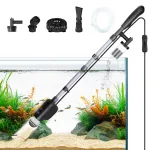
Change 10 to 20 percent tank volume every two to four weeks. Lightly planted tanks or those with a heavier fish load benefit from more frequent changes. Use a siphon to skim lightly over the substrate surface, removing settled waste without disturbing plant roots or digging into the substrate bed.
This process replenishes depleted minerals and removes the slow nitrate accumulation that plants alone cannot fully process. The goal is not to sterilize the tank; it is to keep parameters within a range that the biology can manage between sessions.
Conclusion
A self-cleaning aquarium works if biology is treated seriously. The setups that deliver on the low-maintenance promise are appropriately sized, planted with purpose, and stocked at a level the system can comfortably support. The ones that disappoint are too small, overstocked, and purchased on the assumption that the hardware eliminates the need for involvement.
The central idea across this entire guide is that self-cleaning means the tank does most of the work, not all of it. Realistic expectations combined with good planning produce a tank that is genuinely easy to keep. Preventive habits, a consistent water change schedule, and deliberate plant selection are what separate a tank that practically runs itself from one that becomes a recurring problem.
Live plants are the most underrated tool available to a fishkeeper. Experimenting with aquascaping, even at a basic level, changes the experience of keeping fish entirely. The tank becomes something worth looking at rather than something that needs attention.
FAQ
1. Can I Skip Water Changes?
No. Even in a well-planted, lightly stocked aquarium, nitrates accumulate over time, minerals get depleted, and dissolved solids build up in ways that plants cannot fully process. Skipping water changes does not produce visible problems immediately, which is exactly why it is misleading. The effects show up in fish health over weeks and months, not days.
2. Are Self-Cleaning Tanks Good for Goldfish?
Goldfish produce significantly more waste per body size than most tropical species, which makes them demanding in any setup. A self-cleaning planted tank built around goldfish needs to be large, at a minimum of 40 gallons per fish, with strong filtration and a heavier plant mass than a tropical setup of comparable size would require. It is manageable, but it is not the easiest starting point for someone new to the concept.
Related Products For Your Reference
AQQA 5-in-1 Aquarium Gravel Cleaner Set For Removing...












Add comment
You must be logged in to post a comment.