
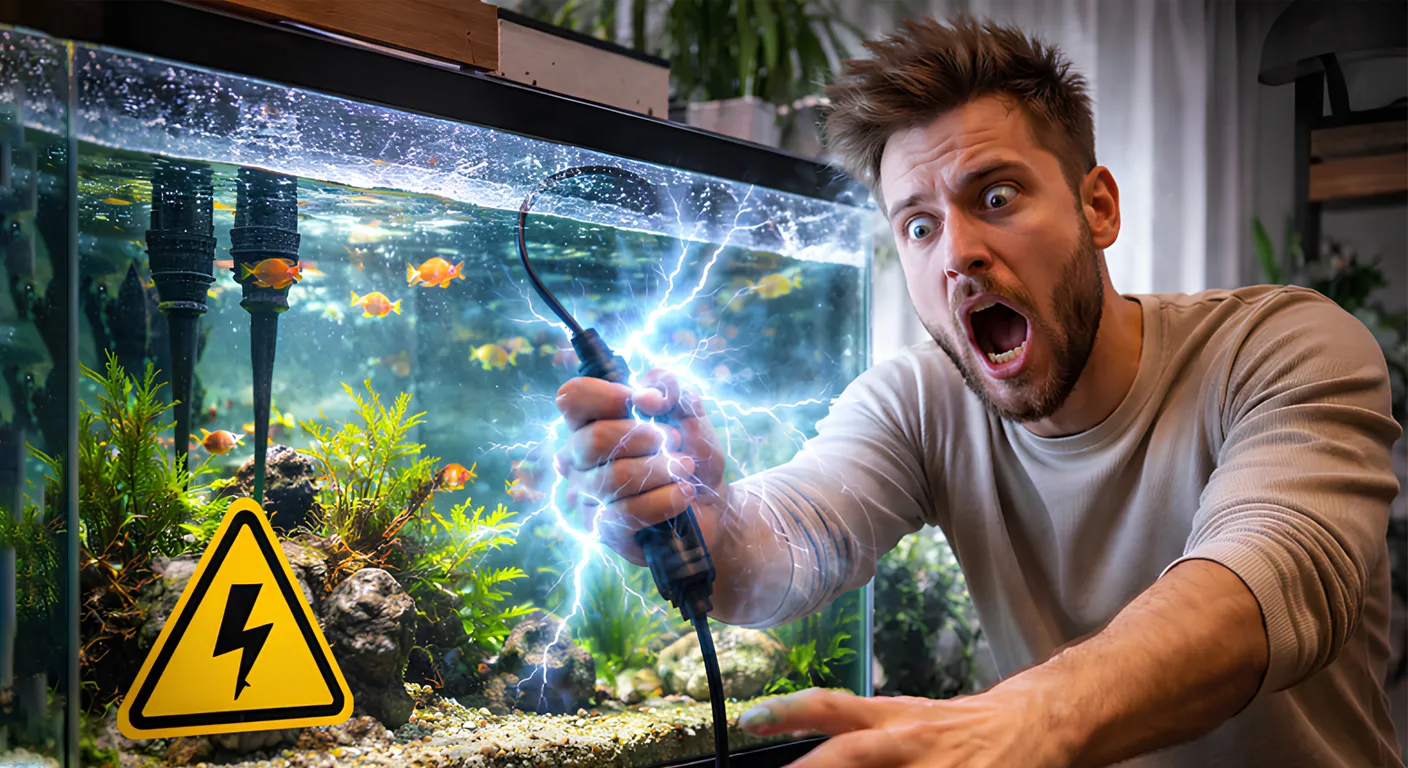
Last Tuesday, I reached into my tank to adjust a plant. The second my hand hit the water, this sharp tingle shot up my arm. Not painful exactly, but definitely not right. I yanked my hand out so fast I splashed water everywhere. Turns out aquarium shocks are way more common than you’d think, and they usually come from a handful of predictable problems like faulty heaters, damaged wiring, or missing safety features. The good news? Most of these issues are totally fixable once you know what you’re looking for.
In this guide, I will explain why aquarium shocks happen in the first place, how to quickly figure out where the electricity is coming from, and what to do immediately to protect yourself. You’ll learn the six most effective, safe, simpl and practical steps to fix.
Table of Content
ToggleWhy Aquariums Shock You
Most shocks come from a few predictable causes. And once you understand what’s happening, the fixes become pretty straightforward.
What Is Stray Voltage
Stray voltage is basically electricity leaking from your equipment into the water. It’s sitting there, waiting. You don’t feel anything until you become the path to ground, which happens the moment your hand touches that water. Your body completes the circuit, and boom, you get zapped.
The water itself isn’t the problem. It’s whatever’s dumping electricity into it.
Cause #1: Faulty Aquarium Heaters (Most Common)
Heaters are the biggest offenders by far. They sit in water all day, every day, dealing with temperature swings and mineral buildup. Eventually, something gives.
Cracks in the glass casing let water seep into the electrical components. Seal failures do the same thing. And when heaters overheat because they’re stuck on, the damage accelerates fast. If you’ve got a saltwater tank, the conductivity is way higher, so even a tiny leak becomes a bigger problem.
Watch for cloudy areas around your heater, scorch marks, or weird buzzing sounds. Those are your early warnings.
Cause #2: Damaged Wiring or Equipment
Frayed cords are sneaky. You don’t always see the damage until you move something and notice the exposed wire. Pinched cables behind your stand, corrosion on metal parts, and cheap adapters that weren’t built for constant moisture. All of it adds up.
Old equipment is especially risky. That filter you’ve been running for six years? The insulation inside might be breaking down even if it looks fine on the outside.
Cause #3: No GFCI Protection
Regular circuit breakers protect against overloads and short circuits. They’re not designed to catch ground faults, which is exactly what’s happening when electricity leaks into your tank. A GFCI (Ground Fault Circuit Interrupter) detects even tiny imbalances in electrical current and cuts power in milliseconds. Without one, you’re basically unprotected.
Quick Diagnosis Table
| Cause | Likelihood | Quick Test | Fix Priority |
| Faulty Heater | High (most common cause) | Unplug the heater, check for cracks, discoloration, or cloudiness. Look for scorch marks or damaged seals. | Immediate – replace right away |
| Worn Wiring | Medium | Inspect all cords for frays, exposed wire, or pinched cables. Check connections for corrosion or loose plugs. | High – replace any damaged cords before next use |
| Grounding Fault | Medium | Test outlet with GFCI tester. Use a voltage pen in water to detect stray current. Check if the GFCI is installed and working. | Immediate – install GFCI protection today |
What To Do Immediately After Getting Shocked
Shock just happened? Follow these steps to stay safe and find the fault fast.
1. First, cut power at the strip or breaker immediately. Don’t mess around trying to figure out which device it is while everything’s still live. Just kill the power.
2. Dry completely before touching anything. Wet hands make you an even better conductor, and you don’t want a second shock while you’re investigating.
3. Check your symptoms. Most aquarium shocks are mild, but if you’re feeling chest pain, irregular heartbeat, or severe burns, get medical help right away. Electricity does weird things to your body.
4. Do not test with your hand again. I know it’s tempting to see if the problem’s still there. Don’t. Use a voltage tester or multimeter instead.
5. Isolate devices one by one safely. With power still off, unplug everything from your tank. Then plug devices back in individually, testing the water with a voltage pen between each one. When you find the culprit, it stays unplugged.
6 Essential Safety Fixes
These are the core fixes ranked by impact. Get these right, and you basically eliminate the risk of getting shocked again.
1. Install GFCI Protection
First line of defense. This thing trips in milliseconds when it detects a leak, and it genuinely saves lives.
Here’s how it works: the GFCI constantly monitors the current flowing out to your equipment and the current coming back. If there’s even a 5 milliamp difference (that’s tiny), it assumes electricity is leaking somewhere and cuts power instantly. Way faster than you can react.
You’ve got two options. GFCI outlets replace your existing wall outlet and protect everything plugged into it. GFCI adapters plug into a regular outlet and give you GFCI protection for whatever you plug into them. Either works. Outlets are cleaner looking but require some wiring knowledge. Adapters are plug-and-play.
Test monthly. There’s a test button right on the device. Press it, and the power should cut immediately. If it doesn’t, replace the GFCI.
2. Use Reliable Heaters and Temperature Controllers
Ditch fragile glass. Seriously. Titanium heaters cost a bit more upfront, but they don’t crack, they don’t shatter, and they last way longer.
Glass heaters are basically an accident waiting to happen. Drop something in your tank, bump it during maintenance, let mineral buildup get too thick, and cause a hot spot. All of it can lead to cracks. Titanium doesn’t have that problem.
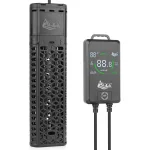
Temperature controllers are the other half of this fix. They sit between your heater and the outlet, constantly monitoring water temperature. If your heater gets stuck on (which happens more than you’d think), the controller cuts power before things overheat. That overheating is exactly when heaters fail and start leaking current.
It’s redundancy, and redundancy keeps you safe.
3. Create Drip Loops and Dry Zones
Water seeks the path of least resistance. If your cords run straight from your tank to the outlet, guess what the easiest path is? Right down the cord and into the socket.
Drip loops fix this with gravity. Let your cord hang down below the outlet level before going back up to plug in. Any water dripping down the cord hits the low point and falls off instead of traveling into the outlet. Simple physics is doing the work for you.
Keep your power strip off the floor and away from the tank. Mount it to the wall or the back of your stand. If you ever have a spill or your tank springs a leak, you want that strip staying dry.
4. Use a Dedicated Aquarium Power Strip
One strip to rule them all. Get a quality surge-protecting power strip and use it only for your aquarium gear. Nothing else.
Surge protection matters because power spikes can damage equipment, and damaged equipment leaks current. Label each plug so you know what’s what. When something acts up, you can identify and isolate it fast.
Don’t overload the strip. Check the amp rating and add up what you’re running. Stay well under the limit. Overloaded strips heat up, connections loosen, and that’s when bad things happen.
5. Inspect and Test Gear Monthly
Prevention beats fixing problems after they happen. Set a reminder, and actually do this.
Check cords for frays, especially where they bend the most. Look at heaters for any cracks or cloudiness. Listen to pumps for weird humming or rattling. Those are all early warning signs.
Here’s the multimeter test. Set it to resistance mode. Put one probe in the water and one on the ground pin of an unplugged device. The reading should be infinite or close to it. If you get a low reading, that device is leaking and needs to go.
Replace anything three years or older. Even if it looks fine. Insulation breaks down, seals deteriorate, and you can’t always see it. Better to replace proactively than get shocked reactively.
Watch your fish. If they’re suddenly gasping near the surface, hiding way more than usual, or avoiding certain areas of the tank, you might have voltage issues they can feel before you do.
6. Ground Your Tank Properly
Grounding equalizes electrical potential and stops stray currents from finding you as their path to ground.
Install a copper grounding probe in your tank. It’s literally just a piece of copper that sits in the water, wired to your power strip’s ground. If there’s any stray voltage, it gets conducted safely to ground instead of through you.
Sump systems need extra attention. You’ve got multiple metal parts, pumps in different chambers, water flowing between sections. Wire all the metal components together (equipotential bonding) so they’re at the same electrical potential. Otherwise you can get currents flowing between them.
Test with a voltage checker pen. They’re like ten bucks. Stick it in the water. If it lights up, you’ve got stray voltage. Track down the source and fix it.
Reef tanks especially need this. Sumps, protein skimmers, reactors. All that extra equipment multiplies the risk if you don’t bond everything properly.
Signs Your Fish Feel Electricity Before You Do
Your fish are way more sensitive to voltage than you are. They’re swimming in it all day. Watch for fish avoiding certain areas of the tank for no obvious reason. Sudden darting movements or stress behaviors when they were fine yesterday. Hiding near the substrate constantly, like they’re trying to get away from something. Any unexplained behavior change is worth investigating.
They won’t necessarily die before you get shocked. That’s a myth. But they’ll definitely act weird.
Advanced Safety Upgrades
Smart power monitors can track energy usage for each device and alert you to abnormal draws that might signal a failing component. Leak detectors around your tank and stand give you early warning before a spill becomes a crisis. AFCI and GFCI combo protection catches both arc faults and ground faults. Battery backup systems make sure your equipment restarts safely after a power outage instead of everything kicking on at once and potentially causing issues.
None of this is required, but it’s all good insurance.
Common Myths Busted
Don’t fall for these. Bad advice can actually hurt you.
Myth 1: “Low wattage gear can’t shock you.” Completely false. It’s not about wattage, it’s about current. Even a small leak can be dangerous if it finds the right path. Any AC current leaking into water is a risk.
Myth 2: “Fish die first so they’re an early warning.” Nope. Fish actually tolerate higher voltages than humans in some cases because of their body structure and how current flows through water. You can get a serious shock while your fish seems fine.
Myth 3: “Dry hands make you safe.” Water finds a way. You’re standing on a wet floor. Your other hand touches the metal stand. There’s always a path. Dry hands help, but they’re not protection.
Myth 4: “Circuit breakers protect you from shocks.” They don’t. Standard breakers only trip on overloads or dead shorts. Ground faults slip right past them. That’s literally why GFCIs exist.
Conclusion
Aquarium electrical shocks usually come down to a few common culprits: faulty heaters, damaged wiring, and missing safety features like GFCIs. Understanding these risks and taking some straightforward steps can massively reduce the danger. Safety isn’t about one perfect upgrade.
It’s about combining good habits with reliable equipment. Inspecting gear regularly, using proper protection, and not cutting corners. Small steps now prevent serious problems later. Take ten minutes this week to check your setup and fix anything sketchy. In the future, you will appreciate it.
Related Reading
Related Products For Your Reference






Add comment
You must be logged in to post a comment.