
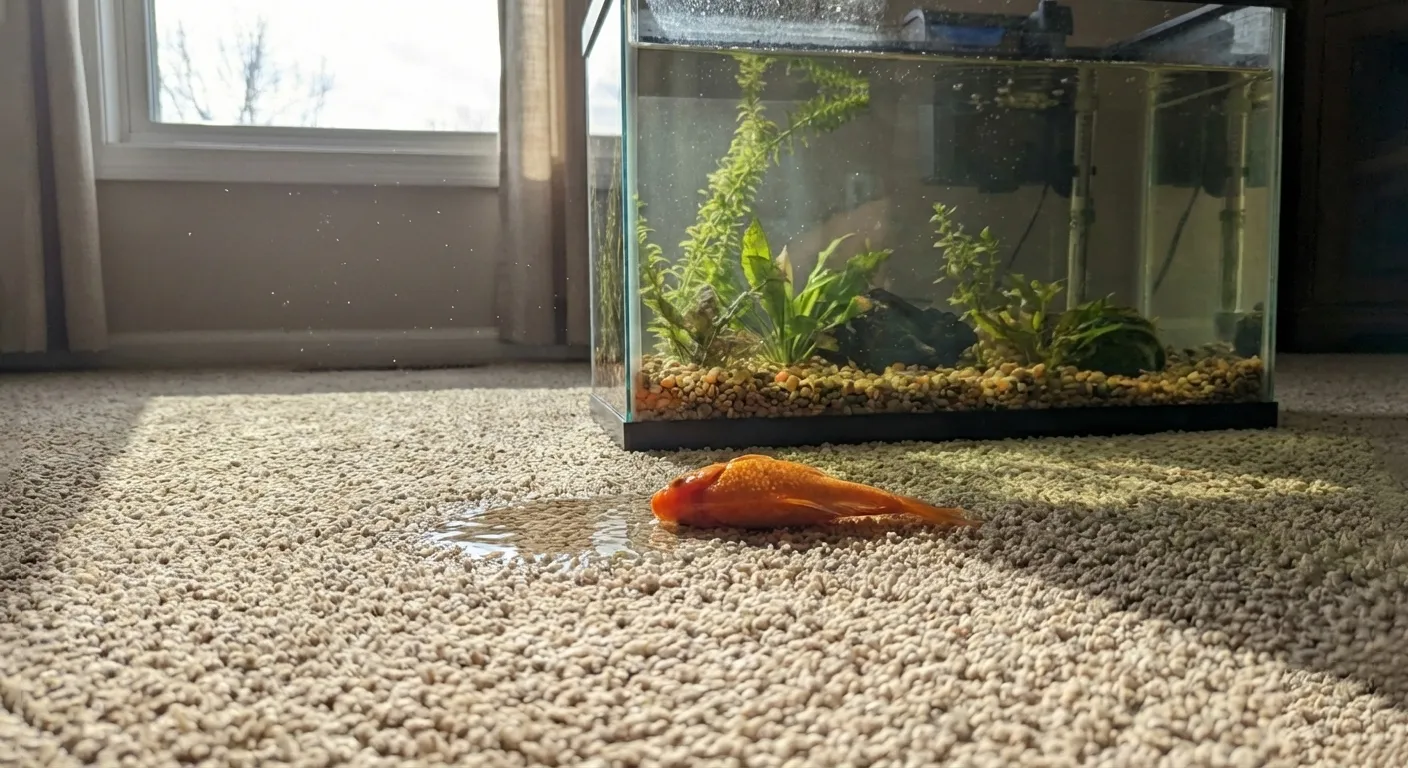
I’ll never forget the morning I walked into my living room and found my goldfish, Bubbles, flopped on the carpet next to the tank – total panic mode. I scooped him up with shaking hands, convinced I’d just killed my fish through sheer negligence. Turns out, I’d learned the hard way that those survival myths you hear online? Yeah, they’re mostly garbage.
Most aquarium fish suffocate in about 2 to 10 minutes once they’re out of water because their gills literally collapse without that constant flow. Goldfish might push it to an hour or three if you keep them wet, but that’s still not great odds. And here’s the weird part: fish can go days, even weeks, without food, but oxygen? There’s no backup plan for that.
So let’s dig into what actually happens when fish leave the water, bust some myths, and figure out what to do if you ever find yourself in the same boat I was.
4 Dangerous Myths About Fish Out of Water
Social media doesn’t help. You see videos of people “testing” how long their fish can survive on a countertop, or stories about goldfish supposedly living for hours after jumping out of a pond. Real fish owners have lost pets because they believed these myths and delayed getting their fish back in the water. Look, I get it. We want to think our fish are tougher than they are. But prevention beats hoping for the best every single time.
“Wet fish can breathe air just fine.”:
This one kills me because it sounds almost logical. But gills need constant water flow over those delicate, capillary-rich filaments to grab oxygen. Moisture alone doesn’t stop them from collapsing. Only rare exceptions like mudskippers can actually manage air, and they’ve got specialized adaptations most tank fish don’t have. Believing this myth means owners delay rescue, thinking their fish is fine as long as it’s damp. Spoiler: it’s not fine.

“Goldfish last hours on the floor”:
Goldfish are hardy, sure. But hours? That’s pushing it. In ideal conditions, kept moist and cool, maybe they hit two or three hours. Most of the time? You’re looking at 10 to 20 minutes before serious, permanent damage sets in. The internet loves to exaggerate goldfish toughness, but their gills still need water. They’re not magic.
“Bigger fish always survive longer”:
Size helps with some things, like fasting. Bigger fish have more fat reserves. But out of water? Body size doesn’t really matter when your entire respiratory system is designed for an aquatic environment. A huge koi and a tiny guppy both suffer gill collapse at roughly the same rate. It’s about the adaptation, not the scale.
“Fasting tolerance equals out-of-water endurance”:
This myth frustrates me the most. Yeah, fish can go 3 to 10 days without food, depending on species and size. Some pond fish can handle weeks. But that’s because they’re using stored energy. Oxygen deprivation is completely different. There’s no stored oxygen reserve. No backup breathing method. Your fish can be well-fed and healthy and still die in minutes without water. The two things aren’t even remotely comparable.
10 Things to Know About Fish Out of Water
Okay, let’s get into the facts. Some of this might surprise you, some of it might confirm what you already suspected. Either way, it’s worth knowing.
1. Gills Fail Fast Outside Water
Gills are amazing when they’re doing what they’re meant to do, which is pulling dissolved oxygen out of water as it flows over thin, feathery filaments packed with capillaries. In the air, though? They collapse within 2 to 5 minutes for your average tank fish.
Unlike lungs, gills have zero adaptation for grabbing atmospheric oxygen. The second they hit air, those filaments stick together and start drying out, which means immediate suffocation.
Water’s surface tension actually helps keep oxygen accessible to gill tissue. Air doesn’t have that, so carbon dioxide builds up quickly, leading to acidosis and even more problems.
Temperature matters too. Warmer air dries out gill tissue faster, so a tropical fish on a hot day is in worse shape than a goldfish on a cool morning.
Even if you get the fish back in water quickly, dried-out gills can suffer permanent scarring, which affects oxygen uptake for the rest of its life.
2. No Food vs No Water: Key Differences
Here’s where people get confused. Fish are actually pretty tough when it comes to fasting. Small fish can handle 3 to 5 days, no problem. Larger, healthier fish? We’re talking 7 to 10 days, sometimes more. Koi and other pond fish have been known to go a couple of weeks during winter when their metabolism slows down.
But oxygen? There’s no wiggle room. Gills need water constantly. There’s no metabolic slowdown that helps with air exposure. No fat reserves to tap into. It’s just a countdown to suffocation, and it’s a short countdown. Fasting is about energy. Air exposure is about respiratory failure. Completely different systems, completely different timelines.
3. Typical Survival Times by Habitat
Not all fish are created equal when it comes to air exposure. Where they evolved makes a huge difference.
| Habitat/Type | Example | Max Time Out | Key Factor |
| Freshwater Aquarium | Tetras, guppies | 2 to 5 minutes | Delicate gills, high oxygen needs |
| Coldwater | Goldfish, koi | 10 minutes to 3 hours | Slower metabolism, hardier gills |
| Amphibious | Mudskippers, walking catfish | Hours to days | Skin respiration, modified gills |
| Extreme | Lungfish | Months to years | Actual lungs can aestivate in mud |
Most of us have freshwater aquarium fish, which means you’ve got minutes, not hours. Don’t gamble on it.
4. Factors That Shorten or Extend Time
Okay, so what actually affects how long a fish can last? The temperature is huge. Cold slows everything down, including how fast gills dry out. A goldfish in a cool room has a better shot than one on a sunny windowsill.
Moisture helps, but only to a point. A wet fish might get a few extra minutes because the gill tissue isn’t drying as fast. But moisture alone doesn’t fix the fundamental problem, which is that gills can’t extract oxygen from air.
Fish health and age matter too. A young, healthy fish with robust gills will outlast an older fish or one that’s already sick. Stress level going into the incident plays a role as well. A calm fish uses less oxygen than a thrashing, panicked one.
5. Goldfish Myths Busted
Let’s talk about goldfish specifically because they get the worst misinformation. Yes, goldfish are tougher than most aquarium fish. No, they’re not invincible.
That story about goldfish surviving hours on the floor? Usually, the conditions were perfect (cold, wet, minimal stress). Most goldfish will suffer brain damage from oxygen deprivation within 10 to 20 minutes. Some might physically survive longer, but the damage is done.
People also think goldfish bounce back from anything. They’re resilient, sure, but repeated stress from jumping out, getting caught by kids, or being “tested” for toughness shortens their lifespan and quality of life. Just because they survive doesn’t mean they’re okay.
6. Special Adaptations in Rare Fish
Now, some fish actually can handle air, and they’re fascinating. Mudskippers spend most of their time out of water, using their skin and modified gill chambers to breathe. Walking catfish can cross land to find new ponds. Lungfish have actual lungs and can burrow into mud, entering a state called aestivation, where they basically hibernate until water returns. We’re talking months, even years.
Bettas and gouramis have a labyrinth organ that lets them gulp air from the surface, which is handy in low-oxygen water, but doesn’t mean they can live on a countertop. They still need water for their gills to work properly.
7. Signs Your Fish Suffered Air Exposure
If you find your fish out of water and manage to get it back in the tank, watch for these warning signs. Rapid or labored gill movement means it’s struggling to get enough oxygen. Listing to one side or losing balance suggests brain or organ damage from oxygen deprivation.
Clamped fins, hiding more than usual, or refusing food are all stress responses. Red or inflamed gills mean tissue damage. Some fish seem fine at first, but decline over the next few days as secondary infections or organ failure set in.
8. Emergency Response Protocol
Okay, you find your fish on the floor. What do you actually do?
First, pick it up gently with wet hands. Don’t squeeze. Get it back in the tank immediately, but if the water parameters are off (wrong temperature, high ammonia), use a clean container with conditioned water instead.
Don’t put the fish directly under a filter outflow or air stone. Gentle water movement is fine, but too much can stress it further. Watch for gill movement and responsiveness over the next few hours.
Avoid adding medications right away unless you see clear signs of infection. Stress is the main issue at first, and more chemicals just add to that stress. Keep the tank calm, dim the lights, and give the fish time to recover.
9. Fasting Safely in Ponds and Tanks
Since we’ve talked so much about fasting versus air exposure, here’s what’s actually safe when you’re going on vacation or trying to manage feeding schedules.
| Setup | Small Fish | Large Fish | Max Safe |
| Pond | 5 to 7 days | 10 to 14 days | Up to 3 weeks in winter |
| Tropical | 3 to 5 days | 7 to 10 days | Don’t push beyond 2 weeks |
| Coldwater | 7 to 10 days | 14 to 21 days | Temperature dependent |
Healthy adult fish handle fasting way better than we think. Overfeeding causes more problems than underfeeding in most home tanks.
10. Recovery After Fasting or Flopping
Whether your fish just survived a jump or you’re bringing it back from a fasting period, ease back into normal routines. After air exposure, wait at least 24 hours before feeding. The fish needs to stabilize first, and food just creates waste that stresses an already compromised system.
After fasting, start with small amounts. Don’t try to make up for lost meals all at once. The digestive system needs time to ramp back up. Watch behavior closely. If the fish is active and interested in food, that’s a good sign. Lethargy or continued hiding means something’s still wrong.
Conclusion
So here’s what we covered: gills collapse in 2 to 10 minutes without water, fasting is a totally different thing that fish handle surprisingly well, and most of those tough goldfish stories are either exaggerated or involve near-perfect conditions. If your fish jumps out, every second counts. Get it back in water immediately, watch for signs of distress, and don’t assume it’s fine just because it’s swimming.
Prevention is everything, so check your tank covers monthly, understand your fish’s jumping tendencies, and don’t mess with feeding schedules just because you heard fish can go weeks without food. Recovery takes time and careful monitoring. And please, for the love of all things aquatic, stop believing those myths about wet fish breathing air or size determining survival time.
Join some Reddit aquarium communities, maybe try growing some plants to improve water quality, and give your fish a better environment. The more you know, the better you can keep your fish actually happy and healthy, not just barely surviving.
3.7 Gal Aquarium Kit: Filter, 10-Color Light, Self-Cleaning,...
Original price was: $81.99.$77.39Current price is: $77.39.

Add comment
You must be logged in to post a comment.