

When I got my first aquarium filter, I was so pumped to get everything running. Brand new filter, fresh out of the box – I thought I was all set. But after just a couple days, this annoying humming sound started up and kept getting worse. As someone totally new to fishkeeping, I freaked out thinking I’d already broken something or messed up the setup somehow.
Turns out noisy filters are super common. Pretty much every aquarium owner deals with this at some point. What you should know is that this annoying noise isn’t just bothering you. Your fish also gets affected by it. It gets stressed, and this messes with how they normally behave. So if you catch them acting weird, it’s not their fault. But don’t feel overwhelmed yet, with some good steps that we’re about to discuss will help you fix this easily.
In this guide, we’ll walk you through what usually causes filters to get noisy, how different filter types act up, and most importantly, 7 steps that actually work to get your tank quiet again. Read on to explore more.
What Are Common Causes of a Noisy Aquarium Filter
Filter noise doesn’t just happen for no reason – there’s always something causing it. Once you figure out what’s going on, fixing it becomes way easier. Here’s what usually makes filters start acting up:
Vibration from the filter motor or impeller: This happens all the time as your filter gets older. Parts start wiggling around inside and bang against the housing, which creates that annoying humming or rattling. And if your filter’s touching the glass or sitting on your stand weirdly, it makes the whole thing even louder.
Water splashing: When your tank water gets too low, the filter outlet basically starts making this constant splashing noise. Super irritating, plus fish that like things calm and quiet really don’t appreciate it.
Debris or obstructions inside the filter: You’d be surprised what ends up in there – leftover food bits, algae chunks, sometimes even tiny snails find their way around the impeller or into the intake tube. When that happens, you get this grinding or rattling sound, and your filter stops working as well too.
Old or defective filter parts: After a while, impellers, shafts, and those little rubber seals just get old and beat up. When they crack or get loose, you start hearing all kinds of weird squeaky or buzzing noises.
Improper installation or mounting: Even brand-new filters can be loud if you don’t install them properly. If it’s pressed against the glass or sitting crooked, those vibrations get way worse than they should be.
Different Types of Filters and Noise
Not all filters make the same sounds. Each design has its own quirks:
| Filter Type | Typical Noise |
| Submersible Filter | Low humming or buzzing from the motor; occasional rattling if debris is stuck. |
| Hang-on-Back (HOB) | Waterfall-like splashing if the water level is low; vibrations from the casing. |
| External Canister Filter | Gentle hum from the motor; gurgling or sloshing sounds if air is trapped. |
Step-to-step to Fix a Noisy Aquarium Filter
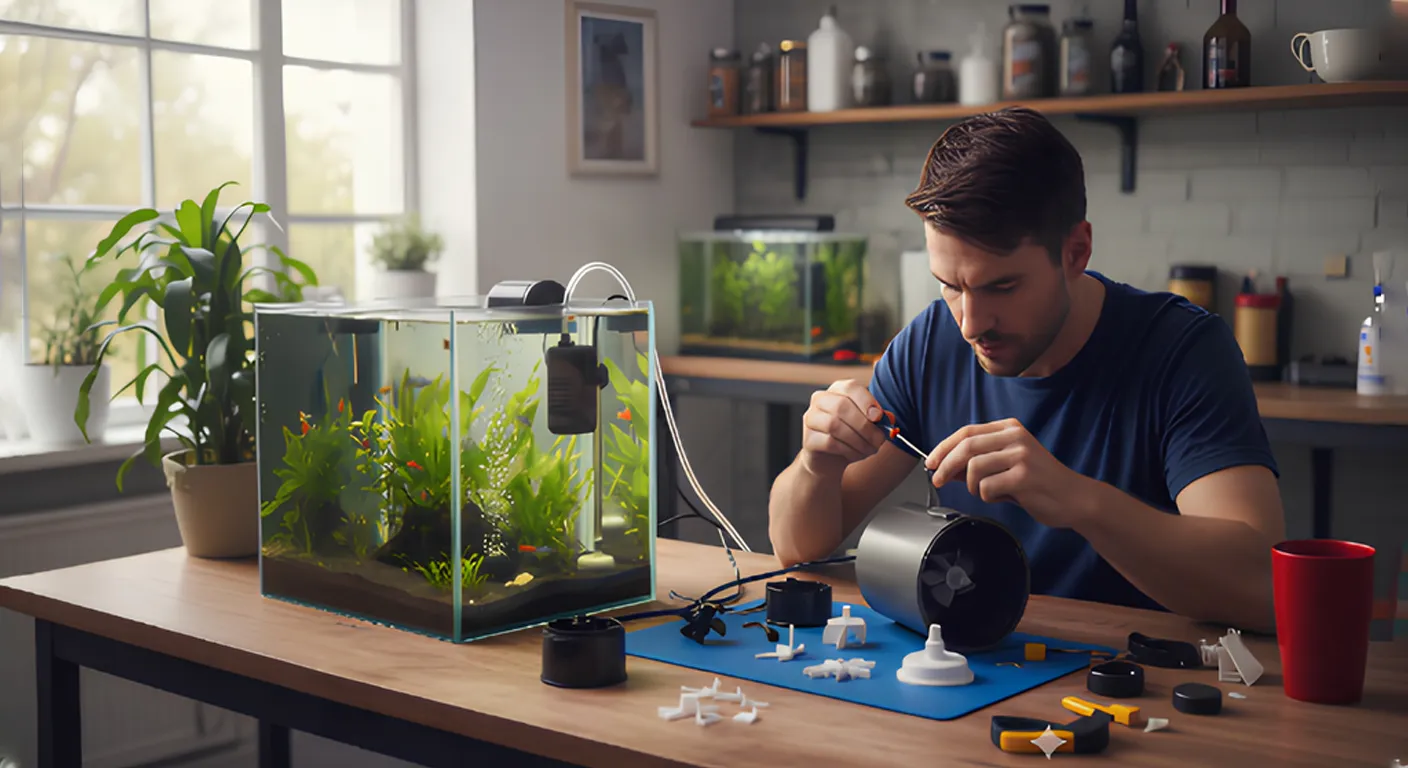
Here’s the thing: a noisy filter doesn’t always mean it’s broken. Most of the time, some basic troubleshooting and regular maintenance will get things back to normal. Let me walk you through how to figure this out step by step:
1. Identify the type of noise
Start with the easy fixes. Is your water level low? Top it off and see if that stops the splashing. Look for air bubbles trapped in the filter or tubes, especially after you do water changes. Sometimes I just tilt the filter a little, and those bubbles come right out.
2. Check the obvious stuff first
Don’t overcomplicate this – start with the easy fixes. Is your water level low? Top it off and see if that stops the splashing. Look for air bubbles trapped in the filter or tubes, especially after you do water changes. Sometimes I just tilt the filter a little, and those bubbles come right out.
3. Open it up and clean everything
Unplug it and take a look inside. Check around the impeller for dirt, algae, or little snails that got stuck. When you clean the fliter, use tank water instead of tap water – you don’t want to kill your good bacteria. Most of the time, just clearing out the gunk fixes the vibration problem.
4. Look for broken parts
If cleaning didn’t work, check if the impeller, shaft, or seals are cracked or loose. Replacement parts are cheap and way better than buying a whole new filter. But if multiple things are falling apart, just get a new one.
5. Stop the vibrations from traveling
Even a good filter can sound loud if the vibrations are going through your tank or stand. I put foam pads or rubber mats under mine – even a towel works. Keep it from touching glass or wood directly, and make sure nothing’s rattling.
6. Mess with the water flow
Sometimes the flow’s just too strong and makes noise. Try putting the outlet a bit under the water surface. For hang-on-back filters, spray bars help spread the water out so it’s not like a waterfall.
7. Think about long-term fixes
If nothing else worked, you might need new parts or a whole new filter. If your tank’s in your bedroom or somewhere you need it quiet, getting a silent-running filter is honestly worth the extra money. Just figure out if it’s cheaper to fix or replace.
Additional Tips
Your filter isn’t the only thing that can get loud. Here’s what else might be bugging you:
Air pumps and bubblers – These things rattle and hum like crazy, especially when you put them right on hard surfaces. I learned that the hard way.
Your aquarium stand needs padding – Adding some liners or foam padding under your tank really cuts down on vibrations traveling through everything.
Time your maintenance better – Do your filter cleaning and stuff during the day when noise doesn’t matter as much. Nobody wants to deal with a loud filter at night when you’re trying to relax.
Conclusion
When your filter starts making noise, it’s scary at first, we know. But instead of being overwhelmed by it and guessing things, you can actually fix it with the right approach. It doesn’t matter what you’re dealing with, it can be its vibrations, splashing, or just old parts wearing out, this all can be fixed.
Those 7 steps I covered will handle pretty much any noise problem you run into. Start with the easy stuff and work your way up to bigger fixes if you need to. Your fish will be way less stressed, and you’ll actually be able to enjoy your tank instead of getting annoyed by it.
Every single person who keeps fish has dealt with noisy equipment – it’s just part of the hobby. If you figure out some trick that works great, definitely share it with other people. There’s always some beginner out there losing sleep over the exact same problem you just solved.
FAQ
1. How often should I clean or maintain my aquarium filter?
It depends on how big your tank is and how many fish you’ve got. Just remember to rinse everything in old tank water, not straight from the tap – you don’t want to kill all your good bacteria.
2. What are the signs that a noisy filter needs to be repaired?
If you see cracks in the impeller, it keeps grinding even after you clean it, or water’s leaking around the housing, then yeah – time for repairs or just getting a new one.
3. I got an external filter and a submersible filter, why is the external one louder?
External canister filters are just bigger and move way more water, so they’re naturally going to make more noise. Plus, they trap air sometimes, which makes that annoying gurgling sound until everything gets primed properly.
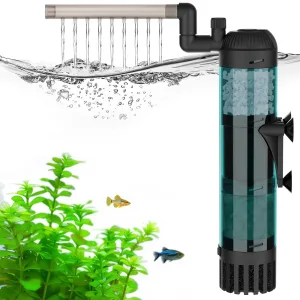
Aquarium Filter, 800L/H, for 70 Gallon Tanks (9W)
Original price was: $17.99.$17.09Current price is: $17.09.
Aquariums Power Filter, 74GPH, for 5-10 Gal Tanks
Original price was: $25.99.$20.79Current price is: $20.79.





Add comment
You must be logged in to post a comment.