
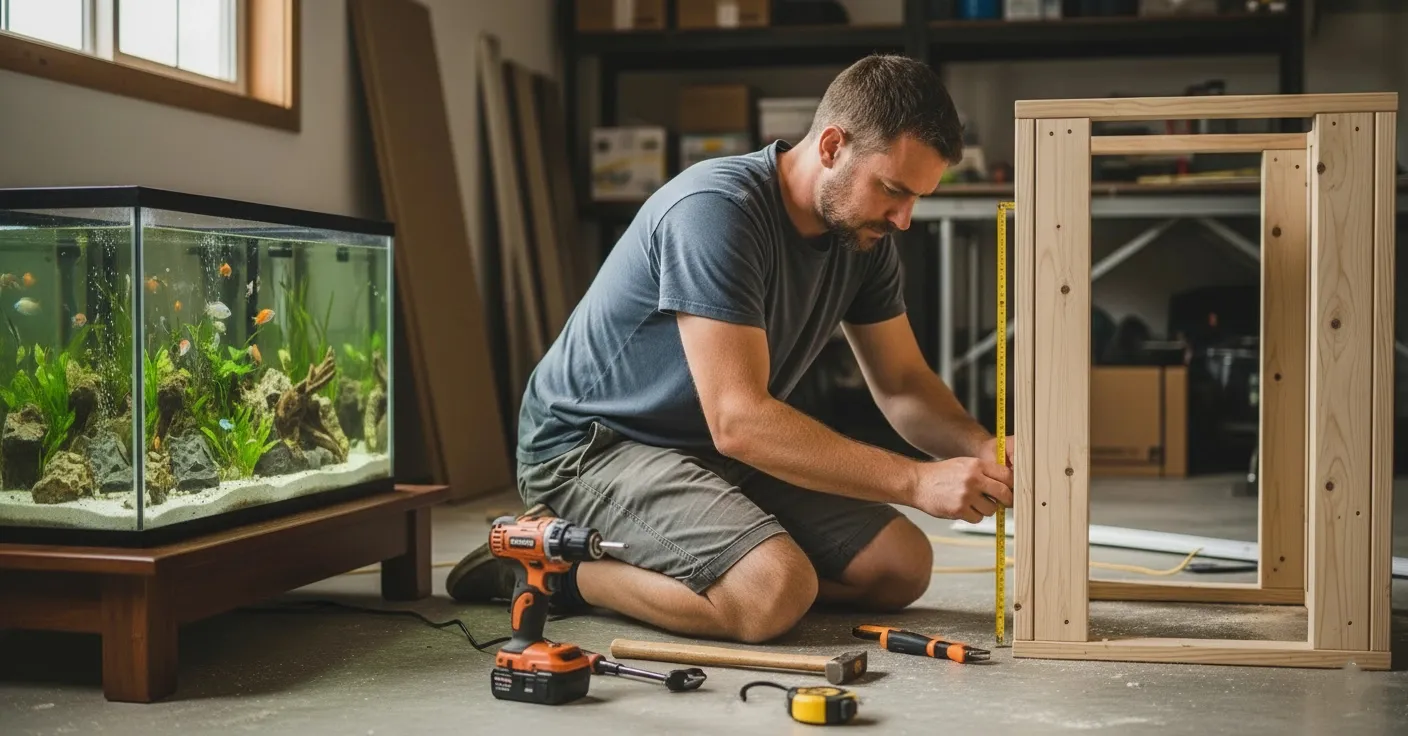
In the initial days, most amateurs purchase a ready-made aquarium stand as it is less demanding. Customizing or building their own stands to have a greater degree of control. However, it is often enjoyed by experienced hobbyists. Building your own stand will enable you to ensure that you match the home decor. This includes storage or creating a structure that will fit your tank perfectly. DIY aquarium stands are a good choice for those who enjoy personal projects.
In this blog, we are going to discuss four primary approaches to customizing and DIY aquarium stands, which are:
Updating an old stand
Creating a new custom structure
Repurposing furniture
Creative painting and styling
Both methods are flexible and depend on your abilities, budget, and personal style. Continue reading, and we will also discuss important things such as the selection of the appropriate materials, the weight of the aquarium, and maintenance in the long run. Under the proper direction, your stand in the aquarium will be useful and good-looking.
Aquarium Stand Plans for DIY or Customization
When one is planning to undertake any project, they should first consider a number of factors that directly influence the performance of your project. Aquarium stands are not ordinary furniture. They should be able to carry hundreds of pounds of water, glass, and gear safely.
Key factors to consider include:
Aquarium size: Bigger tanks are based on stronger frames, and smaller tanks have flexibility.
Weight: Water provides the body with a lot of pressure, and therefore, this is a critical area that should be calculated in weight before picking the materials.
Preference of style: You will choose whether to have a rustic, modern, or minimalistic appearance.
Budget: It depends on how much you spend on sticking on paint or wood, creating furniture, or using old furniture.
Another consideration that you should make is whether to refinish an old stand, construct a new stand, or use old furniture to meet your needs. Sustainable woods, recycled metal, or greener finishes are a great option for environmentally conscious aquarists. Considering sustainability during the planning phase will make your project responsible and sustainable.
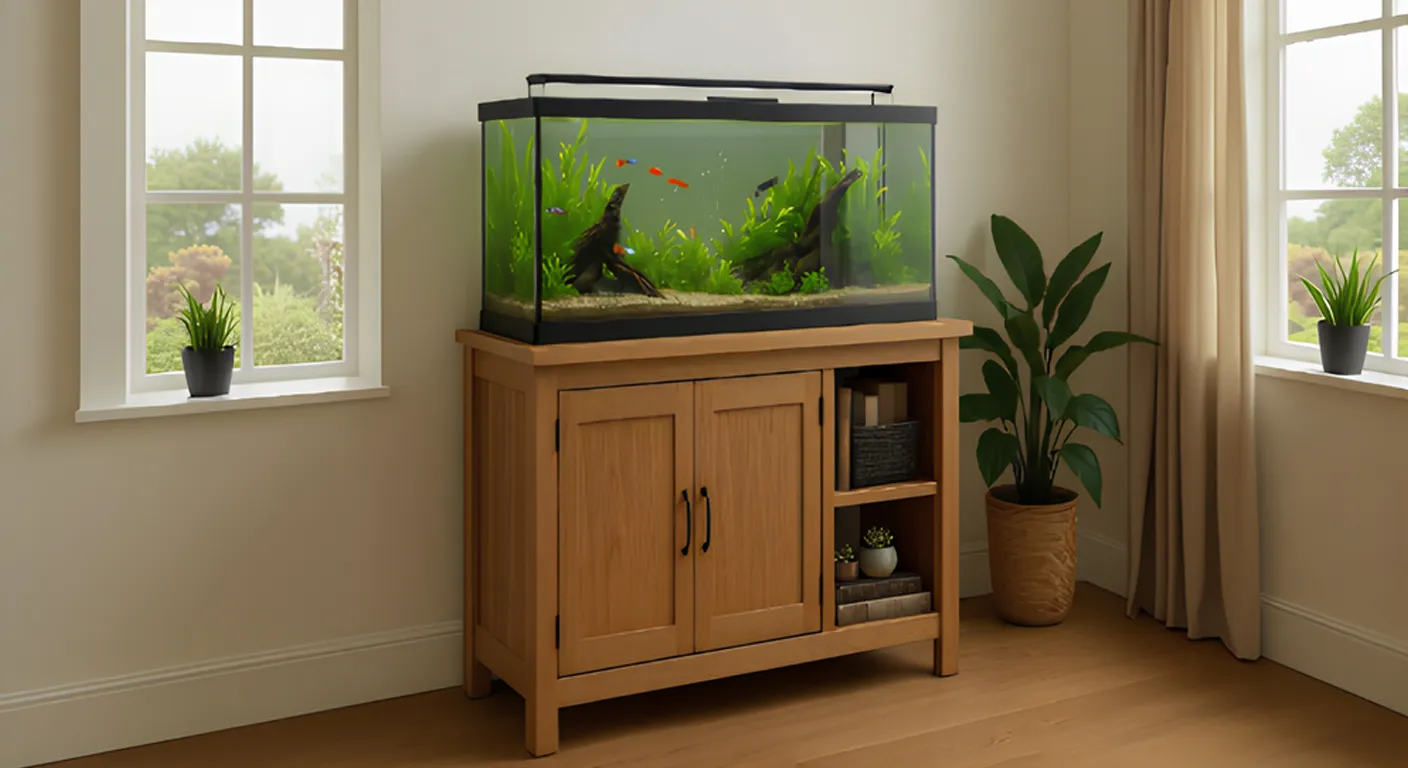
Essential Tool Kits for Customizing and DIY Aquarium Stands
After choosing a style and the materials used in a project, it is imperative to assemble appropriate tools. The various variations of stands demand various equipment that can ensure the construction is safe and the result is smooth.
For Wood Aquarium Stands
Electric Sander or Sanding Blocks: Smooth rough surfaces and prepare wood for painting or staining.
Drill with Wood Drill Bits: Essential for creating strong joints and pilot holes for screws.
Saw (Hand or Power): Cut lumber and plywood with accuracy for framing and panels.
Measuring Tape and Carpenter’s Square: Guarantee accurate cuts and ensure perfect alignment.
Hammer and Screwdrivers: Basic assembly and adjustments during construction.
For Painting Aquarium Stands
Paint Brushes: Apply paint evenly on flat surfaces and trim edges.
Foam or Sponge Brushes: Useful for textured paint techniques or smooth finishes.
Drop Cloths or Plastic Sheeting: Protect floors and surroundings from paint spills.
Fine Sandpaper: Prepare between coats for a professional finish.
For Metal and Hardware Stands
Metal File: Smooth, sharp edges and refined cuts.
Screwdriver Set: Assemble brackets, screws, and fixtures.
Wrenches and Pliers: Tighten bolts, nuts, and fasteners securely.
Metal Drill Bits: Required for creating holes in steel or aluminum frames.
Having the right tools ready makes your DIY project efficient, safe, and more enjoyable.
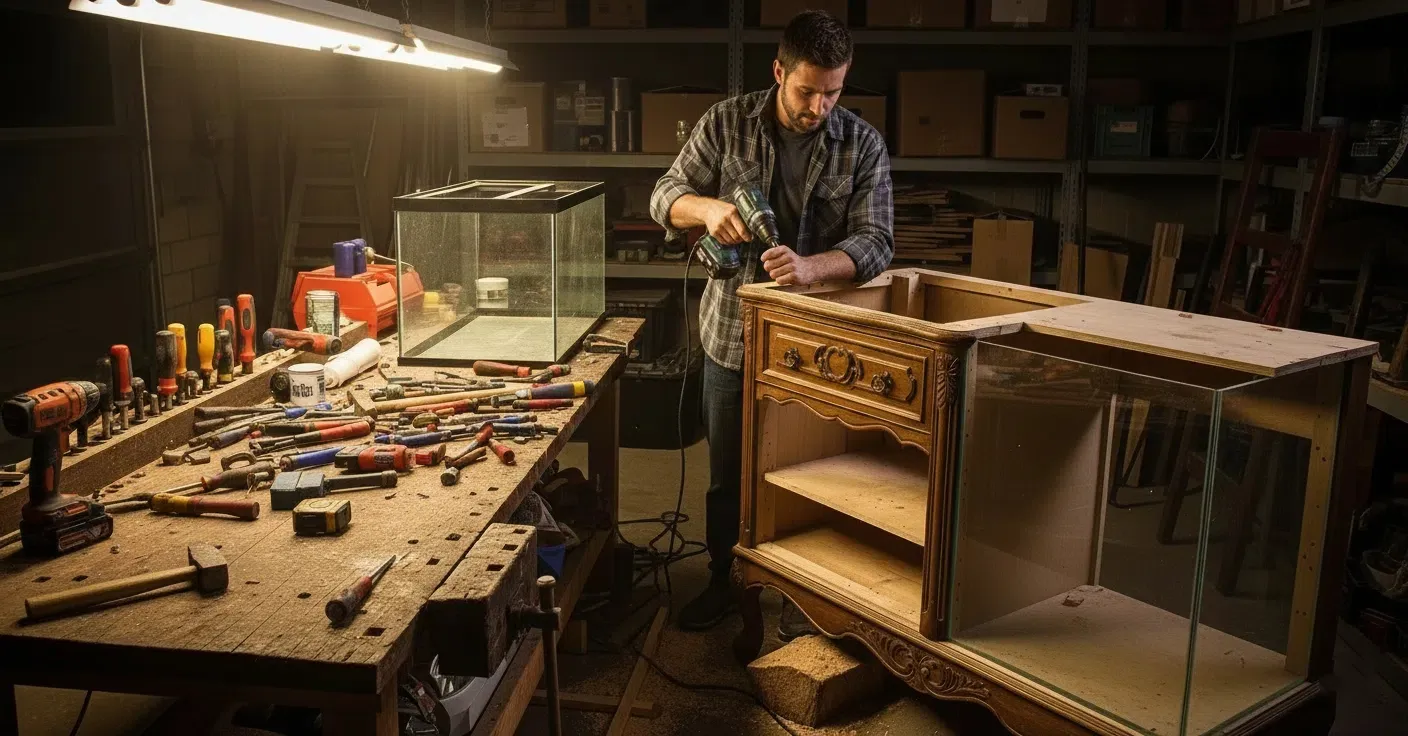
4 Ways to Customize and DIY Your Aquarium Stand
It is best to figure out that there are numerous ways in which the aquarium stands can be changed before going into the specifics. These would meet your flexibility, style, le and functionality, whether you are seeking a simple refresh or a complete rebuild.
1. Refinishing Existing Stands for Style and Durability
In case you have an old stand, it is less costly to have it refinished. Sanding the surface is the first step; veneer or natural wood has to be guarded against being sanded to death. Depending on the appearance you want, apply stains, sealants, or paint. Painting methods may be distressing to provide a rustic or aged look, or may be glossy to provide a modern look.
The final design is also raised with hardware upgrades, which can include new handles, cabinet hinges, or drawer pulls. Refinishing allows you to retain the original frame and change it to look and wear even longer. This is a good mode of working, particularly when your stand is structurally perfect but is visually outdated.
2. Building Robust Aquarium Stands from Scratch
For understanders of the art of woodworking, it is best to make a stand yourself so that it can be customized to its fullest. Begin with solid lumber and plywood, which would be able to support the weight of the tank. Naturally, these are the simple rules of structure: evenly distribute weight, support corners, and eliminate weak joints.
An average construction comprises framing, nailing panels, and coating them with paint or stain. It is suggested to add storage shelves and cable management features to make it convenient. Designing your own stand also gives a chance to be able to size the tanks to the exact size of the tank that may not be available in a commercial one. This process is most suitable in larger aquariums or those hobbyists who wish to have the full scale of creativity.
3. Repurposing Old Furniture into Aquarium Stands
Repurposing furniture is an environmentally friendly and innovative process of creating aquarium stands. Dressers, cabinets, or sideboards may be reinforced and waterproofed. In the first step, the structural integrity should be checked and cross-bracing or plywood tops included to provide strength.
It is important to use waterproofing of seals and waterproofing finishes that are marine grade so as to avoid deterioration in the long run. The furniture can be painted and styled to fit the home decor and perform its new purpose. Repurposing is also cost-effective, and it recycles unused furniture.
4. Creative Painting and Styling for Aquarium Stands
The most powerful stand will have the benefits of creative painting and styling. Techniques such as whitewashing, coloring, or distressing create unusual textures. Waterproof paints may be used, or sealants that are marine grade may be used, because this ensures that the beauty does not fade when it comes into contact with moisture.
It is also possible to organize hardware and accessories according to your living space. For example, farmhouse-style handles are suitable for either rustic houses or modern houses with chrome handles. A perfect combination of design and wearability is one of the main preconditions of your stand to improve the mood of the aquarium and your room.
Long-Term Maintenance for Aquarium Stands
Made or built-in stands need regular maintenance to ensure that they look well and are structurally sound.
Cleaning and upkeep: Cleaners use light cleaners, suitable for wood or metal surfaces or painted areas. Constant dusting and polishing can also be used to maintain finishes and avoid gradual destruction of moisture or accidental spilling.
Periodic inspections: Look for loose joints, peeling paint, or minor cracks and fix them early. Addressing these small problems quickly prevents costly structural failures and keeps your aquarium stand stable and secure.
Water protection: Place mats, trays, or sealants around the tank base to prevent water damage. Adding waterproof liners or protective coatings further ensures long-lasting durability and protection against unexpected leaks.
By maintaining it, you can not only increase the lifespan of your aquarium but also make sure that your aquarium is safe. The regular upkeep lets you avoid the heavy cost of repairs, and also your aquarium looks stunning for years.
Key Parameters for Reference
Aquarium Tank Size & Stand Requirements
| Tank Size | Approx. Weight When Full | Recommended Stand Material | Notes |
| 10–20 gal | 100–200 lbs | Plywood or Solid Pine | Easy for beginners, lightweight builds |
| 30–40 gal | 250–400 lbs | Hardwood or Reinforced Plywood | Ensure strong bracing at corners |
| 55–75 gal | 600–850 lbs | Hardwood, Metal Frame | Ideal with storage space below |
| 90–125 gal | 1,000–1,300 lbs | Steel or Thick Hardwood | Requires careful reinforcement |
| 150+ gal | 1,500+ lbs | Steel Frame or Custom Cabinet | Professional-level build only |
Minimum Stand Material Thickness (Wood Builds)
| Tank Size | Stand Top Surface (Plywood) | Frame Lumber Size | Notes |
| ≤ 20 gal | ½ inch | 2×2 lumber | Light and easy, minimal reinforcement |
| 30–55 gal | ¾ inch | 2×4 lumber | Reliable strength for medium tanks |
| 75–125 gal | 1 inch | 2×6 lumber | Strong load-bearing design required |
| 150+ gal | 1¼ inch | 4×4 lumber | Must handle extreme weight and pressure |
Conclusion
It is both entertaining and useful to build your own aquarium stand or customize it. The process of refinishing old stands would be relatively cheap and affordable, whereas the process of creating new stands would lead to full personalization. Old furniture can be reused to help solve sustainability problems, and doing something to it, be it painting or decorating it with a twist, gives it a personality.
Tank size, weight, and material strength should always be compared before commencing to ensure that it is safe. Your DIY stand can be used for years with the right tools and with their maintenance.
An aquarium stand is not a regular project, but a chance to demonstrate your imagination and make your fishkeeping process better. As an amateur or a professional, DIY aquarium stands provide more fulfillment compared to those sold in the store.
FAQ
1. I got a used fish tank stand. How can I test its durability?
Inspect joints, screws, and structural integrity first, then place weighted boxes gradually to simulate aquarium load.
2. Is it hard to make a half-moon fish tank stand?
Yes, curved stands require precise measurements, strong bending techniques, and sometimes specialty materials for structural support.
3. Do I need to make a stand for my little 5-gallon fish tank?
No, most desks or shelves can handle a 5-gallon tank safely without a dedicated stand.





Add comment
You must be logged in to post a comment.