

All fish owners will at some point in time deal with an aquarium filter cleaning task. It is never easy, whether one has a dirty filter clogged with dirt or an old filter acquired by a previous owner. It has been a question that is frequently asked by many aquarists: why does the tank water become hazy when being cleaned? The cause is normally attributed to the imbalance of the fragile biological system in the aquarium.
Having a clean filter is the key to healthy fish and a clear aquarium. However, cleaning should be taken carefully since the filters are home to beneficial bacteria, which help the ecosystem in your aquarium. Cleaning the tank improperly or over-cleaning may damage your fish, as it kills this colony of bacteria.
In this guide, we are going to explain why cleaning filters is paramount, when to clean filters, and how to do it to a filter type. Best of all, you will know the five best tips provided by experts to clean your aquarium filter safely and efficiently.
Why Cleaning Your Filter Is Important
Aquarium filters are the core of an ecosystem in a tank. They clean up waste, disperse waste, and provide a habitat for the helpful bacteria. Proper care can lead to loss of the efficiency of the filter, and this can negatively affect the quality of the water.
Here are 4 principal reasons why you need to clean your filter:
1.Maintains Efficient Water Flow
The filter soon becomes clogged with fish waste, uneaten food, and plant material. This lowers the water movement and inhibits oxygen transfer in the tank. Regular cleaning will provide stable filtration, even distribution of oxygen, and a clean environment where fish and plants live without getting stressed.
2. Prevents Toxic Build-Up
The filters remove dangerous material like ammonia, nitrite, and uncooked organics. When the filter is clogged with rubble, the filter finds it difficult to filter toxins accordingly. This regular cleaning prevents hazardous build-ups, keeps your fish safe, and ensures there is a stabilizing nitrogen cycle with aquatic health.
3. Protects Equipment Integrity
Filters are mechanical devices with moving parts, such as an impeller and motor. Dirt, sludge, or mineral build-up may damage these delicate parts with time. Regular servicing ensures filters last longer and run at high efficiencies, prolonging their useful life and therefore do not make noise during their use.
4. Balances Fish and Equipment Safety
Neglected filter maintenance may lead to an incidence of sudden water quality collapse or failure of the equipment itself. This causes stress to fish and may cause damage to costly filtration devices. A balance is achieved by cleaning thoroughly and regularly, thus not harming the health of your fish or stressing the equipment of the aquarium.
When Should You Clean Your Aquarium Filter?
There is no standard timeline to change the filter, but most aquarists do it every two to four weeks. Cleaning excessively upsets the helpful bacteria, and cleaning too seldom gives room to harmful buildup.
Rather than being bound by a fixed schedule, be on the lookout to watch these indicators as clues that your filter is due. Any of these indications should alert you that it is time to change your filter.
Slower water flow from the filter outlet: In case you realize that the stream of your filter is lower than it usually is, it is likely that your filter media or impeller is choked up. Reduced flow influences the distribution of oxygen and total water circulation.
Visible debris buildup inside: You will notice that when your filter parts are visibly coated with waste, food particles, etc. They will no longer work efficiently. This accumulation causes obstruction to filtration channels and threatens to resume the presence of toxins in the aquarium.
Unusual noises from clogged impellers or tubing: These filters usually have a silent operation, but when they suddenly start rattling or humming, it can be a red alert. The sounds often indicate the presence of debris that got lodged, inhibiting easy running and subjecting the fragile mechanisms to wear and tear.
How to Clean Different Aquarium Filters
All filters are not identical, and each filter type needs a particular cleaning method. The correct method will help avoid destruction and maintain the beneficial bacteria and support aquatic life through your filter.
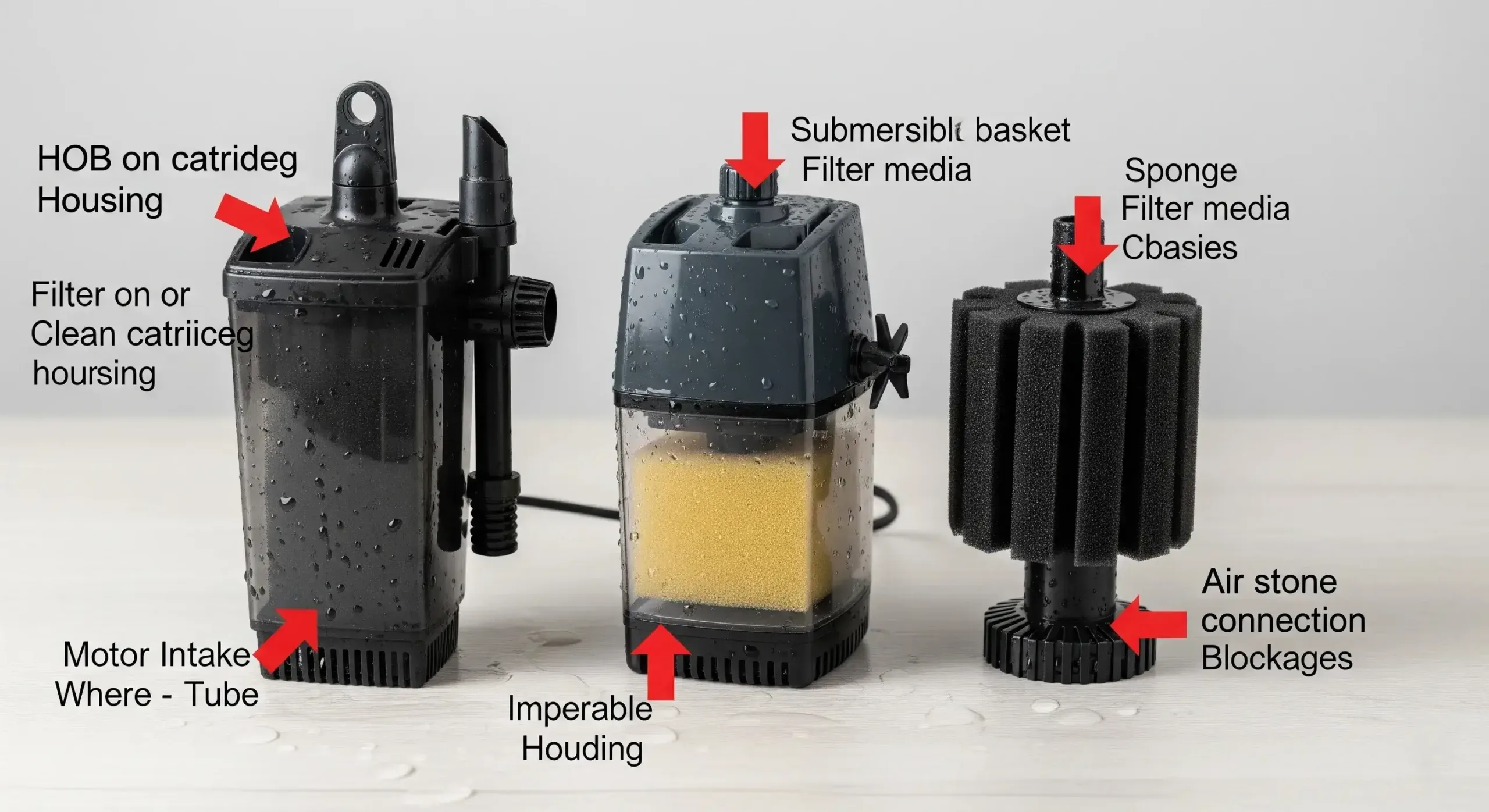
1. Sponge Filters
Sponge filters are highly used in breeding tanks and shrimp tanks because of the soft flow of water through them. Cleaning is easy; you just need to:
Take the sponge out and wash it in a bucket of tank water. Tap water contains chlorine, which destroys beneficial colonies of bacteria, so avoid such water.
Get the best out of the sponge, slowly squeeze it a number of times in the tank water to loosen debris without removing beneficial bacteria.
This kind of filter may need more regular washing out, particularly in intensely occupied fish tanks where waste gathers at a higher rate.
2. Hang-on-Back (HOB) Filters
Home aquariums use HOB filters a lot due to their ease of use and performance. They have sponges, cartridges, and an impeller.
Cleaning entails washing the sponge or cartridge in Aquarium water and cleaning the impeller, which can cause blockage.
You should also clean the filter housing. This helps to clean away the slime, which may mean reduced efficiency.
If activated carbon or chemical media is used in your HOB, replace the media regularly without disrupting the bacterial growth in the biological media.
Routine checks promote proper functioning and no surprises when the filter stops functioning.
3. Canister Filters
Canister filters are potent and commonly employed where advanced filtering is required in large tanks. They have numerous media compartments, which must be washed in steps. Do not wash all of the media at the same time. Maintain a good colony of beneficial types of bacteria.
On servicing, make sure seals, hoses, and connectors are inspected well to prevent leakage on reassembly.
Since canister filters work under pressure, removing debris is essential to ensure a healthy water flow through the impellers and tubing.
Cleaning should be done at regular intervals of every 4-6 weeks, depending on the level of stock.
4. Internal or Power Filters
They are housed inside the tank, and they are often composed of sponges or cartridges and are used to filter both mechanically and biologically.
Cleaning is concerned with the intake tube and the impeller that might be easily packed with algae, sludge, and uneaten food.
To prevent injury to bacterial colonies, rinse the filter media with aquarium water instead of tap water.
It is also useful to review the suction cup or mounting brackets to make sure the filter is positioned securely.
Cleaning the impeller area regularly prolongs the life of the motor and normalizes the circulation of water.
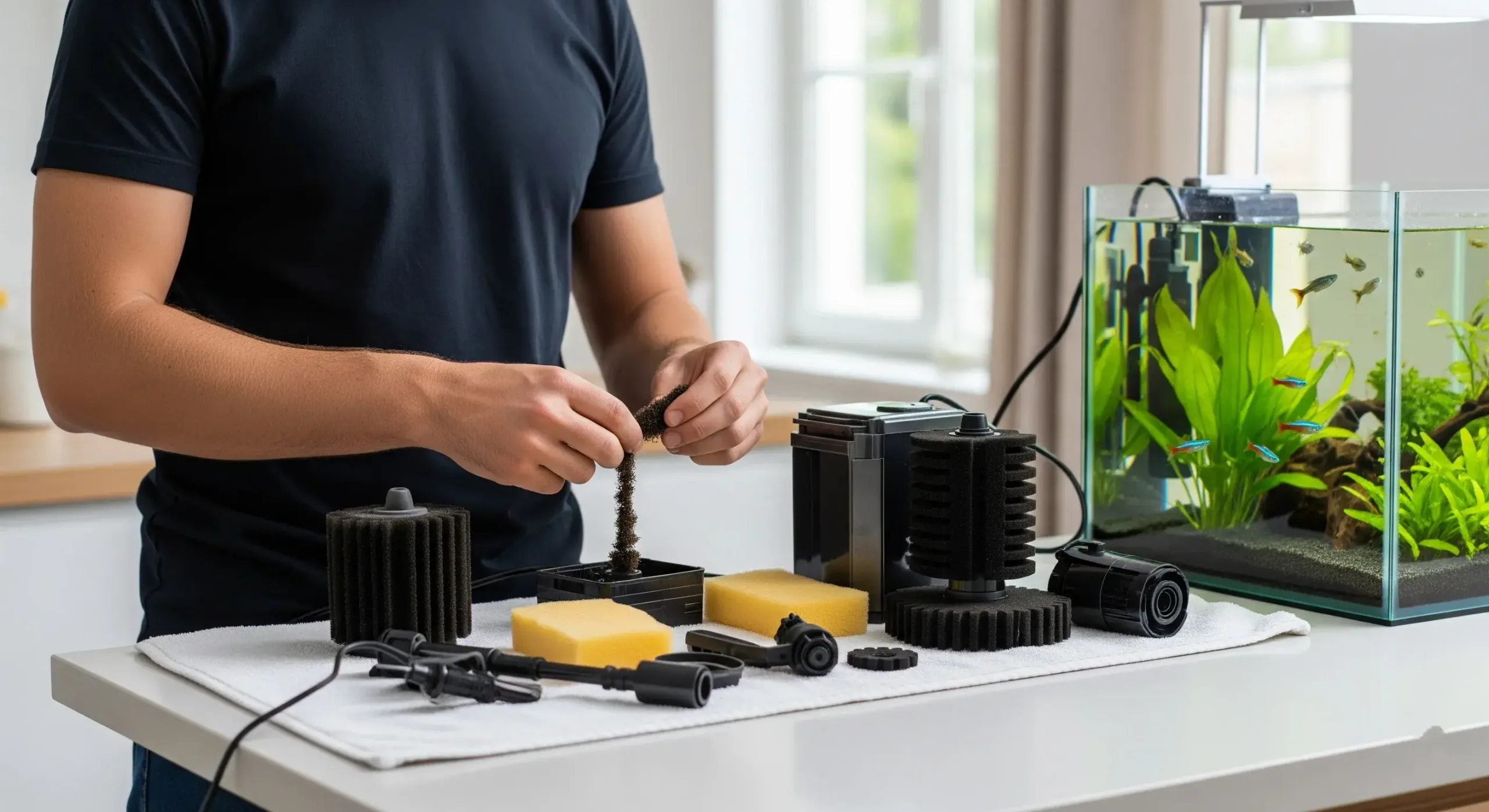
Top 5 Tips to Clean Your Aquarium Filter
You might be frightened by cleaning filters, but using the proven methods will make it simpler. These are the five most crucial pointers on aquarium filter cleaning.
1. Rinse, Don’t Sterilize
Your aim is not to sterilize when you clean. Positive bacteria increase in growth in filter media and are vital in the reduction of ammonia and nitrite. Wash the rinse filter media using a bucket of aquarium water.
Never utilize soap, hot water, or strenuous chemicals, which kill bacteria and destabilize the biological setting of your tank.
2. Clean on a Schedule, Not Too Often
Cleaning is dangerous to the colonies of bacteria, but cleaning the pipes too seldom leads to blocked drains. Routinely move to a regular schedule of every two to four weeks.
Unload your tank heavily, and you may want to clean a bit more frequently. Lightly-stocked cleaning can occur less often. It is always necessary to balance routine with observation.
3. Know Which Parts to Clean
The entire filter does not have to be cleaned at once. An example is that filter media must be lightly rinsed, whereas there is a greater need to clean mechanical components such as impellers and tubing.
Never wash all the media at once, as this will kill the bacterial colonies that are necessary for your fish. To obtain optimal results, clean different parts on rotation.
4. Clean Filter Components Safely
Clogging Mechanical parts may clog up, such as impellers, hoses, and intake tubes. These can be cleaned with small brushes or cotton swabs. Before maintenance, always unplug when electricity is involved to prevent damage or injury.
Visually inspect seals and O-rings of canister filters to make sure that no leak occurs once the filters are back together.
5. Monitor Tank Conditions
Cleaning the filter is just one step. There is always a need to monitor the quality of water in your tank after maintenance. Look at cloudiness, ammonia, and nitrite checks, and check fish behavior. When water gets cloudy after cleaning, it normally indicates that helpful bacteria have been displaced. In this instance, do not clean again until the colonies of bacteria stabilize.
Conclusion
A good filter is more than necessary in a successful aquarium, but cleaning should be treated carefully. Your filter is more than a machine; it is a living element of the ecosystem in your aquarium. Cleaning too much or using an inappropriate method will interfere with the bio-balance that your fish focuses on.
Know these five tips: Rinse, clean on schedule, know what to clean, maintain equipment safely, and monitor tank conditions. They are modest but effective approaches towards long-term success. By doing it the right way, you can have that crystal clear water and healthy stress stress-free fish.
Aquarium keeping is a continuous learning process. The better you are at careful filter maintenance, the more assured you will be as a fish keeper.
FAQs
1. Can I replace an old filter instead of cleaning it?
Not immediately. Replacing a filter entails a loss of the beneficial bacteria within it. In case you need to change it, operate the old and new filters concurrently for a few weeks. This will enable the bacteria to settle on the new filter and eliminate sudden changes in water chemistry, and avoid cloudy water.
2. How can I clean the filter without killing beneficial bacteria?
Before putting filter media into the tank, never use tap water to rinse it; use aquarium water instead. Tap water kills bacteria colonies with chlorine. Cleaning of all the media should also be avoided. Biological media must be rotated regularly and rinsed with clean sponges, cartridges, or bio-media to safeguard the population of bacteria.
Aquarium Electric Sponge Filter (3W/5W) with Double Filtration...
Original price was: $21.59.$20.39Current price is: $20.39.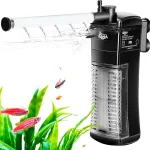
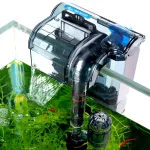
Aquariums Power Filter, 74GPH, for 5-10 Gal Tanks
Original price was: $25.99.$20.79Current price is: $20.79.




Add comment
You must be logged in to post a comment.