
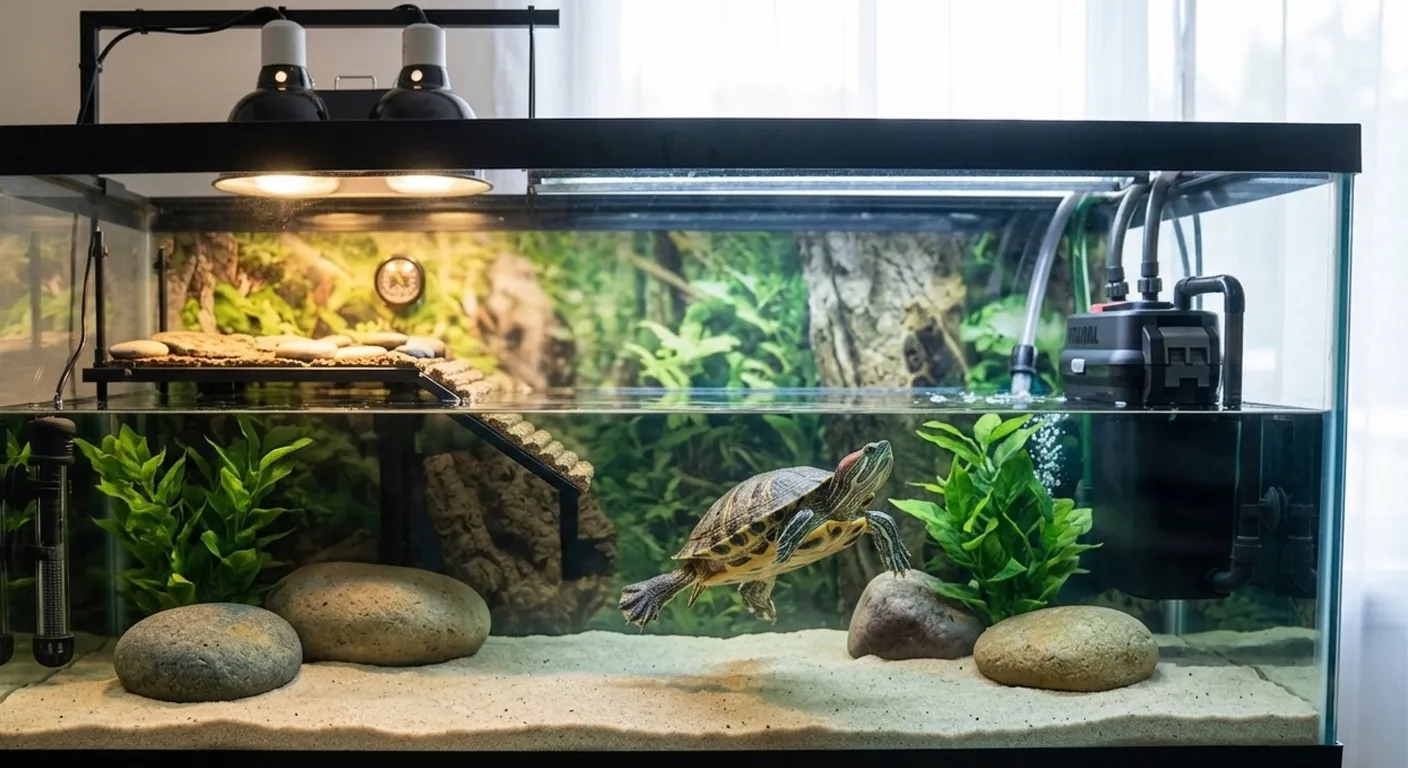
Turtles do not separate eating from elimination the way most pets do. They swim, bask, feed, and defecate in the same body of water. Pound for pound, they produce noticeably more waste than fish of similar size. That waste load has consequences beyond murky water. It affects shell condition, skin health, and the smell that fills the room around the tank. A poorly matched setup means algae blooms within days and a film on the glass that returns almost as fast as you wipe it away.
The good news is this issue has a solution with a clear structure. Pair the right filtration with a handful of consistent habits, and the gap between deep cleans stretches from days to weeks. This guide walks through what a turtle tank actually needs, why filters wear out faster than owners expect, and how to choose equipment that keeps pace with a turtle’s habits rather than fighting against them.
The Core Setup: What a Turtle Tank Actually Needs
Before filtration enters the conversation, the tank itself has to support the turtle’s basic behavior. Get the size, depth, and basking area wrong, and no filter will fully compensate.
Tank Size and Water Depth
Sizing should be based on the turtle’s projected adult shell length, not its current size as a hatchling. A common guideline is ten gallons of water per inch of shell length, with many keepers rounding up once the turtle passes four or five inches. A red-eared slider that reaches ten inches as an adult needs a tank in the range of seventy-five to one hundred gallons, not the twenty-gallon tank that suited it as a juvenile.
Water depth is as important as footprint. Turtles need enough depth to swim and fully submerge, generally one and a half to two times their shell length, along with a ramp or dock that lets them climb out completely dry. Shallow water restricts natural swimming behavior and pushes turtles to spend more time near the surface, which concentrates waste in a smaller volume.
Basking Area and Heat
The dry dock must sit above the waterline with easy access from multiple angles. The basking spot itself should reach roughly 85 to 95 degrees Fahrenheit depending on species. A poorly placed or undersized basking area causes a chain reaction that most new keepers do not anticipate.
Turtles that struggle to climb out, or that find the dock too small or too hot, simply stay in the water longer. More time in the water means more waste released into it, which accelerates fouling regardless of how strong the filter is.
UVB Lighting Basics
UVB exposure allows turtles to synthesize vitamin D3, which they need to metabolize calcium for shell and bone health. Without it, shells can soften or deform over time. A basic setup uses a UVB bulb rated for reptiles, mounted six to twelve inches above the basking area with no glass or plastic barrier blocking the rays. Most UVB wavelengths cannot pass through those materials. For deeper understanding into bulb types or replacement schedules, view this detailed guide.
Why Turtles Destroy Filters Faster Than Fish Do
Filters marketed for fish tanks are built around fish bioload, and that math does not transfer to turtles.
The Bioload Problem
A turtle can produce several times the solid waste and ammonia output of a fish occupying the same amount of water. Fish tank filter charts typically recommend sizing a filter to the tank’s gallon count, sometimes with a small buffer.
Apply that same ratio to a turtle tank and the filter will fall behind within a week, leaving cloudy water, a buildup of debris on the substrate, and a persistent odor that no amount of partial water changes fully resolves.
The Ammonia Spike Risk
Ammonia from waste and uneaten food builds quickly in a system that lacks adequate turnover. Unlike solid debris, it is invisible until levels are already high enough to stress the turtle. A practical rule of thumb is to choose a filter rated two to four times the actual water volume of the tank.
A fifty-five-gallon turtle tank, in other words, calls for a filter built to handle somewhere between 110 and 220 gallons. That margin gives the biological filtration enough capacity to process waste before it accumulates into a spike.
Comparison of Turtle Tank Filter Types
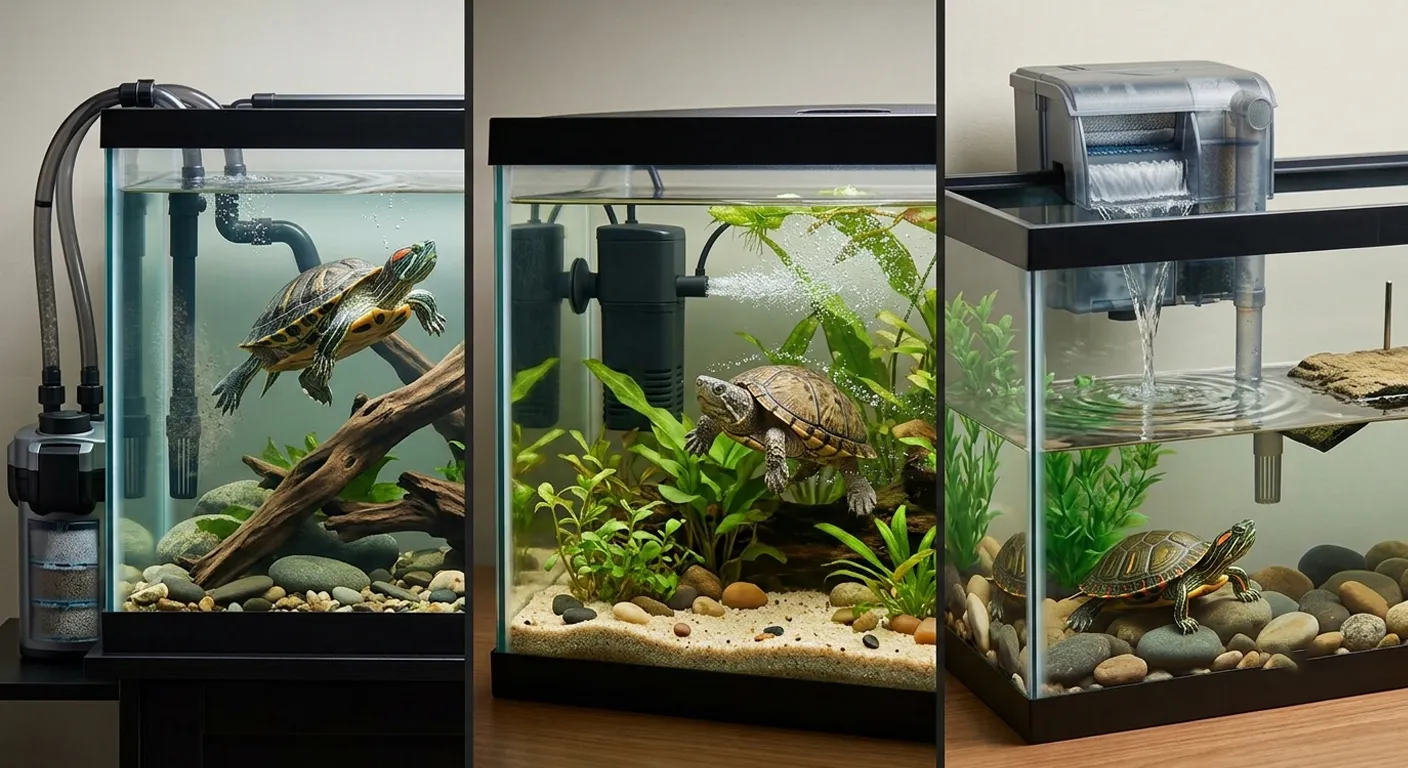
Filter categories differ enough in capacity and convenience that the right choice depends heavily on tank size and turtle count.
1. Canister Filters
Canister filters sit outside the tank and connect through intake and return tubing, which frees up far more room for filter media than any internal unit could hold. That extra media space translates directly into higher bioload capacity, making canisters the strongest option for most adult turtle setups. They do require enough water depth to keep the intake fully submerged at all times. So, very shallow tanks are a poor match.
2. Internal or Submersible Filters
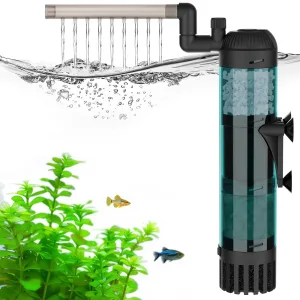
These sit inside the tank and tend to be compact and inexpensive, which makes them a reasonable fit for smaller or nano setups housing young or small species like musk turtles. Their media capacity is limited, though, and they generally cannot keep pace with the waste output of a full-grown slider, painted turtle, or map turtle.
3. Hang On Back Filters
HOB filters mount on the rear tank wall and are easy to open and service without disturbing the whole setup. Their weak point in a turtle tank is exposure to basking splash and the lower water levels that many turtle setups run, both of which can interrupt flow or cause the unit to run dry.
4. Sponge Filters
Sponge filters work well as a gentle pre-filter or as a backup unit. They are a good match for hatchlings or very young turtles that cannot handle strong current. On their own, though, they lack the throughput to serve as the primary filter for a full-grown turtle in a standard-sized tank.
How to Choose the Right Filter for Your Setup
1. Match GPH to Tank Size and Turtle Load
Turtle Filter Sizing & GPH Calculator
Calculate the true filtration power (GPH) your turtle’s heavy bioload requires.
Gallons per hour, or GPH, describes how much water a filter cycles in an hour. For turtles, aim for a filter rated to turn over the tank’s total volume at least four to six times per hour, and add capacity on top of that for each additional turtle sharing the tank.
Two adult sliders in a seventy-five-gallon tank effectively need filtration sized for a much larger bioload than the raw gallon count suggests.
2. Maintenance Tolerance and Noise
Filter media needs regular attention regardless of brand or type, so it helps to be honest about how often you are willing to open the unit and rinse or replace media. Canister filters generally need less frequent servicing thanks to their larger media volume.
While smaller internal units may require weekly attention. Noise is also worth weighing if the tank sits in a bedroom or living room. Canister filters run quieter since the motor is external and often placed in a cabinet below the tank.
3. Budget Versus Long Term Cost
A cheaper filter often costs more over a year once replacement cartridges, higher electricity draw, and more frequent water changes are factored in. Comparing sticker price alone tends to steer buyers toward equipment that will need replacing or heavily supplementing within the first year of ownership.
The Filter That Keeps Water Cleaner, Longer
Weighed against the criteria above, a canister filter sized to four times the tank’s water volume consistently comes out ahead. It offers the media capacity to handle heavy bioload, the quieter external motor that suits shared living spaces, and service intervals that stretch to two or three weeks instead of several times a week.
The single feature that matters most for extending time between cleanings is multi-stage media capacity, meaning separate chambers for mechanical, biological, and chemical filtration within one unit. Mechanical media traps solid debris, biological media houses the bacterial colonies that break down ammonia, and chemical media, typically activated carbon, pulls out discoloration and odor.
A filter that runs all three stages in sequence, with room to add more media as the turtle grows, is what actually delays the point at which water quality starts to slip.
Setup Tips That Stretch Time Between Cleanings
Filtration handles ongoing waste breakdown, but a few habits reduce how much waste ever reaches the water in the first place.
Feeding Habits That Reduce Waste
Feeding turtles in a separate tub or container, then returning them to the main tank afterward, keeps uneaten food and the waste that follows a meal out of the display tank entirely. This single change often has a more visible impact on water clarity than any filter upgrade.
Pre-Filtering and Cleaning Schedule
A sponge pre-filter placed ahead of the main canister intake catches larger debris before it reaches the primary media, extending the time between full media cleanings. A realistic maintenance routine looks like this:
Weekly: check water clarity, top off evaporated water, spot clean visible debris
Biweekly: rinse mechanical media in removed tank water, never tap water, to protect beneficial bacteria
Monthly: partial water change of 25 to 30 percent, along with a check of ammonia and nitrate levels
Conclusion
A tank sized correctly, a basking area that actually gets used, and a filter built for turtle bioload rather than fish bioload work together to change the entire maintenance rhythm. Instead of scrubbing algae every few days, a properly matched canister filter with multi-stage media, paired with off-tank feeding and a light weekly routine, can push deep cleans out to two or three week intervals. The filter is the piece most owners underestimate, and it is also the single upgrade most likely to change how much time you spend on maintenance each month.



Add comment
You must be logged in to post a comment.