
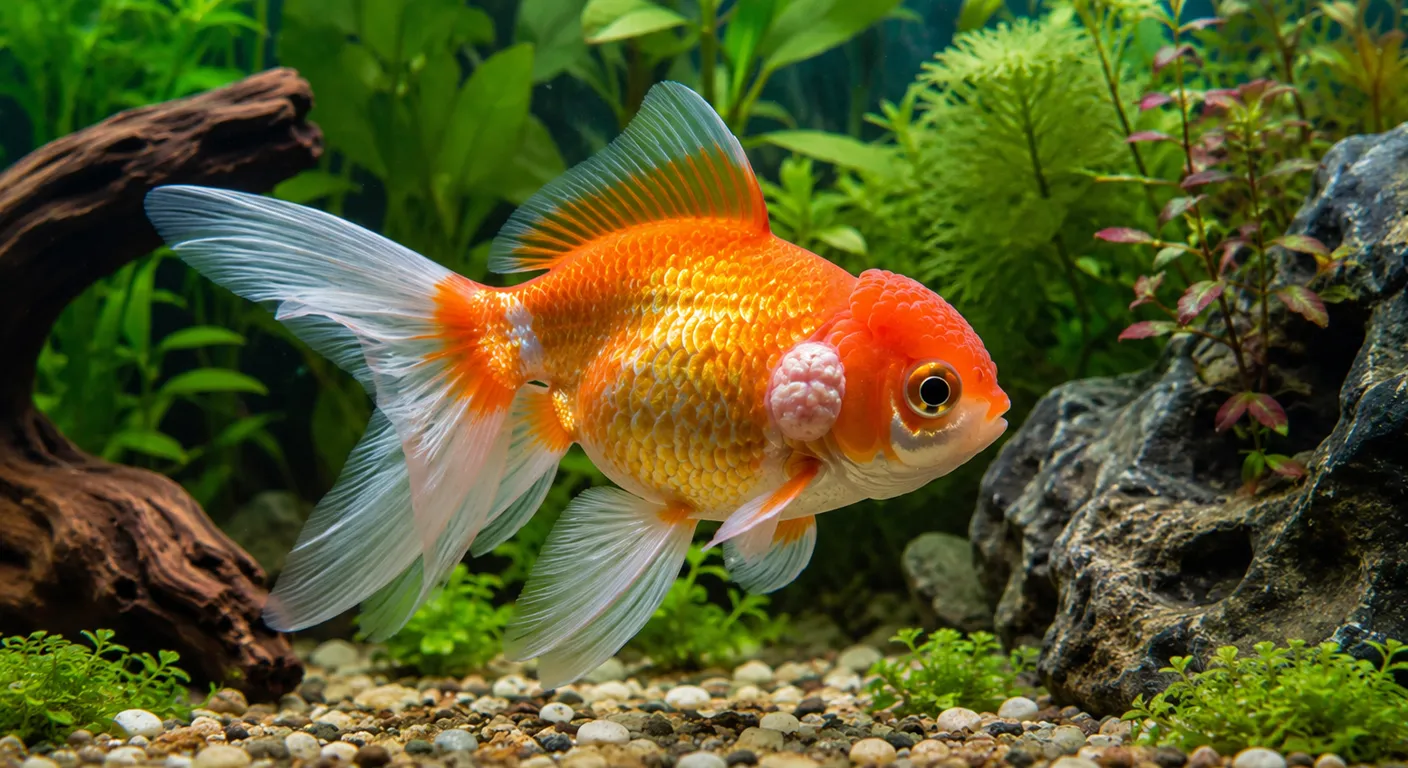
Finding a new bump on your goldfish rattles most owners immediately. Your first thought jumps to the worst case, and that is a fair reaction. But a lump on a goldfish is a symptom, not a diagnosis on its own. It can come from a harmless growth, an old injury, a skin infection, parasites, or something more serious that needs a professional eye. The lump’s shape and color matter, but so does everything else the fish is doing around it.
This guide walks through the common causes of goldfish lumps, the warning signs that call for faster action, and the steps you should take before reaching for any treatment. Read through it once fully before you touch your tank, because the order of operations here actually changes outcomes.
Is Your Goldfish Lump an Emergency
Not every lump means a crisis. The fish’s behavior around the growth tells you far more than the growth itself. Start by watching your goldfish eat, swim, and breathe over the next day or two.
When Close Monitoring May Be Reasonable
A lump that fits this description usually allows time for observation instead of panic:
The lump is smooth, sits in one spot, and stays the same size or grows very slowly.
The fish eats normally, swims with its usual coordination, and breathes at a steady rate.
There is no redness, bleeding, open tissue, fuzzy coating, or discharge anywhere near it.
The fish does not appear to be in pain or avoid contact with that area of its body.
Many goldfish develop what are called neurofibromas, which are typically benign growths on the skin. Even so, an owner who has never seen one before should still have it checked by someone experienced, since visual guessing has real limits.
When To Seek Prompt Veterinary Help
Some signs point toward a problem that needs attention sooner rather than later:
The lump grows noticeably within days or a couple of weeks.
It looks red, inflamed, dark, bleeding, open, fuzzy, ulcerated, or leaks discharge.
It sits near the mouth, eye, gill cover, vent, or fin base and interferes with feeding, vision, breathing, or balance.
The fish stops eating, hides more than usual, gasps at the surface, clamps its fins, or floats abnormally.
More than one fish in the tank has a similar mark, which makes a simple isolated growth less likely.
Water quality worsens almost every fish illness, so testing your tank parameters early is worth doing regardless of which category your goldfish falls into.
Quick Triage Table
| What You See | What It May Suggest | What To Do First |
| Smooth, stable lump; normal appetite and behavior | Likely benign skin growth | Monitor and photograph weekly |
| Lump enlarging or changing shape | Progressing tumor, cyst, or infection | Test water and schedule a vet check |
| Redness, missing scales, bleeding, or fuzzy tissue | Injury, ulcer, or fungal or bacterial infection | Test water immediately; avoid handling the fish |
| Growth affects the eye, mouth, gills, or swimming | Functional impairment regardless of cause | Seek veterinary evaluation soon |
| Several fish have similar marks | Possible parasitic or infectious spread | Isolate affected fish and test water |
What Could Cause a Lump on a Goldfish
A handful of conditions account for most lumps owners report. Knowing which category fits your situation narrows what to do next.
Benign Skin Growths
Localized bumps on the skin or fins of goldfish are often neurofibromas, sometimes called peripheral nerve sheath tumors. These growths are frequently benign and stay mostly cosmetic, though some do grow larger over time, and a portion detach and later return in the same spot.
Location changes the picture even when a growth is benign. A mass near the gills, mouth, or eye can still hurt the fish’s welfare if it presses on tissue, blocks feeding, or gets scraped against tank decorations repeatedly. Avoid assuming a visible bump is automatically harmless. Only proper evaluation confirms that.
Injury, Swelling, or an Ulcer
A new bump sometimes follows a collision with décor, a scrape from sharp gravel, aggression from a tankmate, damage from a net, or friction against hardscape. These injuries can swell before they heal.
Redness, missing scales, torn skin, or a white center are more worrying signs than a firm, skin-colored lump that has not changed. Ulcer-like sores can worsen over time and are often linked to stress, poor water conditions, parasites, or bacterial infection. Do not cut, squeeze, scrape, or swab an open lesion at home. That kind of intervention tends to introduce more bacteria than it removes.
Fuzzy, Grainy, or Parasite-Like Lookalikes
White or brown fuzzy patches often point to fungal or bacterial conditions, and they sometimes appear alongside lethargy, labored breathing, or reduced appetite. This is a different pattern from a single firm lump, and it deserves a different response.
Tiny spots scattered across the body, resembling grains of salt, suggest a parasitic issue rather than a tumor. Raised, smooth, or granular skin changes can stem from several unrelated causes, which is exactly why identifying a lump from a photo alone has real limits.
Normal Breeding Tubercles and Body Swelling
Small, hard bumps along the leading edge of the pectoral fins or across the gill covers of mature male goldfish are frequently normal breeding tubercles. These appear seasonally in healthy fish and are not a health concern by themselves.
Whole-body swelling, scales that stick outward in a pinecone pattern, or a bloated abdomen are a separate matter entirely. These signs can point to internal fluid buildup, organ dysfunction, reproductive issues, or an internal mass, and none of them should be treated as a simple external lump. Pay attention to where the change is happening and how the fish behaves, rather than jumping straight to the word tumor.
What To Do First
Before deciding on any treatment path, work through these three steps in order.
Test the Water and Inspect the Aquarium
Water quality problems can trigger or worsen almost any skin or health issue in goldfish.
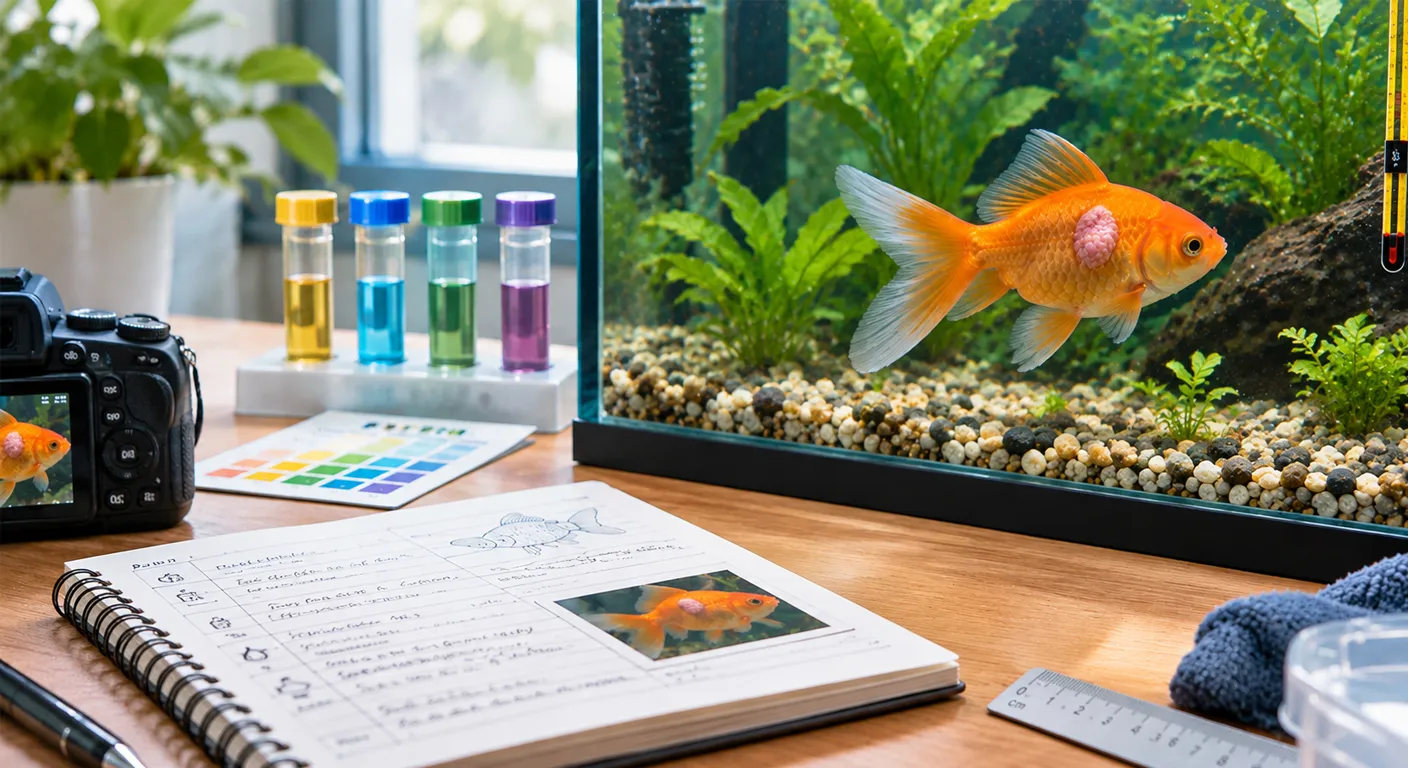
Test ammonia, nitrite, nitrate, pH, and temperature.
In a properly cycled tank, ammonia and nitrite should both read 0 ppm. If either is elevated, perform a large partial water change and check your filtration, stocking level, and feeding amount right away.
Look back at recent events: missed maintenance, a dead fish that went unnoticed, overfeeding, a filter malfunction, new fish added recently, new décor, overcrowding, or an aggressive tankmate.
Check for sharp decorations, rough rocks, exposed equipment edges, or tight spaces where the fish could have been hurt.
Watch every other fish in the tank for similar marks or shifts in behavior.
Create a Simple Tracking Record
A short paper trail makes a real difference if the lump changes over time.
Take clear photos from the same angle and under similar lighting every few days.
Note the date, approximate size, exact location, color, and surface texture, along with whether anything has shifted since the last check.
Record appetite, swimming pattern, breathing rate, and buoyancy alongside your water test results.
Place a ruler outside the glass near the fish for scale in photos. Never handle fish to measure growth directly.
This timeline becomes genuinely useful if an aquatic veterinarian later needs to judge how quickly the lump is progressing.
Avoid Common Harmful Responses
A few instinctive reactions tend to make things worse than better.
Do not squeeze, cut, puncture, or scrape at the lump.
Do not apply human ointments, or reach for random antibiotics or broad parasite treatments without a clear reason or diagnosis behind them.
Do not automatically move fish to an uncycled hospital tank. Unnecessary handling adds stress, and an uncycled tank creates a second water quality problem on top of the first.
Temporary separation makes sense only in specific cases, such as active bullying, an open wound that needs closer observation, a suspected infectious condition, or a treatment plan directed by a veterinarian.
Treatment, Care, and Prevention
When Observation May Be the Right Plan
A stable lump on a fish that eats, swims, and breathes normally can often be watched rather than treated immediately. Keep the water clean and consistent, and continue documenting the growth on your regular schedule.
Beyond that, keep the tank low stress. Stable temperature, sufficient filtration and oxygen, smooth décor, appropriate stocking density, and a diet suited to goldfish all support recovery and general resilience. If the growth sits near a decoration the fish keeps rubbing or gets nipped against, remove or reposition that item.
When Professional Treatment Is Needed
A veterinarian has tools an owner does not, including physical examination, imaging, cytology, and biopsy, to tell a tumor apart from an infection, cyst, or other cause. Treatment depends entirely on what that evaluation finds. Some masses can be managed surgically or through other veterinary procedures, but none of these are appropriate to attempt at home.
Even a growth that looks benign can still require intervention if it interferes with feeding, swimming, vision, breathing, or the integrity of the skin around it.
Reduce Future Health Risks
Good ongoing husbandry lowers the odds of new problems, even if it cannot eliminate every risk.
Keep up consistent water testing and regular partial water changes.
Avoid overcrowding and the chronic stress that comes with it.
Quarantine new fish when practical, and inspect them closely before introducing them to your main tank.
Choose smooth, fish-safe décor, and address aggression before it leads to repeated injuries.
None of this guarantees a goldfish will never develop a growth. It does meaningfully reduce the stress and infection risk that make existing problems worse.
Conclusion
A lump on a goldfish covers a wide range of possibilities, from a harmless skin growth to a sign of infection, injury, or a more serious internal issue. The way to tell these apart starts with watching the fish’s behavior, testing the water, and inspecting the tank for anything that changed recently.
A lump does not automatically mean cancer or a fatal disease. Begin with water testing, a close look at the aquarium setup, and steady monitoring with photos and notes, rather than treating blindly or attempting to remove the growth yourself. Stable water quality and attentive daily care remain the most reliable tools you have, paired with the willingness to bring in a veterinarian when the warning signs call for it.



Add comment
You must be logged in to post a comment.