
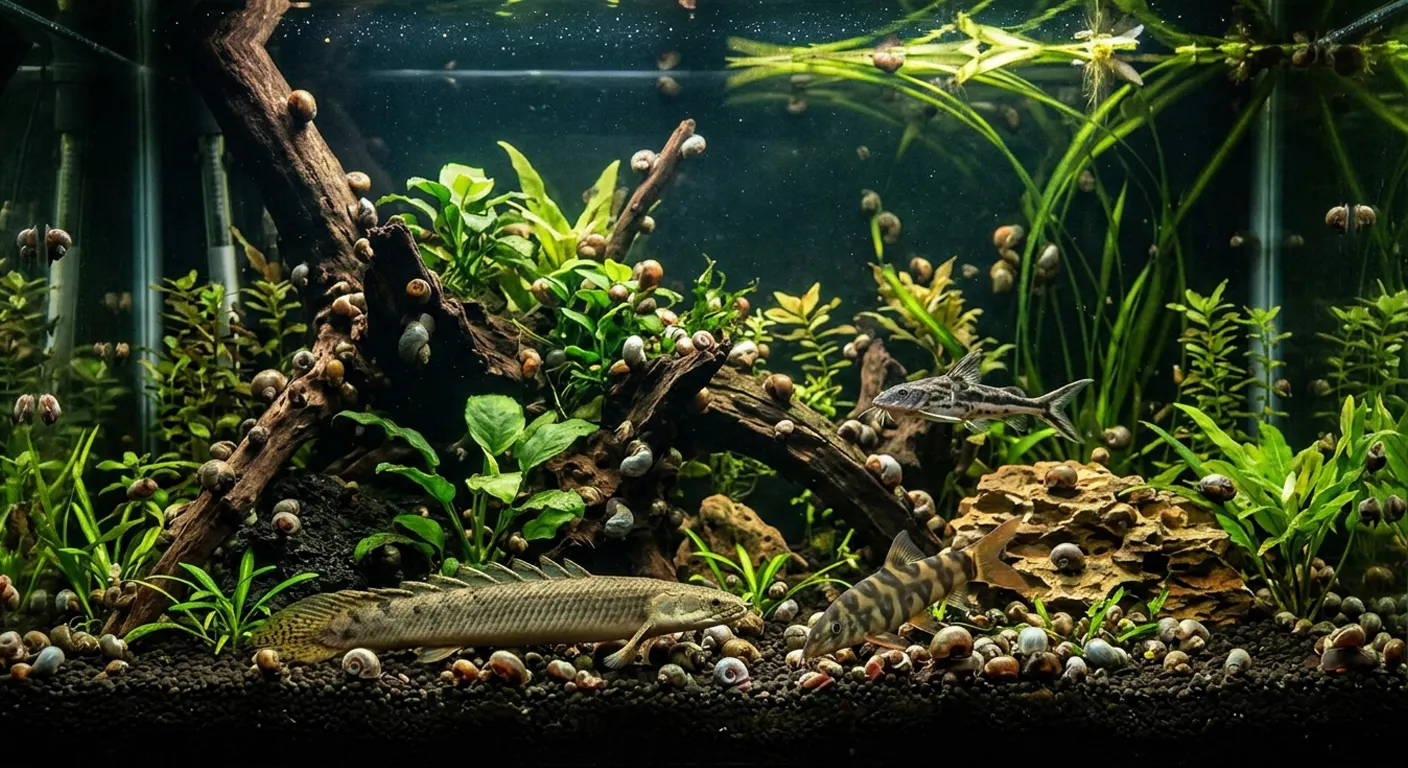
When snails multiply out of control, the first instinct for most fish keepers is to add something that eats them. It makes sense on paper. Snail problem meets snail predator. Problem solved. But it rarely works that cleanly, and in a tank that already has predatory fish in it, the math gets complicated fast.
Whether a snail-eater is safe to add depends less on the snail-eater itself and more on what’s already living in the tank. The wrong addition doesn’t just fail to fix the problem. It becomes another problem on top of it.
In this guide, we’ll check the most common snail-eating options against an existing predatory stock. Show what actually has room in a setup like this. And explain why adding more fish isn’t the real fix for an infestation that’s already out of hand.
Table of Content
ToggleWhy More Predators Won’t Fix an Established Infestation
Predators control snails. They don’t reverse an outbreak that’s already underway. That distinction matters a lot before any new fish goes in.
The Bioload Math
Snail populations can double in weeks when conditions are good. Steady food supply and warm water are all they need. A handful of predators can’t out-eat that growth rate once the population is established. The snails reproduce faster than the fish can consume them. Adding one or two more predators doesn’t change that equation in any meaningful way.
Proof From This Exact Tank
The tank already has a bichir and a yoyo loach. Both are documented snail predators. The infestation still reached hundreds. Those predators were present the whole time, and the population kept growing anyway. That tells you everything you need to know about what adding another predator will accomplish.
Maintenance Vs. Treatment
Predator fish keep a small snail population in check over time. That’s the role they play. They don’t clear an existing one. They eat opportunistically, not exhaustively. Snails that are buried or hidden in substrate or tucked inside decor go completely untouched. The predators get the easy ones. The rest keep breeding.
Snail-Eater Compatibility Tankmate by Tankmate
Before adding anything, it helps to know what’s already in the tank. A bichir will eat any invertebrate that fits in its mouth. A yoyo loach actively preys on smaller snails, including some species that get added as pest control. A pictus catfish hunts small tank mates at night when most owners aren’t watching. That combination rules out more options than most people expect.
Assassin Snail
Assassin snails are one of the most commonly recommended solutions for pest snail outbreaks. In this tank, they don’t stand a chance. A bichir will eat one the moment it’s small enough to fit in its mouth. Yoyo loaches have documented conflicts with assassin snails and will target them directly. The assassins would be consumed before they made any real dent in the pest population.
Verdict: not compatible. Wasted purchase.
Pea Puffer
Pea puffers are small. In a tank with a bichir and a pictus catfish, that’s an immediate problem. The puffer is likely prey for both. On top of that, pea puffers are aggressive fin nippers, and swordtails in the same tank would be constant targets. The risk runs in both directions, and neither outcome is good.
Verdict: not recommended in this setup.
Clown Loach
Clown loaches are a reasonable snail predator in the right tank. In this one, they’re redundant. They occupy the same bottom-dwelling niche as the yoyo loach already in the tank. Adding one increases bioload without adding any meaningful snail control that the existing loach isn’t already providing. The tank doesn’t need more competition for the same space.
Verdict: redundant. Adds bioload without solving anything.
Nerite Snail
Nerite snails are algae eaters. They don’t touch pest snail populations at all. They’re generally left alone by bichirs and loaches because of their hard shell and larger size, but they contribute nothing to snail control. Adding nerites to fix a pest snail problem is solving the wrong problem entirely.
Verdict: wrong tool for this job.
Snail-Eater Compatibility with Existing Predatory Stock
Here’s a quick compatibility table to know your options.
| Snail-Eater | Risk from Bichir | Risk from Yoyo Loach | Verdict |
| Assassin Snail | High. Fits mouth easily | High. Documented conflict | Not compatible |
| Pea Puffer | High. Likely prey | Low direct risk | Not recommended |
| Clown Loach | Low | Low but territorial overlap | Redundant |
| Nerite Snail | Low | Low | Wrong tool entirely |
What To Do Instead of Restocking
Most snail-eater additions are ruled out in a tank like this. The fix isn’t a new fish. It’s addressing what’s actually driving the infestation.
What Has Room in This Stock
Any new addition needs to be too large to be prey for the bichir or pictus. It needs to be non-aggressive toward existing tank mates. And it shouldn’t compete with the loach for bottom space. The 75-gallon has room, but the bioload ceiling with predatory fish already in it is closer than it looks. Large predatory fish produce significant waste, and that limits how much more the tank can realistically support.
What Actually Works [Table Comparison]
Here is a table that shows candidates that fit around Bichir, Loach, and Pictus.
| Candidate | Prey Risk | Territory Overlap | Bioload | Verdict |
| Silver Dollar | None. Too large | Minimal. Mid to upper water | Moderate | Good fit |
| Congo Tetra | Low. Borderline size | Minimal | Low | Viable in a school |
| Synodontis Catfish | Low | Some bottom overlap | Moderate | Works but monitor territory |
| Bristlenose Pleco | None | Some bottom overlap with loach | Low | Good fit. Useful algae control |
Fix the Root Cause First
The only strategy that actually works once predator options are ruled out or redundant is manual removal combined with correcting what’s feeding the population. Gravel vacuuming pulls out snails and eggs hiding in the substrate. Hand picking visible snails during water changes removes adults faster than any fish will.
Overfeeding is the most common driver of snail explosions. Reducing food reaching the substrate cuts the population’s food supply directly. That combination will bring numbers down faster than any new addition would.
When Predators Become Useful Again
Once the population is knocked down manually, the existing bichir and yoyo loach are enough to keep it from rebounding. They were always adequate for maintenance. They just weren’t built for clearing an established outbreak. No additional purchase is needed at that stage. The fish already in the tank can handle the rest.
Conclusion
Predator fish maintain snail populations. They don’t reverse infestations that are already established. This tank’s own stock proves that. A bichir and a yoyo loach were present the whole time the population grew to hundreds. More predators won’t change the outcome when the root cause is still there.
The real question isn’t which fish to add. It’s how to bring the population down first. Manual removal and feeding correction are the only tools that actually work at this stage. New fish come after that. Not instead of it.
Once numbers are under control, the existing stock is already equipped to maintain them. Treat any future snail-eater as a maintenance decision made from a stable position. Not an emergency fix made from a tank that’s already overwhelmed.







Add comment
You must be logged in to post a comment.