
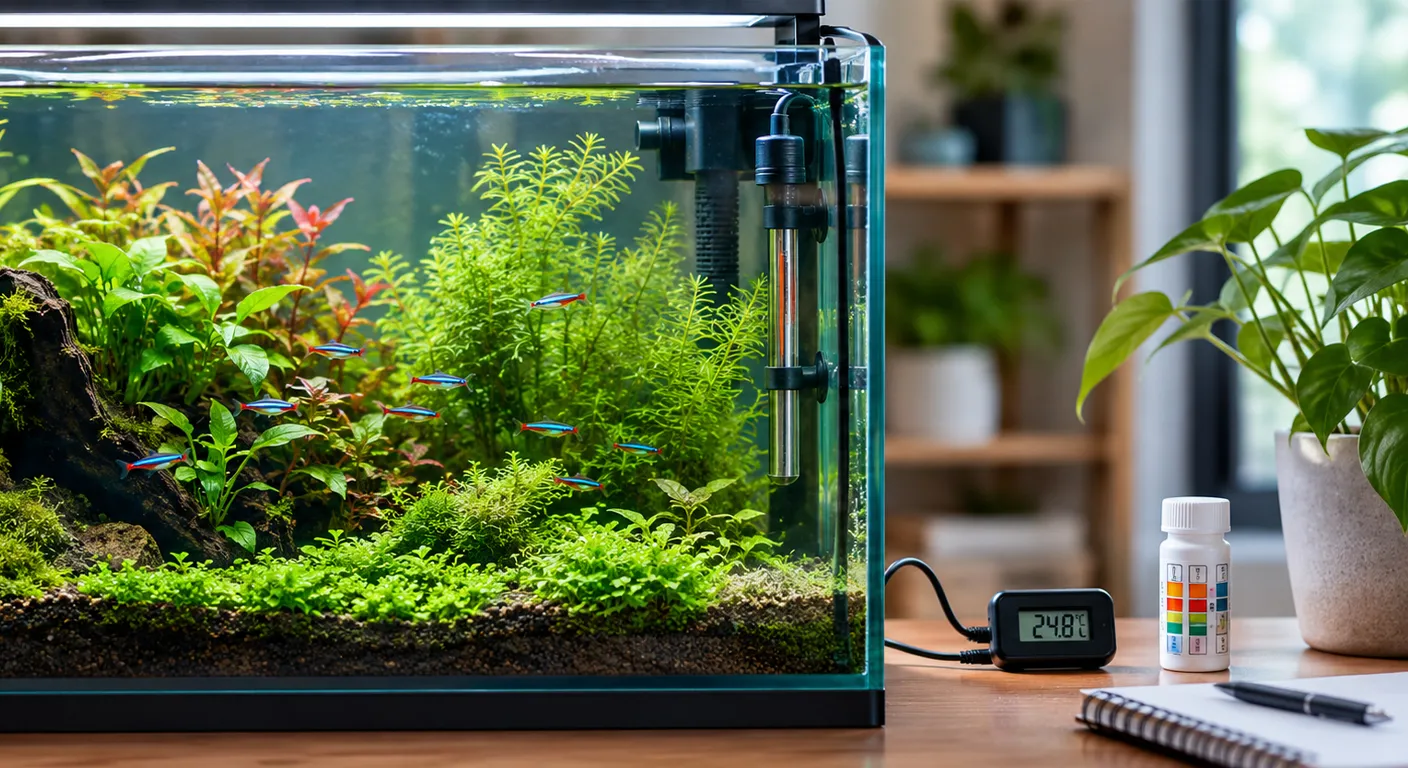
A planted aquarium does not automatically need a heater. The answer depends on the plants and animals you keep. It also depends on the water temperature the tank holds through day and night. A tank in a stable room at 74°F may never need one. A tank in a garage that falls to 62°F every January almost certainly does.
This guide explains what temperatures aquarium plants generally need and how to assess a plant-only or community setup. It also covers when a heater becomes necessary. Finally, you will see why warmer water does not always mean better plant growth.
Table of Content
ToggleWhat Temperature Do Aquarium Plants Need
Plants need water in a range that suits their species. A heater is only required when the tank cannot hold that range by itself. Species differ a great deal, so no universal heating rule exists for planted tanks. The plant creates the biological requirement. The heater is only one tool for meeting it.
Temperature Requirements Vary by Plant Species
Some popular plants handle moderately cool water well. Java fern, hornwort, and vallisneria are often kept in tanks that sit in the upper 60s or low 70s°F. Delicate stem plants and some carpeting plants prefer a narrower, warmer band. They can stall or melt when water drifts outside.
Because of this spread, one minimum temperature cannot cover every aquarium plant. Owning plants is also no reason to heat a tank. The reason has to come from what those plants, and any animals sharing the tank, actually need.
Typical Temperature Ranges
Many tropical planted setups use 72 to 78°F (22 to 26°C) as a reference range. Treat it as a starting point rather than a rule. Check the care notes for every species you buy, since sellers and plant databases often disagree.
Tolerance and preference are two separate things. A plant may survive at 66°F for several weeks, yet grow slowly and look poor. Its preferred range, the one it enjoys for months, matters more. Pushing the tank to 78°F only because it is planted makes little sense. A tank holding steady at 73°F already sits inside the reference range.
Plants Only vs. Plants With Livestock
A temperature that suits the plants may not suit the fish or shrimp living alongside them. The heating decision must account for every inhabitant, not the plants alone.
Plant Only Aquariums
Without animals, the decision rests on plant choice and measured water temperature. You can select species suited to an unheated setup, which is often the cheaper and simpler route. Still, not every aquatic plant grows well at any room temperature. A species that wants 72°F or more will struggle in a basement room that sits at 64°F. Match the plants to the room, or measure the room before you shop.
Planted Aquariums With Fish or Shrimp
Look up the requirements of each animal. Tropical fish and shrimp do not share one temperature need, and a few examples show the spread:
Betta fish usually do best at around 76 to 80°F.
White cloud mountain minnows prefer cooler water, roughly the low 60s to low 70s°F.
Cherry shrimp tolerate a wide span, from about 65 to 80°F.
Discus needs water in the mid-80s°F.
Your goal is an overlapping range that works for plants and animals together. When no overlap exists, a heater does not fix the problem. Discus kept at 84°F will stress many delicate plants, so the better move is changing the inhabitants. Choose hardier plants or another fish instead of forcing the match.
How to Tell If Your Planted Tank Needs a Heater
Base the decision on actual water readings, not on how warm the room feels to you. Water often runs a degree or two below the air because of evaporation, and large tanks react slowly to changes. Four steps give you a clear answer.
Step 1: Check Inhabitant Requirements
Write the appropriate range for each plant and animal. Take the highest minimum and the lowest maximum from that list. The space between those two numbers is the range your tank must hold.
Step 2: Measure Water Temperature
Use a digital or glass thermometer placed in the middle of the tank, away from the filter outlet and any heater. Stick-on strip thermometers can be off by several degrees, so avoid trusting them alone. A digital model that stores the lowest and highest readings makes the next step far easier.
Step 3: Watch for Overnight and Seasonal Swings
Record the temperature in the morning, the afternoon, and late evening for at least one week. Houses cool at night, while strong lights can warm a small tank by day. Daily swings of more than a few degrees can stress fish and shrimp.
Seasons matter too. A tank that reads 73°F in October may sit at 66°F in January, so repeat your checks during the coldest and hottest months. Summer deserves the same attention, since a sunny window can push a small tank past 82°F by afternoon.
Step 4: Compare Readings With the Suitable Range
If the lowest reading stays inside your target range, the tank does not need a heater. If it dips below the range, heating is worth adding. If readings climb above the range, a heater cannot help, and the next section covers that case.
When You Do (and Do Not) Need a Heater
Heating becomes useful when natural temperatures fall below the suitable range for the inhabitants. This table sums up the common situations without assigning one number to every planted tank.
| Situation | Decision |
| Plant only tank with temperatures that suit its plants | No heater. Keep checking through the seasons. |
| Plant only tank that becomes too cold for its plants | Add a heater, or switch to species that tolerate cooler water. |
| Planted tank with animals needing warmer water than the room provides | A heater is needed, set to the overlapping range. |
| Suitable daytime temperatures but unsuitable overnight lows | A thermostat-controlled heater fills the gap, since it only runs when water drops below the setting. |
| Tank that is consistently too warm | A heater does not help. Improve ventilation, run a fan across the surface, or shorten the lighting period. |
| Plants and livestock with incompatible requirements | Change the inhabitants. Extra heat will not reconcile them. |
In every row, the requirements and the readings make the call, not the simple fact that plants are present.
Does a Heater Help Plants Grow Faster
Not automatically. Temperature affects growth alongside lighting, nutrients, and carbon availability, so a heater is not a growth booster for every tank.
Warmer Is Not Always Healthier
Temperature influences plant metabolism. Within the preferred range of a plant, warmer water speeds up photosynthesis and respiration, which can mean quicker growth. Quick growth is not the same as healthy growth. Stems may stretch thin, leaves may look pale, and the plant may suit the tank poorly over the long run.
Unnecessary heat also carries costs. Warm water holds less dissolved oxygen, while fish, shrimp, and bacteria all use oxygen faster. Algae tends to benefit too, which can add maintenance work. Some plants, such as dwarf baby tears, are usually kept in the cooler half of the tropical range.
Cooler is not always better either. Below its range, a tropical plant slows down and may drop leaves. What you want is a suitable range, not an extreme in either direction.
Heat Cannot Replace Light or Nutrients.
A plant builds new tissue only when every input keeps pace with demand. Extra heat raises that demand. If light, nutrients, or carbon are short, a warmer tank can make the shortage show up sooner.
So avoid raising the temperature as the first response to slow growth. Work through these checks instead:
Is the plant a good match for the tank and the room?
Is the light strong enough, and does it run for a sensible number of hours?
Does the water supply nitrogen, phosphorus, potassium, and iron?
Is carbon available, through CO2 injection or a liquid source, for plants that need it?
Can You Keep a Healthy Planted Tank Without a Heater
Yes, and an unheated planted tank can be a deliberate design rather than an unfinished one. Success depends on choosing inhabitants whose needs fit the room, then continuing to monitor conditions.
A room that holds 68 to 74°F year-round suits hardy plants such as Java fern, anubias, and vallisneria. It also suits cooler water animals such as white cloud mountain minnows or cherry shrimp. Keep the thermometer in place and repeat your readings each season, because a plan that works in spring can fail in midwinter. Many keepers also store a spare heater for a cold snap or a heating failure, which costs little and prevents a rough night.
Choosing and Using a Heater
A heater should hold the temperature you chose for the inhabitants, not a generic planted tank setting. Pick and place it according to the tank and the manufacturer’s instructions.
Size: The right output depends on tank volume and the gap between room and target temperature. A common guideline is 3 to 5 watts per gallon, but follow the package.
Placement: Set the heater near the filter outlet or another area of flow so warmth spreads evenly. Keep plant leaves from touching it.
Setup: Let it sit in the water for 15 to 30 minutes before switching it on. Check the result with a thermometer the next day, and unplug it before water changes.
If your aquarium becomes too cold during the colder months, learn more about using an aquarium heater in winter for seasonal considerations.
Conclusion
Whether a planted tank needs a heater depends on its inhabitants and measured water temperature, not on the presence of plants. Some planted aquariums stay healthy without extra heat when natural temperatures remain inside a suitable range.
Check the requirements of your plants and livestock first. Measure the water rather than trusting room temperature, and watch for overnight and seasonal changes. A week of readings costs nothing and settles most arguments about heaters. Add a heater when the tank cannot hold suitable conditions on its own, but never use extra heat as a general way to speed up plant growth.
Related Products For Your Reference
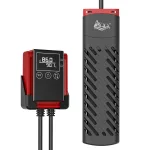
100W Aquarium Heater for 8-20 Gal Tanks with...
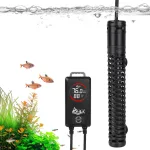
200W Aquarium Heater, 59-93°F/15-34°C, Auto Power-off Out of...
Submersible Aquarium Heater, Quartz Glass with External Controller...
800W AQQA Aquarium Heater, Submersible Fish Tank Heater...











Add comment
You must be logged in to post a comment.